
"Big things have small beginnings." So says Michael Fassbender's character in Prometheus. He was referring to a blob of alien goo that would go on to spawn the monster that drives the Alien series, but he just as easily could've been talking about Radiohead.
Like that daub of black goo, Radiohead's origins were inauspicious. The band -- consisting throughout its existence of Thom Yorke (vocals, guitar, piano, electronics), Jonny Greenwood (lead guitar, various other instruments), Colin Greenwood (bass, synths), Ed O'Brien (guitar, backing vocals), and Phil Selway (drums) -- formed in 1985 in the music rehearsal room of their Oxfordshire boys' school. The band's awkward original moniker was On A Friday -- their usual practice time.
Unlike so many of their contemporaries, On A Friday did not spend years slugging it out in the indie tour circuit before achieving broader success -- their path to glory was more in the classic-rock mold. After a university-born hiatus through the late '80s, On A Friday signed a six-album deal with EMI without ever touring. Pressured by their label, the band changed their name to Radiohead, after a Talking Heads song. A year later, the band recorded a song called "Creep," and the rest is history.
When most people think of Radiohead now, they think of Radiohead the iconoclasts: the band that resurrected progressive rock with OK Computer, dove headlong into experimental music with Kid A, and precipitated an entirely new business model with In Rainbows. For a high-profile band with so much to lose, Radiohead has historically been relentlessly ambitious. No two of their albums sound alike. (Not even Kid A and Amnesiac -- more on that later.)
But Radiohead has achieved their status as one of the last consensus-building rock bands because of their broad populist streak. That populism is musical as well as political. Even at their most challenging and experimental, Radiohead ruthlessly edits their music into catchy, pop-sized chunks. Beneath the swathes of digital gauze and strange sound is a Beatles-style hit machine.
After eight albums, Radiohead may be close to the end of their creative arc. The band has expressed growing (and characteristic!) dissatisfaction with the process of writing and recording albums. Said Yorke during the press cycle for The King Of Limbs: "None of us want to go into that creative hoo-hah of a long-play record again … I mean, it's just become a real drag." (Then again, The King Of Limbs concludes with Yorke informing the listener that, "If you think this is over, then you're wrong.")
So now is as good of a time as any to reflect on Radiohead's catalog. Here are all eight of their full-length albums, analyzed and examined, and ranked from worst to best. If you disagree -- and oh, will some of you ever disagree -- then feel free to crush my list like a bug in the ground with your comments.
Radiohead Albums From Worst To Best
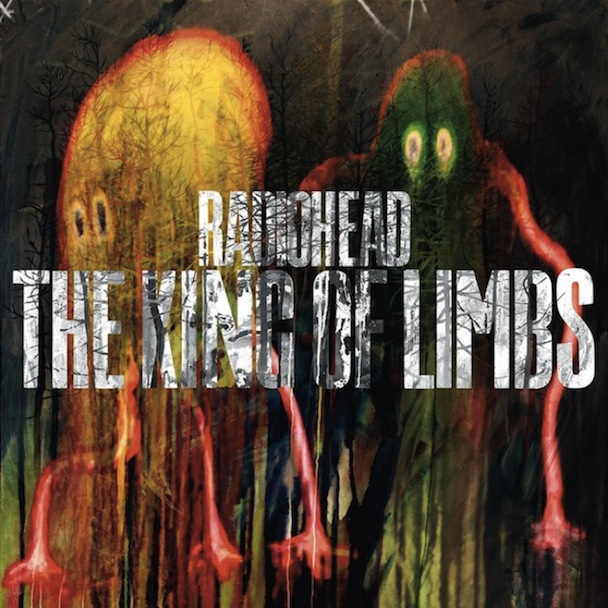
8. The King Of Limbs (2011)
It’s a testament to the depth of Radiohead’s catalog that some folks consider The King Of Limbs among Radiohead’s best work. If Radiohead’s music exists on a spectrum with “normal rock and roll” at one end and “confrontational art noise” at the other, this album sits comfortably at the weirdo end of the range.
Indeed, The King Of Limbs is the most abstract album Radiohead has ever released. By the time they began writing and recording it in 2010, the band’s members had tired of both rock jamming and the electronic programming that dominated their mid-period work. Instead, they and longtime producer Nigel Godrich opted for a middle path, using vinyl emulators to loop and refract live tracks.
This technique produced some textural marvels, especially for Radiohead’s underrated rhythm section. The King Of Limbs, with its short runtime, provides more headphone candy per minute than any other Radiohead disc. You can get lost in the cluttered motorik rhythms of “Bloom” and the nervous shuffle of “Little By Little.” “Feral” pushes this approach to its limits, stacking an impossible number of percussion loops atop a somnambulant Thom Yorke vocal.
But Radiohead’s agonized soul is noticeably absent from The King Of Limbs. Its abstraction leaves it exceedingly chilly and impersonal. The album also noticeably drops off in its second half. “Lotus Flower,” its “sexy” single, has all the warmth of a Svedka advertisement. The King Of Limbs offers plenty of intellectual charms but few spiritual ones: no ghost, all machine.
GET THE STEREOGUM DIGEST
The week's most important music stories and least important music memes.