
Back in 1990, an extremely young Jay-Z showed up wiggita-wiggitaing all over "The Originator," a single by his fast-rapping buddy the Jaz. And between that moment and 1996, when he released his stately and ridiculously assured debut album Reasonable Doubt, Jay more or less disappeared. He spent a little while on the road with Big Daddy Kane, putting in hypeman duty, and even showed up on a 1994 Kane posse cut. And he appeared on tracks with guys like Big L and Mic Geronimo. But he was busy with other things, too. As legend has it, Jay spent most of his time, in those years, amassing an honest-to-god fortune dealing drugs. And when the fully formed Jay showed up on Reasonable Doubt, he showed the sort of unearthly confidence that debuting rappers so rarely display. This Jay was not even remotely hungry or uncertain in his rap style, and his whole bespoke-kingpin character may not have been too different from his actual self. In the midst of a ridiculously fertile moment in New York rap, he still stood out. And even in his least inspired moments, he hasn't stopped standing out.
Jay's great topic, in recent years, is his own meteoric rise from the corner to the Barclays Center owners' suite. But he was mythologizing his own story even as that story was beginning. And he's always seemed like one of our greatest rappers mostly because he was so convinced of his own greatness. For a while there, he was steadily cranking out a watershed album every year, and evaluating his entire catalog is something of a messy task. Even with that prodigious output, many of his most important moments have been on other people's songs, or on albums other than his own. He's given great tracks like "Who You Wit," "Hey Papi," and "Excuse Me Miss Again (La La La)" to the soundtracks of deeply shitty movies. "Jigga My Nigga," one of his most iconic singles, belongs to the Ruff Ryders Vol. 1 compilation -- a crew album from a crew that he wasn't even part of. And his donation of "Is That Yo Bitch?" to Memphis Bleek ranks as one of the great acts of charity in recent memory.
Writing this thing, I've had to puzzle out what constitutes a Jay-Z album. I've included all four of his collaborative long-players, even the inexplicable live-mashup thing he did with Linkin Park. And I've also counted 2000's The Dynasty: Roc La Familia, billed as a Jay-Z album even though it was more of a Roc-A-Fella crew effort. But I left off all the various compilations of his work. I left off the live Unplugged album, where the Roots so masterfully backed Jay up. And I even discounted the soundtrack to his near-unwatchable hood movie Streets Is Watching, since he only showed up on about half the tracks.
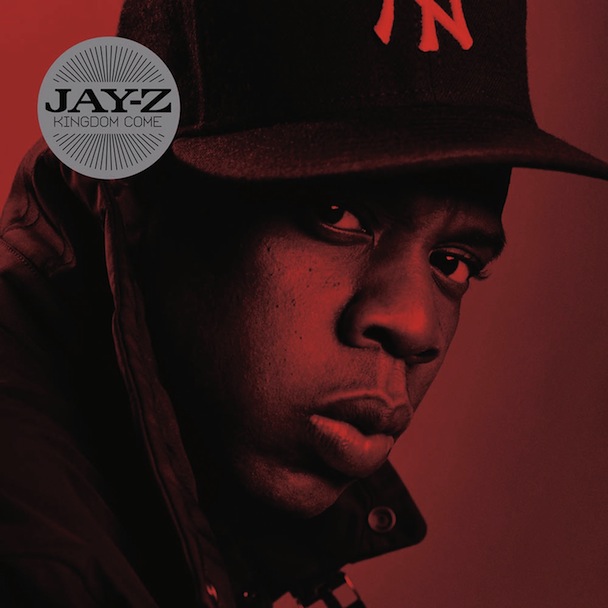
Listening back to all his albums, it's striking how much musical ground he's covered; from slick New York boom-bap to Timbaland future-funk meditations to Swizz Beatz Casio stomps. And it's been fun to watch him evolve from bloodthirsty crime lord to wry and introspective elder statesman, even if he was making better records when he was a bloodthirsty crime lord. Even at his worst (Kingdom Come, obviously), he's still a fascinating and magnetic figure. And you could easily make a case for any of those top five albums as Jay's best.
This weekend, Jay completes yet another career milestone as he finishes his eight-show run at Brooklyn's Barclay Center, a building that's got his fingerprints all over it even if he only owns a tiny piece of it. That makes it as good a time as any to dig through the man's deep discography.