
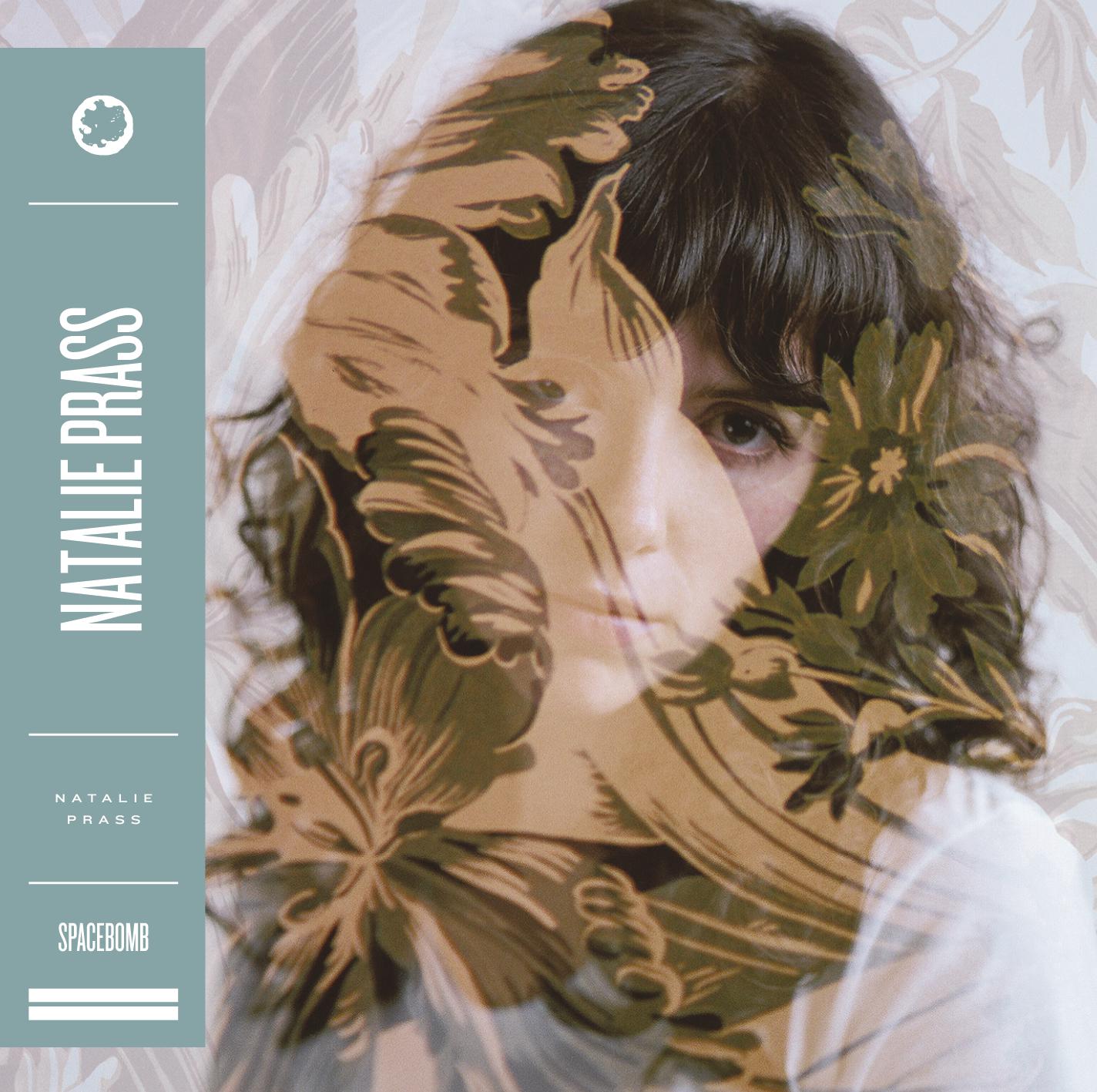
- Spacebomb
- 2015
Her voice is the first thing you hear. After a quick breath, Natalie Prass enters the frame, accompanied by orchestral backing so minimal you barely notice it at first. "I don't feel much," she announces. "Afraid I don't feel anything at all." Her tone is poised and delicate, traversing her upper register with a forceful softness, outlining the demise of a doomed romance. She sounds like a wounded bird, majestic and weary — or, as has often been noted, the hero of an old Disney movie who wandered into the real world, Enchanted-style.
One by one, the other parts of the arrangement make themselves known: the swooning strings, the stately brass, the soulful piano and guitar. By the time the drums and bass kick in, "My Baby Don't Understand Me" has taken on the shape of a lost classic, something just as likely to be excavated by a reissue label like Numero Group or Lost In The Attic as freshly created in the 2010s. Eventually, at just the right time, the climax arrives: The bottom drops out of the song, and a lyric Prass has already repeated multiple times returns, reframed as a refrain: "Our love is a long goodbye." She repeats the phrase again and again, turning it into a heartbreaking mantra, as the band roars back to life, almost rapturous now — the sound of letting go, of resolving to start over again, of bouncing onward toward the future.
"My Baby Don't Understand Me" is the kind of staggering first impression most artists could never muster. That one song was more than enough to sell me on Prass. But her self-titled debut album, which turns 10 today, continued to make the case for her as a rare talent with a distinctive, compelling point of view. When Prass came on the scene, some of us lumped her together with artists like Father John Misty and Tobias Jesso Jr. as part of a revival of highly orchestrated ‘70s pop songcraft. But it's not like Natalie Prass was the product of a trend. Prass had actually been sitting on the album for nearly three years when it finally dropped, and like so many debut albums, its origins reach even farther back.
Prass grew up in Virginia Beach, where she met fellow musician Matthew E. White. They played in a band together in the early 2000s, when Prass was in eighth grade and White was a high school senior, then White headed off to Richmond to study jazz at Virginia Commonwealth University. Prass' own journey took her to Berklee and Middle Tennessee State before she settled, like so many other aspiring singer-songwriters, in Nashville. Eventually she linked back up with White, who was still based in Richmond and was working toward the launch of a record label called Spacebomb.
Prass was excited about White's vision for Spacebomb as a label with not just an in-house band (a la mid-20th century soul labels like Stax) but a whole dang orchestra to lace each record with a signature sound. In the early 2010s, she got to work on the album that became her debut, with White charting the horns and producer Trey Pollard handling the strings. "Spacebomb was literally an idea when I started working, it wasn't a label yet," Prass later explained. "I just wanted to work with these guys, it made sense and was so exciting."
For reasons including the success of White's own 2012 breakout album Big Inner and Prass' gig as part of Jenny Lewis' touring band in 2014, the album she made at age 25 was not released until she was nearly 28. (How very Adele of her.) But the delay did nothing to diminish these songs' musical freshness or the intensity of the emotions that informed them.
Prass went through a breakup while making her debut, and the frustration coursing through songs like "Your Fool" and "Why Don't You Believe In Me" is potent. So is the attraction that informs "Violently" and "It Is You," epic love ballads that give an otherwise despairing album more of a complex emotional shading. Still, melancholia looms in even the snappiest tracks, like "Bird Of Prey," a relationship postmortem in which Prass laments, "You plucked me from the vine/ What clean detachment/ And although it wasn't time/ I let it happen." Sometimes the sadness becomes all-consuming, as on "Christy," an address to a romantic rival immersed in classical strings like some lost Nick Drake ballad.
Yet listening to Natalie Prass can be a joyous experience because even the most downcast, carefully manicured moments surge with life. Filtered through the prism of her retro influences and the Spacebomb Orchestra's throwback elegance, the intense emotions fueling these tracks were refined in ways that somehow amplified them even as it smoothed them out. Prass was pulling inspiration from ‘70s soft-rock titans like Carole King and the Carpenters as well as soul legends like Diana Ross, Curtis Mayfield, and Dionne Warwick. These were not the most zeitgeisty touchpoints at the time, which helped Natalie Prass to stand out as the work of a creator on her own wavelength. And by finding collaborators of the same mind, people who shared her background in music academia and her taste for analog-era pop, she elevated these songs to even greater heights.
Natalie Prass arrived with lots of critical acclaim and became a word-of-mouth success story, establishing Prass as one of the most exciting new forces in independent music. She followed it in 2018 with The Future And The Past, an album that lived up to its title by infusing her signature sound with more modern, synthesized elements. That, too, was well-received, but we've been waiting for a third Prass album ever since. Rather than developing a prolific, FJM-grade discography, she has mostly retreated from the spotlight like Jesso. Prass has contributed to albums by her husband, Dr. Dog's Eric Slick, and played some occasional shows since the pandemic. I have no idea whether she's plotting a comeback; the only thing I know about her future is that she's playing a special one-off gig in March to commemorate the 10th anniversary of her debut — an album very much worth celebrating from an artist who will hopefully hit us with another one someday soon.
We rely on reader subscriptions to deliver articles like the one you're reading. Become a member and help support independent media!