
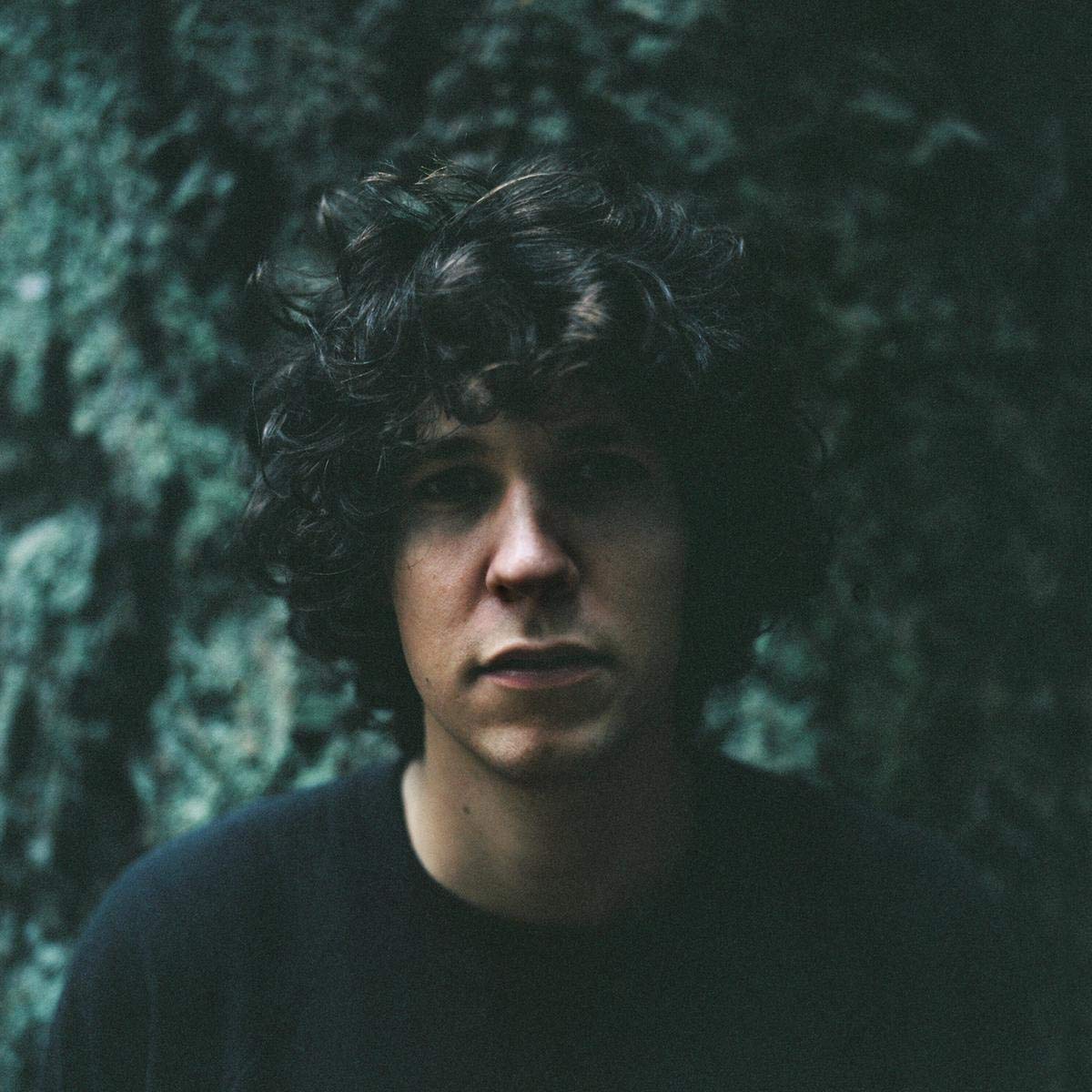
- True Panther
- 2015
I still have my songbook from the day Tobias Jesso Jr. taught piano lessons at South By Southwest. It was March 20, 2015, just three days after Jesso released Goon — his first and only album, which turns 10 years old today. Jesso was the star of a Tumblr-sponsored event at Ironwood Hall in which electric pianos were set up around the room, each one stocked with the sheet music for all 12 tracks on Goon. The tall, bushy-headed singer-songwriter roamed around instructing people how to play his songs, then gave a short concert of his own. It wasn't a staggering performance, but being up close and personal with a rising star — and being tutored on piano by a guy who had taken up the instrument less than two years prior — was the kind of fun curio SXSW used to be known for. (Sigh.)
Jesso was a big deal at the time. Not too long earlier, after failing to make his dreams come true in Los Angeles, he had moved back home to Vancouver and given up on breaking into the music business. But in October 2014, Jesso was the subject of a Rising profile in Pitchfork, and a month later he ratcheted up the hype around him by playing an exclusive solo show in the kitchen of somebody's Williamsburg loft. He was working with big-name producers including the Black Keys' Patrick Carney, indie-goes-pop architect Ariel Rechtshaid, and Girls' Chet "JR" White, who Jesso had emailed blind to share his music after beginning to write piano ballads at age 27, leading to a deal with the Matador imprint True Panther. He even had the endorsement of Adele, whose only tweet in months was a link to the video for his single "How Could You Babe" with the text, "This is fantastic, click away."
This is fantastic, click away https://t.co/DhX8RPVNhu
— Adele (@Adele) January 21, 2015
By that point, Jesso was also at the center of a buzzy micro-trend in which indie singer-songwriters were channeling the soft sounds of '70s studio pop, a zeitgeist that put him in league with the likes of Natalie Prass and Father John Misty. At the time, I was smitten with that wave for a number of reasons. Prass' self-titled debut and FJM's I Love You, Honeybear were stunning listens, the sound of fresh talented filtered through classic aesthetics. They happened to arrive at just the right time in my life, too. I was entering into my thirties, becoming a dad, and here were a bunch of artists from my generation toying around with a style that struck me as grown-up because it belonged to my parents.
Goon was the least developed of those albums, but it hit me hard. What White heard in Jesso, I did too: songs that evoked the wistfulness of old TV theme songs and the glassy-eyed sentimentality of Harry Nilsson, sculpted with professionalism but performed with an amateur's charm. There was definitely a novelty aspect to my appreciation; it was fascinating to hear artists digging up a corner of music history that had not yet been nostalgized by a hipster class intent on reclaiming and rehabilitating every flavor of retro cheese. Still, listening back through Jesso's album now, I'm reminded that the guy had some undeniable juice.
"How Could You Babe" was the hit, if you could call it that: the lead single, the track that got a music video, the one that bowled Adele over. The song was born from the loneliness and outrage of a recently extinguished romance, a loosely swaying full-band swoon with a show-stopping chorus that proved Jesso could really sing when called upon. It was the strongest manifestation of a vibe Jesso mined repeatedly across Goon, a doe-eyed romanticism cut with twinges of bitter reality. "It's the city, vast and stupid, the bright lights and big dreams inside every window holding a story that might sound maudlin if you tried to explain," Jeremy Gordon wrote at Pitchfork way back when. "Well, Jesso isn't afraid to be maudlin."
Songs nearly as potent are packed onto Goon, mostly on Side A. Opener "Can't Stop Thinking About You" flashes the rudimentary brilliance of a prodigious piano student; you can almost feel Jesso's fingers trembling as he plucks out the inspired chords and melodies. His voice is produced to impact like a beam of moonlight in a shadowy bedroom, faintly glowing as he addresses his plea to a girl called Maryann (an ideal name for a character in a '70s-ass love song). "For You" and the fleeting acoustic guitar pivot "The Wait" are winsome Paul McCartney cosplay. The yearning "Without You" drifts along like a dream, gently propelled by guest drummer Danielle Haim. Perhaps best of all is "Hollywood," Jesso's lament about his failed stint in LA, which wrings melodrama from wide-open piano chords and Jesso's Randy Newman-like mutter before a sad-sack orchestral finale. "And I pray God help me/ I've done the best I could," he sings. "But I think I'm gonna die in Hollywood."
By the end of Goon, the vibe has gotten a bit samey, and the songwriting begins to weaken. But damn if I wasn't running this thing back over and over at the time, basking in an unrepeatable magic that made the album feel like some lost artifact salvaged by Light In The Attic. A decade later, I can't help but wonder what subsequent Tobias Jesso albums might have sounded like, which ways he might have expanded upon the relatively narrow palette explored here. We may never know because almost as soon as he found fame, Jesso fled the spotlight to become a wildly successful behind-the-scenes figure in the music industry.
"The album came out and I just imploded," he told Rolling Stone in 2022, continuing:
I didn't want to be an artist anymore. I've always written songs and I've always loved it. It's a great form of therapy and it's a great form of creativity. And I think that at the time it became about, "Now I want you to go perform." And I'm like, "But I'm a terrible performer." And they're like, "and we want you to do interviews." I'm like, "That makes me really uncomfortable." They're like, "We want to put you in photo shoots and we wanna put you on TV…" I'm already very anxious. This is just driving me into a state of unknowable stress. You go on tour and I'm like, "Wait, why am I going on tour if I have to pay to go on tour?" And they're like, "Because then you do two more [tours] and then it starts paying you." And I'm like, "I never want to play shows. I never want to ever do that." And they're like, "That's how you make money as an artist." And I'm like, "I don't care." Everyone's telling me I'd be an idiot not to take this opportunity. Even though it feels wrong to me.
Things worked out just fine for Jesso. He has said that he was fully prepared to go back to Vancouver and work for his buddy's moving company. But by the time he pulled the plug on his performing career, he had a foot in the door toward his future life as a songwriter for some of the biggest names in pop. Adele, who'd loved "How Could You Babe" so much, recruited Jesso to work on a song from 25, the blockbuster LP that took over the world at the end of 2015. The soaring and soulful "When We Were Young" became a Top 20 hit, and Jesso's next pivot was well underway. He's since built up an impressive range of credits for artists like Harry Styles, FKA twigs, Orville Peck, and King Princess, and in 2023 he won the inaugural Grammy for Songwriter Of The Year, Non-Classical. Maybe he should hold a SXSW event to teach people how to replicate that.
We rely on reader subscriptions to deliver articles like the one you're reading. Become a member and help support independent media!