
- Milk!/Marathon Artists/House Anxiety/Mom + Pop
- 2015
"The paramedic says I'm clever 'cos I play guitar," sings Courtney Barnett on "Avant Gardener. "I say she's clever 'cos she stops people dying." That was the Australian singer-songwriter's breakout song, a scary-mundane yarn about an asthma attack she suffered while gardening. It's the kind of track that draws all attention to itself in a room, making anyone present ask: Who is this? I first heard it while attempting to play cards with a group of friends, and it was impossible to focus on anything else while it was on. Released in 2013 in a punchline-heavy era for indie rock, the song was zinger after zinger, and yet its most crucial line — on top of reinforcing Barnett's slacker bona fides by expressing a twentysomething musician's self-consciousness about not having a "real" job — gave away her unease about the adjective most often used to describe her.
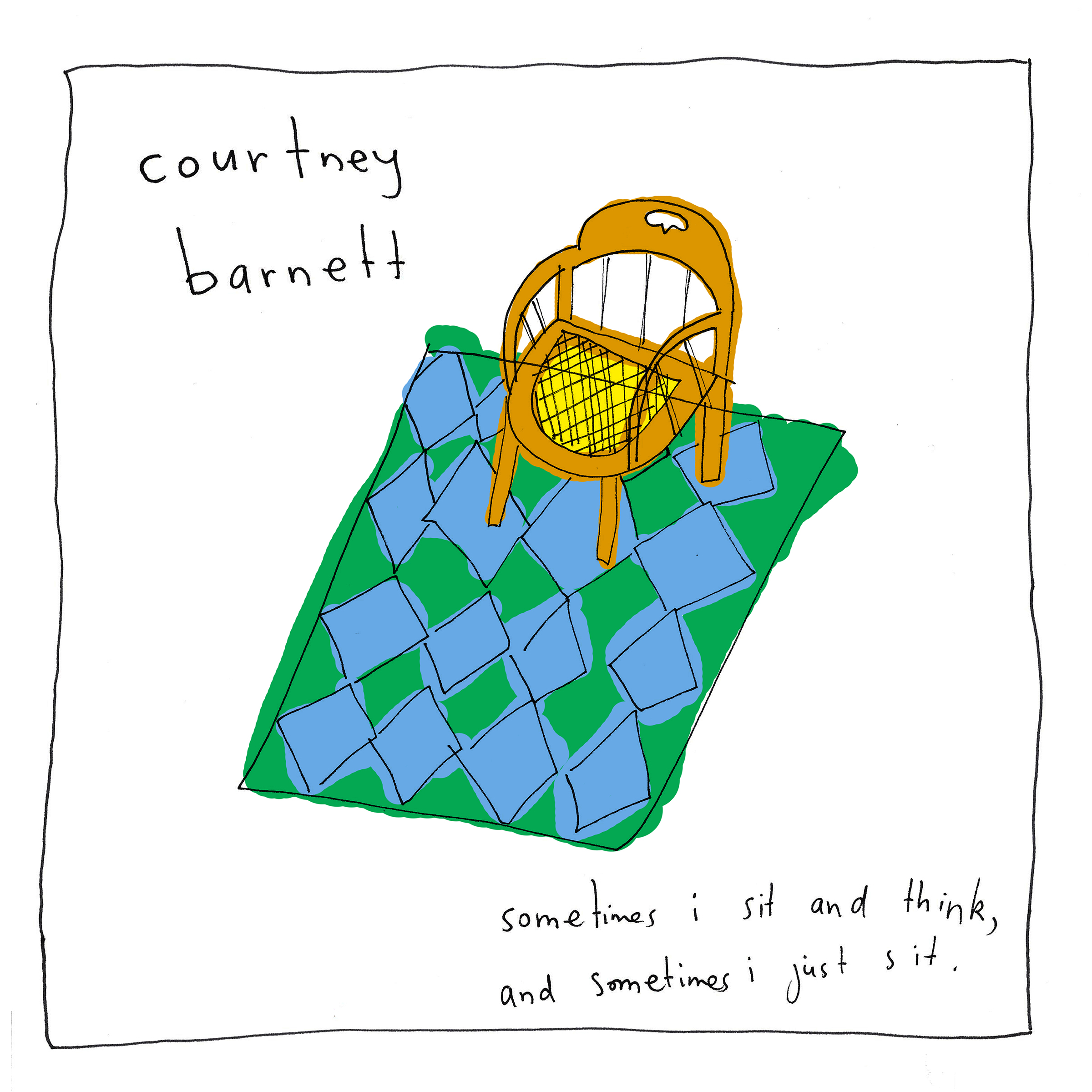
Barnett has always presented herself as a shy and inarticulate person who takes on a superpowered gift of gab in songwriting mode. "I write songs because I can work on them and make myself sound clever, but in interviews I feel like a bit of a doofus," she told the Guardian around the release of her proper debut album, Sometimes I Sit And Think, Sometimes I Just Sit, which came out 10 years ago today. Never mind that she wrote "Pedestrian At Best," its lead single and most quotable song, at the last minute and had never actually sung its words out loud when she stepped into the studio to record it. Even the modest title of the album makes an amusing contrast with the music, which conveys irrepressible action rather than stasis, its 44 minutes flying by in the kind of relentless torrent of language you associate with Joanna Newsom's Ys or Ghostface's Supreme Clientele rather than slack Aussie punk.
It takes zero seconds for Barnett to start singing. How many college kids still mastering their first turntables during the peak of the vinyl revival had to drop the needle one, two, three times before they could line it up properly and hear the first words? "Oliver Paul, 20 years old," she begins, introducing us to this fellow we don't know before we've even really had a chance to get our bearings. Hearing her sing about someone else (a business bro who escapes to the roof to daydream and is mistaken for a suicide) was a little shocking at the time given that Courtney Barnett's great subject was Courtney Barnett, and indeed it's a bit of a thematic red herring. If "Elevator Operator" sets the tone for the rest of the record in any way, it's by establishing the pervasive disconnect between the mundanity of the situations she writes about and her urgency in describing them.
This contrast pays off most delightfully on "Aqua Profunda!," named for the giant sign at Melbourne's Fitzroy Pool, where Barnett describes swimming in an adjacent lane to a sexy stranger and finding herself getting increasingly showy and competitive with her strokes. "Dead Fox" turns a piece of oft-cited driving advice into a killer hook Joan Jett would've been proud to sing with her boy-toy Blackhearts. "An Illustration Of Loneliness" meanders through a description of the wallpaper at the hotel she's staying at before her mind spins back to her absent partner Jen Cloher, with whom she split in 2018. "Nobody Really Cares If You Don't Go To The Party" grapples with FOMO, and it's likely a lot of folks were turned on to Barnett's work when the Grammys played it in announcing her 2016 Best New Artist nomination.
Her stylings sometimes approach the kind of density-for-the-sake-of-density you'd expect from logorrheic post-Eminem battle rap (I'm in the minority in feeling "Pedestrian At Best" is more a succession of jokes than a great song). The handful of slower songs are a mixed bag, and though the seven-minute "Small Poppies" is the song that comes closest to the sweet spot of urgent verbiage and slacker drift she nailed on A Sea Of Split Peas, its late-album bookend "Kim's Caravan" is a ham-handed, predictable environmental yarn. "Depreston" skirts the edge of maudlin, recounting a visit to a house she's thinking about fixing up but that's haunted by traces of the last occupants' lives. A less obvious but more moving song in a similar vein is Bill Callahan's "The Mackenzies," in which he lets himself be absorbed into the lives of an old couple shattered by their son's death.
Sometimes I Sit And Think isn't Barnett's best work, but it's the best showcase of her capabilities as a sheer force of nature, what she can do when she uses the proverbial 100 percent of her brain. This does not seem to be the musical mode she's most comfortable in. She's put out two solo albums since, both of which lean away from her early verbosity towards a tighter and more formal songwriting approach that doesn't come on anywhere near as strong. On Lotta Sea Lice, her low-stakes collab with Kurt Vile, she seemed delighted to sing dumb lines about Nina who brings the reefer-ina. Her trustiest musical collaborator in her recent work is her partner, prolific one-time Warpaint drummer Stella Mozgawa, who produced and drummed on 2021's Things Take Time, Take Time. The reception to that record was chilly, but she and Mozgawa seemed to be having a good time.
Ten years deeper into Barnett's career, Sometimes I Sit And Think arguably sounds kind of unrepresentative, but whatever people thought Barnett's deal was, it was enough to endear her to the rock 'n' roll establishment at a time when people were checking the genre's pulse. At a Grammy ceremony where the Johnny Depp-fronted sleazoid supergroup Hollywood Vampires seemed to stand in for the decrepit state of rock, Barnett was nominated for Best New Artist (she lost to Meghan Trainor) and got accolades in Rolling Stone usually reserved for artists 40 years her senior. During that weird fallow period in rock history where Tame Impala and UMO ditched guitars and the genre mourned its stagnation in comparison to the excitement coming from the Atlanta rap underground, it was easy to view Barnett as a potential savior of guitar music if you squinted enough.
She wasn't that, and I imagine she's fine with that, but it's hard to pinpoint exactly what thread Sometimes I Sit And Think belongs to within the larger story of indie rock. Most of the Australian acts to find indie renown since then have either branched from the Tame Impala universe of vintage Beatledelia (Pond, the Psychedelic Porn Crumpets) or the continent's long-running tradition of beery shit-kicker rock (Taco Leg, the Chats, Amyl & The Sniffers). You could fit her alongside Vile, St. Vincent, and the War on Drugs in a chain of indie darlings whose allegiance to classic rock was repaid by marginal acceptance from rock's gatekeepers and the possibility of being one of the only new artists your dad or uncle might like. But she doesn't really sound like any of those people, except maybe Vile, who's just as free-associative but in a more obtuse and circular way.
If any song points to the place Barnett would eventually assume in the rock world, it's her cover of "New Speedway Blues" on 2016's Day Of The Dead, the Grateful Dead compilation that did more than anything else to cement an acceptance of the once-anathema world of jam bands in the indie rock universe (other key events in this shift: Animal Collective clearing the first-ever legal Dead sample on 2009's Fall Be Kind and Real Estate covering "He's Gone" for Jerry Day in 2014). "New Speedway Blues" left open the suggestion that Barnett's shaggy songwriting was more in league with those cosmic jokers than anything else. Barnett is now a perennial at mid-sized festivals, no longer an artist on the cutting edge of the rock world but one that can be relied on to be very good. She seems happier this way than when everyone was telling her how clever she was.
We rely on reader subscriptions to deliver articles like the one you're reading. Become a member and help support independent media!