

- Jagjaguwar
- 2025
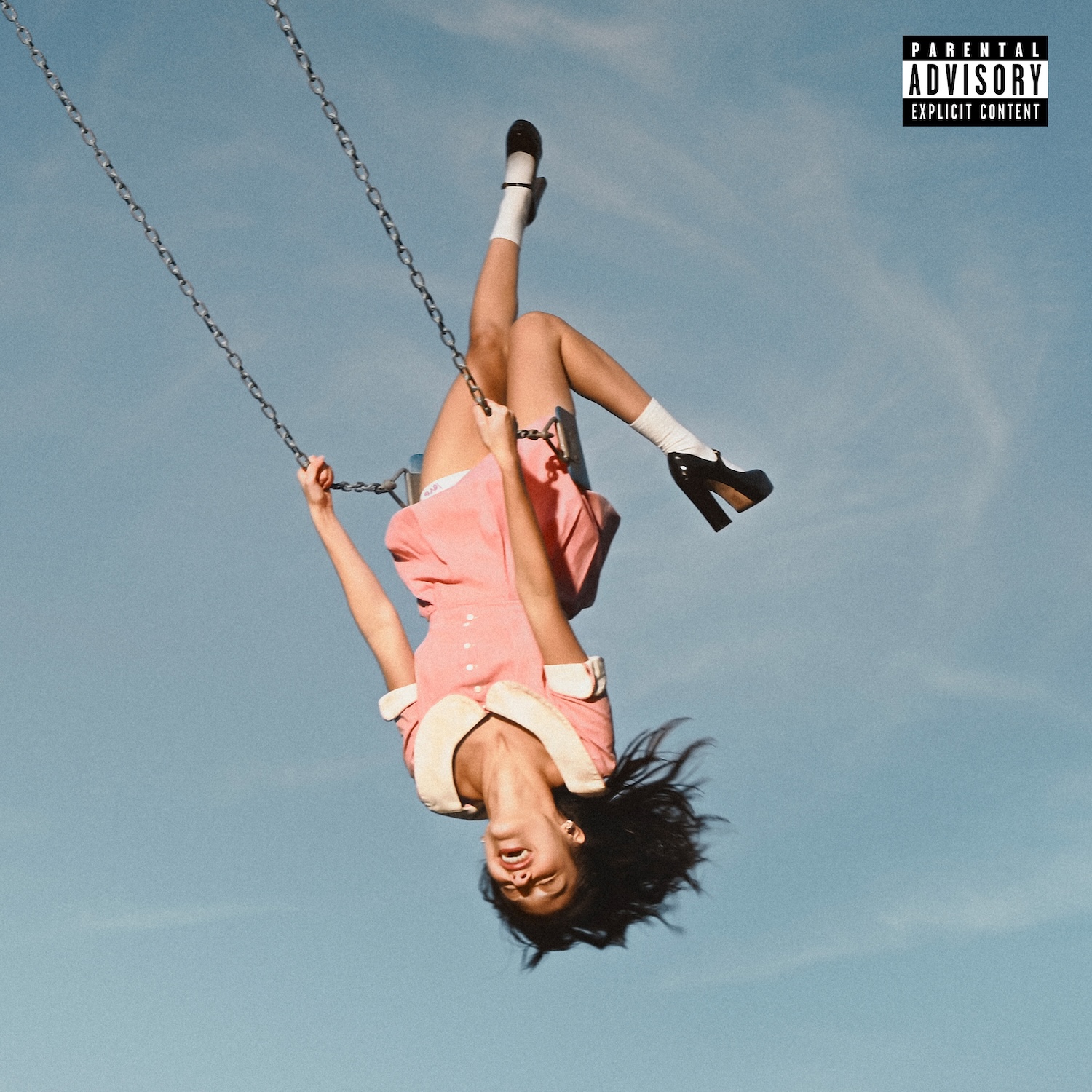
Justin Vernon was sick of being sad — maybe even physically ill from it, depending on how his opaque interview comments are to be understood. In the run-up to SABLE, fABLE, the first Bon Iver album in almost six years, Vernon has spoken about feeling trapped inside the performance of emotional distress that has defined his band since debut album For Emma, Forever Ago, with its readymade narrative of a broken man pouring his heart out in a remote cabin. Multiple times he has recalled an instance when he began weeping onstage after catching a glimpse of a struggling friend and the audience responded rapturously, as if he was giving them exactly what they came to see.
Vernon is one of the biggest stars to ever emerge from the indie rock ecosystem: a guy who'd guested on blockbuster albums by both Kanye West and Taylor Swift, recipient of both Grammys and Best New Music honors, now famous enough to be interviewed by Jimmy Fallon on TV but mostly anonymous enough to disappear into a crowd. As so often happens, there was unhappiness behind the commercial success and critical acclaim. Vernon was worried he'd boxed himself into a corner. Could he even write Bon Iver songs without being depressed? Was he forcing himself into dark places just to live up to his fan base's expectations? Did his livelihood depend on playing the part of the Midwestern sadboi for the rest of his days?
SABLE, fABLE rejects those premises. Vernon has spent the past few years working on himself: making friends outside the music industry, learning not to default to self-deprecation, mending relationships with his loved ones. Arriving after that period of self-assessment and healing, the album considers such previously unthinkable prospects as: "What if Bon Iver, but happy?" and "What if Bon Iver, but sexy? In some ways, it's a natural evolution from what came before, flowing directly from the aesthetic of 2019's career-summarizing i,i. But the overall vibe is different enough that it feels like a reinvention as intended, if not exactly a clean break.
The album is structured very intentionally, with a mind toward easing longtime listeners into Vernon's transformation. It begins with three old-school Bon Iver songs, released last year as the standalone SABLE, EP. "Old-school Bon Iver" is not a super precise descriptor given how much Vernon has pushed the band's sound forward over the years, but the suite works as a protracted survey of where the project has been, erring on the side of For Emma-style acoustic balladry (especially on "S P E Y S I D E") while subtly nodding at the post-rock expanse of Bon Iver, Bon Iver and the electronic experiments of 22, A Million.
Due to the minimal, downcast vibes, that opening stretch plays more like an extended prologue than the proper start of the album, which gives SABLE, fABLE a unique, somewhat awkward momentum. If they don't exactly start the album with a bang, the tracks make for decent Bon Iver throwbacks, and they're absolutely fascinating as metatext — the sound of Vernon wrestling with his legacy within the exact kinds of songs it was built on. "I would like the feeling gone," begins Track 1. "I can't rest on no dynasty/ What is wrong with me?" he laments on Track 2. "You can be remade/ You can live again," he assures himself on Track 3. I didn't process it when the EP dropped last fall, but in hindsight it's impossible not to hear him spelling out the internal turmoil that led him to revamp the band.
The transitional "Short Story" ushers us out of the darkness and into the light of "Everything Is Peaceful Love," the lush lead single from the fABLE section of the album. With its percolating, pan-genre '80s beat, soulful deployment of Vernon's signature falsetto, and altogether positive orientation, the song sets the tone for the rest of the album. Vernon played a key role in introducing soft rock sounds to indie rock with the electric piano power ballad "Beth/Rest," and his work with producers like BJ Burton and Andrew Broder digitally refracted his salt-of-the-earth songwriting into the audio equivalent of cubist paintings. Here, he and co-producer Jim-E Stack apply that chopping and splicing to upbeat lite pop sounds of the late 20th century, lending a futuristic edge to the most VH1-coded aspects of his music.
Vernon is dipping into a style I associate with artists like Haim, whose Danielle Haim pops up on the album, and the 1975, who often season their own soft-rock pastiches with ample Bon Iver worship. But more than the rest of the alt-marketed prestige pop acts mining the grocery store jams of yesteryear, Vernon steers these songs into the realm of R&B. The tracks all boast serious grooves, and Vernon glides across them passionately. His voice moves with power and grace throughout, often remarking on love, sex, and romance, forgoing the oblique mysticism that has sometimes characterized his lyrics in favor of clearly expressed sentiments.
"Can we stay inside this place?" he sings on the Blonde-ish boom-bap of "Walk Home." "Pull me close up to your face/ Honey, I just want the taste." On the luminescent neon rocker "From," he declares, in ebullient falsetto, "I wanna kiss you ear from ear." The smooth-jazzy soft rock ballad "There's A Rhythmn," hailed by Vernon as his favorite Bon Iver song to date and the truest expression of himself, involves the phrase "You really are a babe." The organ-slathered "I'll Be There" even occasions a loverman promise worthy of Boyz II Men: "You can have all my love for free/ And I will keep the fire in me/ Even if it takes all goddamn night." (Therefore, girl, "Keep the sad shit off the phone/ And get your fine ass on the road!")
Some of this might strike you as corny and insufferable on the page. There are many worlds in which "newly liberated Justin Vernon makes an album of jubilant Bon Iver sex jams" is a failed concept, but in this dimension it works wonders. Some of that has to do with Vernon's confidence as a singer and songwriter, the way he throws himself into the music with no apprehension or shame. But SABLE, fABLE also benefits immeasurably from Bon Iver's ability to harness classic sounds and alter their chemical makeup, bio-hacking genres both organic and synthetic until they sound completely natural and entirely unreal. It's a trick the band's been pulling since 22, A Million, and it works just as well when many of the raw materials could be mistaken for chintzy elevator music.
It's all so lush and fluid, and it often plays out in delightful, unpredictable ways. The pedal steel swirling in the ether. The stabs of processed vocals, puncturing the pristine backdrops. The glassy keyboard chords and trip-hop breakbeats. The way guitars and horns blur together into bluesy bent notes — American music old as dirt, updated into gnarly new contortions for our touchscreen future. I'm especially taken aback by the spliced Wurlitzer and piano chords on "Day One," a collaboration with Dijon (a former Bon Iver opening act whose music struck Vernon as truly fresh and forward-thinking) and Flock Of Dimes (Wye Oak's Jenn Wasner, a longtime member of the Bon Iver touring ensemble, whose music will hopefully be discovered by a few lucky Swifties via this feature). That arrangement just wallops me. It's like the Band playing an old gospel tune, but it's also like a holographic video display where elements can be swiped in and out of the mix with the wave of a hand.
No one is culture-jamming quite like Bon Iver right now. Mk.gee, who plays guitar on "From," was clearly an inspiration for this album's palette and production, but SABLE, fABLE makes him seem like a one-trick pony by comparison. So much is happening on every track, ideas and inspirations careening in brilliant bursts of sonic choreography. The arrangements feel like high-tech magic tricks but also, somehow, earnest human outpourings. It's a joy to listen to, and hopefully Vernon is now sharing in that joy.

SABLE, fABLE is out 4/11 on Jagjaguwar.