
- Nothing/Interscope
- 2005
In 2020, Nine Inch Nails were inducted into the Rock & Roll Hall Of Fame, an inclusion that would have seemed unthinkable at one point but by then seemed well overdue. It was a sign of the Rock Hall finally, begrudgingly, moving past its All Boomers Everything roots. In the introductory video, Annie Clark talks about NIN mastermind Trent Reznor's impact on music. With a voice tinged with both admiration and astonishment, she makes a very good point: "'Head Like a Hole' has two choruses!" And you know, when she's right, she's right.
For most of its now close to 40-year existence, Nine Inch Nails was Trent Reznor, as helpfully explained in the liner notes of their 1989 debut Pretty Hate Machine. (Longtime collaborator Atticus Ross officially became a co-member in 2016.) It's not an exaggeration to say that Reznor is one of the greatest sonic architects in the history of recorded music, blending elements of industrial rock, musique concrete, and oft-disquieting Eno-inspired electronic soundscapes that brought new flavors and dimensions to guitar based rock music, eventually upended the world of music scores, and helped, partially, to pave the way for America's embrace of electronic dance music. He's also a singularly intense performer in the lineage of Iggy Pop, bringing a physical, cornered-animal ferocity onstage and in the studio; even on record, you can hear the veins throbbing on his neck. (You don't have to like it, but this is the platonic ideal of a bad ass rock video. Fellas, what's keeping you from achieving this?)
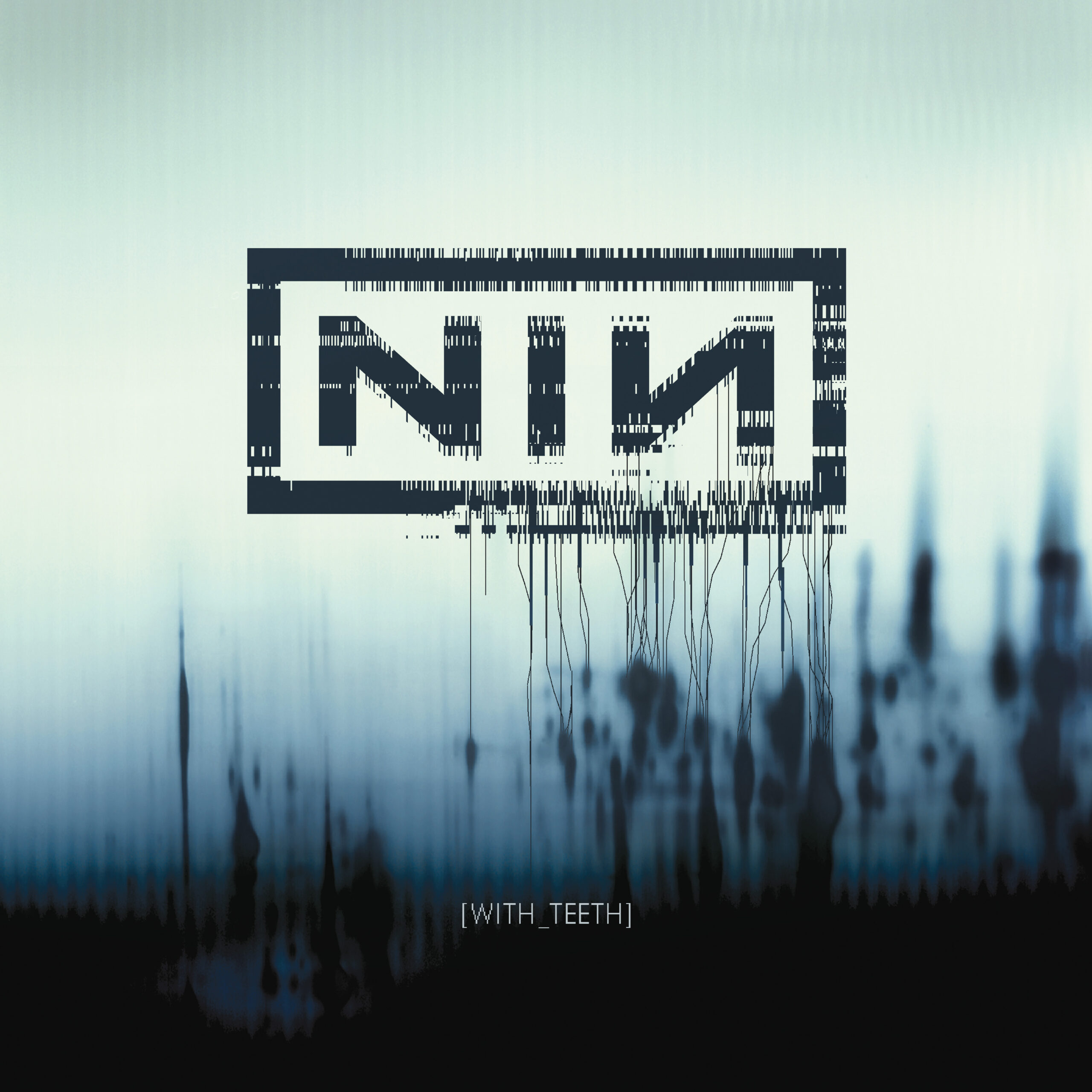
Less often heralded by minds less astute than St. Vincent is that Reznor is also an ace pop songwriter who can mine a hook from the gnarliest of sounds and can write an arena-ready chorus when the mood strikes him, a skill he has attributed to growing up as a lonely kid in Pennsylvania, listening to Queen and AM pop gold. While the production acumen made him iconic and the intensity earned the loyalty of punks, metalheads, and first-generation Lollapalooza kids, it's his melodic, user-friendly sensibility that sustained him through the generations; it's why Nine Inch Nails can still headline festivals to this day. And the clearest example of Trent Reznor, Pop Craftsman, can be found on the comeback album With Teeth.
When With Teeth arrived 20 years ago this Saturday, it had been years since anyone had heard from Reznor, and in some of the darker, more gossipy corners of the internet, fans had reason to fear the worst. In 1999, Nine Inch Nails released The Fragile, a byzantine double album filled with intense depictions of despair melded with ingenious layers of corroded sound and few obvious bangers. It's aged beautifully but could not have been more out of place, as the Clear Channelification of radio and MTV meant that the only two modes offered to the public for 1999's Party At The End Of The Century vibe was teen pop and nu-metal — harmless fun if you look at it one way; grotesque, cartoonish performances of masculinity and femininity when viewed from a distance. (In retrospect, it's remarkable how the twin poles of 1999 TRL fare presaged the dumbing down of American mass culture brought on by the Bush era, a regression Reznor would later rage against.)
The Fragile stalled at radio and on MTV, and the supporting tour found the band struggling, in all senses. "Looking out and seeing empty seats in the back of the arena that you shouldn't have played anyway, but arrogance got you there," Reznor told Spin in 2005. "Combine that with personal ruin? It's hard to look cool vomiting in a toilet, know what I mean?"' Reznor had managed to, more or less, hold it together during the long, drawn-out recording of The Fragile, which found him plagued with writer's block and self-doubt. "That's why there aren't a lot of lyrics on that record. I couldn't fucking think," he explained. "An unimaginable amount of effort went into that record in a very unfocused way." But after The Fragile debuted at the top of the Billboard chart, he began spiraling (pun not intended) deeper into cocaine and alcohol addiction. While on tour in 2000, he overdosed in London after mistakenly taking heroin for a line of coke.
"I was so deep in the throes of addiction that it was shitty, but it didn't seem that much shittier than a lot of other things, other surprises that kept happening," Reznor told The Guardian in 2013."You tend to accumulate dramatic bad things when you're in that place. My house got broke into, how did that happen to me? Oh my car got stolen, oh I woke up in hospital … it doesn't sound that out of the ordinary when everything is shitty. For me, it was another brick in the wall of realizing at some point, enough."
Following the tour, Reznor fled to his New Orleans studio mansion and essentially disappeared, save for "Deep," a forgettable song from the soundtrack to the forgettable Tomb Raider franchise. His addictions worsened, and he barely left his home. "I was going to just drink myself or drug myself out of it. I got back to New Orleans after the Fragile tour, and I'd pretty much lost my soul. I just felt like nothing," he remarked to Spin. He was eventually prompted to get clean after the murder of his friend Rodney Robertson, a studio assistant with a troubled upbringing that Reznor had taken under his wing. He entered rehab, learned to open up about his insecurities and shame, and began to understand that he had a natural inclination towards depression that he would have to learn to live with.
We rely on reader subscriptions to deliver articles like the one you're reading. Become a member and help support independent media!
Eventually, he began plotting his return to music. Early plans for a concept album were abandoned. (It was rumored to be called Bleed Through and centered around alternate realities; Reznor is a nerd who tricked the world into thinking he's a dark sex god rock star.) He decided to stop overthinking things for once, and leaned into his strengths for a pared-down, tight (though it could have been tighter) 13-song album.
With Teeth is both a sign of maturity and, to an extent, a retreat. Every artist who helps define the sound and feeling of the era they've conquered will eventually reach a point where a new era arrives and they are no longer at the center. Sometimes they are quite unfashionable in said new era; the earliest incarnation of Pitchfork held Nine Inch Nails in utter contempt. This transition can sometimes be delayed, but it can't be avoided. It's a time-honored move for an artist who went too far afield for some of their fans to pivot back toward the middle and win some of them back. (See: David Bowie's Let's Dance or Pearl Jam's Yield.) It's also true that at one point an innovative act will no longer create a new sonic language with each album and will instead opt to play in the sandbox it has created, finding fresh new wrinkles and building upon what it's done. Reznor did both here, realizing quite sensibly that it was time to just make a really good Nine Inch Nails album, just as Beck had dropped a really good Beck album a month earlier; Sonic Youth and Radiohead would follow this path in the years to come.
Also, Reznor's other great talent? My dude can just be a petty little bitch. He throws Gallagher-level heymakers in interviews (he wrecked Fred Durst's entire world in his 1999 Rolling Stone cover story) and on With Teeth opener "All The Love In The World," he unleashed on some unspecified adversary, seething with jealousy, asking what makes them so special, noting "sometimes I get so lonely I could cry." It's a slow build, wading us back in; towards the end, things slow down and we get, shockingly, some gospel pianos and a disco thump that sound imported from a soulful house track, gradually accumulating intensity until at last we reach the sort of catharsis that assured fans that Nine Inch Nails were back. In this same vein, Reznor unleashes holy terror on "You Know What You Are?," the closest this album gets to the unhinged berserker energy of Broken. Almost certainly written about Reznor's former manager and former best friend John Malm, whom he has accused of financial misdealing, it's a fine entry to the hallowed category of angry songs about (alleged) music industry leeches, featuring whiplash drumming from guest Dave Grohl and some top-shelf Reznor screams.
Reznor made his name by constantly pushing himself and his genre, and in his mind, his rivals were '00s era vanguards like TV On The Radio and LCD Soundsystem. But he was also a realist who was honest enough with himself to admit he liked playing arenas, so on some level, he admitted his rivals were also Green Day and Audioslave, therefore capitulations must be made.
When Reznor turned in The Fragile, "There was a real arrogance on our part," he explained to Spin. "We said [to Interscope], 'Here's the new record. Get out of the way. This is the new thing. Deal with it." He was well aware he didn't have that level of freedom anymore, and he had to play ball with K-Rocks of the world, hence "The Hand That Feeds," a song I often use for a bathroom break when I see Nine Inch Nails live. I mean…. It's fine. Reznor throws enough synthesizer loops and ominous vibes to make it sound good, and I respect the fact that he was willing to speak out against the Bush administration, even dropping out of an MTV appearance over what he insists was an attempt to censor his message. But the a-a-a rhyme scheme of the chorus is so basic it's basically a nursery rhyme, and the guitar work just sounds safe. There's a difference between keeping it simple and direct and dumbing it down, and this lands on the wrong side. Similarly, "The Collector" has some top-notch Grohl drumming but otherwise lands flat.
Much better is follow-up "Only," which feels like Reznor's attempts to directly challenge the Ladytrons and Peaches of the world for the hearts of fishnet-clad dancefloor dwellers everywhere. (I bet this shit still rules the floors at the Castle, America's greatest goth club.) Featuring a funk- and disco-inspired rhythm, along with one of his most serpentine melodies, it makes clear his deep debt to Prince and his ability to wring pop ecstasy out of internal strife.
Looking at it two decades past, it's clear that With Teeth established a lyrical motif that would reverbere through the rest of Nine Inch Nails' career and that would especially dominate 2013's Hesitation Marks: his awareness that the relief and peace he gained from sobriety is tenuous at best and that he can slip up and ruin everything at anytime. "Only" is basically Reznor castigating himself for trying to destroy himself (it's very reminiscent of John Mulaney's bit that, when he's alone, he's with the man who tried to kill him) while acknowledging the dark pull of self-destruction.
With its talk-singing nervous breakdown vibe, it's like if "Losing My Edge" were about the self-loathing of cocaine use. "Every Day Is Exactly The Same" explores the monotony of depression and addiction, offering just enough of a release to repeat it all again next time. The title track and album highlight, an epic of layered, corroded guitars, drops out in the middle, leading to one of Reznor's most nakedly emotional vocals; surrounded only by the barest of electronic whispers he pleads "I cannot go through this again," only to roar back in defiance. (And the way he pronounces it with-a-teeth-a just sounds cool, which is very important, of course.)
The album ends with a suite of Pink Floydian ballads, the greatest of which is "Beside You In Time," a shoegaze-like hymn in which Reznor takes stock of himself, wounds and all, aware that the isolation that's plagued him most of his life — perhaps since he was abandoned by his parents — will never truly leave him, but that he can keep it in place and move forward, maybe, if he works at it.
Reznor would later admit he was worried that people would forget about Nine Inch Nails, that he was a relic from another time. He needn't have worried; With Teeth went gold (which was basically double-platinum in the file-sharing era), spun off several hits, and proved to be a needed course correction. When I saw them headline Coachella that year, he was visibly moved by the crowd's cheers after he finished their set. A few years later Reznor would retire Nine Inch Nails for a bit, but he has generally ping-ponged between more exploratory, innovative attempts to refining what Nine Inch Nails can sound like (Year Zero, Hesitation Marks) and just making really good Nine Inch Nails songs (The Slip, Bad Witch). He's started a family; we don't talk nearly often enough about the fact that he has sons named Lazarus Echo and Balthazar. Along with Ross, he has reached a new generation of fans through film scores alone, and Nine Inch Nails' influence on contemporary music is still readily apparent. At a recent mixer-type event, I met a college-aged young man who boasted that he was a Reznor fan "from before Challengers." I nodded and said, "Right on."
This most transgressive and unstable of artists has become an unexpected institution, which I'm sure Reznor never anticipated and probably sometimes feels strange about, but it's better than some of the alternatives. It turns out, Nine Inch Nails were built to last. With Teeth was the proof.