

Ever since Taylor Swift released The Life Of A Showgirl last Friday, listeners have been pointing out segments from the new album's songs that resemble older hits. One guy on TikTok put together a quick rundown of some comparisons, pitting the Charli XCX diss track "Actually Romantic" against Pixies' "Where Is My Mind," the title track "The Life Of A Showgirl" against Jonas Brothers' "Cool," the ode to Travis Kelce's penis "Wood" against the Jackson 5's "I Want You Back," and so on and so forth:
@jarredjermaine Taylor Swift “The Life Of A Showgirl” songs that sound similar to other songs #taylorswift #swifttok #swiftie #music
♬ original sound - jarred jermaine
This discussion has involved mention of interpolation, a word that often gets mixed up or misunderstood. Some people use it interchangeably with sampling, which is outright wrong. Sampling is when you use part of a previous recording in your new recording — essentially cutting and pasting the audio track, maybe tweaking the sample by adding effects it or adjusting its speed. Interpolation is when you work musical elements from a previous song into your newly written song but record it new.
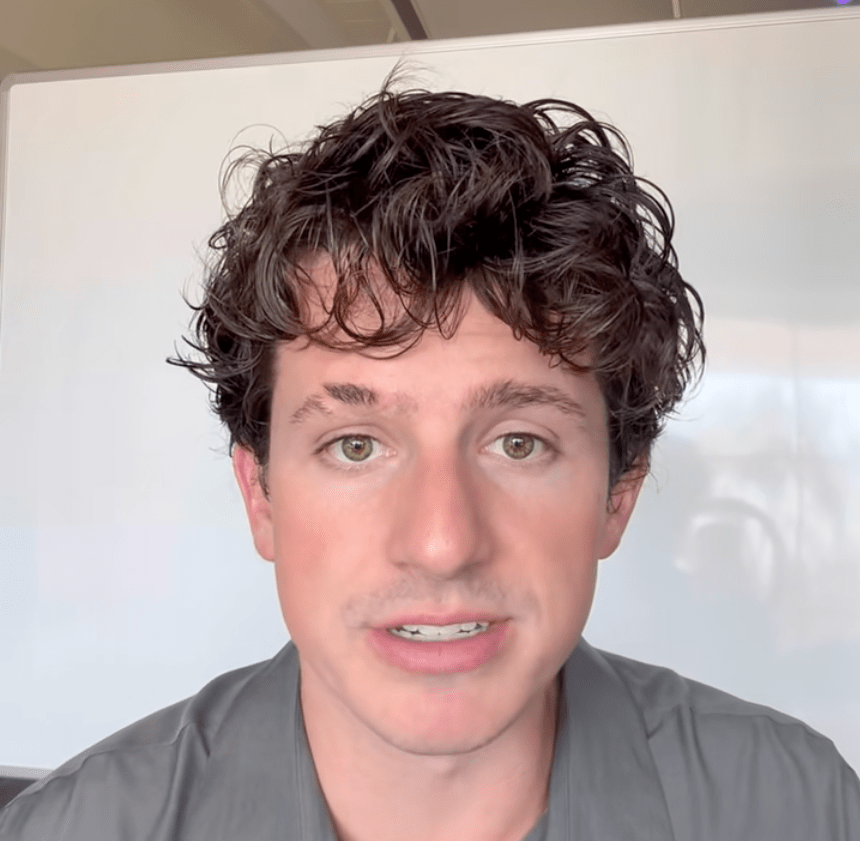
Charlie Puth has created a TikTok of his own on the subject. The eighth installment of his Professor Puth video series published today, and it just happens to be about interpolations. In the video, he argues that copying pre-existing songs to some extent is inevitable. "Lately there's been a lot of discussion about when two songs have similar melodies," the video begins. "There's only 12 notes in a scale, so when you're writing a new song, there's bound to be similarities to an older song."
Swift famously sang on last year's The Tortured Poets Department that Puth "should be a bigger artist," so he may be inclined to come to her defense. Or maybe it's just a coincidence that he landed on this subject at this time. For what it's worth, he doesn't mention Swift by name or address any of her songs in the video.
In the clip, Puth gives his own definition of interpolation, not to be confused with a legal standard. He introduces what he calls "the four-note threshold" — essentially, if the first four notes of your song are the same as the first four notes from another song, that's OK, but if your melody continues to mirror the prior melody after that, you're getting into interpolation territory. He points to several examples to show what is and isn't interpolation in his mind, including the notorious instance of Portugal. The Man's "Feel It Still" jacking the melody from the Marvelettes' "Please Mr. Postman."
Puth ends with a call for leniency on this subject: "Sometimes artists will accidentally interpolate each other, and it's almost never done maliciously. We have to really stop demonizing this when it happens. Interpolations and sampling, this stuff has been going on for a really long time, and some great music has come about because of it." He then teased the release of his own new music in another video coming tomorrow. You can watch the professor in session below.
@charlieputh Professor Puth Ep. 8
♬ original sound - Charlie Puth
Fascinatingly, the only artist to get an interpolation credit on Showgirl was George Michael for the song "Father Figure," but that interpolation is not even that blatant.