

- 6131
- 2015
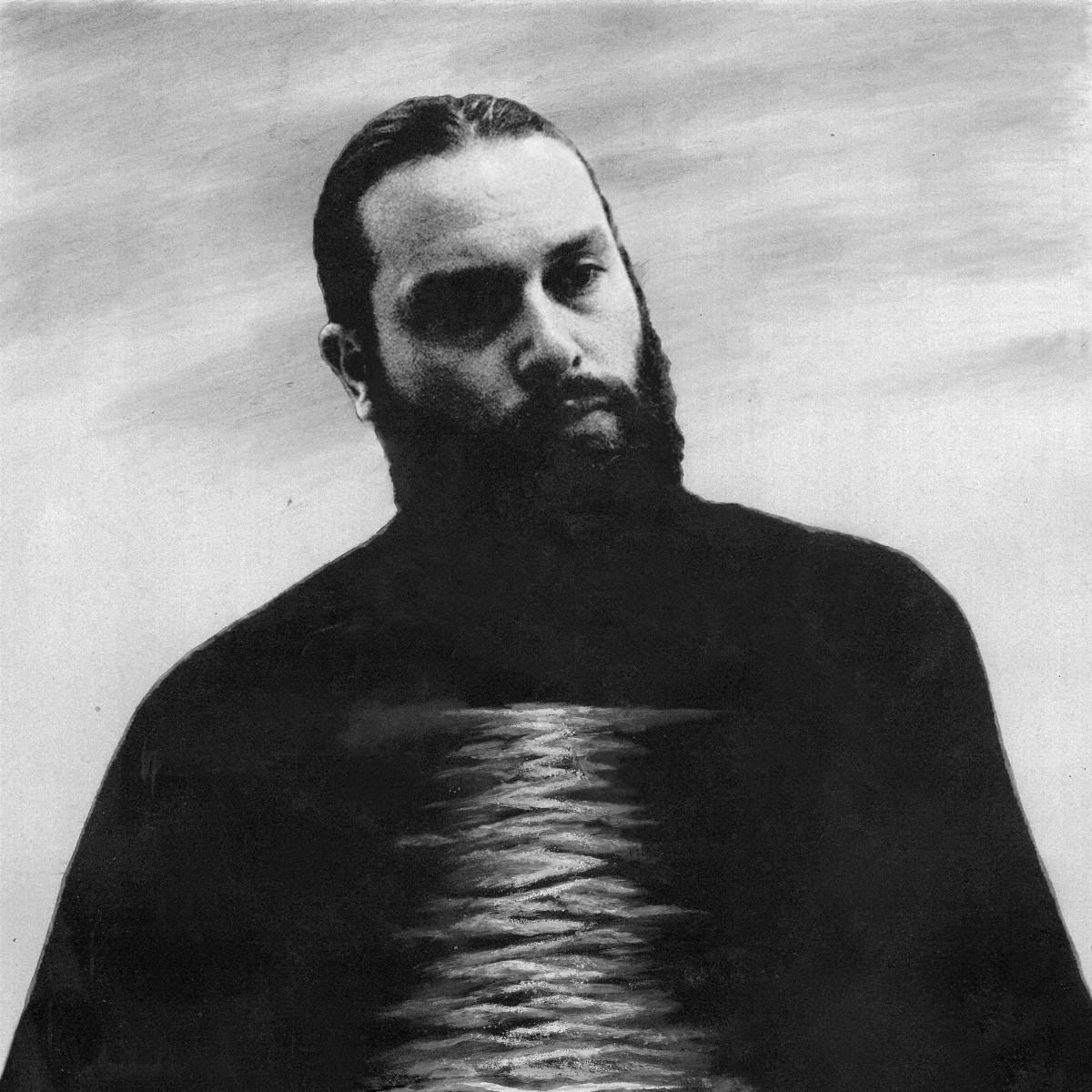
She was a kid. That's the first thing I think when I see the Sprained Ankle album cover today. It was probably the first thing I thought when I first saw that album cover in 2015. Baker was 19 years old when she made her debut LP, and she looked younger than that. The record came out shortly after her 20th birthday. (Baker herself turned 30 less than a month ago. Today marks 10 years since the release of Sprained Ankle.) The 19-year-old Julien Baker had done a lot of things. She'd been through addiction and recovery. She'd released an album with her teenage DIY band, and she'd toured house-show venues, with her dad in the car so that the kids in the group wouldn't get in trouble for crossing state line without a chaperone. She'd almost died in a car accident. But still, she was barely more than a child.
The bottomless, feverish sadness expressed on Sprained Ankle was the kind of thing that only a kid can properly access and understand. At a startlingly young age, Julien Baker displayed real sophistication, both as a writer and a recording artist. She figured out artful, economical ways to convey the feelings she was feeling. Working with just a recording engineer, with no other musicians, she built her songs into vast cathartic engines of expression. But those songs hit like fresh wounds because she didn't have time to fully process any of what she stuff that she put out on that record. She had no idea that she would spend the next years of her life singing those songs to hushed and rapturous audiences. She didn't think about the larger picture because there was no larger picture at the time.
Listening to Sprained Ankle felt almost wrong, as if you were tapping into the innermost thoughts of someone who was going through some serious things. Julien Baker has made a lot of raw, intense, sweeping music since Sprained Ankle, but she's always made it while secure in the knowledge that lots of other people would hear that music. She didn't know that when she made Sprained Ankle, and I think that's why the record sears as deeply as it does. Looking back, Sprained Ankle feels even more revelatory than it did when it first came out. Today, Julien Baker is a big deal. She has Grammys. She's played amphitheaters. She's been on the cover of Rolling Stone. When you listen to Sprained Ankle, you get to hear this widely celebrated person crawl through the darkness and howl into the void. If anything, it feels even more wrong now. We shouldn't have access to this stuff, but we do, and it's a gift.
I don't think I knew any of Julien Baker's backstory the first time I heard Sprained Ankle. I just knew she was a young singer-songwriter and that some of the younger Stereogum staffers were into her. So I was knocked out just by the record itself -- those streaks of voice and guitar rising up out of the depths and exploding in the sky. It was a mysterious thing. After I learned the context of the record, it remained mysterious.
The context was this: Julien Baker was a queer Baptist punk kid who grew up outside Memphis. Her parents were physical therapists who raised her in the church. As a kid, Baker played in praise bands, and then she put out one very good album, American Blues, with her high-school band. They were called the Star Killers when they made that record, and then they changed it to Forrister before they had to go on hiatus because everybody was heading off to college. Baker learned how to make records on the punk underground, and the culture of straight edge helped her get past addiction. But American Blues was really more of a classic rock 'n' roll record than a punk or hardcore one. Even at 17, Baker had serious gravity in her voice.
Baker studied audio engineering at Middle Tennessee State University in Murfreesboro, then switched over to literature. She was still writing songs for Forrister, but she realized that they were more vulnerable than anything she'd done with her band. A friend named Michael Hegner had some free studio time at the on-campus audio facilities, so Baker recorded some demos and posted them as a Bandcamp EP. Hegner got an internship at Spacebomb Studios in Richmond. At the time, people like Matthew E. White and Natalie Prass were using that space to make lush, orchestral indie-pop. Hegner was able to get some free studio time there, too, so Baker came up and recorded Sprained Anklewith Hegner in a few days. It might be the sparest record that anyone ever made at Spacebomb, but Baker and Hegner figured out how to use the space.
Even though Baker's voice and guitar are almost the only things that we hear on Sprained Ankle, the record sounds vast. The guitar is spacious but fluid, soaked in sustain and sometimes multi-tracked. Her voice is choked and tremulous, but it has so much power. The way the songs are constructed, it almost sounds like she takes the first half to gather herself, to muster the strength that it takes to howl what must be howled. When she does find that power, her voice is a keening wail that seems to flow through her, like she's a conduit for feelings and ideas bigger than her. What she needs to howl is that she's not good enough, that she'll let everyone down, that she means nothing to anyone. It's fucking rough.
The first thing that Julien Baker sings on Sprained Ankle is this: "Do you think that there's a way I could ever get too far?/ That you'd ask me where I'd been like I ask you where you are?" She's talking to God. She's thinking about the moment that she almost died -- when she crashed her car into a streetlight and then the streetlight fell on her roof, just missing her head. In that moment, Baker sings, she knows that she saw His hand. So she's out there, praising His name, but she doesn't know if it's doing any good, if it means anything. She's also acutely aware of her own failings and urges and needs, and it doesn't fit with her idea of what God wants: "The devil in my arms says feed me to the wolves tonight." Baker can't make sense of any of these contradictions yet. She's just a kid.
"Wish I could write songs about anything other than death." That's the line, from the Sprained Ankle title track, that stuck with everyone right away, the one that seemed to unlock the album. When I reviewed Sprained Ankle upon release, I disagreed with that line. To me, Baker's songs were about things heavier than death. They were about confronting the darkest part of yourself and finding ways to keep living when it feels impossible. Baker has said that the "anything other than death" line was her own little joke with herself, her way of asking why she couldn't ever write anything happy. But sometimes we don't make these decisions consciously. Sprained Ankle, it turned out, was what Baker needed to make.
The songs on Sprained Ankle don't all sound the same, and they aren't necessarily about the same things, but they all rise to devastating conclusions. "You're gonna run, it's all right, everybody does." That's what's going to happen when you find out who she really is. "I just said nothing, said nothing, said nothing/ I can't think of anyone, anyone else." That's what runs through her mind after she gets dumped in a parking lot -- the other person driving off while Baker sits there, still trying to think of something to say. "I know my body is just dirty clothes/ I'm tired of washing my hands/ God, I wanna go home." That one kind of speaks for itself. There's something magical about immersing yourself in those sentiments, allowing yourself to feel them too. That's the shit that most of us try to bury, but it has a way of unburying itself. Baker looks that stuff dead in the eye, and she sings it at the top of her lungs. From where I'm sitting, that's an act of great strength, a triumph of spirit.
Superficially, Sprained Ankle fits into a sort of indie-folk tradition. But Baker didn't have a background in that kind of music. She was a hardcore kid. The swirling force of her arrangements is a kind of adaptation of techniques from the post-hardcore records that she loved. The label that released Sprained Ankle was 6131 Records, which was best-known for hardcore and post-hardcore records from Touché Amoré, Rotting Out, Swamp Thing. When the album came out, people from across the independent music landscape were dumbstruck. It's the sort of album where you hear it and worry about the person who made it -- not just because of the dark feelings expressed on the record but also because of the toll that this kind of expression can take on a person.
Julien Baker is fine. Or I hope she's fine, anyway. The one time I talked to her, she was so pleasant and positive that I was genuinely inspired. But that was right around the time that she released Turn Off The Lights, another album about not being fine. She's released more music about not being fine since then, and it still cuts, even if it doesn't always have the nothing-to-lose gravitas of Sprained Ankle. I'm sure she's not always fine. I'm sure nobody could continue singing songs like these, night in and night out, without paying some kind of mental and spiritual price.
Earlier this year, Baker canceled touring plans for health reasons. Good. Fine. Whatever she needs. Sprained Ankle is a heavy and intimate record, and I don't think it's the kind of thing you make when you plan on making a career of it. Baker has made a career of it, and that career has been spectacular. She's made incredible music, played on big stages, and influenced a lot of people. She's thrived as a part of something bigger than herself, even though I always get the sense that her two boygenius bandmates are still in awe of her. But of course they are. Why wouldn't they be? After all, Julien Baker made Sprained Ankle when she was just a kid.
We rely on reader subscriptions to deliver articles like the one you're reading. Become a member and help support independent media!