
Harvey Mason Jr. says the "toughest part" of his job as president/CEO of the Recording Academy and MusiCares is figuring out what to do about AI. "I represent 40,000 members of the academy, and we’re trying to figure out where is the best place to sit [on AI]," he said in a new interview with Billboard. "I want to advocate for our human members and human creators, but I also realize that this technology is here." Mason took over the role in 2020, years before we'd start to really notice an influx of fake AI artists racking up hundreds of thousands of Spotify streams, inching their way up Billboard's niche charts, and take advantage of real human artists.
Excluding AI-powered music from Grammy eligibility should be a no-brainer, but Mason has claimed that every songwriter and producer he knows is using AI in the studio somehow. Here's his take:
It runs the gamut of people texting lyrics or ideas or how they feel when they wake up and generating an entire track, lyrics and melody from it. That’s the far end of the spectrum. The other side of the spectrum is somebody who has just produced an entire song, but they can’t figure out the bridge section, or they can’t figure out one line, or they can’t figure out a melody to finish the chorus, and they ask one of the platforms to create that as a way to supplement what they’ve already done. That’s the other end of the spectrum. Everything in between is what I’m seeing in the studio.
I’ve seen people having one of the platforms writing lyrics after they’ve already played all the chords, or taking lyrics that have been generated and building songs around that, or having AI vocals on a song that you wrote because you can’t sing. I know one person who writes on acoustic guitar and whistles the melodies and puts that into one of the models, and the model spits out songs. I know another person who’s a poet and they put that into the model, and it spits out a fully produced demo. It’s all over the map.
These people that are professionals are generally somewhere in the middle, where they’re using it as a tool. They’re unlocking something when they’re stuck on a lyric, or they’re trying to find 15 things that rhyme with “this.” Also, people are using it as inspiration, not just taking what it gives you. They are just using it as a launch point.
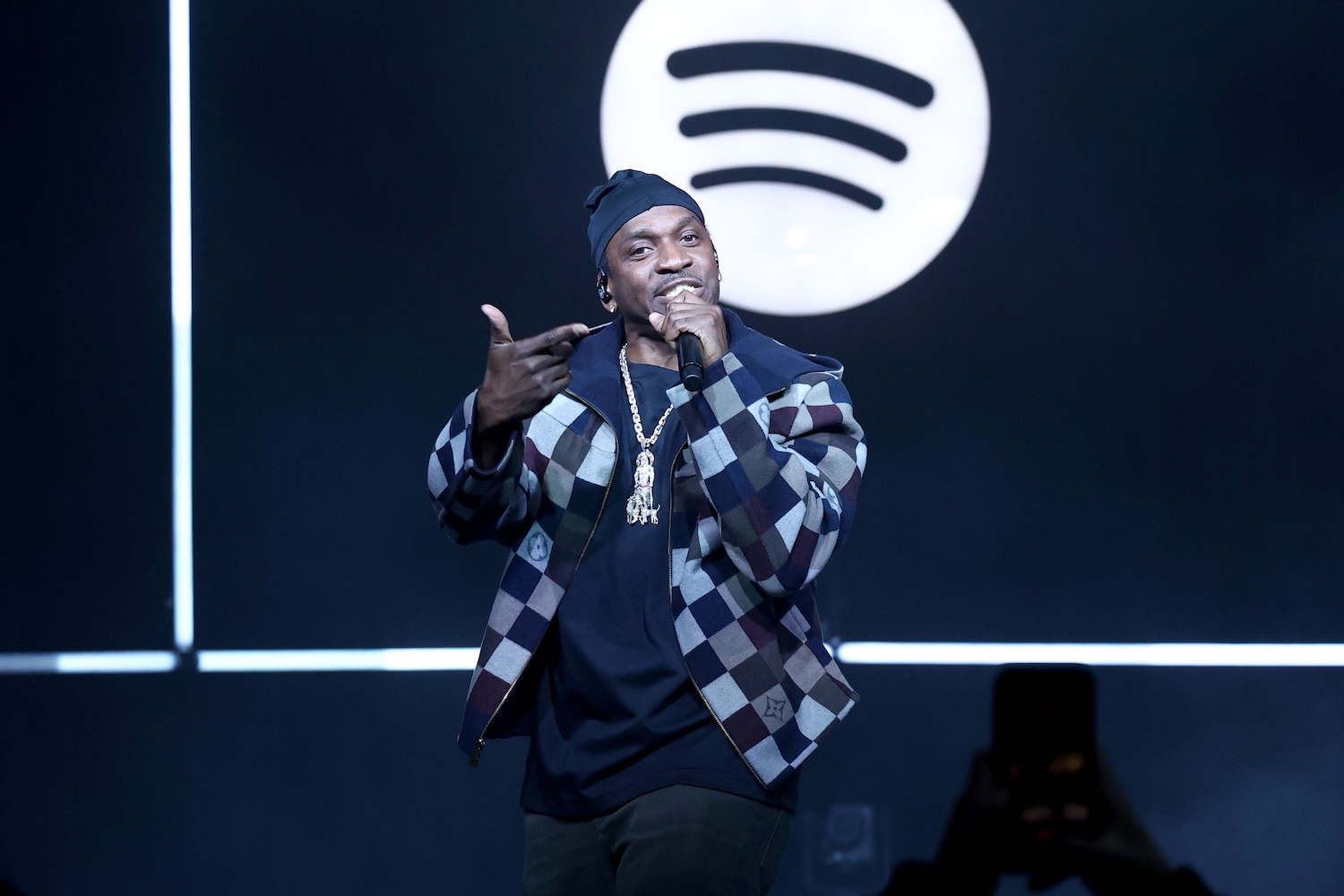
Mason might be giving generative AI a bit too much credit, but unfortunately, he's right in that many popular artists have gone on the record admitting to using AI in the studio in various ways. In a recent Reddit AMA, Pusha T said he's used AI to try to predict how a potential vocal feature might sound on a track. Charlie Puth recently said he used AI-treated backing vocals on his song "Changes." In October, Teddy Swims said he's resorted to AI to alter his own vocal takes when he doesn't feel like re-recording a changed lyric. Timbaland has said he'll "gladly" use AI if it "enables [him] to do something that would be otherwise impossible."
So AI-powered music is all around, and it's getting more and more difficult for ears to detect. As for Grammy eligibility, Mason said music can still be nominated if it's made with AI:
Something can still be nominated in a performance category [if] AI created [it] or wrote the music and a human sang it. Using AI does not make your entry ineligible. It just makes you have to choose the right categories to be considered in... If you’re doing something illegal or something that affects an artist in a way that is protected, there are things that we can do to avoid that. But all that is starting to look really blurry and needs clarification more now than ever.
So according to Mason, songs like "Heart On My Sleeve," the infamous 2023 track with AI vocals made specifically to sound like Drake and the Weeknd, would probably get disqualified for the Grammys because they explicitly infringe on another artist's likeness. But those are tough parameters to define, especially now that it's getting more convenient and less litigious to use existing artist's vocals to train AI models.
It's depressing stuff. Nevertheless, AI-powered or otherwise, the 2026 Grammys will take place Feb. 1 at LA’s Crypto.com Arena.