
April 3, 2021
- STAYED AT #1:1 Week
In The Number Ones, I'm reviewing every single #1 single in the history of the Billboard Hot 100, starting with the chart's beginning, in 1958, and working my way up into the present. The column is now biweekly, alternating with The Alternative Number Ones on Mondays. Book Bonus Beat: The Number Ones: Twenty Chart-Topping Hits That Reveal the History of Pop Music.
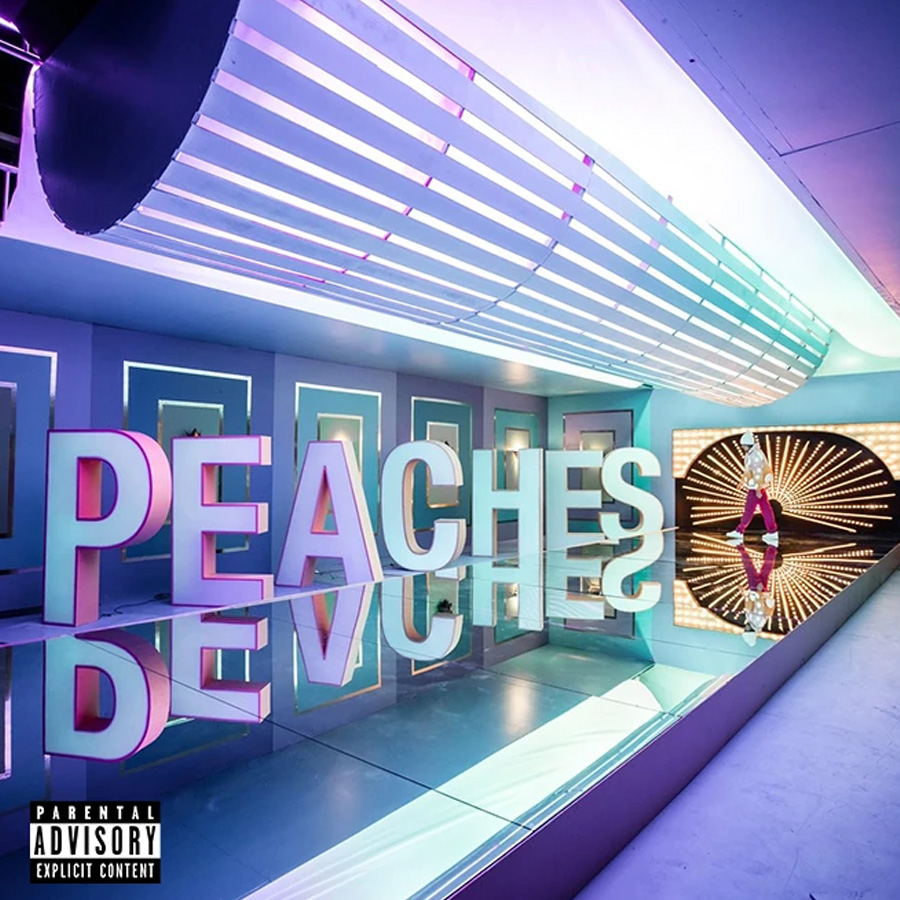
"Peaches," baby! Millions of peaches! Peaches for me! Millions of peaches! Peaches for free! Peaches come from a can! They were put there by a man! In a factory downtowwwwn! Wait. Wait, no. Sorry. My bad. Wrong "Peaches." The Presidents Of The United States Of America's "Peaches" came out in 1995 and, one year later, crossed over from alt-rock novelty hit to mainstream novelty hit, reaching #29 on the Hot 100. That's not the "Peaches" that we're talking about today, though. Sorry if you got excited. (There's an Alternative Number Ones column about a different Presidents Of The United States Of America song, if that helps.)
Justin Bieber's "Peaches" has absolutely nothing to do with the Presidents Of The United States Of America's "Peaches," but the two tracks do have one tiny but significant thing in common beyond their identical titles. On these two "Peaches" songs, both Justin Bieber and lead President Chris Ballew are singing about actual peaches. The peaches of these two songs are not metaphorical butts. They are just peaches, the kind you find in the grocery store. This feels significant. I haven't done a scientific breakdown or anything, it seems like most of the peaches that have been referenced on pop songs throughout history are actually butts. But on the two most famous songs called "Peaches," the peaches are peaches. Maybe there's a lesson somewhere in there. Americans obviously like butts, but sometimes we just like peaches also.
It's not that Bieber and Ballew don't like butts. There's maybe a little bit of eyebrow-waggling naughtiness at work on the Presidents Of The United States Of America's "Peaches." And Bieber has sung about butts plenty of times in his career. His "Peaches" is mostly a starry-eyed love song to his wife Hailey Bieber, née Baldwin. They got married in 2018, and they're still together today, which means they've already beaten the odds, at least as far as celebrity relationships go. But the line on Bieber's "Peaches" that gave the song its name goes like this: "I get my peaches down in Georgia." Hailey does not come from Georgia.
On "Peaches," Bieber could be singing about going to Atlanta and meeting girls, but he's probably not. In the second half of his career, Bieber's main lyrical theme, at least aside from his faith, is his monogamous devotion to his wife. That's the context. So it seems safe to say that he really does just go to Georgia to get peaches, or at least that he imports those peaches specifically from Georgia. He's too much in love to chase the other kind of peaches. That's nice, right? Unfortunately, the song is pretty bad.
Justin Bieber's "Peaches" is pure song-machine pop product that was originally birthed during a spur-of-the-moment jam session. That's probably true of many song-machine pop products, but in most of those cases, the lead artist was not one of the people involved in the jam session. According to co-writer Andrew Watt, who has already been in this column for working on Camila Cabello's "Havana" and Cabello and Shawn Mendes' "Señorita," the "Peaches" process started when Bieber was over at his house and he suggested that Bieber jump behind the drums.
During the time that he started recording "Peaches," Justin Bieber was still near the peak of his pop-star career, though not quite as hot as he'd been when his Purpose album sent three consecutive singles to #1 in 2015 and 2016. Bieber's long-awaited Purpose follow-up Changes came out just before COVID hit in 2020, and it didn't send any singles to #1, though a couple got close. Later that year, Bieber and Ariana Grande did top the Hot 100 with the instantly forgotten pandemic-pandering charity duet "Stuck With U." And as Bieber geared up for another quick-turnaround album release, his singles kept hitting.
In September 2020, Justin Bieber re-teamed with Chance The Rapper, his collaborator on DJ Khaled's chart-topper "I'm The One," for "Holy," an outright religious love song that reached #3. (It's a 6.) A month later, Bieber showed up to yodel sadly on the spare and regretful "Lonely," a song originally released by superstar producer and past Bieber collaborator Benny Blanco. That one later appeared on the next Bieber album, and it peaked at #12. The video, in which the eerily gifted child actor Jacob Tremblay plays a young Bieber, is pretty cute. (Benny Blanco's highest-charting single as lead artist, the 2018 Halsey/Khalid collab "Eastside," peaked at #9. It's a 7.)
More hits followed. In November, Bieber jumped on the aforementioned Shawn Mendes' single "Monster" and easily stole the track away from Mendes. (That song peaked at #8. It's a 5.) On New Year's Day 2021, Bieber released his own single, and adult-contempo quasi-rocker called "Anyone." That one got a big rollout, with a period-piece Colin Tilley video where Bieber played a boxer and Zoey Deutch played his love interest, and it made it to #6. (It's a 6.) Another Bieber single, "Hold On," dropped in March and peaked at #20.
All of those singles are pretty anodyne, and none are especially memorable. Taken together, they worked as a signal that Bieber was ready to play ball, that he was willing to make bland pop-star music if he could be received as a pop star. When the 2021 Grammy nominations came out, Bieber made a bit of a stink about how he was nominated in pop categories and not R&B ones when he really considered himself an R&B singer. But most of those singles barely carried any trace of R&B. They were solid, unremarkable pop songs that could fade unobtrusively into any background. The whole string of singles led up to the mid-March release of Bieber's album Justice, and the one track from that record that really popped was "Peaches," the one that came out on the same day as the LP.
Back to that jam session. Shortly after the release of "Peaches," Andrew Watt told Billboard about the track's origins. While Bieber was at Watt's home studio, Watt asked Bieber to try playing something on drums. Bieber had been playing drums since his child-star days; the instrument was a part of his early live show. Bieber knocked out a drum beat, and Watt looped it up. Then Bieber played a piano melody, and Watt looped his chords, added them to the drums, and put in his own bass and guitar parts. Bieber went into the vocal booth and improvised, and what came out was the hook: "I get my peaches out in Georgia/ I get my weed from California/ I took my chick up to the North, yeah/ I get my light right from the source, yeah."
There's some light transgression at work on "Peaches." It's Bieber, a former child star, singing about smoking weed, but that's pretty light, as far as transgression goes. California legalized weed in 2016, and god knows there were plenty of pop songs about it in the decades before that. On the ad-libs, Bieber refers to his wife as a "badass bitch," and that sort of thing doesn't fly in every marriage, but he clearly means it affectionately. In addition to the weed and the peaches, Bieber tells us that he brought his wife back home to Canada and that he gets his inspiration from God. If anything, it's almost cloyingly wholesome, even with the drugs and the cussing.
On that hook, Bieber basically identifies himself as a grown-up, faithful party guy. And then he does it again and again and again. His "Peaches" chorus is light and comfortable and way too catchy, and it gets stuck in my head more often than I would like. On the finished song, Bieber repeats that chorus six times, and I really wish he would've cut a couple of those. That's how a catchy hook becomes an annoying one.
In September 2020, Justin Bieber posted an Instagram video of himself singing that "Peaches" hook and accompanying himself on piano, with the caption "Lil idea vibe." Luis Manuel Martinez Jr., a producer known professionally as Shndō, heard that snippet and decided to do something with it. Shndō had a few miscellaneous credits — a Chris Brown deep cut, a Cardi B mixtape track — but he wasn't exactly a known guy. Honestly, he's still not. He took the audio from Bieber's Instagram video, added drums, and sped it up slightly. Fellow producer Brandon Harvey, who goes by the name Harv, added some stuff, too. Bieber and Harv go way back. Harv, a Kansas City native, was the bassist in Bieber's touring band when Bieber was just starting out, and he started producing tracks on Bieber's 2020 album Changes. Harv is the one who showed Bieber the remixed version of the "Peaches" snippet.
If I had to guess, I'd say that Bieber already planned to turn "Peaches" into a full song. Operating on spec, Shndō and Harv gave him one idea how the completed version would sound. Bieber loved it. He used their instrumental track to re-record his chorus, and then he wrote a first verse all about how he loves his wife. Then he reached out to two vibey young R&B singers, Givēon and Daniel Caesar.
Those two guys are about the same age as Bieber, but they weren't child stars like him, so both of them were still pretty new in 2021. Rather than going through management, Bieber recruited both singers by himself, serving as his own A&R guy — a rare thing for a star of his stature. Since we now have these two other singers on this song, it's time for a couple of quickie capsule biographies. But Givēon and Daniel Caesar don't have insane stories or anything. This is a spoiler, but the next few paragraphs mostly just amount to "these guys are good at singing, and they have had a pretty good amount of success at it."
Givēon was Bieber's first choice to appear on "Peaches," so let's start with him. Giveon Dezmann Evans is a smooth, moody baritone from Long Beach, California. (When Givēon was born, TLC's "Creep" was the #1 song in America.) At 18, Givēon took a music course through the Grammy Museum and realized that he loved the music of Frank Sinatra, an artist who's been in this column a couple of times. He started out trying to sing like Sinatra, and even though I don't hear a whole lot of that influence in the music that he's taken to the market, it's still fun to think about.
Like a lot of people his age, Givēon started out posting tracks on SoundCloud, and that's how he was discovered by Sevn Thomas, a producer who's been in this column for working on Rihanna and Drake's "Work." Thomas signed Givēon to his Epic imprint Not So Fast, and Givēon's debut single "Garden Kisses" came out in 2018. In 2020, Givēon really got his big break when he improvised a track in the vocal booth and Thomas brought it to Drake. Drake turned that improvised track into "Chicago Freestyle" one of the better moody-Drake songs to come out in the past decade or so, and it peaked at #14. Givēon also released his debut EP Take Time in 2020, and his EP track "Heartbreak Anniversary" earned sleeper-hit status, eventually reaching #19.
Justin Bieber had never worked with Givēon before "Peaches," but he had at least some experience with Daniel Caesar, the second singer that he recruited for the song. Caesar was born Ashton Dumar Norwill Simmonds. He grew up in Ontario, just like Bieber, and he named himself after Julius Caesar and the Biblical Daniel, the one from the lions' den. (When Caesar was born, the #1 song in America was Madonna's "Take A Bow." In Canada, it was Sheryl Crow's "Strong Enough." Canada wins this one.) Caesar's father had been a teenage gospel sensation in Jamaica, and Caesar grew up in a strict Seventh-Day Adventist family in Oshawa, outside Toronto. He sang in church as a kid, but his home life was rough, and he took off on his own as a teenager.
Once he left home, Daniel Caesar was determined to make it in music. He met a couple of producers, started putting tracks out, and built a bit of internet buzz. His style of spacey, indie-friendly R&B had a cultural moment in the mid-'10s, when he was first releasing music. On his 2017 debut Freudian, Caesar worked with peers like Kali Uchis, Syd, and Charlotte Day Wilson. A couple of his Freudian singles charted in the US. The biggest of them, the spare and elegant H.E.R. duet "Best Part," reached #75. Pretty song! (H.E.R.'s highest-charting single, the 2019 YG collab "Slide," peaked at #43.)
Caesar's 2019 sophomore LP Case Study 101 didn't have any Hot 100 hits, but it did have collaborations with people like former Number Ones artists Pharrell and Brandy. Caesar also got a co-writer credit on "Monster," the aforementioned Justin Bieber/Shawn Mendes debut. Much like Givēon, he was in the mix.
Before and after "Peaches," both Givēon and Daniel Caesar were widely respected R&B journeymen who got Grammy nominations and did decent numbers, but they weren't really part of the same pop universe as Bieber. It's telling that Bieber, operating on his own, thought to include both of these guys on "Peaches." When Bieber's collaborators tell stories about how he went outside the system and masterminded "Peaches" entirely by himself, it's nice to think that this onetime pop product was taking control of his career, making the kind of music that he wanted to hear. But that narrative doesn't account for the whole mob of people who got songwriting credits on "Peaches."
I'll try to map this out as best I can. Justin Bieber is one of 11 credited songwriters on "Peaches." Andrew Watt, the producer who got him freestyling in the first place, is another, as are Shndō and Harv, the song's two actual producers. Givēon and Daniel Caesar are in there, too; that brings us to five. Louis Bell, the frequent Andrew Watt/Post Malone collaborator who has already been in this column a ton of times, is also listed. So are Toronto singer/rapper Sean Leon and songwriter Keavan Yazdani, two frequent Daniel Caesar collaborators. So is Harv's wife Felisha Harvey, a member of the '00s R&B group Cherish. (Cherish's highest-charting single is "Do It To It," a pretty fun Ciara-esque 2006 track with Youngbloodz member Sean P; it peaked at #12.) Someone named Vincent Massi is also credited as a writer, and I can't figure out who he is. There's a stuntman named Vincent Massi, but I don't know whether it's the same guy.
Point is: Many, many people were apparently needed to help write "Peaches," which undercuts the idea that Bieber came up with most of the song in a moment of studio-time inspiration. "Peaches" eventually got a Song Of The Year nomination at the Grammys, and it broke the record for the nominee with the highest number of credited songwriters. What did all these people do?
I can't tell you. This column has covered a lot of songs with small armies of credited songwriters. I never quite understand it, but sometimes I at least get the sense that all of these professionals have been brought in to maximize the track's impact. Songs like that are supposed to be industrial-strength earworms, and I guess "Peaches" qualifies, but it doesn't really play that way. Instead, "Peaches" is a soft and playful lope. It floats along on fingersnaps, tootly flute samples, and the type of hesitating bassline that I still associate with the jazz-inflected boho-rap of the '90s. Bieber and his collaborators sing the melodies beautifully, and their slight tonal differences complement one another. Bieber really does sound comfortable, as if this kind of warm and contented R&B is what he always wanted to sing.
Here's the important thing about "Peaches," though: It's fucking annoying. The people involved in the track all do their jobs. They conjure vibes. Everything hovers pleasantly — everything, that is, except the chorus. But the chorus is an evilly sticky little thing that digs into my brain like a microscopic glass shard stuck in my sock. The rest of the track, accomplished as it is, fades right into the background, but the chorus always jumps right out at me in ways that I don't appreciate.
Right now, I'm in a bad mood because I've had to listen to "Peaches" a bunch of times to write this column and I just know that it's going to be revolving in my head for the rest of the day, grinding away at my brain and making my life less pleasant. I have called "Peaches" a stupid song in casual conversation before, but that's not right. It's not stupid. It has to be smart, at least on some level, to get stuck in my head the way that it does. Instead, it's a well-made piece of music that I find to be personally irritating. We all have songs that just bug the shit out of us for reasons that we might not be able to properly describe. I have now written thousands of words about "Peaches," and I still can't tell you quite why it gets on my nerves the way that it does. It's just one of those things.
"Peaches" is a hit, though. I can't take that away from it. Justin Bieber knows how to sell a hit. In March 2021, he did a Tiny Desk Concert for NPR, performing remotely with his backing band, including Harv on bass. He sounded great, and he performed "Peaches" for the first time, accompanying himself on keyboard. (Givēon and Daniel Caesar weren't there.) Bieber, Givēon, and Caesar also shot a "Peaches" video with director Colin Tilley. It's got a lot of pretty neon lights, and it's got Bieber at his handsomest and most charming. The song immediately had enough juice to debut at #1. Later in, Bieber released a "Peaches" remix with Usher, Ludacris, and Snoop Dogg, three pop elders who have been in this column a bunch of times. "Peaches" only got a week at the top of the Hot 100, but it lingered in the top 10 for months and eventually went quadruple platinum. In 2022, Bieber sang a listless piano version at the Grammys.
Bieber's Justice album is a boring slog that's randomly got a bunch of samples from Martin Luther King, Jr. speeches. That's not really something that white pop stars are supposed to put on their records, and it's about the cheapest way of conveying sincerity that I can imagine. Nevertheless, the album was a commercial success. It eventually went double platinum, and it spawned one more hit, the Weeknd-esque Spotify-core '80s pastiche "Ghost." The late Diane Keaton was in the video for that song, which peaked at #5. (It's a 6.)
After the Justice album cycle, Bieber went away for a while. He cut ties with many of his longtime associates, including manager Scooter Braun, and he once again became a figure of overstated tabloid alarm. He finally reemerged last year, making some genuinely weird and interesting music — music that, much more than "Peaches," sounds like the work of someone who has really worked to remove himself from the machine. But we'll talk more about that music another time, since Bieber will be back in this column soon — not for one of his own songs but for an appearance on a track from a young associate.
As for Givēon and Daniel Caesar, both of those guys are still doing just fine for themselves, but I doubt we'll see either in this column again. They've got one platinum album apiece. Givēon has been the lead artist on a handful of minor hits, and he's been back in the top 10 once. Later in 2021, Givēon and Lil Durk appeared on Drake's Certified Lover Boy track "In The Bible," which peaked at #7. (It's a 4.)
Daniel Caesar has been following a slightly artier career path, but the commercial results are pretty similar. Late last year, Caesar released Son Of Spergy, an ambitious but not-that-exciting album with contributions from folks like Bon Iver, Blood Orange, and Sampha. He made it to #52 with his Son Of Spergy song "Who Knows." Caesar also made it back into the top 10 as a guest on someone else's single. In this case, it's Tyler, The Creator's "St. Chroma," which peaked at #7 in 2024. (It's an 8, and it's Tyler's highest-charting song.)
Lately, this column has covered a lot of big-name artists' noisy event-songs that debut at #1 and then disappear. Bieber has a bigger name than almost anyone, but "Peaches" isn't really an event-song. Instead, it's the work of an artist still trying to figure out his lane even though he's been at the top for half of his life. He gets help from people he admires, and he chases inspiration wherever he can find it. On paper, that's interesting. Too bad I just don't like the song. If I had my little way, I'd avoid "Peaches" every day.
GRADE: 4/10
BONUS BEATS: I have never watched the Netflix show Ginny & Georgia, but my wife and daughter have. From what I can tell, it's a bit like Gilmore Girls if that show was Southern and trashy and full of murder. Google tells my that Ginny & Georgia fans call themselves Peaches, so naturally the show had to feature "Peaches" at some point. Here's Antonia Gentry and Sara Waisglass dancing to "Peaches" in a 2023 episode:
@lindaababyy Im gonna need to learn this dance from @Ginny & Georgia #fyp #ginnyandgeorgia #peachesjustinbieber #season2
♬ original sound - Lindaabussin’
The Number Ones: Twenty Chart-Topping Hits That Reveal The History Of Pop Music is out now via Hachette Books. If you can cut into your peaches out in Georgia/weed from California budget, buy the book here.