We've Got A File On You features interviews in which artists share the stories behind the extracurricular activities that dot their careers: acting gigs, guest appearances, random internet ephemera, etc.
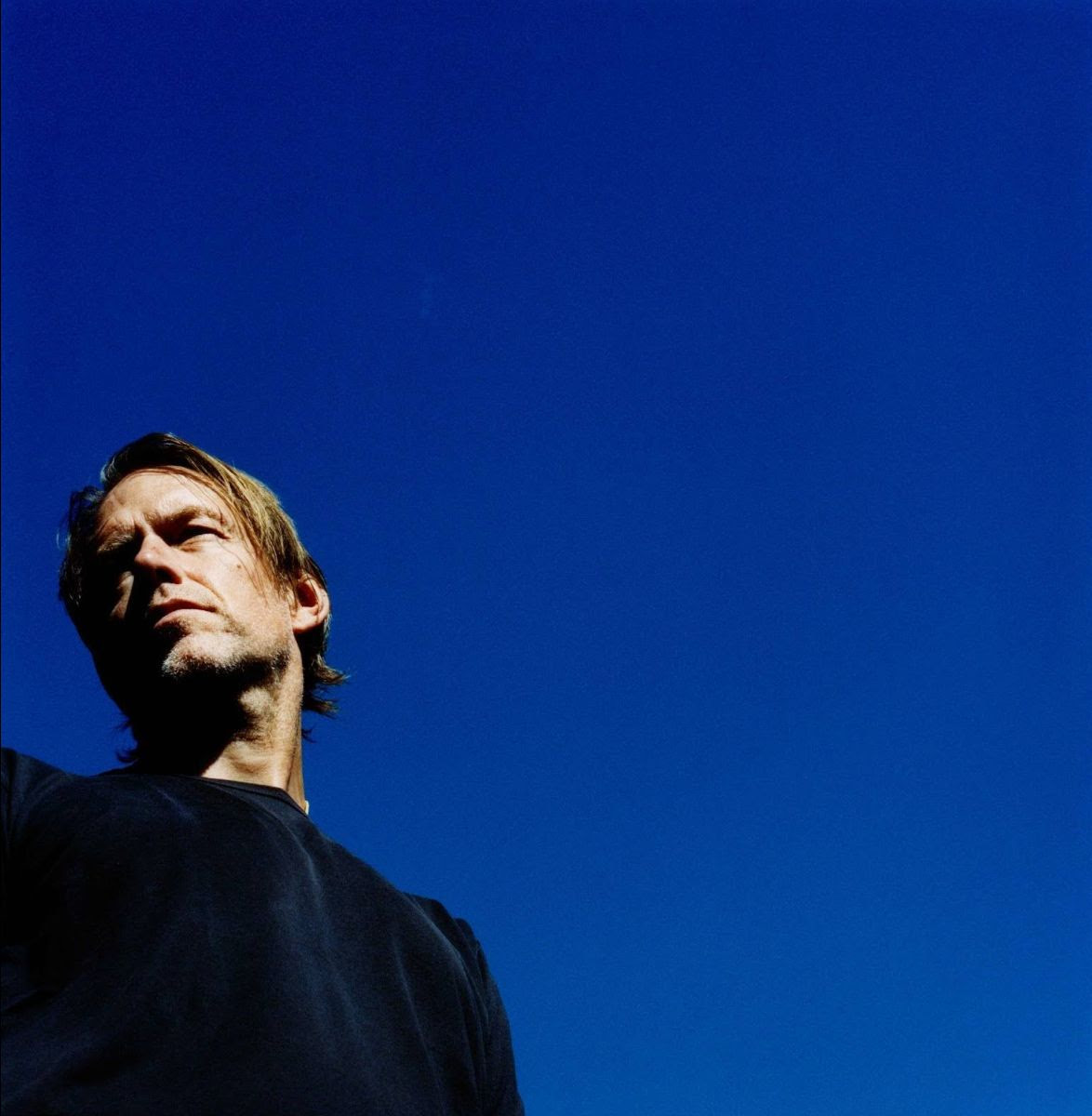
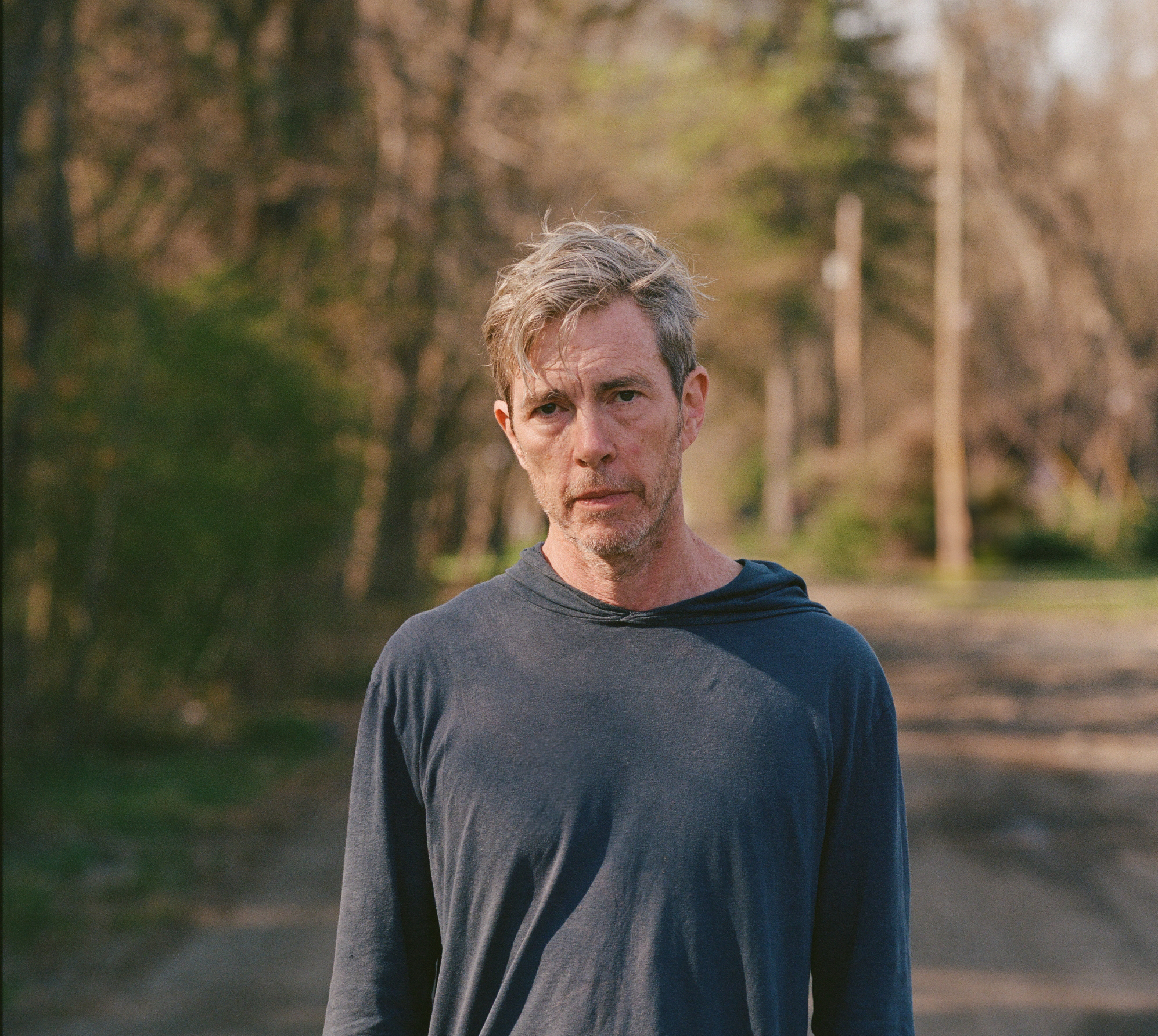
Bill Callahan has loosened up in middle age. Within the pantheon of inscrutable indie legends, the veteran singer-songwriter is a Mount Rushmore-worthy figure. From his early lo-fi releases as Smog to the rootsier records under his own name, he's struck a delicate balance between heartfelt conviction and emotional distance. It's a posture akin to towering figures like Bob Dylan and Leonard Cohen, and Callahan's catalog deserves to be mentioned in the same breath. But domestic life has softened him.
Since marrying and becoming a dad, the Austin-based artist's records have brimmed with a new warmth and candor. He returned from a long layoff with 2019's brilliant double-LP Shepherd In A Sheepskin Vest, then quickly followed it with 2020's Gold Record and 2022's YTI⅃AƎЯ. He took a little longer with the next one, which finds him opening up even more.
My Days Of 58, out this Friday, is among Callahan's most vulnerable works — not least of all on "Empathy," a song addressed to his late father, and "Lake Winnebago," with its lyrics about burying his parents. Callahan says the album's frank songwriting was shaped by a cancer scare. Last year he had a medium-sized Stage One tumor removed, which fortunately had not metastasized. He's OK now, but for a few weeks, he thought he might be on his way out, which kicked him into gear creatively. You can see how these songs might have worked as a last will and testament.
On tracks like opener "Why Do Men Sing," with its vision of Lou Reed greeting him at the pearly gates, and the playful ramble "Highway Born," he reflects on his chosen life as a performer. "Pathol O.G." presents his thoughts on songwriting: "I don't want to say that it saved my life, but it gave me a life." Lead single "Man I'm Supposed To Be," the first song Callahan wrote after his cancer diagnosis, digs even deeper into the core of his personhood. Even the songs best classified as cultural criticism — like "Computer," a plainspoken treatise on the poisoning effects of modern technology — poke and prod at what it means to be alive. "It's kinda funny, kinda sad," Callahan's leathery baritone posits, "how easily we take the question: Are you human?"
In keeping with that song's embrace of flesh-and-blood flaws, Callahan sought a lived-in feel for these songs. He achieved it via free-flowing takes with his touring band of Matt Kinsey (guitar), Dustin Laurenzi (saxophone), and Jim White (drums) plus contributors Richard Bowden (fiddle), Pat Thrasher (piano), Chris Vreeland (bass), Mike St. Clair (trombone), Bill McCullough (pedal steel), Eve Searls (backing vocals), and Jerry DeCicca (tambourine). The result is a bunch of raw, lively readings of carefully constructed songs, sometimes stark and intimate, sometimes lush as a springtime forest path.
In a wide-ranging video chat last month, Callahan talked about My Days Of 58 then bounced around the nooks and crannies of his remarkable career. Read our conversation below.
My Days Of 58 (2026)
Being from Columbus, I'm friendly with Jerry DeCicca, who used to lead the band Black Swans when he lived here. I was excited to see him and his partner Eve Searls were part of the creative process for this new album.
BILL CALLAHAN: Yeah. Jerry, he was kind of a sounding board. He was at the studio about half of the tracking days and half of the mixing days, and he's got a really good — he's got a producer's ear.
The promo materials for the new album talk about how you wanted a "living room" feel. What appeals to you about that approach at this point?
CALLAHAN: To me, there's basically two kinds of recording techniques. There's the headtrip thing where it's just like this universe that's inside your brain, you know? That's the way most records are recorded and mixed these days, and starting in the late ‘60s or ‘70s. I always call it airless, like you can't really detect any room sound. It's just kind of like in your brain. And I really like that. I'd say my YTI⅃AƎЯ record had used that technique. And then the other way is kind of like the old early jazz records where you could just hear people's chairs squeaking and whatever. I can hear, feel the breath of the performer. The Michael Hurley records, he was really good at making records that sounded like he was just sitting right next to you. And it just seemed appropriate for this record.
You feel like the songs are more homespun? Whatever that means.
CALLAHAN: Yeah, I don't know. It's more like, I guess I just wanted it to be really human-sounding and approachable, and sometimes the other way, the cerebral implant way, it can feel a little too manufactured. I just wanted it to feel real, like no tricks. I just wanted it to feel like a real recording. I think I'm trying to keep it real on this record, so maybe it fit in with the theme of a lot of the songs.
One song that seems to be explicitly along those lines is "Computer." You're singing about "I'm not a robot, and I'll never be," and just the negative impact of going online all the time. And then just this morning I was re-listening to your lyric about how free speech is going away, and I just saw TikTok started censoring anti-ICE and anti-Trump messages. It feels more and more relevant every time I listen to it. Is that song a pretty comprehensive reflection of your thoughts on technology in society right now?
CALLAHAN: It's kind of like at the moment, technology, especially AI, right now it's changing every day and getting more complex and being used for more things. And I feel kind of like the song has a shelf life, like maybe in five years, it might be ridiculous-sounding. But I also think no one really talks about this stuff. I feel like we just accepted this technology and everyone just started using it, and then it became like impossible not to use it because now you can't do anything unless you have a smartphone. And it's really hard to do anything because it's just the way that businesses want to do their business.
And the free speech thing is weird because I think it's both sides. Neither side of the political spectrum wants people to have free speech. Both sides just want you to do what they say and not question it. So I figured that was a target that no matter what your politics is, you should be able to relate to that criticism.
But yeah, it's mostly like, no one's talking about this. We're just taking an AI and, like, oh, I guess people can make a nude picture of me now if they want to with it, by entering a couple of words. You know, I wonder what's for lunch? And that's just like a novelty thing. I'm sure you've heard about musicians — people are imitating musicians and posting things [online]. And that's just the start. It's going to be a whole identity theft for even people who aren't in the public eye. I have started to see some warnings about the dangers, but it's quite small compared to the threat level, I think.
It's interesting you mentioned that song might have a short shelf life because I was struck by how a lot of the songs on this album are rooted in this particular moment in your life. Even the title is kind of timestamped. You're singing lyrics like, "Now I'm pushing 60." It's very personal. It doesn't strike me as songs that somebody else would necessarily cover. Maybe some of them I could see covered, but they're very distinctively Bill, and they're very tied to this particular phase of your life. Does that feel accurate to you?
CALLAHAN: Yeah. I mean, I've wondered, is a 16-year-old boy going to pick up and buy an album called My Days Of 58? When I was 16, it'd probably be the last record that I would buy. But they're going to be 58. Maybe they can buy it now and just hold on to it for 40 years, listen to it later. But yeah, a lot of the record does seem to have a shelf life. I just was like, I don't care, this is what I'm making this time. Some people are probably going to appreciate it.
I was struck by how personal you got on some of the songs, especially "Empathy," and "Lake Winnebago" a little bit as well. What compelled you to put this out there now in terms of singing to your dad, singing about your family?
CALLAHAN: Well, both my parents are dead, so I thought, I don't have to worry about what they think when they hear it. But I realized that they're probably hearing it anyway, you know? Since my parents have died, especially my dad, I feel like he's here with me more than he was when he was alive, strangely. When he was an earthly being, he was very earthly and had a personality that kind of put a wall between us. But now that he's in the spiritual realm, it's like he's pure spirit, and there's no wall between us anymore, so he's like — strangely, I find that he's more present than ever. I talked to this psychic and she told me to forgive my parents. To look at a body of water and forgive my parents. And I started doing that, and It really helped. Kind of broke down that wall.
And then also, something like "Empathy," that's just something I had to get off my chest. I really just wanted to get it out there just to move on. Because as soon as I did that and it came out and then I started thinking about my dad I was like, well, there's more to say than this, but I had to say the bad stuff first in order to later say more, to process it more. The song just felt like a necessary first step. Sometimes if you're unhappy with someone, you have to first tell them you're unhappy, and then you can move on from there. So I always look at the big picture. I'm not trying to ever sum anything up once. When I write a song, I'm just saying, this is as much as I can comprehend it right now, but stay tuned for part two, three, four, five, six, you know? I don't ever think my songs are definitive about anything, it's just where I'm at, at that particular moment.
When you released "Stepping Out For Air," you mentioned it was originally going to be part of another album with Jim White and Warren Ellis years ago. Was that the first time that any of you have ever talked about that? Did you guys have a band name or anything? Or was it gonna be a Bill Callahan record?
CALLAHAN: I think it probably would have been under a different name. I think it's the first time I've mentioned it in public. I made like a four-song demo for those guys and sent it to them, and Warren even threw down some violin on stuff, over the demo. Then everyone got super busy. He just like took off with Nick Cave, and Jim took off with Cat Power for years, and I just kind of… no one mentioned it again. [Laughs] So, yeah, just kind of faded away.
"One Fine Morning" Appears In HBO's Station Eleven (2021)
Bill Callahan's "One Fine Morning" appears in HBO's Station Eleven (2021)
— Such Great Heights (@suchgreatheights.bsky.social) 2026-02-25T13:53:59.461Z
Did you see that scene? I assume you had to watch it in order to approve it.
CALLAHAN: You know, it's weird. I almost always ask to see a scene before I approve it, or at least get a written description or something like that. I didn't do it with that for some reason. I don't remember why. I've never actually seen it because my wife and I started watching that show — we watch TV before we go to sleep, that's like the only time — and it was too scary for her, so we stopped before I got to the episode of my song. And I never watch TV by myself, so I haven't seen it. I've heard it's good.
When I did one of these interviews with Will Oldham, we talked about — he has really strong feelings about licensing his songs. He says once you hear a song in a movie, all of a sudden you're no longer in the world of the movie, you're toggling over to the world of the song, if it's a song that you're already familiar with. Do you have any qualms about having your music appear in film and TV?
CALLAHAN: When I was younger, I used to be a lot more selective, and these days I'm more open. I don't really understand, even if it's in a commercial, it's ruining a song. I always think, what if you have the TV on with the sound off, and you play your favorite song, and you're looking at the visual with the song playing? Does that ruin the — you know, it's the same thing. Does that ruin the song because you're looking at a commercial? So I don't think a song can be ruined in context. If it's a good song, then it's going to withstand any light that you put it in.
I think Will's point was not that even that it was ruining the song. It was more like ruining the movie. He was talking about Wes Anderson movies and stuff, like when you have these famous needle drops and all of a sudden it's like, "Well, now I'm no longer paying attention to your movie, I'm listening to the Kinks."
CALLAHAN: Yeah, I don't know. I always think about the Scorsese movies where, like, people are getting their ass kicked, and he puts some doo-wop song on top of it, and it's funny. So I think in music and film, they go together so well. They're kind of melded. It's not just like the screen goes black and you hear a song. There is an image, and it's a whole. It's the same as listening to music in different situations. The same song makes you feel different ways. Like, I had this crazy experience a couple of months ago. I was in the airport, and our plane was delayed, and I was like, "Fuck, what am I going to do for 2.5 hours?" And I just put my headphones on and put some music on, and the world was just beautiful and interesting. I was just watching the people in the airport walk by while listening to this music, and I just felt like I was in a beautiful dream. So, I think that's what music in movies can do, it can really transport you. It's the best. It's like stacking two different drugs on top of each other.
Do you remember what you were listening to at the airport?
CALLAHAN: I do. It was Shida Shahabi. She's an Iranian piano player and composer. Just beautiful, sedate, mostly instrumental music. I just discovered her a few months ago.
Collaborations With Will Oldham (1994-Present)
Speaking of Will Oldham, you two have a long history of collaborations, all the way back to the Sundowners. And then you guys did all those covers together during COVID. What stands out about working with him? What does he bring to the creative process?
CALLAHAN: His vocal skill is pretty impressive. It seems like for the first, I don't know, 15 years of his career, he just kind of sang. He sang very well, but it seemed like there was the point where he blossomed into this multifaceted vocalist. For doing a duet record, the bar was set very high for me to push myself in different ways of singing. Because usually I just try to get the words out and move on. I don't really push myself in technical ways, vocally. But this was like, a lot of the backing vocals and things in songs that were very different from what I would normally sing, so it was a real challenge. And also, it's just a challenge to do covers anyway because they're already usually good songs. The first question is always, "Why? What can I do to make this worthwhile?" To make it stand alongside the original, or close to it at least.
Do you have a favorite among the covers that you've recorded together?
CALLAHAN: I really like the Little Feat cover, which was very influenced by someone who had covered it in the ‘70s, I think her name is Judy Mayhan. Somewhat obscure singer, but she was inspiration for the way the song turned out in the end. It's such a beautiful song, and yeah, I think that might be my favorite.
Collaborations With Noah Cyrus (2024-Present)
You've released a couple songs with Noah Cyrus: "Porcupine Tattoo" for last year's Everything Is Recorded album, and then "XXX" for Noah's recent album. The press release said that when Richard Russell asked you who you wanted to write a song for, you responded Noah Cyrus. Why is that?
CALLAHAN: She just stood out to me as a current songwriter, singer that really has a timeless feel to her. That was it, really. She really stood out from the pack. I could tell that she really knew what she was doing. She wasn't just like, "Hey, I want to be a rock star," you know? There's no question that this is what she is supposed to be doing, and that's just really rare these days, to my ears. Finding a singer like that these days is a rare thing.
Two songs have come out so far. Were those from the same session, or has it been an ongoing thing?
CALLAHAN: The Everything Is Recorded, that was just a demo that I did on my phone, and then they finished it in LA, pitched my voice down and stuff. But then I started talking to Noah, and we decided to do an EP together. And so I went out to LA and we did some sessions for that in the studio, just to get the ball rolling. And then she liked "XXX" so much that she was like, "Is it OK if I put this on my album instead of the EP?" So I went back out there to re-record it with the guy that she was recording her album with, just to make it cohesive with the sound of her album. But yeah, we have like three other songs that are sort of finished, and we're planning on working on more sometime this year, I hope.
Covering Versus' "Santa Maria" For The Merge Records 20th Anniversary Compilation Score! (2009)
How did you pick that song?
CALLAHAN: A good friend of mine used to date one of the guys in Versus and was also in a band with the brother of the guy that she dated, who was also in Versus. I think I kind of just did it as a surprise for my friend, like, "She's going to be blown away when she hears me covering the song." I don't even know if she ever actually heard it because she's never said anything.
Covering "Lapse" For The Chris Knox Benefit Comp Stroke (2010)
Can you tell me about your history with Chris Knox's music?
CALLAHAN: The first time I played a show in Europe, it was in the Netherlands. They had this festival for home recording and lo-fi people. So a lot of the Flying Nun stuff. And Tall Dwarfs were there, and I met them. This is like '94-ish. I met Chris then, and Alec Bathgate, and we just became friends. Chris was already a fan of my music and vice versa. So we did a couple of shows together in Europe, and then we did some shows together other places too, in the subsequent years. He's also one of those guys that loves to write letters, and this is obviously pre-email, so we would exchange letters. He would make cartoons for me and stuff like that. And I visited when we played in New Zealand. They invited us to his compound. So we were just friends and saw each other occasionally on the road, or played together. Yeah, very sweet guy.
Guest Appearances On Old Fire's Voids (2022)
Much more recently, you did a few songs with John Mark Lapham for his Old Fire album. How'd you get involved with that?
CALLAHAN: He is old friends with my friend Thor Harris, who you're probably familiar with. Those guys are old friends, and I think John Mark is always looking for vocalists for his projects. I think maybe John Mark knew that we were friends and just asked Thor if he thought I would go for it, and he just put us in touch.
Are you generally pretty open to collabs, or are you pretty choosy about them?
CALLAHAN: There's a lot of requests out there. I'm into the idea of actually getting together. The thing with Noah, I've always been kind of afraid the person's going to squash my idea, and I'm going to have to attach my name to something. I've been very protective of my music ever since I started. That's why I had to start at home, me pressing the record button. I never want my ideas to get distilled or watered down. I've always tried to do stuff myself, but working with Noah really showed me that you can still bring all you have, give all you have to give, and this only strengthens it, to have another person.
So I'm a lot more open to collaboration these days. Not so much the things where some stranger's like, "Please sing on this," and they send you the track. It seems like you're working together, but you're not really. You're just dumping something on top of what they've already done in isolation. So that type of thing — although it is so easy these days, everyone's doing that. It seems like that's how the majority of like rap records are made these days. So that type of collaboration, depends who's asking, but I'm not that interested in it. But like actually together in the same room, that is something that is finally starting to interest me.
I did just do, if you want a hot tip on an unreleased collaboration — I don't know if you know Meshell Ndegeocello, do you know her work?
Yeah.
CALLAHAN: I met her at a festival a long time ago, and it was very cute. She was sleeping in a tent or something, and I don't think she'd ever heard my music. But she had done her set, I guess, and went to sleep in her tent. Then I started my set, and she was like, "What is this voice?" You know, "Who is this?" And she just came out, like, half asleep, at the end and introduced herself to me. And then like 10 years passed, and she asked me to sing on one of her songs. It's coming out, I guess, this year sometime.
Bob Dylan Narrates Cadillac Ad Set To Smog's "Held" (2007)
Sometime in the 2000s, Bob Dylan talked over "Held" in a Cadillac Escalade ad. Is that an accurate retelling?
CALLAHAN: It sounds crazy, but it's true.
I imagine that's kind of a surreal experience. Some ad company was like, "Hey, we want to put your song with Bob Dylan" — was that the extent of it?
CALLAHAN: Yeah, I mean, I didn't really ask why. They just described what the scene would look like, and it just seemed so weird that I had to say yes. But yeah, it is kind of a weird — like one of the most famous people ever listening to one of the least famous people ever in a car. A lot of people like that song. I think there's just something about the way that it sounds, and the rhythm. The way the rhythm was recorded makes that song attractive to a lot of people.
What is it about the rhythm?
CALLAHAN: We were recreating the Queen song, "We Will Rock You." We're basically trying to recreate that, which meant stomping on these wooden pallets that were in the studio, I think is how Queen did it too. They were stomping on something. That's just a very arresting sound. Stomp on a pallet and add some reverb to it. It's a big part of the song. I think that's what a lot of people hear, like ad executives would hear.
Have you heard the Spoon cover of that song?
CALLAHAN: I have, yeah.
Do you have much history with Britt [Daniel] from overlapping Texas time or overlapping time in the indie music world?
CALLAHAN: A little bit. I think the first time I met them, we opened for them somewhere in Arizona. I couldn't get a headlining show, so I opened for Spoon. I used to go out a lot more when I wasn't married, and so I used to see him a lot more, but not so much lately.
Guesting On Joanna Newsom's "Only Skin" (2006)
I imagine that she has a very particular way of working. What was that experience like?
CALLAHAN: I'm trying to remember even where I did that. I think we did it in LA. I don't really have much memory of it. It happened pretty fast. I was prepared and just kind of did it in — I want to say it was the first take. I just kind of did it, and it was done really quickly. I don't think she had any notes or anything. She just wanted me to do it how I wanted to do it. I have no recollection of that day, though, really. I think it happened really fast, which often is the case when I do things on other people's records. It's usually just first take, and it's just a little part of my day. It's not like a big struggle or anything. But that was, what, 20 years ago?
The thing I remember from that session was, I was there for part of the time that Van Dyke Parks was doing his string overdubs, and there was a guy just sitting on the couch who he was calling Lee. And I didn't realize till after he'd left that it was Leland Sklar, the famous session bassist. Just one of those things where you don't realize you're in the presence of greatness.
A similar thing happened, even more so, once when I was recording at Electrical Audio, Steve Albini's place. Often when you're recording there, Steve would be like, "A prospective client wants to take a tour of the studio. Is that OK?" And I'd be like, "Yeah, it's fine." They can come in, check out the equipment. And he did that, and I was working with a different engineer. And Steve brought this guy in, just like, "Hey, what's up?" And we were kind of concentrating on the work. And the guy looked around and then left. And then I started thinking about the guy's face, and me and the engineer looked at each other. I was like, "Was that Tom Verlaine that was just standing inches from us?" And we iced him out? You know, acted like we were doing him a favor by letting him in. And he's like — I mean, Marquee Moon is probably like a top-five record for me. I just wish I could have told him so. But really what I wanted to do was, actually, I was like, fuck, I should have asked him to play guitar on my record. "As long as you're here…"
My Days Of 58 is out 2/27 on Drag City. Pre-order it here.