
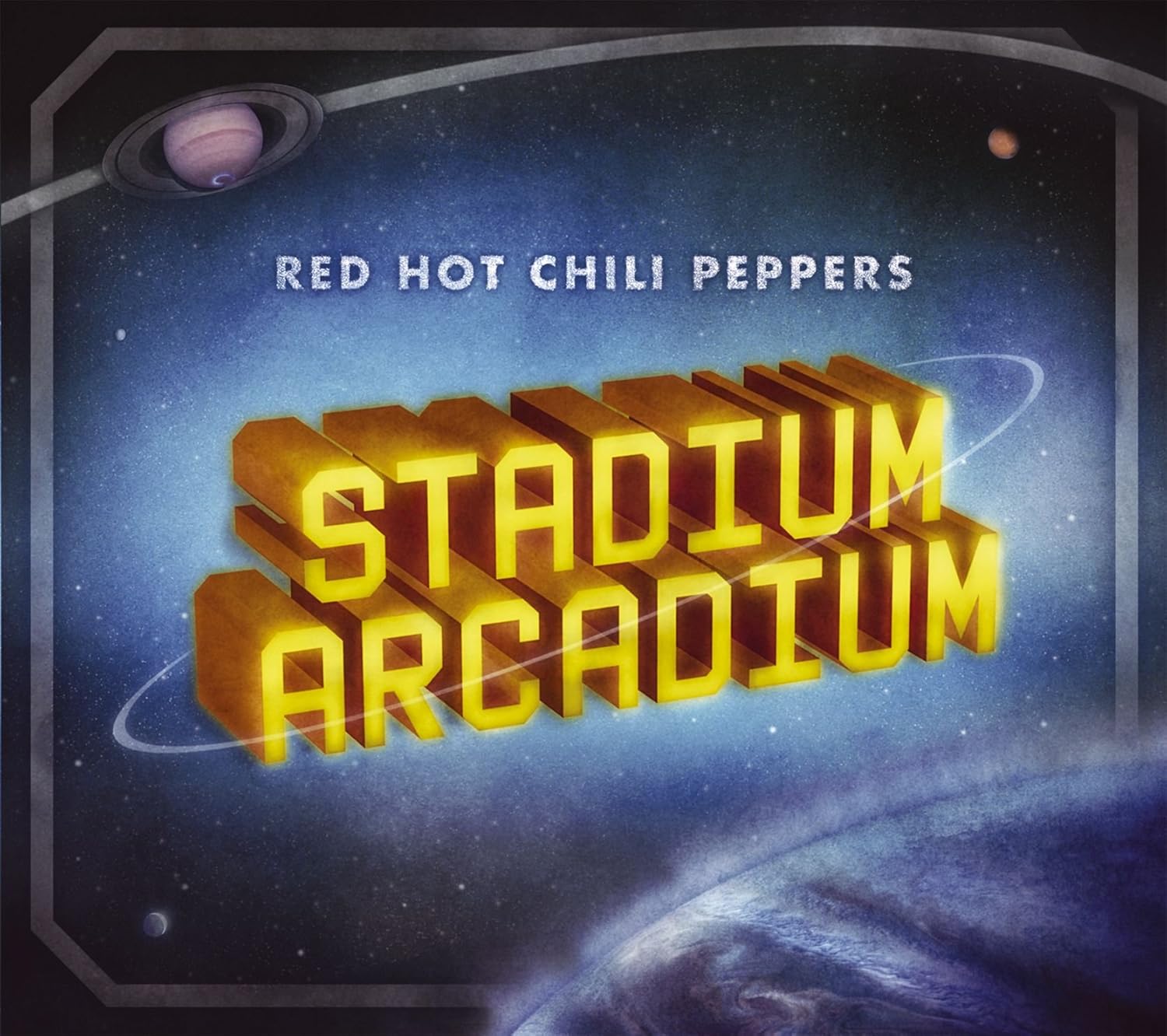
- Warner Bros.
- 2006
My friends and I had a clubhouse. You see those movies and TV shows where teenagers have some structure with the walls decorated with old license plates and silly graffiti, tattered couches, and an old video game system and think, “Kids don’t actually have those.” But we did. We had more or less annexed my parents’ shed, and from age 15 to 18 it became our cultural hub. My friends and I were a tight little nucleus, also like you’d see in a movie. We shared interests. We knew everything about each other. It was an exercise in male bonding and vulnerability to the point where for a long time I just figured every guy had as intimate an understanding of their friends’ internal lives, so it was a shock to find out that was not the case for everyone.
In that shed, while playing endless rounds of Mario Party on Nintendo 64 and participating in all of the normal teenage mischief, we were always listening to music. More than anything, we were listening to the Red Hot Chili Peppers. Because while the shed was our home planet, our world revolved around the Red Hot Chili Peppers in a teenage monoculture, our small cast of hilarious characters all sharing one interest on the border of pathetic. You know, also like in the movies. We were more a cult than a fraternity. What a beautiful thing to have friends that you say are like brothers and you mean it, without having to go to war or even a hazing.
It wasn’t until years later that I realized that the Red Hot Chili Peppers were not taken seriously. They were the butt of a joke. They were silly. They weren’t understood to be virtuosic wizards whose powers spanned funk, punk, metal, soul, and every other nameable and unnameable genre. What do you mean everyone didn’t talk about John Frusciante’s belief that every melody and song already exists in the cosmos and can be pulled down by those in the right mindset? What do you mean you haven’t watched Live At Slane Castle 20 times?
And as deeply corny as it sounds, our understanding of collaborative creativity, of friendship, of being this little unit that made its way through the world together, was inspired by the way that our favorite band seemed to do it. Much like how I imagined all friendships in the real world, I assumed every professional band was the same way, because it seemed like the Chili Peppers were — for a while, at least.
The history of John Frusciante in Red Hot Chili Peppers is tragic. The very reason he was ever part of the band was because original guitarist Hillel Slovak passed away in 1988 of a heroin overdose — something recently brought to younger fans’ attention by a Netflix documentary. He was 26. Slovak, their friend, their brother since childhood, was gone. And as Flea put it in the film, it seemed like that feeling he had playing with him, the almost cosmic connection they had developed, was gone forever and wouldn’t be coming back.
Frusciante was positioned to take over as if it were destiny. He himself was a teenaged superfan who had essentially taught himself guitar by playing Chili Peppers songs. It was what he was put on this earth to do. As a devout scholar of the socks-on-penises band, I was aware of this history. I knew, too, that he had left RHCP during the mid ‘90s amidst his addiction issues, ostensibly because he felt uncomfortable with the commercial success of the band.
But he had come back by the time I was old enough to pay attention, and they made Californication and By The Way, and everything was right again — at least for me, who only understood the Hillel and early John years as a research project into a back catalog. The sound was what it was supposed to sound like. The band put itself back on top. They were playing the biggest shows in the world and they were about to put out a double album that surely would be their biggest and best work to date.
At this time in 2006, finishing up 8th grade and heading into high school, it never struck me that that idea or the lead single, “Dani California” could be perceived in any way that was cringe. I even harbored a slight grudge against Tom Petty for a minute because there were rumors that he was considering a lawsuit thanks to the guitar part being similar to “Mary Jane’s Last Dance.” I don’t think that ever ended up happening. It didn’t matter, because I was ready to go to war for my Chili Peppers.
Stadium Arcadium — released 20 years ago today in Germany and four days later in the US — seemed and seems like it was designed for a certain type of teenager. It appeals to the undeveloped brain that thinks it recognizes deep metaphors and galaxy-brain talent. There is simply no denying Flea, Frusciante, and Chad Smith’s ability. For all of the shit that the Chili Peppers could rightly receive, the chops of those three are not up for debate. But the magic, or perhaps the curse, of the Red Hot Chili Peppers is that they’ll have a song with a weapons-grade hook, intelligible lyrics, and ripping guitar solos and basslines, and then they’ll position that song next to one called “Hump de Bump.”
This is where a lesser critic, a more insecure critic, might pretend that they did not and do not appreciate songs like “Hump de Bump,” on which you’re treated to Flea’s trumpet skills and an extended auxiliary percussion break. But to appreciate the Red Hot Chili Peppers is to understand that “Hump de Bump” does not exist in a vacuum. It’s about the juxtaposition of songs like that and ones like the sprawling, shimmering, powerful ballad of the album’s title track, and then… Ah, shit, the next song is called “She’s Only 18.”
What Stadium Arcadium pulls off, what it gets away with, is convincing so many of us to take it seriously, despite the silliness, because of the moments where the Chili Peppers aren’t winking. The guitar solo on “Wet Sand” is a high point in the band’s discography, to the point that I’ve seen it inserted into the “Dad, why is my sister named Rose?” meme. Bringing in Omar Rodriguez-Lopez for a frenetic guitar solo on “Especially In Michigan” was enough to scramble this high school freshman’s understanding of the instrument. The breakneck pace of “Torture Me” had me slamming my foot down on the gas and risking my provisional driver’s license. And that’s just on “Jupiter,” the first of the two albums. That, in my opinion, is the magic of this band. It is at once worthy of respect and shamefully silly. It’s neither of those things, and it is both. It is music performed at an extraordinarily high level, and it is drivel. It’s deep, and it is shallow. If you say it’s one or the other, you don’t get it.
Stadium Arcadium had a grandeur that has never existed on other Chili Peppers albums. Huge sweeping choruses on tracks like “We Believe” and “Slow Cheetah” feel denser and, to use a word I’ve typically forbidden myself from using in music writing, lush. The highs are so high, and it feels like a “we spared no expense” record, with all sorts of bells and whistles and personnel. But it’s just the sum of four parts like it “always” had been, according to our teenage perception of this crew’s unbreakable bond.
Stadium Arcadium is especially fun to remember in context. The Peppers were almost like those bands that clung to hair metal as grunge was kicking off: anachronistic LA knuckleheads of a certain age, still behaving like children, whipping up a cosmic gumbo of genres long since out of style and splattering it all over the radio. They were competing with the hyper-seriousness of the growing indie rock scene. At the time it felt very buttoned-up. But now that “indie sleaze” works as a party theme, that stuff seems just as goofy as anything Flea was doing at the time. It was just more pretentious.
Stadium Arcadium is indulgent. For a band that made a career out of overstaying its welcome and basking in its own glow, that’s what you’d almost hope for. Yet Stadium Arcadium doesn’t overstay its welcome. There is no fatigue midway through. It was, after all, their ninth (and technically tenth) album. The band had already gone through so many phases and aesthetics, each with their own peaks and deep valleys, so keeping two measly albums afloat was no problem.
It wasn't just my friends and me enthusing about this Chili Peppers era. Stadium Arcadium was the Chili Peppers' first #1 album, debuting with nearly half a million in first-week sales and remaining atop the Billboard 200 in its second week. "Dani California" became one of only three songs to ever debut at #1 on Billboard's Alternative Songs chart and spent 14 weeks there. Rolling Stone and the Los Angeles Times hailed it as the group's best work. The Grammys graced the Peppers with four nominations — including Album Of The Year — and doled out two wins, including Best Rock Album. For a band that had already been a dominant force in pop culture, this was a new level of popularity and acclaim.
John Frusciante’s contributions merit close attention. Stadium Arcadium is where his special meter filled up after remembering what he could do on the two albums that preceded it. He’s said in interviews that on both Californication and By The Way he was limiting himself either by choice or by lack of practice. On Stadium Arcadium, though, he returned to the headspace that he had gone to when he joined the band – not thinking about his playing at all out of fear that too much human brain would limit what the spirits were guiding him through. He’s said that the mansion they recorded in with Rick Rubin, the same one where they did Blood Sugar Sex Magik, is full of powerful beings that guided his playing during the recording of this album. That sort of thing is very exciting to a 14-year-old learning an instrument as well. Especially if they’re in Catholic School and they like the idea of esoterism that isn't part of a diocese-approved curriculum.
John was firing, so Flea and Chad were firing, and because the three of them were firing, Anthony Kiedis was operating at his own highest level. And Rubin could sit back and do what he does best: nothing. All was right with the world of Red Hot Chili Peppers again because all was right with Anthony Kiedis, John Frusciante, Flea, and Chad Smith again.
Across more than two hours, the Chili Peppers crammed in as much shredding, noodling, crooning, bass slapping, gibberish, clunky metaphors, and at times moments of real beauty and vulnerability and romance and simple emotion that resonated in a real way. Stadium Arcadium not only works but thrives because every single piece is exactly where it needs to be. It was created in the perfect environment and could only have been made once each member of the band was where they were at the time, having gone through what they’ve gone through and worked through what they’ve worked through.
I often think about what it was about Red Hot Chili Peppers that appealed to me and my friends so much back in this time. A simple answer is that the music was striking; there’s no denying that. At a time where file sharing was just growing, it allowed teenagers to dig into back catalogs and discover B-sides and rarities as if they had unearthed them from the dirt themselves, lording their mp3s over their friends who had not heard songs like “Bicycle Song” or “Quixoticelixir.” We love a guitar solo, we love the whimsy and free spirit of Flea as he also lays down a punishing bassline. We love the steadiness of Chad Smith and that he looks like Will Farrell. And we love the ringleader that is Anthony Kiedis, not fully grasping some of the more problematic lines and instead enjoying his karate-like dance moves that will one day be copied by the likes of Brendan Yates and Mac from Always Sunny. We love it because it is adult music for children and children’s music for adults. We love it because we can see in those four an unbreakable friendship like the one we’re creating. One big mob. Me and my friends.
When you’re of that certain age and care that deeply about music, about bands, you want to believe that they really are best friends. Teenage music fandom comes with that certain level of parasocial attachment and projection. So, when cracks form in that, it can feel like there are cracks in the very nature of your understanding of reality.
Frusciante would, ultimately, leave the band just a few years later in 2009. It seemed like it’d be for good this time. It wasn’t a matter of substance abuse, it just seemed personal. And if that could happen with this band of brothers, it seemingly could happen to any group of friends. I didn’t understand it at the time because I was, by that point, still only 17 and still hanging out with the same friends in the same shed, now listening to Frusciante’s latest solo album The Empyrean in total silence and absolute darkness as he had supposedly instructed people to do, until my dad opened the shed door to see his son and his friends sitting in silence in the dark like the kids in Weapons and told us to go inside.
I don’t think we were sad or angry at Frusciante for leaving again. I think deep down somewhere we understood that he’d be back. It was destiny that brought him to the band in the first place, albeit from horrible circumstances. It was destiny that led him back and got him to a place where he could produce his best work and raise the levels of the rest of the band. He was simply part of it, and that couldn’t change. We were right, of course; Frusciante rejoined RHCP in 2019, kicking off a third tenure with the band that remains ongoing. But maybe we just believed he’d be back because we were all applying to different colleges and reality was starting to set in for the first time, even subconsciously.
Regardless, you do have to wonder whether this latest comeback will take the band back to the heights of Stadium Arcadium. They did try the double album approach again with 2022’s Unlimited Love and Return Of The Dream Canteen, and it didn’t hit the same way. But by this point I was 30, and I don’t know what the kids are into these days, especially if they’re hiding in a shed somewhere.
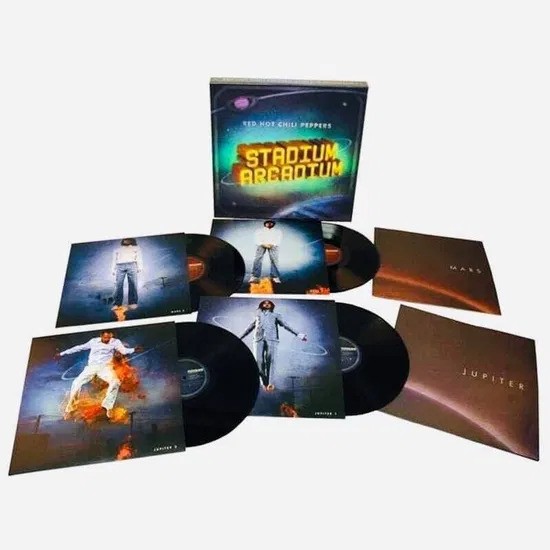
Red Hot Chili Peppers - Stadium Arcadium [4xLP]