Skip to Content
The Alternative Number Ones

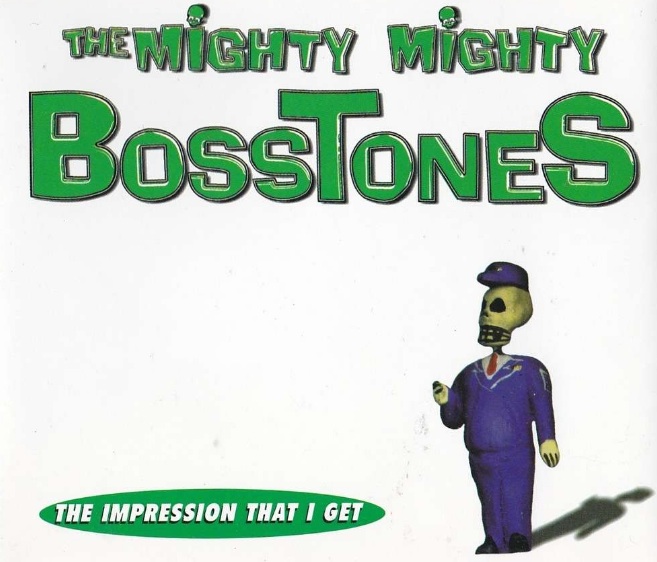
The Alternative Number Ones: The Mighty Mighty Bosstones’ “The Impression That I Get”

8:21 AM EDT on August 10, 2026

June 28, 1997

  • STAYED AT #1:1 Week

In The Alternative Number Ones, I’m reviewing every #1 single in the history of the Billboard Modern Rock Tracks/Alternative Songs, starting with the moment that the chart launched in 1988. This column is a companion piece to The Number Ones. The column is now biweekly, alternating with The Number Ones on Mondays.

My high school punk band played a grand total of two shows, both in spring 1997. The first was at a talent show at my friend's school, and we named ourselves American Standard, after the company that made urinals. But then we found out that there was already a New York hardcore band called American Standard, so we became American Substandard for the second show, in a buddy's backyard. I think we had three or four originals, one of which was about my friend Nat's crush on Suddenly Susan-era Brooke Shields. We also did covers — Operation Ivy, Youth Brigade, like four Misfits songs. We had more Misfits covers than originals. That was the vibe.

I say "we," but my own status within the group was a matter of some debate. I didn't play any instruments, though I could kind of fill in on the drums at practice when the drummer didn't show up. I didn't sing, except for the one song where nobody wrote lyrics so I just bellowed gibberish in a death metal Cookie Monster voice. I was only there to jump around while my friends made the actual music. I was the Dancing Bosstone. That was my job title.

Over the years, plenty of rock bands have had members who don't actually do anything — the ones that are there for presence and vibe but who don't contribute anything sonic besides maybe backup vocals or occasional tambourine flourishes. Bez from the Happy Mondays was one. Beau Beau from Avail was another. That one guy with the sideburns from the Brian Jonestown Massacre, too. But for kids in my generation, the definitive non-band band member was Ben Carr, the Mighty Mighty Bosstone who didn't do anything except dance. To us, that guy was the man.

What a life! You get to hang out with your friends and perform in front of people all the time, but you don't have to learn how to play scales or write lyrics or anything. You're the highlight of every live show. When people talk about your band, they're like, "You know they've got one guy who doesn't do anything except dance?" And if the band sucks, it's not your fault! God, it's the best. That's literally the only time that I have ever been in a band, and it was such a blast. I probably only got to have that experience because I happened to be a high school punk in 1997. That was the time that Ben Carr really had his moment. I guess the other Bosstones had theirs, too.

Here's something that Bob Nastanovich, arguably the Dancing Bosstone in Pavement, once said about sharing a stage with the Mighty Mighty Bosstones: "The Bosstones were so pumped, and their act was so physical, it was like an aerobics class. They had outfits. They were made for that type of thing, and we just weren’t." In this case, "that type of thing" refers to the main stage at Lollapalooza 1995. That year, the festival's lineup was heavy on critics'-favorite indie types: Sonic Youth, the Jesus Lizard, Nastanovich's band. (Pavement's highest-charting Modern Rock hit, 1994's "Cut Your Hair," peaked at #10. It's an 8.) Unlike the other bands on the bill, the Bosstones were made for that type of thing.

That was my first Lollapalooza, and as far as my friends and I were concerned, the Bosstones pretty much rinsed every other act on the bill — with the possible exception of Cypress Hill, whose set had the added benefit of strangers offering you puffs from their blunts. We went to the West Virginia show, the one where the audience hated Pavement and threw mud at them until they left. (They should've played "Cut Your Hair.") Unlike their hoity-toitier peers, the Bosstones went out there and performed. They had the worst time slot of the day, but they had flash and energy and novelty working for them. They had a guy who didn't do anything except dance! That's showmanship, baby!

By the time the Bosstones played Lollapalooza, they'd already put in their time as an underground band and as an unheralded major-label act. They helped set the stage for the punkier version of ska that came along in the '90s and briefly colonized alt-rock radio. I was just getting started on my punk awakening the first time that I saw the Bosstones, and they totally captured my imagination. In the years immediately after that Lollapalooza tour, I saw the Bosstones so many times — at a radio station festival, at two consecutive Warped Tours, I forget where all else. They were always fun, and their songs always had hooks. When ska became a commercial proposition, the Bosstones had earned tons of goodwill with kids like me. "The Impression That I Get," their one true big hit, was the right song at the right time.

The Bosstones technically started in the early '80s, when frontman Dicky Barrett and his friends were teenagers. When the band formed, ska's second wave, the UK two-tone scene, was only just winding down. The Bosstones' members came from Boston's famously rowdy hardcore world, but they were into the two-tone stuff as well. Over time, they developed the hybrid sound that they called ska-core — ska rhythms and horn-bursts, combined with gravelly hardcore vocals and occasional touches of stuff like funk-metal guitar. Basically, the Bosstones were a less adventurous, predominantly white East Coast version of Fishbone, right down to the omnipresent skeleton-based T-shirt logo. (Fishbone's highest-charting Modern Rock single, 1991's "Sunless Saturday," peaked at #7. That's not one of their ska songs. It's a 7.)

It took time for the Bosstones to figure their style out, and they didn't release anything for their first few years, until they had a couple of tracks on ska compilations in the late '80s. In 1989, they released their debut album Devil's Night Out on Taang!, the Boston hardcore label that also put out the first records from the Lemonheads, another band that's been in this column. That record had jaunty horns and metallic guitars and a guest vocal from Murphy's Law frontman Jimmy G. It's messy and energetic, and it established a chaotic sound that the band would never refine too much. The Bosstones had an actual look, with all the members wearing plaid suits, and they had Dicky Barrett, a charismatic young leader who sounded like he'd been smoking seven packs a day for 50 years. They stood out.

The Bosstones made one more Taang! album, 1992's More Noise And Other Disturbances, before signing to Mercury. I guess you could say that their major-label deal came during the post-Nirvana signing blitz, but it's honestly hard to imagine an alternative rock band that had less to do with Nirvana. Maybe Mercury saw the Bosstones as being in the tradition of, say, Oingo Boingo — wacky, eccentric pan-genre party bands with wild, distinctive live shows. That stuff always had an audience. In 1993, the Bosstones dropped their covers-and-live-songs EP Ska-Core, The Devil, And More and almost immediately followed it with the LP Don't Know How To Party. The album made it into the lower reaches of the Billboard 200, and the anthemic single "Someday I Suppose" got some MTV burn and reached #19 on the Modern Rock charts. That song rules.

Look, I really like this shit. Ska has gone through various different waves of dismissal and reappraisal since it had its big '90s radio moment. The ska bands of the '90s aren't canonized like the stalwarts in god knows how many other alt-rock subenres. Ska-punk doesn't have a Daft Punk or a Jawbreaker or a Neutral Milk Hotel or anything. (It has Operation Ivy, I guess? Nobody hates Op Ivy, but they don't regularly show up on Pitchfork lists or anything.) I don't really put on Reel Big Fish records around the house anymore. But in that moment, the horn riffs and flashy outfits and giddy exuberance really activated something in me. I had a little stretch where I was wearing skinny ties and newsboy caps to high school, seriously debating whether maybe I liked ska better than punk. The Bosstones had a lot to do with that.

I must've heard "Someday I Suppose" when it was new, but the song didn't grab me until a few years later, when I'd picked up enough puzzle pieces to put that music in some sort of cultural context. By that time, the Bosstones had released their second major-label album Question The Answers, which didn't even have a minor hit on the level of "Someday I Suppose." I had that album on cassette, and I can't remember whether I bought it or shoplifted it. But the Bosstones' name got bigger and bigger over the next few years anyway. Green Day and the Offspring established the commercial possibilities of punk, and then Rancid made it to #8 on the Modern Rock chart with "Time Bomb." Rancid are a punk band, but that's a ska song, and it's their biggest hit. (It's a 10.)

From there, more dominoes fell. No Doubt, who were at least partly a ska band, blew the fuck up. So did Sublime, though that didn't happen until after Bradley Nowell's death. Goldfinger had "Here In Your Bedroom." (Peaked at #5, an 8.) The Specials reunited. Bomber jackets with Moon Records patches became cool things to own. (I had one.) While all this happened, the Bosstones kept working. In 1995, the same year that they did Lollapalooza, they had a memorable cameo in Clueless, arguably the greatest teen movie of all time. In her voiceover, Alicia Silverstone's Cher character endorsed them: "The band was kickin'." When Cher said that, they were playing 1991's "Where'd You Go," their best song, so she was right.

Point is: The Bosstones were ready to take advantage of the moment. By 1997, they were mainstays at the Warped Tour. They'd established their sound and their performance style, and the brand was strong. Their song "The Impression That I Get" first came into the world on the 1996 compilation Safe And Sound: A Benefit In Response To The Brookline Clinic Violence. An anti-abortion nutjob had killed two people and injured more at a couple of abortion clinics in Brookline, Massachusetts, and a bunch of Massachusetts bands responded by contributing songs to this comp that aimed to raise money for women's reproductive health in the area. Back then, the Bosstones' politics made sense, and they helped out.

There wasn't a lot of ska-punk on that benefit comp. The Bosstones appeared alongside acts from Boston's busy college rock universe — Belly, Juliana Hatfield, Tracy Bonham, Morphine, Letters To Cleo. The Bosstones made their feelings about local college kids (and tourists) plain on "They Came To Boston," their 1992 song about being annoyed at the out-of-towners all around them. They were a Boston townie band, not a Boston college rock band. Still, I can't imagine that too many of the college rock heads who bought the Safe And Sound comp hit skip on "The Impression That I Get."

Here's one thing about "The Impression That I Get" that everyone gets wrong: There's a comma in the chorus. For years upon years, I thought that Dicky Barrett was singing that he never had to knock on wood, which is not how that superstition goes. You knock on wood because you don't want something bad to happen to you, not because something bad already happened, and radio DJs loved pointing that out. Instead, though, Barrett sings about going through extreme pain in life, wonders how he'd do in that situation, and admits that he's never been tested in that way: "I never had to, knock on wood." The syntax is still pretty confusing, but the song makes a whole lot more sense when you realize that's what's happening. I probably didn't figure that out until I wrote this 20th-anniversary piece on the song, and I don't remember writing that thing at all, so I had to re-learn about the comma just now.

Barrett co-wrote "The Impression That I Get" with Bosstones basist Joe Gittleman, a guy who now teaches music industry classes at the University Of Vermont. Barrett got the idea for the song after a close friend's brother died. At the funeral, Barrett looked at all the intense pain happening around him and thought about how he'd respond in such a situation. There's no metaphor at work on "The Impression That I Get." It's just one young guy looking at his friend's hardship, realizing that he'll probably face a situation like that at some point in his life, and wondering if he'll handle it with grace and dignity. Unlike a lot of '90s alt-rock hits, it's a song about not feeling pain, or maybe about the pain that the singer hasn't felt yet: "Never had to, knock on wood/ And I'm glad I haven't yet/ Because I'm sure it isn't good/ That's the impression that I get." Yeah, no shit.

Dicky Barrett's conversational rasp goes a long way toward giving "The Impression That I Get" a sense of depth that it might otherwise lack. Many of that era's big ska-punk bands had singers who adapted the adenoidal teenage whine of their pop-punk peers. But Barrett was a hardcore frontman before the Bosstones, and he sounds like a grown-up on "The Impression That I Get," even if the song is about the feelings he hasn't felt yet. His voice — deep, grimy, knowing, more serious than the band's shared fashion sense might imply — lends the song a gravitas, especially when Barrett considers the possibility of his own failures under duress: "Might be a coward, I'm afraid of what I might find out."

Part of the juice of "The Impression That I Get" is the contrast between those anxious lyrics and the sprightly, bubbly music. The intro's new wave guitar flickers lead into the tootling horn riffs that you could expect on any Bosstones song, the kind that recall high-school marching bands as much as ska's origins in '60s Jamaica. A humming organ and a mid-tempo groove make the song feel a little less frenetic than the ska-punk that the band's younger peers made, and a few stray power chords help emphasize the chorus.

When that chorus hits, Barrett turns the word "I" into a drawn-out, guttural "aaaaaagh," and the whole band joins in for some hardcore-style gang-chant backups. There's a nice little buildup and breakdown on the bridge, and an even nicer drawn-out coda. It's a big, bright, catchy song that gestures at internal darkness. You could sing along. You could skank to it. Where previous Bosstones singles were a bit chaotic and unfocused, "The Impression That I Get" was what happened when the band focused on a simple idea, turning it into a cohesive little nugget. It's exactly the song that they needed to make.

The Bosstones recorded "The Impression That I Get" with producers Paul Q. Kolderie and Sean Slade, local Boston fixtures who have already been in this column for producing Tracy Bonham's "Mother Mother." Those guys has been working with the Bosstones basically since the band started recording. Kolderie produced the band's first two Taang! albums before working with Radiohead and Hole and Uncle Tupelo, and the two of them clearly knew how to handle the Bosstones' whole deal. "The Impression That I Get" came out as a single in February 1997, a month ahead of the album Let's Face It, and it almost immediately broke onto the Modern Rock chart.

When "The Impression That I Get" showed up as a scene-transition soundtrack in Chasing Amy that April, my friends made annoyed sounds in the theater, and the song hadn't even reached its chart peak yet. Obviously, it's a teenage punk's duty to scoff and get annoyed when a beloved band finally blows up. It's what you're supposed to do. But that reaction was telling. "The Impression That I Get" was a lot of fun in small doses, but it grew oppressive when it started popping up everywhere. The band's slightly forced goofball shtick also wore thin.

That year, the Bosstones were all over the place. They worked hard. I saw them at two different festivals in the same stadium, maybe a month or two apart. They played SNL. (Host: Chris Farley, two months before his death.) They performed with the Count on the prime-time Sesame Street special Elmopalooza. Let's Face It went platinum, and follow-up single "The Rascal King" peaked at #7. (It's a 7.)

The run didn't last. In 2000, the band followed Let's Face It with the relative flop Pay Attention, and they made it to #11 with lead single "So Sad To Say." I'm so sad to say that I did not pay attention to Pay Attention. By that time, I'd firmly moved past the caring-about-ska stage of my life, and I don't think I even knew that the album came out. Apparently, the rest of the world felt the way that I did, and that seems to be what "So Sad To Say" is about. The Bosstones never made the Modern Rock chart again, and the album was their last for Mercury.

After Pay Attention, the Bosstones went back onto the indie landscape. But after just one album for the punk label SideOneDummy, they went on an extended hiatus. Dicky Barrett moved to LA, had a brief stint as a radio morning-show host, and found a steady gig as the in-house announcer on Jimmy Kimmel Live!, a job that he held for nearly 20 years. Guitarist Nate Albert became a record label exec; he's the guy who signed the Weeknd to Republic. In a 2015 FADER interview, Albert said that his experience as a Bosstone helped him make that deal. Doc McKinney, one of the Weeknd's producers, had been in a ska-punk band that once opened for the Bosstones, and knowing that connection made the Weeknd more comfortable with Albert. Various other Bosstones went on to various different bands, and then the Bosstones came back in 2007.

At first, the reactivated Bosstones only played a few shows, then toured with the Dropkick Murphys, another band of grizzled Boston punks who'd found a crowd-pleasing gimmick. (I say that with nothing but love for the Dropkick Murphys, who are awesome. Their only Modern Rock hit, the 2012 novelty Christmas song "The Season's Upon Us," peaked at #28.) But then the Bosstones kept touring and released a few more albums, and they stuck around for long enough to release a 2021 George Floyd tribute song that went viral for being extremely embarrassing. Then, everything fell apart in even more embarrassing fashion.

Maybe you've been waiting for this part of the column. Maybe you knew what was coming. You could argue that it's sad for a band like the Bosstones to keep playing the nostalgia circuit deep into middle age, but it's definitely sadder for a band like the Bosstones to finally break up, after 40 years, because their singer is a virulent anti-vaxxer. The Bosstones didn't cite any particular reasons when they announced their breakup in 2022, but it sure seemed to coincide with Dicky Barrett's slide into vaccine denialism.

Barrett and Robert F. Kennedy, Jr. co-wrote a song, since scrubbed from the internet, for one of RFK's anti-vaxxer rallies, and Barrett's refusal to get vaccinated cost him his job at Kimmel. It probably also made the band's touring plans impossible. It was definitely a giant fucking bummer for anyone who'd ever cared about the Bosstones. Barrett went on to front the Defiant, a band seemingly made up entirely of guys who got kicked out of other punk bands for being anti-vaxxer wingnuts.

I met Dicky Barrett in 1996. This was at the Warped Tour, which was in its second year. My local show didn't sell enough tickets for the outdoor amphitheater where it had been booked, so it got moved at the last second to the Capitol Ballroom, a big since-shuttered club in DC. I had a great time that day — better than at any of the outdoor Warped Tours I attended in later days. Saw CIV and Fishbone and Rocket From The Crypt and the Bosstones, and then someone was like, "Yo, Dicky Barrett's standing right there!" So I went over, shook his hand, said hi, and made awkward conversation for a couple of minutes, as you do when you're 16 and you meet the singer of a band that you like.

This was one of my earliest exposures to the punk rock ideal where the people up on the stage aren't really any different from the people in the audience, where the frontman of a band is almost expected to be out in the crowd or at the merch table when he's not up onstage or hauling equipment. I can't say that moment changed my life or anything, but Barrett went out of his way to make me feel comfortable. It left an impression. So it's a real drag to see that guy ruin his career and legacy for a stupid bullshit brain-poisoned idea. The same has happened with way too many people; certain members of my family don't talk to each other anymore for similar reasons.

With all that said, "The Impression That I Get" remains a very good song that brightened things up on the radio for a few weeks. "The Impression That I Get" only spent a week on top of the Modern Rock chart, briefly interrupting the reign of "Semi-Charmed Life," and it hasn't had anything like that song's endurance. Give or take Sublime, this is the only chance that this column will have to address the late-'90s ska-punk boom, a doofy little fad that meant a lot to me. As a former Dancing Bosstone, I must now take this opportunity to denounce Dicky Barrett, even as I salute the music that he once made.

GRADE: 8/10

BONUS BEATS: Here's indie garage rocker type Mikal Cronin covering "The Impression That I Get" on a 2015 installment of the AV Club's AV Undercover video series:

BONUS BONUS BEATS: Here's DIY overlord and ska-punk torchbearer Jeff Rosenstock leading a sped-up cover of "The Impression That I Get" at a 2022 show in Chicago:

BONUS BONUS BONUS BEATS: Last year, the fast-rising Boston hardcore heroes Haywire headlined their hometown's edition of the hardcore fest For The Children. During their set, they brought out Dicky Barrett, whose whole anti-vaxxer shit was extremely well-known, to help them cover "The Impression That I Get." This was a confounding decision! If I'd been in the room for that, though, there's at least some chance that I would've sung along as loud as everyone else. I don't know. I wasn't there. I've just never been tested. I like to think that if I was, I'd pass. Anyway, here's that video, which would be extremely fun if not for all the context:

GET THE STEREOGUM DIGEST

The week's most important music stories and least important music memes.