
February 5, 2022
- STAYED AT #1:5 Weeks
In The Number Ones, I'm reviewing every single #1 single in the history of the Billboard Hot 100, starting with the chart's beginning, in 1958, and working my way up into the present. The column is now biweekly, alternating with The Alternative Number Ones on Mondays. Book Bonus Beat: The Number Ones: Twenty Chart-Topping Hits That Reveal the History of Pop Music.
Fuck it, I'll just come out and say it: I like Lin-Manuel Miranda. I think he's good. When he's on the Blank Check podcast, I'm excited to listen. When he showed up on a Mountain Goats album last year, I was like, "Oh, damn! That's cool!"
From what I have seen, at least in my corner of the internet, this is a minority opinion. People love to roll their eyes at Lin-Manuel Miranda. I understand it. He's the ultimate try-hard theater kid of our time, and he represents a wave of shiny cultural optimism that has been smashed to pieces again and again in recent years. Miranda might be the single greatest human representation of the entire "Obamacore" concept — one who's possibly even more representative of that term than Barack Obama himself.
Even at the peak of Miranda's fame, my entire feed seemed to take vicious delight in the story about indie-rap scowler Immortal Technique picking Miranda up and throwing him in the garbage when they were in high school together. (I had dinner with Immortal Technique once for an Urb cover story, and he is not scary.) As the first person to effectively translate New York rap music into Broadway fodder, Miranda was always going to be a natural target for online hate, but even that doesn't explain how his all-around enthusiastic earnestness awakens so many people's inner Nelson Muntzes.
It's just an aura thing, maybe. You look at his face, and you're like, "This fuckin' guy." It was like that from the beginning! Before he even did anything! Way back in 2007, in his struggling-actor days, Miranda had a one-scene role on an episode of The Sopranos, which makes for a real jump-scare moment if you're rewatching the show — not as bad as a randomly occurring Perez Hilton, but still. Miranada is in there for all of 20 seconds, exchanging two brief sentences with Tony Soprano and Paulie Walnuts. After that conversation, Paulie is like, "Fuckin' guy." Part of me instinctively wants to give that exact same response whenever Miranda pops up onscreen. I like him anyway. He's too good at his job for me to keep that energy.
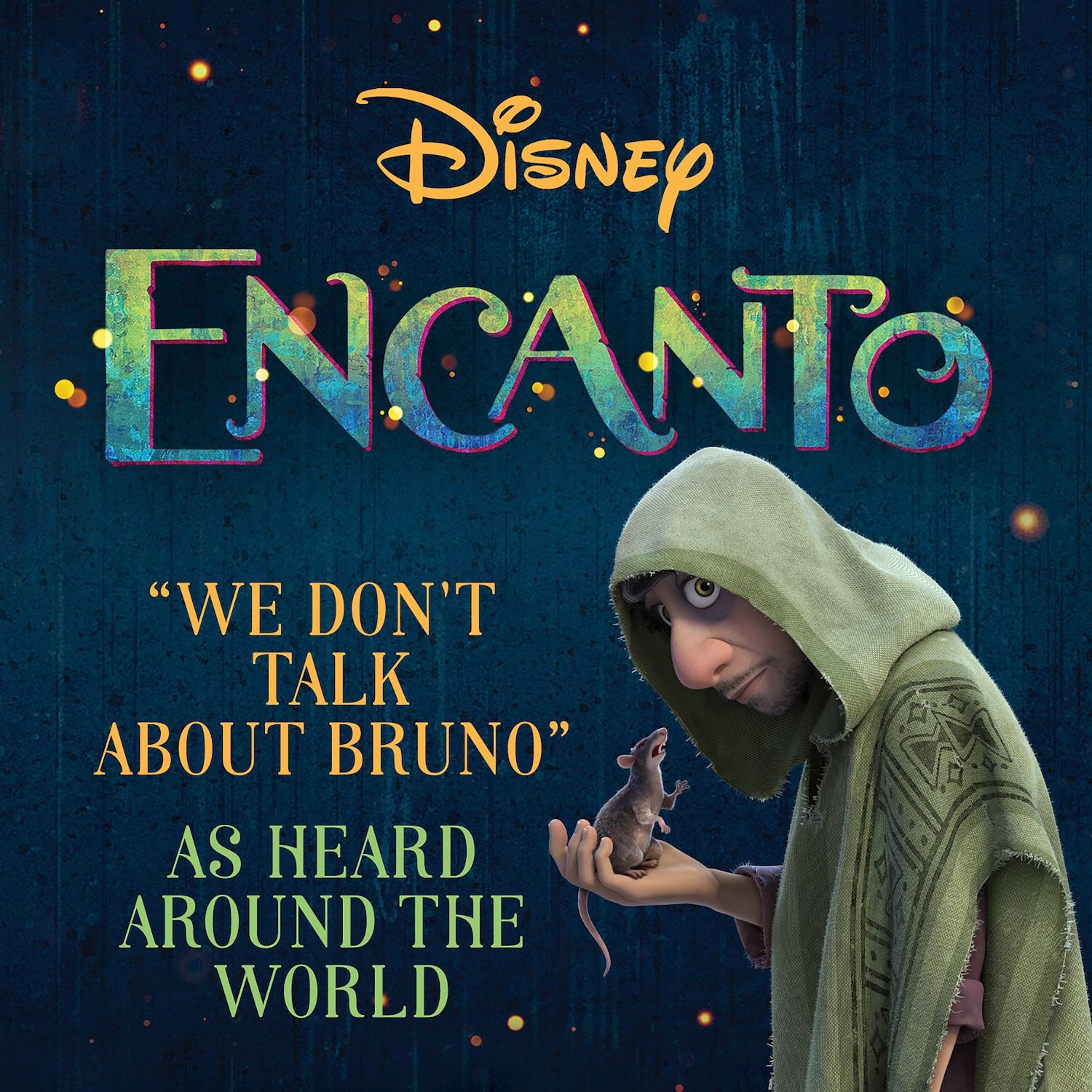
Lin-Manuel Miranda has warehouses full of award statuettes for a reason. The man can write a song. "We Don't Talk About Bruno," the Disney-soundtrack number that shocked the world by turning into an out-and-out pop smash, is a perfect example, a strange and ingratiating little nugget that no other human being could've possibly concocted. It's a complex, layered exposition-dump that mostly exists to move the plot of the movie Encanto along and to work in a bunch of tiny character moments. But the song goes.
"Bruno" is an infernally propulsive little hook-machine full of tricks and flourishes and overlapping back-and-forth bits. When my kids fell under the song's spell and played it eleventy million times, I didn't even get annoyed. That can only happen when the person reponsible for the earworm puts an inhuman level of craft into the work. That's what Lin-Manuel Miranda does, and that's why I like him. I'm not even embarrassed to say it. Fuck it. Who cares.
"We Don't Talk About Bruno" is only the second song from a Disney animated musical to reach #1 on the Hot 100. By amazing coincidence, my column on the first one of those songs, Peabo Bryson and Regina Belle's take on "A Whole New World" from Aladdin, happened to run on this website on the exact same day that "Bruno" ascended to #1. (Since then, there has been another Hot 100 chart-topper from another Disney cartoon, but it's a Pixar end-credits joint, so I don't know if it counts. We'll talk about that one later.) Way back in the early days of the fabled Disney renaissance, various Disney executives figured out that a big pop song could be an effective way to sell the company's animated features and to turn them into modern standards that could play during Disney World fireworks displays for generations to come. But "We Don't Talk About Bruno" doesn't function like any of those songs. It's a whole other thing.
In the years that followed Beauty And The Beast and Aladdin, a ton of songs from Disney pictures became real-deal crossover pop hits. Basically without exception, those songs were big heart-swelling ballads that could function outside the story mechanics of their movies. The versions of those songs that did well on the Hot 100 weren't sung by voice actors; they came from established name-brand singers. Here, I'm talking in particular about Elton John's "Can You Feel The Love Tonight?" and Vanessa Williams' "Colors Of The Wind," the two tracks that came closest to repeating what "A Whole New World" did in the years that immediately followed. (Both of those songs peaked at #4. "Can You Feel The Love Tonight?" is an 8, and "Colors Of The Wind" is a 6.)
Disney landed another big pop hit in 2013, after the success of movies like Tangled and Frozen signaled a kind of re-renaissance, and that big pop hit operated in slightly different ways. The Frozen showstopper "Let It Go" isn't an inspirational love song. Instead, it's a character moment, about one magical ice-princess deciding to shut herself off from the rest of the world. The version that blew up came from Idina Menzel, the movie's voice actor, not a pop star who came in to give the song a shot at radio. (Demi Lovato did have a version of "Let It Go" on the end credits, but nobody cared about that one.) Even in that case, though, "Let It Go" is a grand, emotive Broadway ballad with Meat Loaf-ass pianos and lyrics vague enough that they can function as platitudes. (I'm not saying any of that to complain about "Let It Go." "Let It Go" rocks. It peaked at #5, and it's a 9.)
"We Don't Talk About Bruno," by contrast, is all storyline. The song simply cannot function outside the context of the movie Encanto. That's not how it's built. When you hear "Bruno" in the wild, the song doesn't make any sense. It might not even make sense when you're watching Encanto. Encanto is a busy movie, with a teeming cast of characters and motivations and resentments that's simply too much to keep track of on one viewing. Watching the film with my kids, I had to be the annoying adult constantly asking, "Wait, who is she? The cousin?" The best way to process both the song and the movie is to let it wash over you, to get lost in all the little visual hooks and turns of phrase. That's how it gets stuck in your head, by becoming a kind of joyously meaningless babble. And you already know that the pop charts love joyously meaningless babble. That's the name of the game! That's the whole reason we're here, baby!
Officially, "We Don't Talk About Bruno" has more credited lead artists than any other chart-topper in Billboard Hot 100 history. Six people — Carolina Gaitán, Mauro Castillo, Adassa, Rhenzy Feliz, Diane Guerrero, and Stephanie Beatriz — got to see their names listed next to "Bruno" on the Hot 100. Most of those people are primarily actors, not musicians, and none of them are all that famous. (The biggest name in the Encanto cast was almost certainly John Legiuzamo. He played Bruno, the one who was not being talked about, and he's not on the song.) For the purposes of this column, I am not going to dig too deep into the personal biographies of all six of those people. I'm not going to tell you which songs were #1 when they were born, either. That's too much work. You can look all of them up yourself if you want. I'm just one guy. Instead, I'll treat Lin-Manuel Miranda as the song's auteur, since that's what he is.
Lin-Manuel Miranda comes from Inwood, the neighborhood at the very northern tip of Manhattan. (When Miranda was born, KC & The Sunshine Band's "Please Don't Go" was the #1 song in America. Don't worry. I'll still give you this information when it's important.) Miranda's father was an advisor to New York mayor Ed Koch who went onto a long political-consultant career, and his mother was a psychologist, so they weren't broke or anything. Miranda went to the same high school as the MSNBC anchor Chris Hayes, so maybe that's the type of school where a young Immortal Technique can be the resident Biff Tannen-ass cartoon class bully who stuffs people into trash cans. Sorry to be stuck on this biographical detail. I just can't stop picturing it.
In 1999, when he was a student at Wesleyan, Miranda started writing In The Heights, the musical that made him famous. In The Heights is a big old warm-hearted sappy romance set in Washington Heights, and it incorporates a bunch of rap. It's hard to combine rap with musical theater in ways that don't make you want to cringe so hard that your facial architecture permanently changes. You just have to deal with that. It's part of the Lin-Manuel Miranda equation.
Miranda can really rap, especially in the starry-eyed hyper-syllabic idealistic backpacker style beloved among middle-class X-ennials everywhere. (Come to think of it, that's basically the Immortal Technique style. Did that school have an inspirational English teacher who captured all the kids' attention by explaining that Shakespeare is really rap when you think about it? Much to consider.) On In The Heights, Miranda threw in tons of deep-cut references to let us know that he knew what he was doing. Still, this kind of thing was never supposed to function as actual rap, or even as pop. Miranda was a classic creature of Broadway, and Broadway embraced him.
Miranda spent years working with a team to develop In The Heights. During that time, he worked as an English teacher at his old high school, so maybe he became the inspirational Shakespeare guy. He also did freelance writing and came up with ad jingles — all the side hustle stuff that you need to do in New York before you make it. That's when he was in that one Sopranos scene. Sometime in there, Miranda co-founded a touring improv comedy rap type of deal called Freestyle Love Supreme, and a bunch of future members of his Hamilton cast came from that.
In The Heights opened off-Broadway in 2007 and then moved to Broadway in 2008. It became a sensation, and Miranda got himself a Tony nomination for playing the lead role. Miranda worked on a bunch of other projects, but his In The Heights follow-up was the real cultural juggernaut that will probably always define him. You already know that I'm talking about Hamilton, the rap-adjacent musical retelling of Alexander Hamilton's life.
Miranda wrote Hamilton by himself, and he led the cast, notably populated almost entirely by people of color playing white historical figures, when it opened on Broadway in 2015. Hamilton was instantly huge, and it only got huger. The Obamas loved it and invited Miranda to perform at the White House. Celebrities would show up at every performance, and tickets became very hard to get. It won a fuckton of awards, and the soundtrack album debuted at #2 and went platinum six times. It was a big deal.
Miranda was everywhere in the immediate aftermath of Hamilton, and he found himself on the Hot 100 a few times. In 2017, for instance, he teamed up with fellow Nuyorican multi-hyphenate Jennifer Lopez, someone who has been in this column a bunch of times, for "Love Makes The World Go Round," a pretty bad one-off charity single that reached #72. In 2017, he rounded up a bunch of other Puerto Rican stars, Lopez included, for "Almost Like Praying," another one-off benefit single, and it peaked at #20. In 2018, Miranda and fellow Broadway star Ben Platt made it to #49 with "Found/Tonight," a mash-up of songs from their respective hit musicals. You're not going to believe this, but it was a one-off charity single.
Miranda made his biggest post-Hamilton impact when he took the assignment to write the songs for the 2016 Disney musical Moana. That movie is awesome, and Miranda's songs achieve that elevated status. Maybe the rest of the world already figured out that Lin-Manuel Miranda songs don't need his actual presence, or the constant looming threat of effortful fast-rap bars, to hit you right in the soul. His Moana songs do everything that songs for musicals should do. They move the story forward, underline all the characters' motivations, and give the whole thing a splash of life. My kids and I walked out of the theater singing them, and the album went quintuple platinum in real life and diamond in my car. (You have probably noticed that my soft spot for Miranda has a lot to do with the fact that my kids are the right age to love his work, my daughter especially. No prizes for figuring that out.)
Like plenty of past Disney musicals, Moana came with a pop star's end-credits cover of the big ballad. In this case, it was Alessia Cara delivering a vaguely trop-house-inflected take on "How Far I'll Go," and it peaked at #56. (Cara's highest-charting single as a lead artist, 2015's "Here," peaked at #5. It's a 7. She also guested on Logic's "1-800-273-8255," which peaked at #3 in 2017. It's a 3.) This is another "Let It Go" case where the far superior OG version of the Disney song did better on the Hot 100, with voice actor Auliʻi Cravalho taking the song to #41. That's a banger. Miranda himself also sang the soundtrack song "We Know The Way" with Opetaia Foa'i, and it peaked at #93.
During the 2020 pandemic summer, Disney put a filmed version of the Hamilton stage play on its Disney+ streaming service, and it did huge numbers. This was the first shot in an absolute barrage of COVID-era Miranda-related streaming projects. A Jon M. Chu-directed movie version of In The Heights was one of the many movies that debuted simultaneously in theaters and on HBO Max in 2021. The same year, Miranda directed an adaptation of Jonathan Larson's musical Tick, Tick... Boom! for Netflix. He wrote the songs for Vivo, a Netflix animated joint that I probably watched but definitely don't remember. And then there was Encanto.
I don't even know how to explain Encanto. I guess it's a magical realist story, but it's Disney, so the "realist" part of that is debatable at best. There's this family, right? It's early 20th-century Colombia, and the family's matriarch had to flee from some unspecified conflict (presumably the Thousand Days War) and build a new life in a hidden valley. Their house is both sentient and magical, and it grants a special superpower to every member of the family when they reach a certain age — or almost every character, anyway. Mirabel Madrigal, our protagonist, mysteriously has no superpower, which the movie never really bothers to explain. She's ashamed of that, and so is her grandmother.
Encanto doesn't get into the weeds on the hows and whys of any of this, and it's seemingly not all that concerned with its own premise. Instead, it's all about this family's internal dynamics, the tension that builds because people just aren't talking to each other the way that they should. It's got a big ensemble cast, and I have a hell of a time keeping track of all the story developments. But it looks incredible — bright, vivid animation full of dreamy psychedelic interludes and exaggerated moments of telling body language — and the songs all slap. Rewatching the film for this column, I got antsy whenever it went too long between musical numbers, like, "Fine, but when are they going to sing again?"
Encanto directors Jared Bush and Byron Howard are Disney Animation lifer types who were coming off of the huge hit Zootopia. Lin-Manuel Miranda was a big part of the planning process for Encanto; he's the reason it was set in Latin America in the first place. Miranda and his father joined Bush and Howard when they went on a two-week research trip to Colombia early in the planning process. (This was pre-pandemic; Miranda started work on the movie in 2016.) All of his Encanto songs are rooted in Latin music, or at least in the Broadway version of Latin music, and he engineered all of them to give plenty of space to the big cast.
Lots of Encanto voice actors are Colombian or Colombian-American, and most of them aren't especially famous. Stephanie Beatriz, who plays Mirabel, is probably best-known for starring on Brooklyn Nine-Nine, and she was also in the In The Heights movie. Beatriz was born in Argentina, and she moved to the US as a child. She's the main character, and she's also one of the credited lead artists on "We Don't Talk About Bruno," but she's not the dominant voice on the song. There is no dominant voice on the song. Instead, "Bruno" is mostly side characters singing to her.
Should I even bother attempting to situate "Bruno" in the Encanto plot? I'll try, but it won't make any sense. Mirabel is worried that there's a problem in the literal/metaphorical foundation of the Madrigal house, and she discovers that the person who might know the secret is her uncle Bruno, who disappeared from the family because he can tell the future and his prophecies always bummed everyone out. So Mirabel starts asking all her relatives about Bruno, and they tell her that Bruno is not to be discussed while also telling her all about Bruno. They've all got their own gossipy takes and stories about Bruno's whole deal, and that's where the song comes in.
The first person who Mirabel asks about Bruno is her aunt Pepa, as played by Carolina Gaitán, a Colombian actor who has been on a bunch of Spanish-language TV shows. The first verse is a fun little back-and-forth between Pepa and her non-powered husband Félix. He's played by Mauro Castillo, a Colombian singer and actor so obscure that he doesn't have a Wikipedia page. He might be the only lead artist on a #1 single with no Wikipedia page? I would have to scroll through too many things to verify that. Pepa tells a horror story about Bruno forecasting rain on their wedding day while Félix basically acts as her hypeman. It's cute. I like the comic timing of Pepa insisting that she doesn't talk about Bruno, pausing dramatically, and then immediately talking about Bruno.
Then Mirabel's cousin Dolores, who has magically sensitive hearing, sweeps her away and whispers about how she thinks she can still hear Bruno's voice echoing around the house. She's played by Adassa, a Miami-born reggaeton artist who has songs with people like Luis Fonsi and Pitbull but who had never been on the Hot 100 before "Bruno." None of the singers on "Bruno" had ever been on the Hot 100. It's probably important to have someone who actually can rap deliver her part, since it's fast and complex and syncopated. She's telling secrets, so she does it quickly and quietly, pausing at one point to imitate "the sound of falling sand," ASMR-style.
And then another cousin, the shape-changer Camilo, comes crashing in, making himself look like a monstrous version of Bruno. That's Rhenzy Feliz, a young Bronx-born actor who now plays Colin Farrell's criminal understudy type on The Penguin, and he's got the catchiest part of the song, the "seven-foot frame, rats along his back" bit. Now: There are some of us out there in the world who do have seven-foot frames and who didn't necessarily need to hear our children, or worse yet our children's friends, singing that to us over and over for months on end. I wish Lin-Manuel Miranda would've kept us in mind when he wrote that part. I am aware, however, that this is a niche concern. Miranda probably didn't mean any offense by it, and I probably will not respond by throwing him physically into the garbage. Probably.
The "seven-foot frame" thing leads into a whole choir of townspeople singing about all the terrible things that Bruno predicted, which gives the Simpsons Springfield feeling of a whole crowd of side characters ambling around in the background, and then Mirabel's imperious older sister Isabel gets a movie-star entrance, descending from the ceiling. She's about to get engaged to some guy, and her superpower is plants. Bruno has only predicted good things for her, so she wants Mirabel to shut up and stop asking questions. She's played by Diane Guerrero, a New Jersey-born actor who was on Orange Is The New Black and who wrote a memoir about her entire family being deported back to Colombia when she was a kid. This country's shameful treatment of its immigrant population isn't really part of the story in "Bruno" or Encanto, but I think it's there in the subtext.
All these voices surround Mirabel, giving her this information overload and maybe telling her too much. While this is happening, the guy who's about to propose to Isabel is on his way to a big family dinner at the house, and everyone runs around to prepare. The whole number is a hectic firehose of information, and Mirabel can't process any of it. The animation team has tons of fun throwing in surreal dream-ballet touches and details that you won't catch on the first viewing, including the actual Bruno quietly dancing in the background in one shot. It's all choreographed by Jamal Sims, someone who usually constructs performances for actual humans rather than cartoon characters, which probably also helps it all feel physically fluid.
Miranda later told IndieWire that he studied complicated, layered multi-character musical numbers like "A Weekend In The Country" from A Little Night Music and "It's Beginning To Snow" from Rent when he wrote "We Don't Talk About Bruno." Miranda co-produced the song, and the rest of the Encanto soundtrack, with Mike Elizondo, the Dr. Dre/Fiona Apple/Turnstile collaborator who has already been in this column for his work alongside Dre on Mary J. Blige's "Family Affair" and 50 Cent's "In Da Club." I don't know enough about Latin music to understand which specific traditions "Bruno" incorporates, but I know they're in there. The song moves, as the constant chatter of all those different voices keeps building. All through his Encanto songs, Manuel throws in little echoes and phrases that connect them all together because the point was always for them to build on one another. The point was never for one song to function on its own. Nobody bet on "Bruno" breaking out and becoming a pop hit, but strange things can happen when TikTok enters the equation.
Encanto arrived in theaters in November 2021, and its box office was merely OK. It earned just shy of $100 million in the US and about $250 million worldwide — not great numbers for a Disney animated picture. But this was 2021. COVID was still a concern, and vast swaths of the public weren't willing to pay to go see a movie that wasn't about Spider-Man. Encanto didn't become a hit until Christmas Eve, when Disney+ started streaming it for free, just a month after it opened in theaters. In the weeks that followed, Encanto played constantly in my house.
That January, we had a big power outage because of an ice storm, and the whole family had to spend a few nights in a hotel, with nothing to do but watch Encanto on a loop. My daughter watched it so many times. I just asked her about it, and she said that she thinks she saw the movie seven times in a one-week period. Then she was like, "Wait, you're not putting that in the column, are you?" But my magical gift is that I take life experiences and turn them into online content. Abracadabra.
Evidently, a whole lot of kids did the same thing during that Christmas break and the months after. Suddenly the Encanto soundtrack was huge. None of the songs from the movie got the pop-star cover treatment because the movie didn't have that classic-style Disney showstopper. Disney only picked one track to submit for Best Original Song Oscar contention, and it was "Dos Oruguitas," a lilting acoustic Spanish-language ballad sung by the Colombian star Sebastián Yatra. ("Dos Oruguitas" peaked at #36, and it's Yatra's only Hot 100 hit.) That's a very pretty song, but it's not really a musical number, and Yatra doesn't play a dramatic role in the movie. If Disney knew what they had on their hands with "Bruno," that song would've gotten the push for sure.
When kids were streaming Encanto nonstop, they started using those songs for TikTok videos, and "We Don't Talk About Bruno" was the main beneficiary. Disney put the "Bruno" sequence on YouTube a few days after Encanto made its Disney+ debut, and that probably helped, too. For anyone with children, "Bruno" quickly became inescapable, just like a certain other cartoon musical number that we'll discuss in a future column. But the whole soundtrack was huge, and it produced another proper top-10 hit. The Miami-born actor Jessica Darrow, playing the super-strong Madrigal sister Luisa, sang "Surface Pressure," a quasi-reggaeton track about the stress that comes from being the only dependable person in your family, and it peaked at #8. (It's an 8.)
The Encanto soundtrack ultimately went double platinum, and "We Don't Talk About Bruno" went platinum six times. An Encanto-themed ride will open at Disney World next year, and there have been rumblings about a sequel. "Dos Oruguitas" did get an Oscar nomination, but it lost to former Number Ones artist Billie Eilish's Bond theme "No Time To Die," which peaked at #16. Billie Eilish has two Oscars now! She is 24 years old! That's too many Oscars! If Lin-Manuel Miranda ever does win an Oscar, which seems likely, he'll complete the full EGOT. He probably would've done it already if Disney had pushed for a "Bruno" nomination.
Even without a nomination, "We Don't Talk About Bruno" had a big presence at that year's Oscars. All night long, the show's hosts and announcers made a big deal about how the song would get its first-ever live performance on the show, and then that performance happened really late at night, when most of the little kids watching probably would've already been asleep. Naturally, the Oscars turned the performance into a superstar clusterfuck, cutting out most of the song and bringing in Becky G, Sheila E., Luis Fonsi, and Megan Thee Stallion to sing and rap about the magic of Oscar night. It was awkward! (Becky G's highest-charting single, 2014's 'Shower," peaked at #16. She also guested on Karol G's 2022 track "Mamiii," which peaked at #15. Sheila E.'s highest-charting single, 1984's "The Glamorous Life," peaked at #7. It's a 9. Luis Fonsi and Megan Thee Stallion have both been in this column, and Megan will be back.) A few minutes after that performance, former Number Ones artist Will Smith smacked Chris Rock in the face, and the world promptly and mercifully forgot about what the Oscars had done to "Bruno."
When "We Don't Talk About Bruno" had its time at #1, I wondered if we were looking at some powerful new chart realignment, if we were entering the true TikTok chaos era. That whole new world never really arrived, but it's nice to celebrate chaotic and unpredictable mass success when it happens, even if the Disney corporation doesn't really make for a very compelling pop-chart underdog.
In the time since "Bruno," Lin-Manuel Miranda has continued to toil in the Disney mines. He wrote songs for the live-action Little Mermaid remake and the Lion King sequel Mufasa, but none of them did what "Bruno" did. Miranda did not write the songs for the Moana sequel, which is one of the reasons that movie sucked. Beyond the Disney stuff, Miranda made an album based on the great New York gang movie The Warriors, which will be his next big Broadway project, and he produced what might be the single worst song of Lil Wayne's entire prolific career, which is honestly kind of impressive in its own right. I don't necessarily expect Miranda to write another gigantic chart hit, but if it happens, I won't be mad about it.
GRADE: 9/10
BONUS BEATS: I don't know how to describe what I'm about to post, but here's this:
The Number Ones: Twenty Chart-Topping Hits That Reveal The History Of Pop Music is out now via Hachette Books. We don't talk about how authors get emails offering the chance to buy unsold print copies at cost because they're going to get pulped otherwise, no no no. Buy the book here.