
In the summer of 1991, I was a 19-year-old college kid who couldn’t stop thinking about the new songs I’d heard Nirvana perform live: “Breed,” with its driving power; the Beatlesque “Drain You”; and especially the bombastic anthem “Smells Like Teen Spirit,” which I’d seen them debut at Seattle’s packed, tiny OK Hotel that April. Nevermind wasn’t out yet, but I knew the song titles because I’d seen Nirvana again in June and swiped the handwritten setlist from the stage, just below Kurt Cobain's mic stand. I was sure new music was coming soon, and I was desperate to hear it. I searched record stores, scoured tiny mail-order ads in record collector magazines, and bought bootleg 7" singles, hoping one might contain what I was looking for. Nothing did, and I spent the entire summer feeling like the song repeating in my head was the best-kept secret in the world.
Within a few months, everyone would know “Smells Like Teen Spirit.” And by January 1992, Nirvana would be the biggest band in the world, with a #1 album, a Grammy nomination, and a spot performing the song on Saturday Night Live. Four months before any of that, and 35 years ago today, I got to stand in a Seattle record store parking lot, watching Nirvana in their very last days of being a regular band, as they crossed the line between relative obscurity and total fame.
On Sept. 16, 1991 — eight days before Nevermind’s release — Nirvana played a free live in-store at Seattle's Beehive Records to promote "Smells Like Teen Spirit," a song that I’d finally taped from the radio, and eventually heard at full fidelity on a CD single. While Nevermind wouldn't be out for another week, I brought my existing Nirvana collection to get signed.
Beehive was a large, brightly-lit space that felt more like a chain store than a homey mom-and-pop shop, and my friends and I had no trouble shoving our way through the front door and into the crowd of a couple hundred tightly-crammed bodies. In the center of the store, the three members of Nirvana set up their gear in front of a cheesy, postered backdrop. There was no stage, so Nirvana set up on the floor. There was no security either, only the fans in the front row that protected the band by ensuring their own prime real estate.
Nirvana's set was explosive — just as good as the two shows I'd seen earlier that year. The only downside of the show’s intimacy was its sound: cymbals dominated the mix and Cobain's vocals were hard to hear, but it didn’t matter. I now knew nearly every one of the 14 songs. Five months ago they were in a tiny club. Now they were on the radio. They had an album coming out on a major label. I could feel the band growing before my eyes.
There was no official signing after the show. Instead, the band stood outside in the parking lot, where fans talked with them in a way that was surprisingly calm. Krist Novoselic happily signed all of my singles. On the last one, he looked at it inquisitively, as if to say, What the hell is this? Then he signed it in messy capital letters: STINKING BOOTLEG SCUM SUCKING ASSHOLE.
Novoselic, who was lanky and much taller than my 6'1", with a messy shag of black hair, handed the record back to me without looking, already accepting another fan’s record in his hand. “Oh, you’ve got the white vinyl,” he said to the woman, as she handed over her rare copy of the band’s first-ever single, “Love Buzz.” I watched with envy, aware that only 1,000 copies existed in the world, and I felt the woman’s excitement as the bassist held her record. Then Novoselic kneeled down, attempting to rest his beer bottle on the pavement, but accidentally spilled beer on the record, which caused the fan to gasp. “Sorry!” He fumbled about trying to balance the beer, the record, and his pen — and then the pristine white vinyl single made a hard click on the sidewalk. I held my breath along with everyone in the small circle surrounding Novoselic, as the record hit the pavement but somehow remained intact.
Next, I spotted Dave Grohl on the outskirts of the parking lot talking to just one fan, so I tried to casually join the conversation, smiling and nodding awkwardly as if I were part of it, but not really saying anything at all.
“When is your next show?” the fan asked, as Grohl signed his record sloppily.
“I think we’re playing at the Moore on Halloween,” Grohl replied nonchalantly. The gothic downtown Seattle theater was where I’d seen Soundgarden twice. It’s where Alice In Chains played their big hometown Christmas show. I knew Nirvana were about to be big, but I didn’t realize that they’d be Moore Theatre big. The show, which was just six weeks later, would end up being at the much larger Paramount Theatre, selling out in minutes, and later immortalized as the film and album Live At The Paramount.
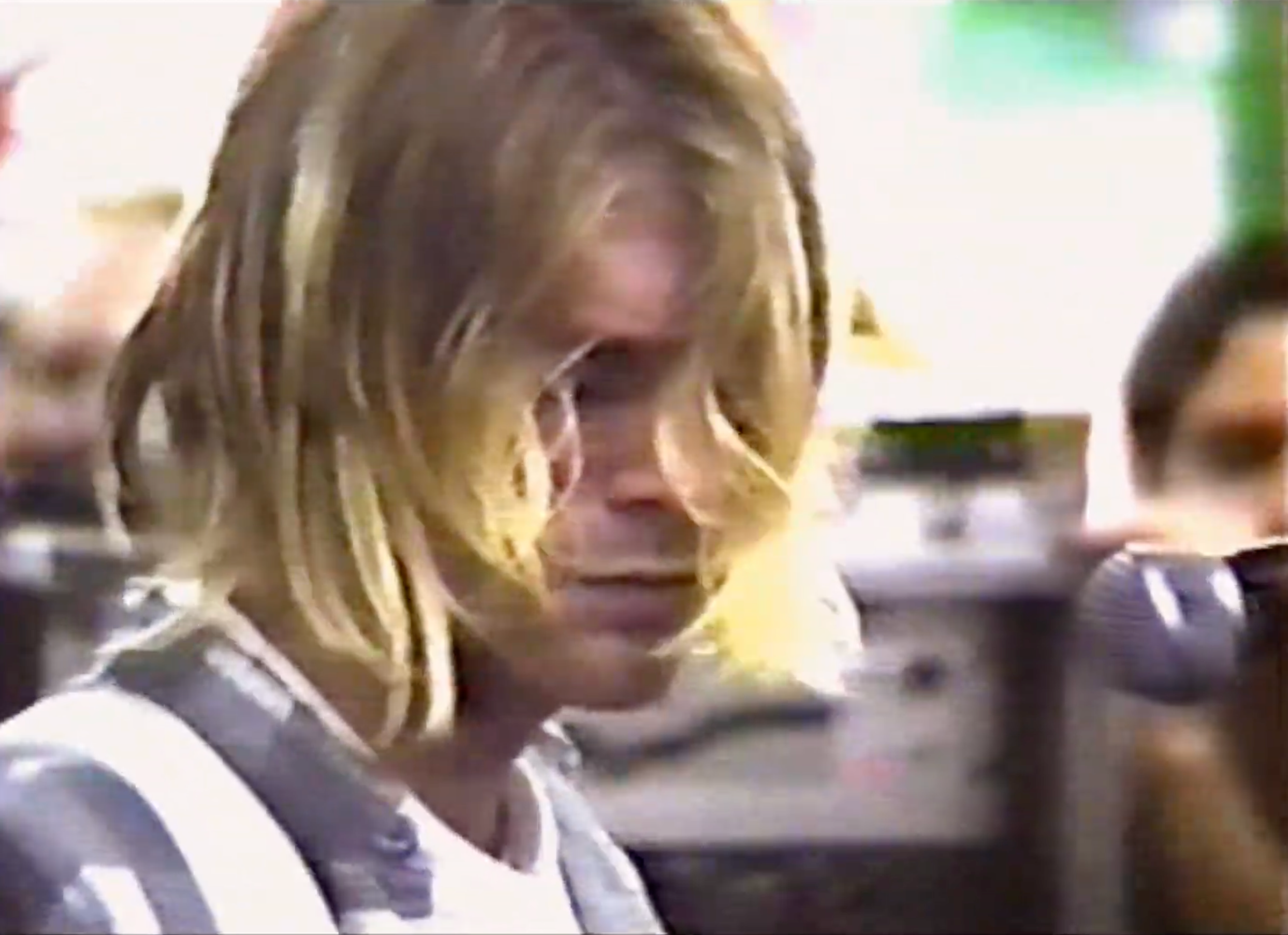
Cobain was more difficult to spot. He was the shortest and the least boisterous of the three members. And when I finally found him, he was hidden inside a cluster, completely surrounded by fans. After a few minutes, I earned my spot in the middle of the intimate circle, which never felt pushy or competitive. On the contrary, it felt protective. Nirvana’s fans that night were sensitive and respectful — pretty attuned to, and enchanted by, Cobain's introversion. He never made eye contact with me, and while we never actually spoke, I felt bad for him. He seemed happy during the show, but now, surrounded by fans outside, Cobain emanated a palpable malaise. Each time I handed him a single, I felt like more of an asshole. Yes, another one, please. And another. Oh, here’s one more. And each time, I feared that a hand that wasn’t mine would reach in and grab one of them. My fear never came true, and I left that night with seven Nirvana singles, each autographed by all three members of the band.
Bands still play small, packed shows and meet fans who feel as excited as I did that night. Some, like Phoebe Bridgers — whose 20,000 fans locked away their phones at Madison Square Garden this June to debut new songs — can even make a huge room feel intimate. But nothing quite recreates when it happens by accident: a couple hundred respectful fans, watching the world change in real time. Looking back, so much of the magic of that night wasn't just the music I'd waited all summer to hear or the records I got signed. It was watching three ordinary guys cross into fame and sharing intimate moments that I was positive I — and they — would never experience again.
Nabil Ayers is an author, podcast host, and president of Beggars Group. Find him online here.