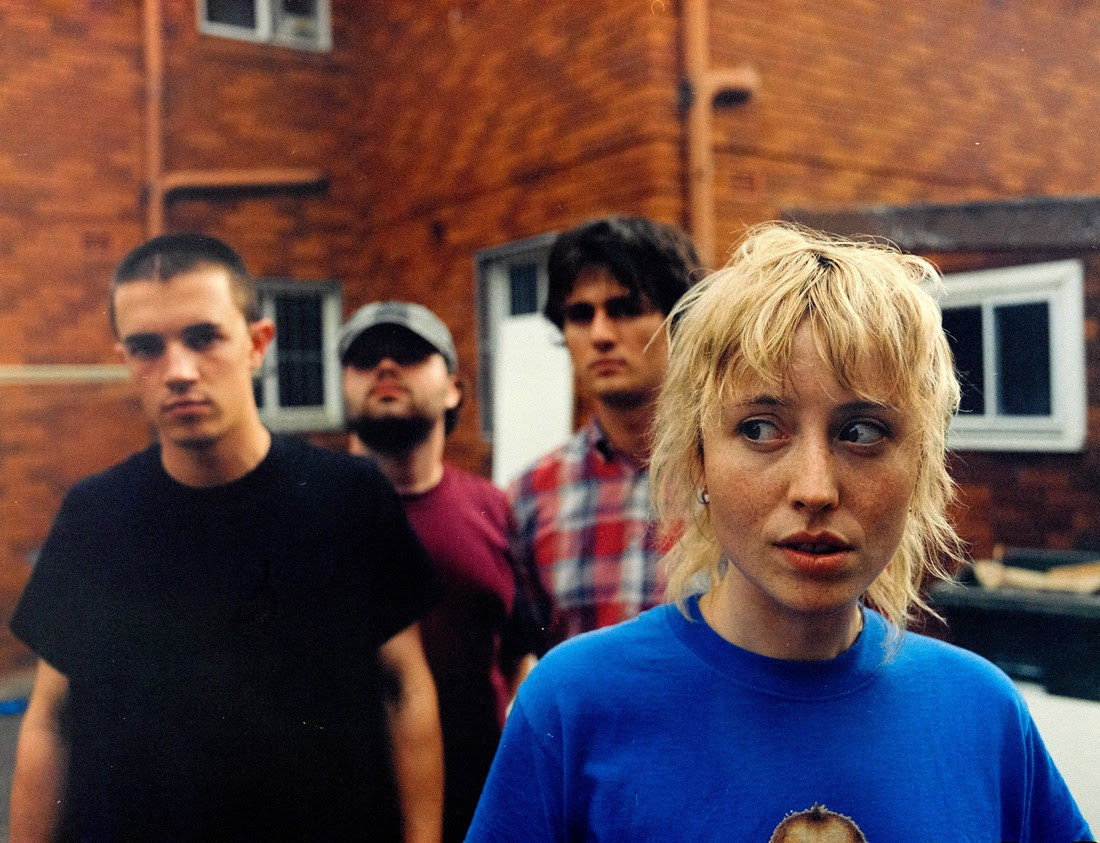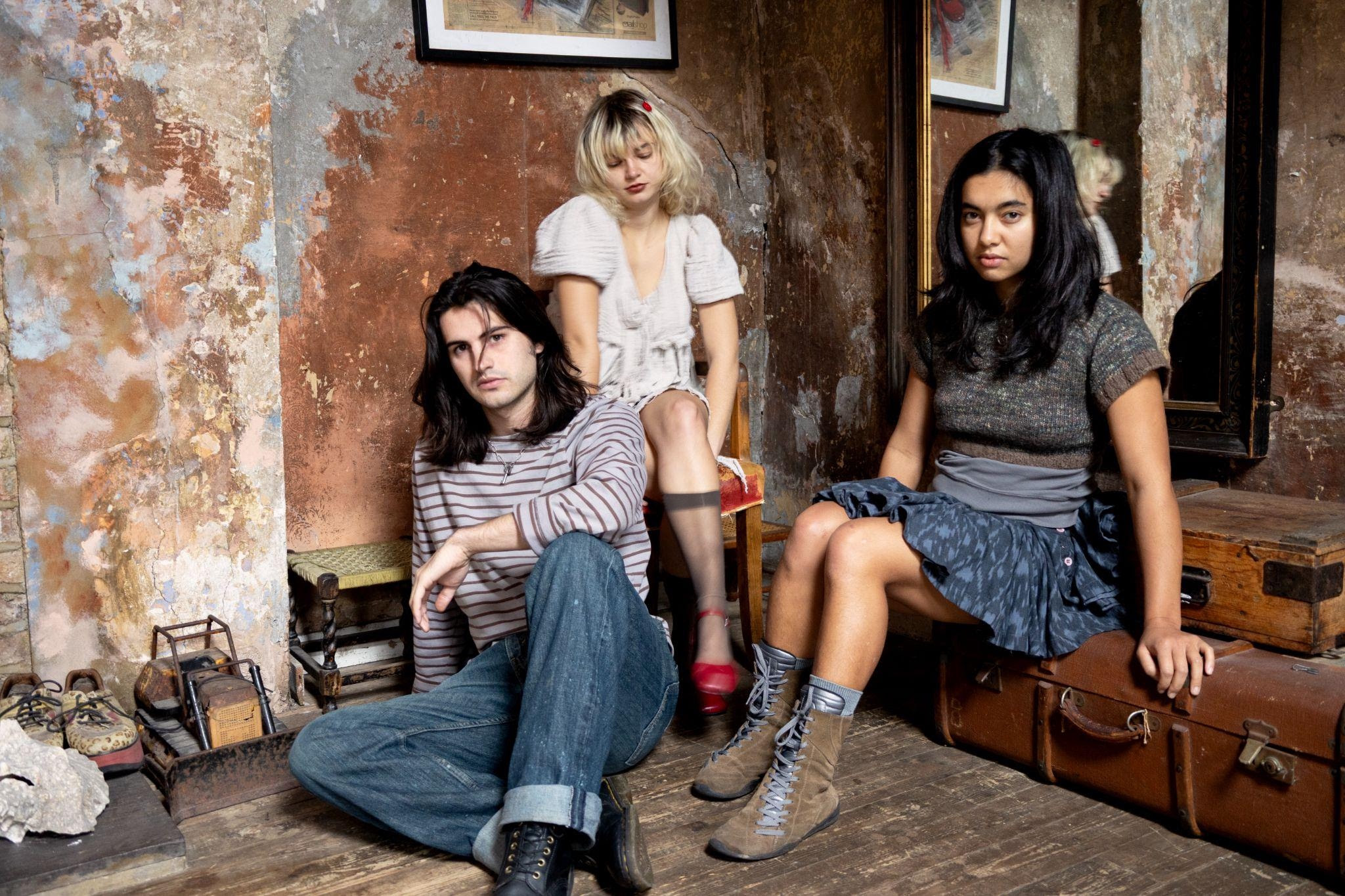

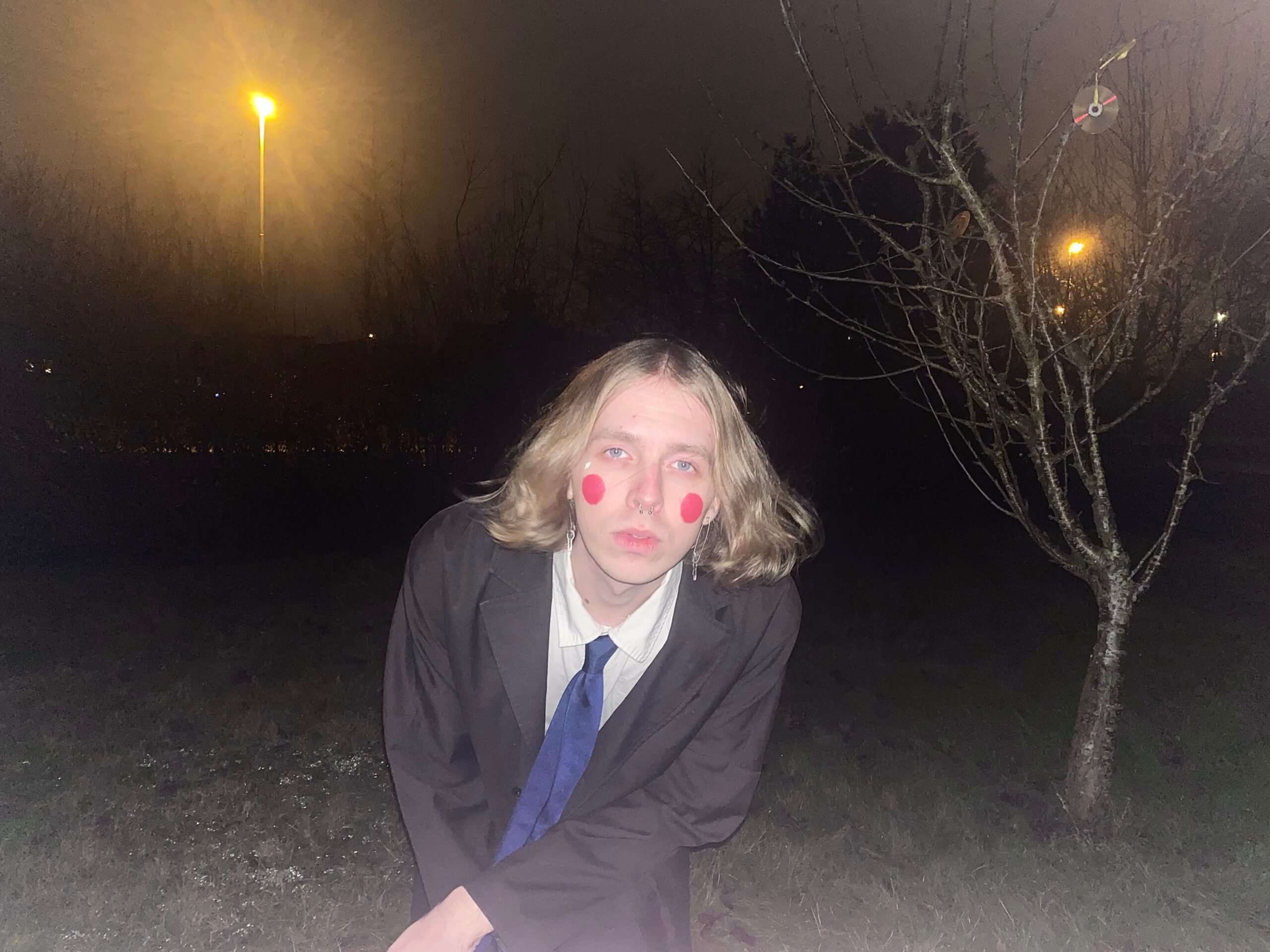
"This is the best album ever made." "This album has made me fall in love and break my heart." "I can't listen to this album without feeling like crying." "This album is so peak bro."
That's how fans gush about Weatherday's Come In on Rate Your Music, the preeminent internet forum for Gen-Z music nerds. On that site, where users rank albums on a one-to-five scale, often alongside a written review, Weatherday's 2019 debut has been rated over 15,000 times -- thousands more than any Alex G album, and nearly as many star ratings as Car Seat Headrest's lo-fi landmark Twin Fantasy has received. In addition to cataloging review scores, Rate Your Music files every release on their database into ranked charts that allow users to view the highest-rated albums within a given year or genre. Come In lands at #15 for 2019 albums -- higher than Caroline Polachek's critical smash, Pang -- and at #24 for emo full-lengths, beating out genre classics like Jimmy Eat World's Clarity and the Hotelier's Home, Like No Place Is There.
Not bad for an album that was self-released by a broke, 20-something Swede, who was uninvolved in any scene, had no label or press support, and who recorded their 51-minute opus with an iPhone earbud mic and the GarageBand mobile app. Even more impressive when you take into account that fans know next to nothing about Sputnik, the mononymous, anonymous mastermind behind Weatherday, who rarely spoke about their personal life until this interview with Stereogum.
Against all odds, Come In found a grassroots audience on discovery-oriented platforms like Bandcamp and Rate Your Music, and within a few months, Sputnik was able to quit their job hunt and eke out a frugal living making music -- something they never planned on doing. Since then, Weatherday has released a clutch of short-form releases -- and one near-perfect shoegaze EP under the Five Pebbles moniker -- and toured the US a handful of times. However, it's taken them six years to follow up Come In with Hornet Disaster, the longer, darker, hookier Weatherday sophomore album, which finally arrives March 19 via Topshelf Records.
In the years since Come In, Weatherday's profile has risen and their influence has ballooned. Two Weatherday covers compilations, Porcelain Songs Vol. 1 and 2, were curated and released by members of the fan-run Weatherday Discord server. When Topshelf issued Come In’s first vinyl pressing in 2021, all 2,000 units were rapidly gobbled up by Weatherday's cult fanbase. One member of the Come In covenant is Korean shoegaze artist Parannoul, another anonymous bedroom musician (even more beloved on Rate Your Music) who credits Weatherday as a chief influence on his 2021 emo-gaze milestone, To See The Next Part of the Dream. Parannoul's brittle, lo-fi shoegaze textures have significantly reupholstered the genre's sound in the 2020s, and that sandy noise-pop veneer is directly informed by Come In. An album where Weatherday's emo exclamations were zhuzhed up with post-rock climaxes and art-rock idiosyncrasies, and then encased in a granular varnish of shoegazey distortion, a profound testament to how Sputnik was able to paint emotionally core-shaking vistas with a meagerly lo-fi toolkit.
"I think Weatherday is an incredibly influential artist in democratizing the recording quality of DIY music, and also further legitimizing noise and dissonance as acceptable production styles," says Longinus Recordings owner Matthew Cruz, who's released music by Parannoul, BrokenTeeth, and another Korean Weatherday disciple, Asian Glow, who partnered with Sputnik on the 2022 Weatherglow collab project. "The production standards of emo looked a lot different before Come In," Cruz continues. "It's arguably the first defining work of ‘fifth wave emo,' and has trickled down across a lot of newer acts in that genre."
Come In arrived at the perfect time. In 2019, the fourth-wave emo era (I.E. "emo revival") was years in the rearview, and the movement that took its place, "weed emo" -- the poppy, party-hardy emo strain typified by Prince Daddy & the Hyena, Oso Oso, and Mom Jeans -- fragmented the wider scene, leaving a vacuum for emo that valued sophistication and pretense; a generational equivalent to what The World Is A Beautiful Place & I Am No Longer Afraid To Die, Foxing, and especially the abrasively challenging Brave Little Abacus were doing earlier in the 2010s. Come In’s convergence of awesome ambition and relatable scrappiness met the mark, and the record's release also dovetailed with a similar transitional moment happening in bedroom-pop. The first generation of Bandcamp lo-fi artists (Car Seat Headrest, Alex G, Frankie Cosmos) had graduated out of their home studios, and a more commercially twee iteration of bedroom-pop (Beabadoobee, Cavetown, mxmtoon) was about to dominate the COVID lockdown era. Younger indie-oriented listeners with an ear for harsher sounds needed their generation's The Glow Pt. 2 or Twin Fantasy, and Come In, with its dense coming-of-age concept and mountainous dynamic builds, fit the bill.
What's remarkable about Weatherday is that for as integral as their music has been to an era of music when artists are more overexposed than ever, even basic details about Sputnik's life remain a mystery. Given that they tour like a normal rock band and never went to any great lengths to conceal their face, they're not entirely anonymous. However, their government name and age are still classified from fans, and they keep their location in Southern Sweden intentionally vague while speaking with Stereogum via Zoom. They're soft-spoken yet surprisingly friendly for an artist who'd only ever done three interviews prior to our conversation. When presented with a compliment about their music, they smile bashfully and tilt their head downward, making the silver gems glued playfully beneath their eyes sparkle in the computer light. The formalities of a label-funded album rollout are still new territory for Sputnik, who uploaded Come In to Bandcamp on a Monday in April 2019 and never expected anyone else to care.
"I was really broke when I dropped that album," they say. "I was just dropping it for my own sake. And then it took off really quickly."
For all the ways in which their life has changed since then, their creative process hasn't adjusted much. They upgraded their production software from GarageBand to Logic after Come In and purchased an actual microphone to record Hornet Disaster -- albeit a "cheap, tiny one," they clarify. Writing and recording takes no time at all. It's the production, interestingly enough, that consumed the vast majority of the 15-hour workdays Sputnik pulled while making Hornet Disaster. To anyone worrying -- or hoping, since Weatherday's crud-coated sound isn't universally admired -- that Hornet Disaster will sound too polished, don't fret. First single "Angel," out today, is as clattering and claustrophobic as any track on Come In. Snowing, Brave Little Abacus, and Japanese noise-rockers Number Girl are still their primary influences. However, they also describe Hornet Disaster as being both sadder and more "conventional" sounding than Come In.
I think what they mean by that is catchy. "Angel" is an absolute earworm, one of several that litter Hornet Disaster’s 19-song tracklist. Rather than leaning into 13-minute epics like Come In’s "My Sputnik Sweetheart," Sputnik intentionally wrote songs with pop song structures and focused on burying sticky melodies beneath their twinkly licks. One song, "Pulka," is sung entirely in Swedish and is meant to be Weatherday's take on their home country's specific breed of morose pop-rock à la Broder Daniel and Kent. Overall, Hornet Disaster is at once more emo and more aggressive than Come In, but also far hookier and less directionally cumbersome. Everything flows a little more evenly, but all the quirks that made Come In so alluring -- multi-character lyrical perspectives, elastic vocal deliveries, scattered electronic detours -- remain intact.
In previous interviews, Sputnik spoke mostly about their artistic process, but this time, they were unexpectedly open to discussing the human behind Weatherday, and how they've adjusted to life as a niche indie micro-celebrity. They're still not very forthcoming, and to be sure, the mystery they've constructed is part of the fun in being a Weatherday fan. That way, every detail they do reveal offers a new keyhole glimpse at the sensitive person behind the noise-pop emo curtain.
Below, hear new songs "Angel" and "Heartbeats" and read our interview.
What was your life like growing up?
SPUTNIK: I don't know, that's hard to say. I feel like it was fairly normal. To put it in perspective, when I met people in America and I heard about what they have experienced growing up, I was like, "What is this place? It seems crazy." I know people from Florida. It's a lot more threatening and rough. There are also really positive things about America.
What kind of positive aspects?
SPUTNIK: I think the social aspect of it. People are really social and usually pretty kind. We have a lot of polite kindness here, which is its own thing. But there's been some warmth in America that I haven't felt in the same way here. Compared to [my experience] growing up, I was socially feeling alienated a little bit, or like different. And in America, I feel like everyone has that, like, it's very individualistic and everyone has their own story. So, it's easy to feel welcome in that way.
Why do you think you felt socially alienated?
SPUTNIK: I'm still trying to figure that out.
Were you more of an artsy kid or were you into sports?
SPUTNIK: I was totally more of the artsy kind. I would draw a lot, and I played the cello and stuff. I did do martial arts, swimming, and tennis, so I was into that stuff. But it was more early on. And then I started focusing more on drawing.
Were your parents supportive of you pursuing artistic things?
SPUTNIK: Very much so. They're musicians and so they were really encouraging when it came to that stuff. With anything in general, if I had an ambition, they were trying to nurture it.
Did you have a lot of friends in school?
SPUTNIK: I had a lot of friends, but not a lot of close friends, And the close friends were ones that didn't stick around when I switched schools. Since then, I've gotten more permanent friends [through] growing up.
I feel like there's this connotation of you being this very shy artist who's very private about your personal life. But so far in our conversation, you're not as private as I thought you'd be.
SPUTNIK: Every year becomes easier with [overcoming shyness]. I'm pretty private because I don't tell people online where I live or how old I am, anything like that. Like, no personal information. I'm trying to just be, like, the artist publicly.
Is that because you don't want people to know about you, or is that in service of the art in some way?
SPUTNIK: Definitely both. The main thought is the latter. Just for safety reasons. The few things that I have been open about…Like, I had friends from real life that I followed on my Instagram account, and then I'm getting these people who start writing them because they can tell like, these aren't bands, these aren't labels or whatever. These are like people that Sputnik really knows in real life. So they start DMing them and being like, "Hey, can you make Sputnik reply to my DMs?" So I figured that if people start knowing too much about me, they might start calling my parents, finding addresses and stuff. I don't want to deal with that.
Have there been any genuine doxxing attempts?
SPUTNIK: No, I've been pretty good with not drawing too much attention to that, and my listeners are generally not the type to try and look that stuff up.
How do you feel about talking to fans when they approach you at shows?
SPUTNIK: I think it probably fast-tracked [me] getting a bit less shy, especially when speaking in English. Because it's not my first language, so I'll never be fully comfortable. So having talked to a lot of listeners at shows, I think that has totally helped me in that area. And overall, being in America, people are more, not prying, but the good version of that. So you're forced to open up a bit, and people open up about anything. You'll be at a gas station and learn someone's life story, and so you feel more inclined to be open and inviting as a person. So after every show, I try to hang around by the merch table and talk to everyone and take pictures with everyone.
What about criticism? Are you a namesearcher? Do you read the comments?
SPUTNIK: Definitely starting out, I was so excited. Like, "I'm getting a lot of unfiltered opinions, this is so cool." I still do now and then. It's fun to see where things are at. For example, on Rate Your Music, which I use a lot on my own, sometimes I'll go in and check how some of my albums are doing. Seeing how people have slowly started to like Come In. They've gotten used to it -- it might be Stockholm Syndrome. But I'm seeing a more positive outlook on there.
And so I check stuff sometimes, but mostly to get unfiltered feedback. Because friends will be really positive and they'll see the good stuff, but I need to hear what I'm missing myself. Everything I do [has] a choice behind it, and it's all very deliberate. If I have any restrictions with my equipment, I'll work around it…So when someone points out anything, I will know what people aren't that into.
I feel like Weatherday's music is pretty angsty, emotional. There's a lot of feeling in it. Were you always someone who's pretty sensitive?
SPUTNIK: For sure, I was one of those kids who was crying regularly when they're a bit too old. Like, if you get hurt, you fall and scrape your knee and start crying, but you're two years too old to do that. I was one of those [laughs].
How did Come In taking off online and becoming this cult album change your sense of identity?
SPUTNIK: It's wild when someone you meet knows you, or a version of you at least, and they know way more about you than they would any other stranger. And they're a complete stranger to me. It's a weird interaction to have. So that's something I think that has changed about me. There are different types of strangers to me now, and I have to get used to some of them knowing a lot about me. Also, I will not as often go outside with greasy hair and stuff, because I don't want someone who knows me to see that.
The paparazzi are always watching.
SPUTNIK: One time I just opened Twitter casually and I saw someone mention how they saw me out in the city here, like I was hopping off the train. And they were like, "Oh my god, I saw Weatherday on the train station." And after that, I thought, like, I will not go out with greasy hair and looking [disheveled]. That's a luxury I feel like I don't have any more. It's self-imposed, though. I don't feel forced to do anything.
Let's talk about Hornet Disaster. You were mentioning this record's existence as far back as 2020, right?
SPUTNIK: When I started working on it in 2020, I don't think it had the name Hornet Disaster officially yet. I think people were still thinking it was called Sprite because of a joke I did online. People are asking me to this day, like, "What happened to Sprite?" I was trying to, after Come In, just do an EP that was a bit less effort, to just get more experience and just for fun. And then it turned into an album, and then that album turned into a more complex album. I was trying to do something simple. The album is supposed to be my conventional "poppy" album. It has choruses and some hooks. I set out to do something really simple and normal, and I feel like I succeeded. This is, like, really conventional.
It's long, though. Practically a double album.
SPUTNIK: That's true [laughs]. I think more compositionally. Because on Come In, I have a lot of [songs] that start at point A and then end at point B. There's a lot of meandering. And this time around, it's more verse-course-verse type stuff, and I'm trying to make the melodies more conventional. It's sort of a conventional album, and also unconventional. I like that middleground.
Your music has a really raw sound, but it sounds like there's a lot of production effort that goes into achieving it.
SPUTNIK: For sure, like, a really huge amount. It's by far the thing I put the most time into. It's usually because I'm recording with not the ideal equipment. It becomes more work afterwards to make it work. It's kind of like how painters will be painting something really messily, and then they adjust it to make it look good. And you have to do it that way to get the human touch. I record things and it sounds really messy, and then I try to clean it up enough for people to be able to listen to it.
We rely on reader subscriptions to deliver articles like the one you're reading. Become a member and help support independent media!
Since you're a Rate Your Music person, you're probably into genre and classification. Do you consider yourself to still be working under the umbrella of emo with Hornet Disaster?
SPUTNIK: I'm into genres as a curiosity, and I think it's really cool to have this whole net of different genres and umbrella terms. But as an artist, I don't put too much weight into it. So, I still try to explain [Weatherday] as well as I can but as simply as possible. So I still see it as emo and noise-pop, and lo-fi I usually [say] because that's how it sounds. I've seen a lot of discussions about how to properly tag the album [to] genres. A lot of people being like, "No, it's Midwest emo." A lot of people saying, "No, there's nothing that is Midwest emo here." And someone being like, "Well, when you actually look at it, there's a lot of first-wave emo on here."
I'm influenced by all of it, and I'm trying to put my own spin on stuff. I'm not doing a lot of the tropes. Especially on Come In, I didn't know how to do a lot of the [emo] tropes. Otherwise I would have had more Midwest emo tropes, a lot more twinkling and stuff like that. I usually just say "emo." Any kind of emo that you think this sounds like, I'll agree with you.
I was expecting you to go in a more indie-rock or shoegaze direction with Hornet Disaster, but it's almost more emo than Come In. And also more abrasive and intense sounding. What do you think accounts for that?
SPUTNIK: I wanted the album to be more explosive and have more meat to it. Come In is the happy album, and this is the sad one. So I wanted it to be more harsh. There were harsher emotions expressed on here, so it naturally became more abrasive.
What are some of the harsher emotions you're working through on here?
SPUTNIK: I think overall on the album, I am usually explaining things pretty clearly. So a lot of it is gonna be plain to see. It's hard to talk about because I'm trying to leave it up for interpretation. Vaguely speaking, I think a lot of self-destructive stuff, feeling misunderstood, feeling like you're misunderstanding everything and everyone. It's a form of isolation, and it's different from the one that people have heard on Come In. Where Come In is more like, you've locked yourself in somewhere, this one -- I mention it in one of the songs, "Blood Online" -- is you've definitely locked the door, but the door was never closed. So it's an open door that you've locked. This one picks up where Come In left off. It's my dream to have a third album to form a trilogy.
You mentioned self-destruction being a theme in the lyrics. How so?
SPUTNIK: In a very broad sense, where it manifests in everything. I'm trying to show in the lyrics…where the way you would normally act in a situation, I'm trying to have the narrator be very unreasonable. Where you can totally tell that this is just bad vibes.
Are you the narrator or is the narrator a character?
SPUTNIK: It's both. I [included] a lot of fiction, and I have a lot of anecdotal stuff that won't make sense to people. Just something that I know and have experienced, but it won't make sense on the album. I think that stuff is hard to keep out when you're trying to write honestly. On Come In, I was doing the lyrics from three different points of view at all times. So I was using the same word that could mean different things, and words that sound the same but are different words. So if you read one of the lines in the lyrics, it can be understood in three different ways, always. I was doing that a lot on this album, too. So a lot of things mean several things at once, and that's also how it's an album about hornets in a literal sense. But also, it's using hornet stuff to translate human things into that.
The cover art for Hornet Disaster is pretty graphic. There's blood on it, and it also contains the character from Come In. How does it continue the story you were telling with Come In?
SPUTNIK: On the album, there's a lot of blood-related themes. It's supposed to represent…something very personal. It's vital to you. It's something you don't just give away. You'll die if you get drained of all your blood. So, it's a way of being vulnerable and authentic. On the album cover, biting your hands to make blood come out, that way you're being more revealing.
I know you began working on Hornet Disaster right after Come In. Do you already have ideas for the third Weatherday album?
SPUTNIK: I have a lot written down, and I already have lyrics going. All of that will probably change to some degree. But I have a vision in mind. Just like how Hornet Disaster is a step in one direction from Come In, this would be like, probably an equal step further in some direction. But who knows what the future holds.
Are you going to do anything else with Five Pebbles?
SPUTNIK: Once I'm done with Hornet Disaster stuff I'm going to focus on taking some time off by doing side projects like Five Pebbles and Lola's Pocket PC. I have a lot of material for both of them. I recorded this demo that sounds like Abba but shoegaze, so I was really excited about maybe doing something with that.
What do you think is the biggest myth or misconception about Weatherday?
SPUTNIK: I don't know. I always think people are equally onto something and totally missing the mark about most things. But I like it that way.
TRACKLIST:
01 "Hornet Disaster"
02 "Meanie"
03 "Angel"
04 "Take Care Of Yourself (Paper - Like Nests)"
05 "Hug"
06 "Radar Ballet"
07 "Green Tea Seaweed Sea"
08 "Blood Online"
09 "Blanket"
10 "Pulka"
11 "Heartbeats"
12 "Chopland Sedans"
13 "Cooperative Calligraphy"
14 "Ripped Apart By Hands"
15 "Nostalgia Drive Avatar"
16 "Aldehydes"
17 "Tiara"
18 "Agatha's Goldfish (Sparkling Water)"
19 "Heaven Smile"
Hornet Disaster is out 3/19 via Topshelf.