
- Interscope
- 2005
For the first 10 years of his career, the idea of the "real" Beck was up for grabs. You had the lo-fi folkie, the slacker white-boy rapper, the is-he-for-real Prince impersonator, the epically bummed-out orchestral singer-songwriter. Depending on who you talked to, some of these personas were derided, and some were hallowed. Depending on who you talked to, he was a great Gen X shapeshifter or a '90s ironist confounding fans with insincere genre exercises. But if there was any consensus or accepted wisdom about Beck's career, it was his 1996 free-for-all collage Odelay that was the truest representation of him — wry, vivid, spiritually cohesive while stylistically agnostic.
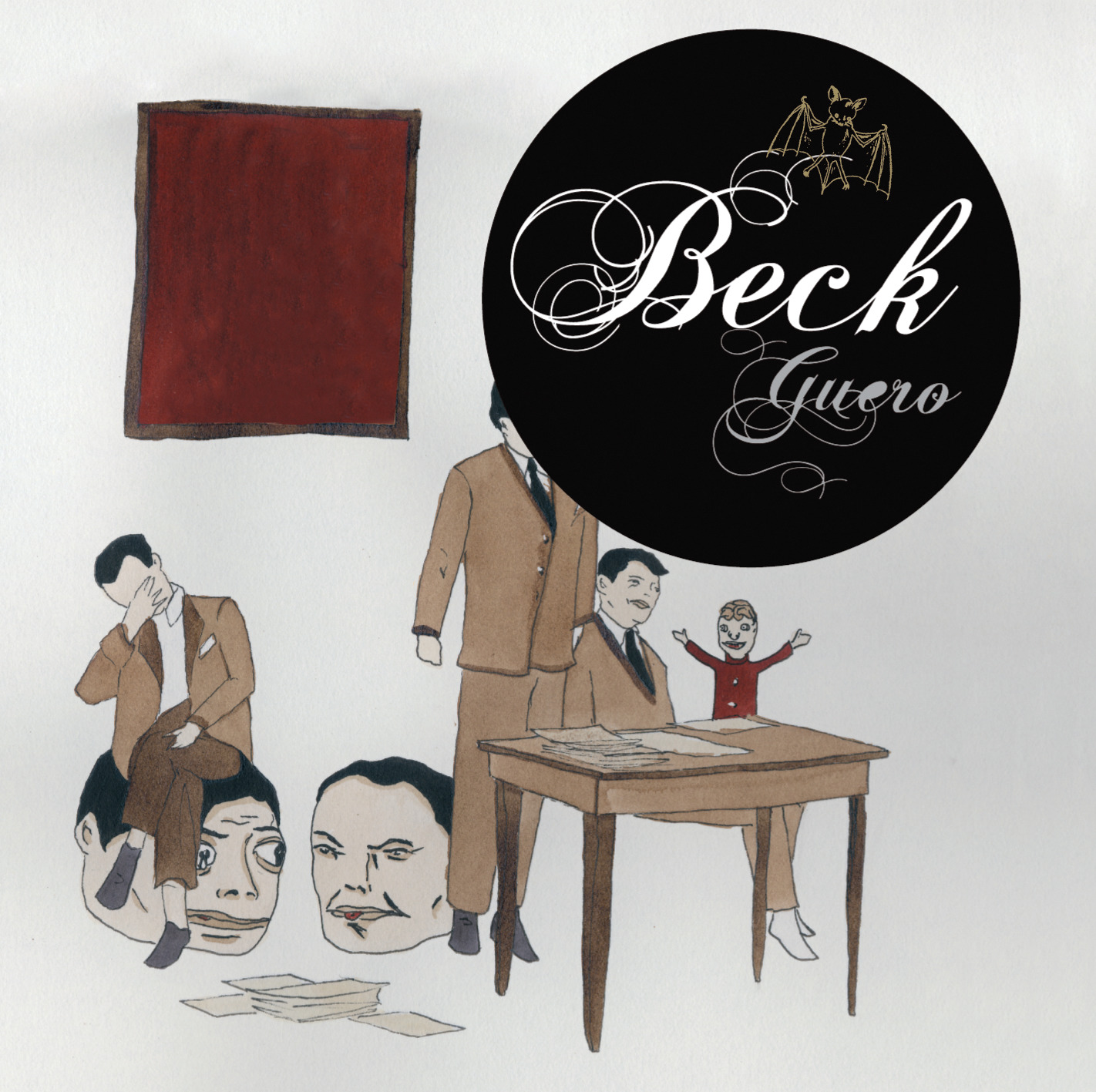
I never knew those other Becks as the primary Beck, the way '90s alt-rockers latched on to Mellow Gold or indie internet nerds rallied behind the pastiche of Midnite Vultures. My first Beck was the "return-to-form" Beck. For nearly a decade after the success of Odelay, Beck bobbed and weaved until, finally, he released Guero, 10 years ago this Saturday. It was one of those albums where an artist resets by returning to a core idea of who they are. Which, naturally, meant you could argue it was a wan pop concession as much as it was a triumphant comeback.
If you revisit reviews of Guero from back then, you'll see a whole lot of "Beck, giving the people what they want," both derisively and approvingly. If you viewed 1999's Midnite Vultures as shenanigans — this was long before the album underwent its arc from "wrongfully maligned hipster fave" to "We've gone on and on about how underrated this is to the point that it might be overrated now" — or 2002's breakup document Sea Change as a bummer, Guero was the reboot. Nearly 10 years on from Odelay, Beck reunited with the Dust Brothers, the production duo who had helped Beck create Odelay’s sample-strewn kitchen-sink aesthetic. (The Dust Brothers also had a few credits on Midnite Vultures.) Guero became the return of Odelay, in the sense that it flitted from sound to sound while allowing all the Becks to once more coexist on a single album — or reintroduced us to the real Beck, the restless guy who just wanted to try it all.
From the start, you could see the album work almost as if recapturing the zig-zagging magic of Odelay had been a prompt and template. Some detractors argued that "E-Pro" descended directly from "Devil's Haircut," as "Hell Yes" did from "High 5 (Rock The Catskills)." Partially inspired by, and named for, Beck's experience growing up in a Latino neighborhood in LA, Guero conjured city streets with the cacophonous, cartoony sound effects and beats of "Qué Onda Guero," while Latin rhythms gently interjected across the ensuing tracks. This time around, "Girl" might've been the biggest shock, considering it was an unabashed slice of acoustic guitar pop.
Maybe this is amplified with two decades' worth of hindsight, but the more time you spent with Guero, it became a bit easier to question everyone buying into the Odelay sequel narrative. The album is not so jarring, not so experimental. It actually settles into a relatively consistent vibe. "Black Tambourine," "Scarecrow," "Go It Alone," and "Rental Car" exemplified its bleary-eyed, dusty rock sound; moodier jams like "Farewell Ride" and "Emergency Exit" fit in right alongside them. It was true you could hear traces of all the past Becks if you tried — the twilit acoustic jaunt and tear-strained strings of "Missing" almost checked the box for Mutations and Sea Change at once — but nothing sounded so bold or adventurous as all of Beck's detours that had led him back to theoretical home of Guero.
The context was entirely different. Guero was less chaotic than his mid-'90s breakthroughs, while also arriving in an era where blurring the lines between genres would quickly cede from hip to generationally matter-of-fact. The novelty of each individual song was quieter this time; it's not like his long-awaited Odelay successor reprised the former's structure by now having Beck try on a bunch of other genres, bringing in reggae or techno or something. In this sense, Guero was a remarkably successful remake. It sanded off the edges of the past and introduced Beck to a whole new generation of listeners.
We rely on reader subscriptions to deliver articles like the one you're reading. Become a member and help support independent media!
Where Guero ranks in Beck's catalog probably varies depending on your age. It might not quite be the divide of Radiohead fans who were in high school when OK Computer came out and those who were in high school when In Rainbows came out, but I definitely have warmer feelings towards Guero than some slightly older listeners I know. Maybe I'm not alone: Even if Guero wasn't Beck's most visionary moment, it was his most commercially successful in terms of album sales, despite enduring tracks like "E-Pro" and "Black Tambourine" never standing a chance against the iconic stature of '90s jams like "Loser" and "Where It's At."
When artists hit this point of reclamation-by-way-of-reboot — especially when it ends up being commercially successful — it can delineate their career. Everything after is in some way judged against the searching transformations of youth, the emotional and artistic settling down of a 30- or 40-something musician, and then more minute digressions later on. After Guero, Beck quickly returned with another eclectic, anything-goes album with 2006's The Information, which had gestated in the same years as its predecessor. He did the whole second Sea Change thing with Morning Phase, spent the end of the '10s making albums that awkwardly married his go-to sounds with more of-the-moment pop, and so far he's sat out the '20s in terms of new releases.
Guero divides Beck's career into uneven halves. Back in the day, you never knew what kind of Beck you were going to meet, or if you'd even recognize each other. Since Guero, Beck didn't necessarily become more static, but he began cycling through familiar costumes. Maybe that version of Beck works for a lot of people. And if that's the case, the weathered graininess and tamed eccentricities of Guero lives on as a fine introduction to an older, less zany Beck.