
The singer-songwriter on the passions, priorities, and industry changes that led her to leave her music career behind and launch Picnic Studio, "a progressive art space for adults with intellectual and developmental disabilities" in Los Angeles
In the big book of songs about the profession of being a songwriter, few are more candidly bleak than Molly Burch's "Baby Watch My Tears Dry." In the track from her 2023 album, Daydreamer, Burch croons, "I overthink like it's my job/ Trying to please everyone/ So many times I feel I've failed to/ Create the things I'm told I'm meant to." The chorus picks up, but the mood doesn't, with Burch begging helplessly for "a little reassurance" to keep her from crying an ocean's worth of tears.
She wasn't exaggerating. Daydreamer landed when Burch was more miserable with her job than she'd ever been. She was totally disillusioned with her life as a career musician, a path she'd been pursuing for her entire adult life, and had, at many points, seen considerable success doing. But by 2023, she was burnt out by the grind and struggling to find any joy in the rat race of maintaining an indie-level profile in the current landscape.
"I kept trying to remind myself that we went through a global pandemic and the rules changed, to not be so hard on myself," Burch says. "Then at the end of the day I was like, 'I'm crying every day, why am I doing this?'"
In 2025, Burch is in a totally different headspace. She's no longer a career musician, and she couldn't be happier for it. While speaking with Stereogum from her well-lit home office in Pasadena, California, Burch is glowing with enthusiasm for her new passion: Picnic Studio, a self-described "progressive art space for adults with intellectual and developmental disabilities." The project has been Burch's sole focus since early 2024, but she and her co-founder formally announced Picnic last month, along with the news that Burch would be stepping back from music to take on this new venture. While many of Burch's fans pitched in to help Picnic swiftly earn their initial fundraising goal of $50,000, many commenters on social media were surprised to learn about the singer's drastic life pivot.
Beginning with her 2017 debut, Please Be Mine, Burch released five albums on the respected Brooklyn indie label Captured Tracks (including a 2019 Christmas album) and toured relentlessly. In 2023, she and her boyfriend, musician Dailey Toliver, moved from Austin to LA with the intention of doing music at an even higher intensity. An LA native, Burch's family is in the movie business (her sister, Samy Burch, earned an Oscar nomination for penning the screenplay to Todd Haynes's 2023 flick, May December) and for as long as she could remember, Burch thought she'd remain in the entertainment industry as well. However, upon returning to her home city, everything fell apart. She split with her management, became disgruntled with the business of marketing her art, and released a whole album, Daydreamer, that now reads like an obvious cry for help during an existential crisis. The thing she'd spent her whole adult life doing no longer felt worthwhile.
"Before the pandemic, things were tough -- I struggled with a lot -- but everything just felt a bit easier to deal with or easier to handle," Burch says. "We would tour, we would sell out shows, we were on a trajectory that felt more normal."
Once the pandemic took away touring and pushed the entire music industry online, "normal" never resumed. The rise of TikTok dramatically altered how musicians were expected to market themselves as content creators, and an influx of new artists were all simultaneously trying to build careers in the same online spaces. For someone like Burch, who got into the ever-evolving music business at the tail end of its previous iteration, it felt like the rug had been pulled out from under her.
"It almost felt like the old indie music way just vanished," Burch says. "It just happened so quickly. I was like, 'Oh, wait, now I feel old.'"
We rely on reader subscriptions to deliver articles like the one you're reading. Become a member and help support independent media!
Eventually, Burch took stock of her life and realized she needed to make a change. She thought back to the last thing that truly brought her joy and realized it was her time volunteering at a small non-profit in Austin called SAGE, which now serves as the direct inspiration for Picnic. The organization is a combination studio and gallery for adults with intellectual and developmental disabilities. A space where they can not only create art, but also sell it with the hopes of earning a meaningful income from their craft. During the early days of the pandemic, Burch spent her Saturdays hanging out in SAGE's beautiful, sunlit studio, just hanging out with the artists and assisting them in minimal ways.
"Immediately I was like, wait, I love this," Burch enthuses. "I think it was like the opposite of what I was doing. With music, it feels so abstract. I felt like I was just constantly chasing success or something that I couldn't see. Even when something good happens, it's so fleeting. You're like, 'OK, what's the next step?' I was so tired of that."
At SAGE, the tangibility of helping someone make art totally rejuvenated her relationship with it. "I got so much fulfillment out of just a simple act of handing a marker to someone and helping them create something. I was like, 'Oh, wow. I can literally see it, it's not abstract.'"
While there are other programs similar to SAGE throughout the country, including Creative Growth in San Francisco, there was no equivalent organization in LA, which Burch identified as a serious detriment to that region's community. Throughout the US, adults with disabilities are not only socially isolated from most of able-bodied society, but their options for employment are severely limited. In California, adults with disabilities are assigned to regional centers where they're typically given the option to work at a grocery store or another service gig, businesses where they're often underpaid and/or not granted enough hours to earn a decent living. Without programs like SAGE and Picnic, it's nearly impossible for members of that community to seek employment in a creative setting, where they can produce and sell art just like any other able-bodied creative.
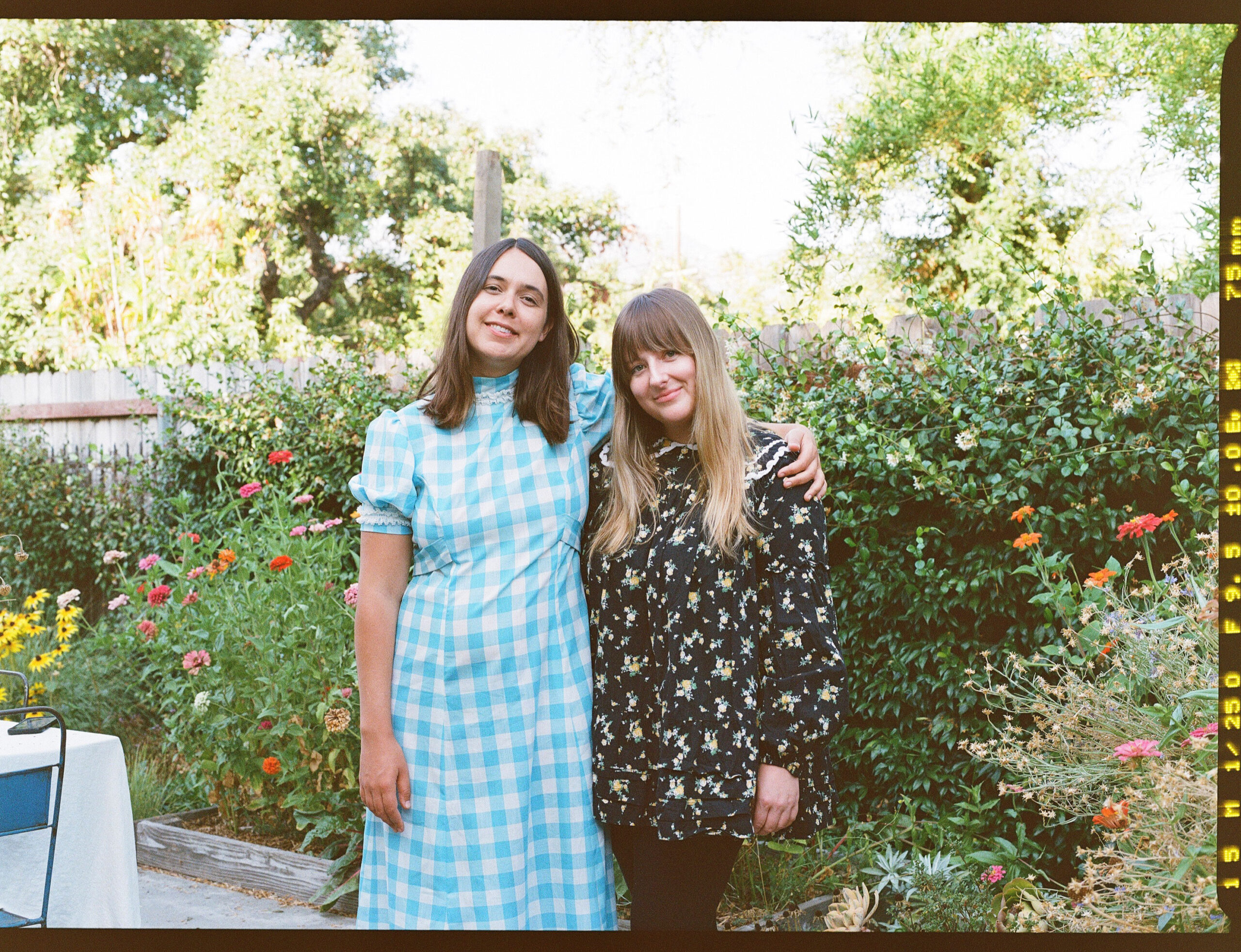
As working artists themselves, Burch and her Picnic cofounder/longtime friend Sascha Stannard acutely understand the value of creative labor, and with Picnic (an acronym for Promoting Inclusion and Creative Networking in Community) they aim to facilitate equitable careers -- and an encouraging social space -- for artists who desperately need that kind of support system. Burch spoke openly with us about her misgivings with the music business, the difficulties indie musicians face in the current landscape, and how her work with Picnic has completely reoriented her life for the better.
You released an album basically every year or every two years between 2017 and 2023, but now it's 2025 and we're not talking today because you have a new album coming out. Kind of the opposite, right?
MOLLY BURCH: Yes, I started putting out music in like 2017 and pretty much released one album per year up until the pandemic. And that really, I think, is where things shifted for me. I put out two albums since 2020, and my last album came out in 2023, and ever since then I've been taking…I kind of call it an indefinite break, but I also kind of feel retired in that sense that I don't feel like I would ever go back to putting out music like how I was. And I kind of gave myself permission to be OK with not knowing what the future holds for me as a musician. And I think that was a really intense, hard transition, and it took me a second to really accept it.
Obviously the music industry changed for everyone during the pandemic, but was there anything particular about that period that impacted you?
BURCH: The most immediate one was prior to 2020, I was under the impression that you have to tour as much as possible. Touring is the only way to make money. We would tour most of the year, and that was just our whole lives, and it was really difficult. So when the pandemic happened, that was just totally taken away… I really had to kind of sit and think about, "OK, wow, what if I didn't have this, this thing that I'd never questioned before." I'd never not had it. I've never not been working towards this.
So I think that was the first thing that happened. And then the second thing, I think, was just the experience of putting out an album in 2021. That was really jolting. Because I think at that time, everyone's like, "Oh, it's 2021 everything's back to normal." And it wasn't. But I still kind of felt like everyone was pretending like it was back to normal and judging people off of what's normal, and not like acknowledging that things were different. So that was really hard.
How did things feel especially different in 2021?
BURCH: We couldn't tour that album for a while. And I think putting out music is so isolating anyways. But then it was especially isolating because we were on-and-off being quarantined. I just felt especially isolated during that process.
What's isolating about putting out music?
BURCH: Even though I would tour with a band, it's my name, so it feels very much about me, and then it's just so vulnerable. I personally always struggled with [being] a people pleaser. So I wanted my label to be happy, I wanted my manager -- I wanted everyone to think that I was doing well, and I think I spent a lot of energy thinking about that, especially during album cycles. But everything on the business side is just measured with success. How many tickets did you sell? How many [songs] did you get on this Spotify playlist? I personally could never get out of that mindset. I loved writing and recording, but even in those times, it was hard for me to really purely enjoy the music. I was always thinking about marketing the album. I think it got to the point where all the joy was sucked out of it. I feel like it was just all the parts that made me anxious.
The isolating part is even though you have a team of people and you're working together, at the end of the day, it's you and your songs. And I think a lot of people do rely on whether the album does well or not. But even during that time in 2021, I wasn't really questioning whether I wanted to do it, I was still pretty certain. But I think the last thing that I attribute to my choice of stepping aside was my boyfriend and I had lived in Austin for almost 10 years, but I'm originally from LA, and so in 2023 we decided to move back to LA. A lot of my family's here, and we were like, "We need to change, let's just go to LA and do music more." We were moving to LA to give us more opportunities for songwriting sessions and blah, blah, blah.
But that first month we moved, my management dropped me, and everything kind of spiraled out after that, where I had to navigate things on my own for the first time in a while. I started my career doing everything myself, but I was so used to having a manager. So I really was just so involved in the process of my last album, and I was just like, "Oh, wait, I am not happy. This doesn't feel good. I don't like the people that I'm having to expose myself to on a daily basis." After years and years of just putting blood, sweat, and tears into it, I was just like, "Wow, this is where it is. This is not working." Right before our last tour, I was like, "I think this is the last tour."
Why did management drop you?
BURCH: I feel bad saying that because I am still close with my manager, but she was hired as part of a bigger management team. I think it just wasn't doing well. I wasn't making them enough money, or any money. I don't know. I think that's why anyone gets dropped, you're not making them enough. But everything feels so personal even though it's business. That hit me really hard. But I think even more than that was just having to do everything on my own and deal with the label.
A lot of artists have also talked about how post-COVID touring has become prohibitively expensive.
BURCH: Oh, absolutely. It's really expensive, and then also you're just making less, or at least that's what it was for us. I think we were selling maybe, like, 50% less tickets than we did pre-pandemic. And once touring came back, then everyone was on tour, so it just got so competitive. And also, I think a lot of people didn't want to go to shows. I felt that way. I was like, "I don't want to be in a crowd of people." But yeah, being told for so long, "You have to tour, that's where the money is." And then we're like, "Wait, there isn't [money here]."
Was there an exact moment when you were like, "That's it, I'm making a change. I'm putting music on the backburner and doing something else."
BURCH: It wasn't until right before the tour for Daydreamer, one of my best friends, Sascha [Stannard], who's the co-founder [of Picnic], we went to one of our other best friend's wedding, and we were staying in a hotel together. We both were just feeling so burnt out. She's a painter and a working artist, so we both were talking about how we feel like we need a change. I just started talking about SAGE. Like, "I just want to do that." And she was like, "Me too." We were like, "Wait, let's do it." It just was pretty instant.
I went on tour, but I bought books about how to start a nonprofit and was so, like, "This is what I'm going to focus on when I'm off tour." At the top of 2024, I asked to get out of my label. I still had one record left, and it was pretty amicable, which was a big relief. Like, "OK, great, I'm gonna focus on this," and that's what I've been doing ever since. We've been slowly building our community and having our classes out of my house. About four weeks ago, we started our Instagram and a crowdfunding campaign.
Give me a rundown of what the studio will look like when it's complete.
BURCH: Our idea is very much modeled after SAGE in Austin. We really want two designated parts to this space. I think what's really special about that is people can come in, see a gallery set up, but then also be invited into the space where it's created, which I think is really cool. I think that also gives the artists a sense of like, this is my desk, this is my work. Visually, they can see, this is where I work, and this is where we sell the work. We want to be in Pasadena. So basically, we're starting the process of looking for spaces. We just love the community over here, and we just want it to be a beautiful space that inspires creating, and also where we can host a bunch of events. Gallery openings, poetry readings, movie nights, all [kinds of] things.
How does the funding model work? If it's a nonprofit will you be getting grant money, ideally?
BURCH: So right now, we are really relying on individual donors. We just did our first crowdfunding campaign and we raised $50,000, which was awesome. And so yeah, individual donors, and we will apply for grants, but we're waiting for our 501(c)(3) status. But we're operating under a fiscal sponsor, so that's why we're able to fundraise. But once we get our status, a lot of grants want you to be operating for at least, like, two years. So right now, I feel like we're really relying on donors. And also, once we're set up, we'll have art sales, merch sales, and we'll put on fundraiser shows.
I think it's really cool that you're explicitly helping the artists to make an income from their work. Being working artists yourselves, I'm sure that's an important aspect of what you're doing with Picnic.
BURCH: I think that the two most important [components] are having an opportunity to make, first of all, any income, but also meaningful income. I kind of can't I stress enough how broken the system is for people with disabilities. Laws are outdated, this is a community that is so pushed aside, and it's really heartbreaking when you really see what's going on. I didn't know what it was like before I really started to look. It's not something that's really talked about. The opportunities are super limited, and I think that it's really hard to have any income, let alone meaningful income. So that's a huge part of it. Getting our artists to make money.
The second huge part is to have an inclusive space. And I think that's almost the most important thing for us. People with intellectual and developmental disabilities, their social lives can be really small. Like family, staff workers if they're in a program, or just their peers. Even within that system, things are really limited. We want to create a social environment where people with disabilities are exposed to people without, and people without are exposed to people with. I just think that's so, so important for everyone.
Everyone I've met in the past couple years, they're some of my closest friends now, and I get so much out of our friendships, and I learn from so much. It feels so important to learn about different perspectives and to step outside of your normal circle. And I've been able to see so many instances of friends coming in to, like, do art with us. They come and they leave and they're like, "That was the best day. That was so lovely. I needed that." Or when the fires happened in LA in January, we had two people we were working with that lost their homes. We were able to invite them to Sascha's house for a couple days. We just watched Wicked and made art and hung out
Sascha's friend came, who doesn't have disabilities. She also just lost everything, and it was so beautiful to see her connect with one of our artists with Down Syndrome who had lost their house, and they just embraced and were crying together and just saying, like, "I miss my house. I miss my room." It was just so powerful to see that. Two people that wouldn't have met before who were both going through the exact same thing. It was just so beautiful. They both felt so much support from each other. I think that was a really cool moment for Sascha and I to see, because we were like, that's exactly what we want to do with the space.
Was there anything you picked up during your time being a working musician that you're able to apply to Picnic?
BURCH: I feel like I've always been a type A musician. My boyfriend's a musician and he's a musician through and through -- he hates filling out forms. I gravitated toward that stuff. I like formality. So I think that this weirdly melds a lot of my interests. I really like helping someone figure out what they want to do, or helping them achieve what they want to do. There's something so nice to have it not be my creative thing, but to help others.
Do you still feel the desire to write music but not release it, or are you totally severed from that now?
BURCH: I feel so severed. It's funny, a lot of people I tell are like, "Oh, you're not retired. Don't worry, you can come back to it if you want to." I do know that, but I feel so past the transition phase. I don't think about it. I feel like I'm able to be a fan of music again, which I feel like I lost for a while. I just feel so content in knowing if I'll ever do it again or not… I've always written music for the purpose of putting out an album or something. I've never been the type to write all the time, and I think that's what was part of the problem. It became too much of a job instead of art.
Anything else you wanted to add about Picnic?
BURCH: Anyone who wants to donate, please, you can still do it. We'll always need that support. Even though I'm really excited that we just hit this first milestone, we're still open to accept donations forever. I'm just excited to share with others what I feel like this community has given me. I truly feel healed in a lot of ways. I can see within this community that their voices aren't always heard, and to give a platform to someone who doesn't feel heard and to understand them, I've just really fallen in love with that feeling and being that support for someone.
Donations for Picnic Studio can be made here. Visit the organization's website here.