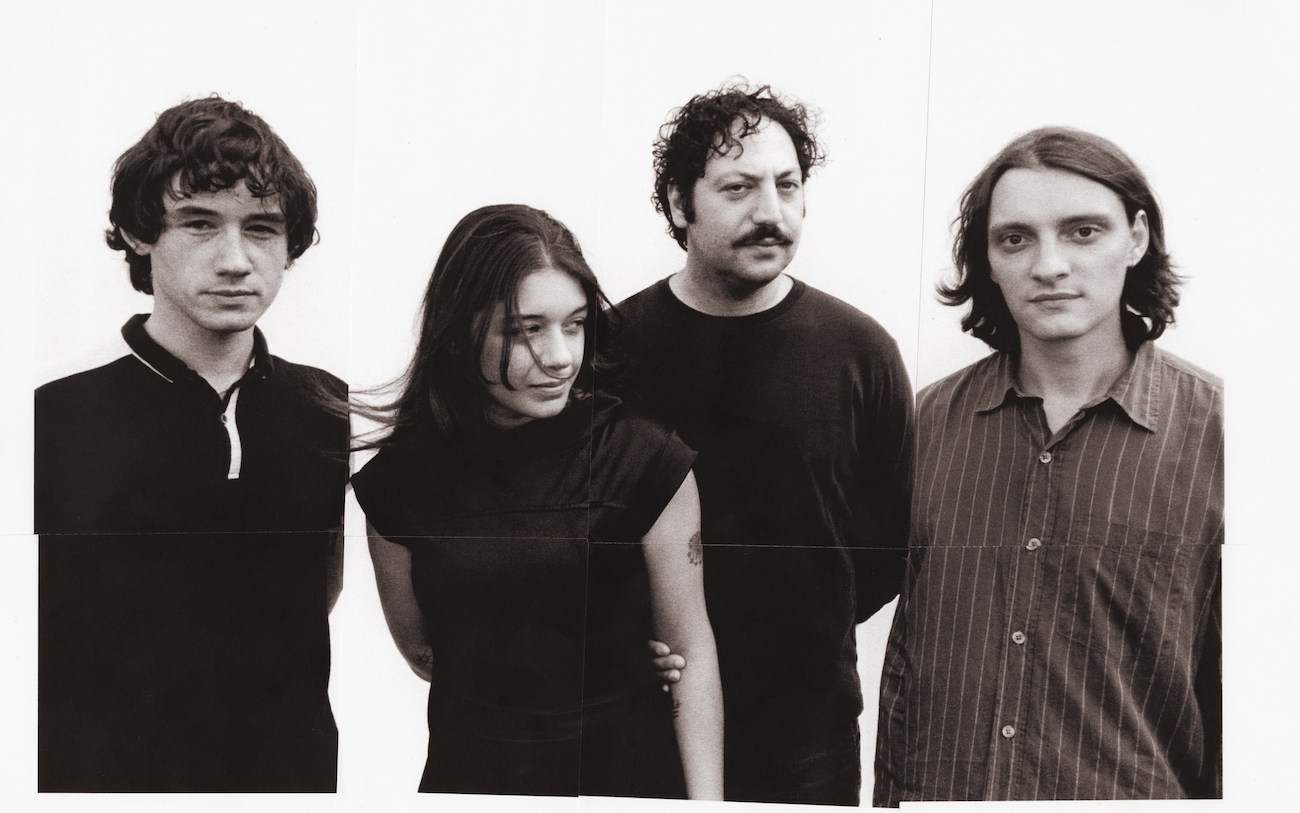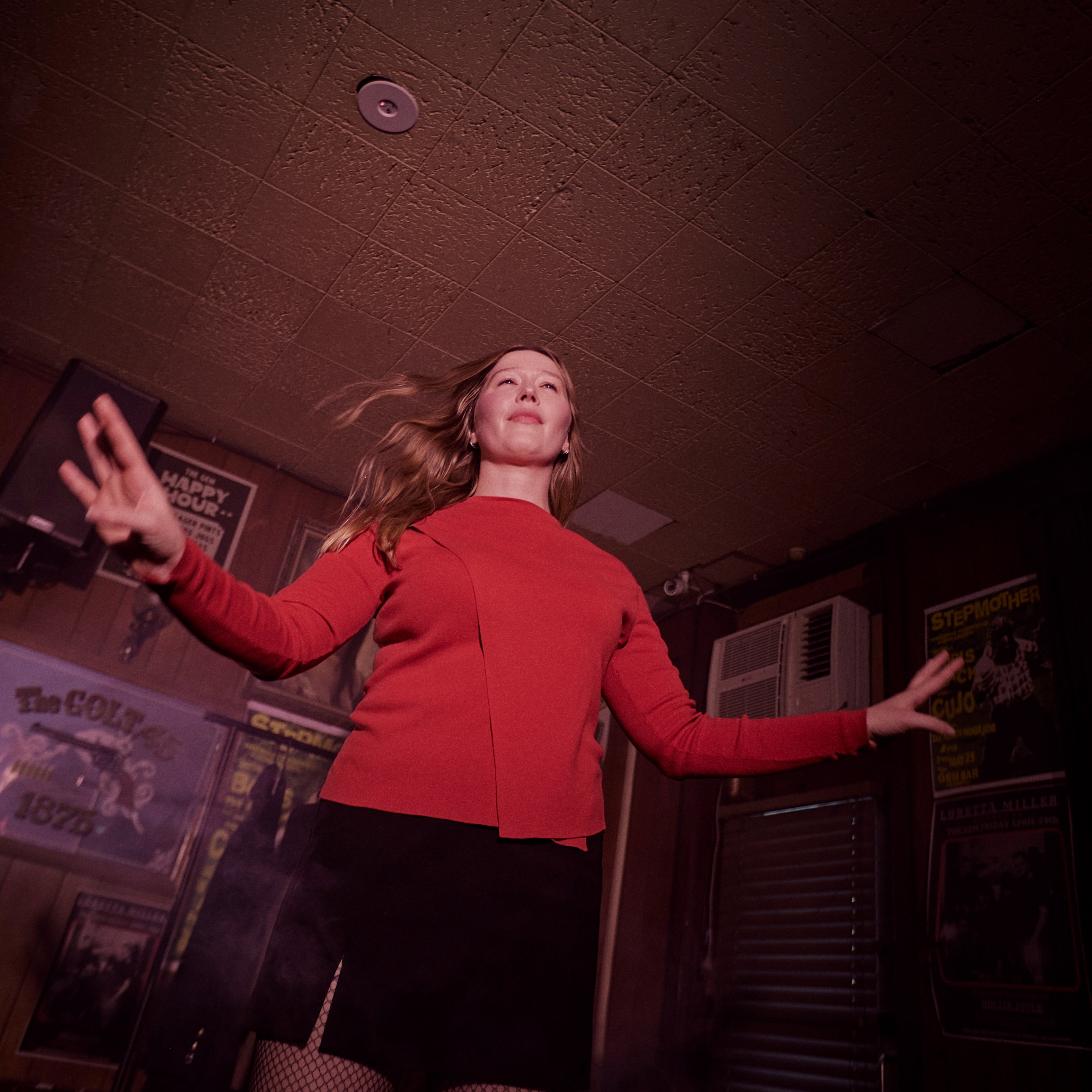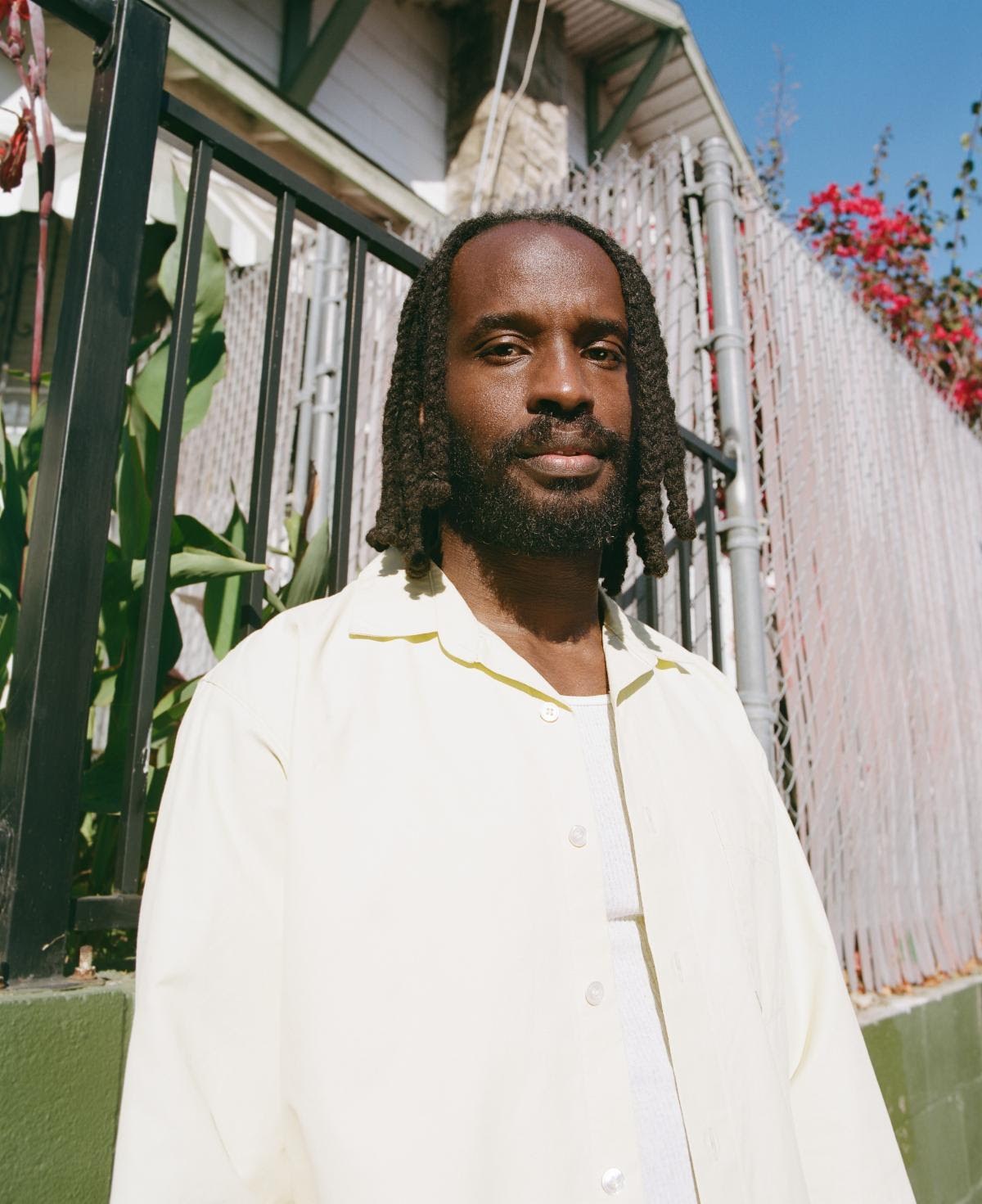


Bill Orcutt's urgent, improvisational guitar music radiates inexplicability. Initially inspired by the blues, the Miami-born, San Francisco-based artist rose to cult legend status as a member of the noisy, experimental punk band Harry Pussy in the 1990s. After that act dissolved in 1997, following Orcutt's divorce with romantic and creative partner Adris Hoyos, he moved to the Bay Area and shifted focus to filmmaking. Orcutt returned to music towards the end of the 2000s, rolling out dozens of confrontational instrumental solo records and collaborations at a steady clip, in addition to running the groundbreaking label Palilalia Records. He also designed the software Cracked, a live coding program that yields glitchy electronic textures. Across partnerships with the likes of Chris Corsano, Circuit des Yeux, and Okkyung Lee, Orcutt has emphasized an ability to straddle provocation and surrealism — his output is typically aurally demanding, while always evoking the beautiful chaos of flower petals blowing in spring wind.
There is a tasteful jamminess to all of Orcutt's work that calls to mind what might happen if the Grateful Dead interpreted Steve Reich live, after a day spent blasting no wave deep cuts. Nowhere does this rickety energy beam brighter than on the latest Bill Orcutt Guitar Quartet release HausLive 4, a bootleg-style live recording issued by lovable Chicago oddball label Hausu Mountain. The entirely electric guitar live lineup includes New York City-based free improv favorite and Editrix front person Wendy Eisenberg, fellow New York City-based avant-garde composer Ava Mendoza, and Georgia-based interpreter and Ahleuchatistas band leader Shane Parish. At Orcutt's demand, the band performs with just four uniquely tuned strings on each instrument, producing a sound that is scorched and alien from a simple sonic palette.
The performance on HausLive 4 was captured during an exhausted but frenetic appearance at the Chicago left-field performing arts space Constellation; each staticky note seems to emerge from a thick layer of rust. Across 15 tracks, Orcutt and his backing band smear cuts from the excellent 2022 record Music For Four Guitars into forms that are more ecstatic, prickly, and sprawling than the already inventive original pieces. Though it's presented as a lowkey Bandcamp upload for the heads, HausLive 4 offers a prime glimpse of Orcutt in his strange element.
Over Zoom, I chatted with the affable, but highly thoughtful Bill Orcutt Guitar Quartet about the arrangements and techniques that shape their live show; how an ensemble made up of four people simultaneously shredding remains listenable; and one legendary brandy and sausage soaked evening in Poland.
I'm curious if each of you could talk briefly about where you come from musically and what brought you together? How did you all end up working with Bill?
BILL ORCUTT: Well, I am Bill, so I had no choice.
SHANE PARISH: I came from just playing guitar for a really long time and improvising with people and playing some prog rock and crossing paths with these folks at gigs over the years. Wendy and I did a duo album together, improvised guitar duets, and some tour dates. And then Ava and I played some gigs here and there. Bill emailed me one day and said, "Can I send you some music?" And I said, "Sure." I listened to it, and he said, "I have this guitar quartet, and I want you to transcribe this. I want to include a score as a PDF download when I release the LP." I listened to it, and I said, "Yes, I can do that." The record came out a year and a half later, and it was time to put a band together. Ava had already reached out to Bill, saying, "If you put a band together, I'd be interested in playing." Bill was, like, "I want you to put the band together." I said, "Okay, well Ava that's great." And then Wendy was the first person I thought of because we had played together and they kill it, so I thought that would be really exciting. That's how we all became the quartet.
Bill, I'm a big fan of all of your records and various projects. But the ones I find myself coming back to the most are some of your more recent collaborations. Made Out Of Sound with Chris Corsano is one I find myself listening to every few days. What do you look for in a collaborator and what drew you to these collaborators?
ORCUTT: I don't have that many in my life. I played with Adris (Hoyos, of Harry Pussy) because when I met Adris she didn't play any instruments. But I was like, "This is an interesting person, I wonder what they would sound like if they were playing an instrument?" I just wanted to play with Adris. With Chris Corsano, I didn't consider any other drummers. I didn't have a second choice. I got his email off somebody and emailed him. If he had said no — which I think initially he had said, "Oh, I'm busy" — if I had never played with Chris, I don't know who my second choice would have been. I just always loved his drumming, and I thought that this is somebody that I could vibe with and who I could play with.
Going into the quartet, I was just trying to make this music into a real thing that happened simultaneously. I've never been in a band where it was all notated like that. So I didn't know what to expect, really. I think I was really nervous in the first rehearsal, at first. And then amazed because it was working and it all sounded better than what I imagined it might sound like. It was incredible. And then, as we played together, I came to discover all the things that they could do and the ways that all the pieces fit together. Ava and I played in a Rhys Chatham Guitar Trio thing in San Francisco, and I knew her music really just from online sources. Wendy, I was a big fan of the Auto record. And Shane, I just knew from online as well, and I knew he was good at transcription, which is why I initially approached him.
I believe you're all based between a number of different cities. I'm curious how that impacts your process when you're collaborating.
AVA MENDOZA: We just rehearse at soundcheck. I think for our first tour we had one rehearsal. Bill and Shane came to New York, and we all learned the music in advance and got together and had a couple hours of rehearsal. Our first gig ever was in Philly, at Solar Myth, and we did a long soundcheck rehearsal and that was it. So we've had one rehearsal, ever, as a band. And other than that we just all learned the music from the original record and Shane's transcriptions and did our homework and showed up.
Did it fall into place naturally?
WENDY EISENBERG: It felt really natural for me.
MENDOZA: It felt natural, yeah.
PARISH: I think it really clicked, even in the first rehearsal, with the seating arrangement. How we sat down that first time was how we ended up sitting down for all the touring that we've done.
MENDOZA: The one thing that was unnatural was, after two or three gigs — Shane is our conductor, and there are a couple things where you could count them in a couple different ways. And so we talked about it, like, "Should we count it in in three? Should we count it in in four?" — got into music nerd territory. And by the third gig, Bill was, like, "This is the worst possible outcome I could ever have imagined for this band. I went through every nightmare scenario in my mind and never did I come upon this one, which is, ‘One, two, three, four!'" That was what drove Bill crazy. Everything else felt really natural.
EISENBERG: Ironically, the counting.
PARISH: We just decided to settle on the Ramones' style, "One, two, three, four!" no matter what time signature. There's a few in six; there's one in five; and the rest are in four. But regardless, it's just, "Count to four, go!"
ORCUTT: The set evolved, somewhat. At some point, I remember Shane's solo became a soli. Was that on the first tour?
PARISH: That was in Wels, Austria. We were backstage, and I said, "Everybody get out of my way!" It was like Miles Davis telling Monk to stop playing. No, but it was more just kind of for some variety. And we did it that night at the festival, and that was our third tour. It worked great, and the next night we recorded the live album.
EISENBERG: Forever memorialized.
Bill, what does your role as a bandleader entail, exactly, for this project?
ORCUTT: I don't know. Do I ever say no to anybody?
MENDOZA: I have two instances.
ORCUTT: I'm like the "Yes, and" guy. What have I said no to? I don't remember.
MENDOZA: Bill has said no to two things I can remember. He's very easygoing as a bandleader and relaxed. But there's two things. I think all of us at some point were like, "Do we have to take two strings off our guitar?" I remember, specifically Wendy, at one point was, like, "I can play all of the parts with the D and the A string on there. Do I need to take them off?" And Bill was, like, "Yes, you have to. That's the only total stipulation of the band." So I guess it wasn't a no, it was a "Yes, you have to."
And then the other one is, on this last tour, I had my full pedalboard with me when we met up. We did this Europe tour, and I had just come from touring in another band with Marc Ribot. And I had my full pedalboard, which I don't usually do with this band. And I said, "If it's cool, I can use it, and I can do more sonic stuff in between songs." And Bill was, like, "Sure." And then at one point, just to see what would happen, I turned a delay pedal on during one of the songs — during a written part. This was at soundcheck. We finished, and I said, "Bill, what did you think?" And he said, "I hated it." And I actually did, too. But I turned it on to see what he would do; he said, "I hated it;" and then I never turned it on, other than in the improv moments and the solo moments, after.
Could you talk a bit about the show at Constellation in Chicago that this release was captured at? What made you decide to release something from that show in particular, and was there anything about that night that felt particularly monumental?
EISENBERG: If I remember correctly, we had a really early flight out of New York and then played two sets at Constellation. And so we were dead, sort of; I was dead. I like having a lot of sleep and not flying in and playing two sets. Maybe I'm a simple guy, maybe that's so wrong. Maybe I'm pampered, I don't know! It was intense, it was a long day, and it was sort of at the beginning of something. There was an intensity to it that felt kind of like work, in a positive way. Like, when you're playing and it's actually work. The playing itself wasn't the work, but the getting through the playing was the work. So there might be this kind of busted, ragged thing that gives you a perverse energy because you're tired that I remember feeling.
The other thing is, it was Shane doing a solo set before the first set. And then me doing a solo set before the second one. For us two, it was three sets. There's a lot of different ways of holding the audience and also holding the band. I think I remember the first set feeling some level of discomfort because I knew I had to put strings on because I played between the two sets. I was very in the moment in the set and then I remember being, like, "Oh fuck, I have to completely do this thing that then bends my guitar back into itself and unbend it again." I remember around the day of it being, like, "Oh, this is really intense. This is like a 12-hour day, minimum, or longer." And everyone in Chicago wants to talk to you in the green room, so it wasn't like you had a buffer of quiet before it or anything. The only buffer of quiet you had was instantaneous or small.
MENDOZA: I agree, it was a hard day. And I forgot that Wendy and Shane were doing those opening sets. The travel of the day has faded into the background, and I can't remember what happened, except that we had a long day and got there kind of late and we were all tired. I had cramps and I needed Ibuprofen. So I was in the back room and I was, like, [makes pained noise and dramatic, zombie-like gesture]. Playing that first set, which is what was recorded, was invigorating. I'm happy with the recording. But I remember that the second set that we played as a quartet had that transcendent, just barely there, coasting along on the raw energy feeling that you get when you're really tired. Afterwards, I was curious to hear it back. But it was the first one that was recorded, which I like also, but it's a different energy.
EISENBERG: One of the things that I really love about playing this music is, because we're playing something that exists, you disappear. But you can't possibly disappear, so there's this authorship and disappearance that are, like, concurrent. In each of those sets, you can view that in the same way as that process. So that first one, you're really showing up for it — because if you don't really show up for it, you can't really disappear. And then the second one, you're so dead that you actually have disappeared, which means that you've shown up unwittingly. It felt like the whole night was this intense haiku.
ORCUTT: I have the same memory of just being so insanely tired.
MENDOZA: We came from Keane, New Hampshire, I just realized.
ORCUTT: We flew from New York.
EISENBERG: And the drive back from New Hampshire is always longer than you think. It was probably, like, six hours. And we stopped by one of my old places that I lived in Western Mass, and that was the day before.
PARISH: We got those pancakes the day after the show. I don't remember much from Chicago either. I remember there was a lot of excitement though, because we'd been playing and kicking ass. And people were, like, "When are you coming to Chicago? When are you coming to Chicago?" And then we got a ticket to do it and it felt really good to go there. They added a second show. That was exciting. That was a moment for me, I don't know about y'all.
EISENBERG: It felt important, and it was nice to see Constellation really buzzing like that.
PARISH: A lot of the touring we've done, there's been some super tired days. But then as soon as we start playing, you kind of come alive with the music.
ORCUTT: I think that's the tiredest I remember being playing a show, to be honest. I remember I was having trouble remembering where I was in the set, not while I was playing the songs. Something wasn't quite clicking for me. It wasn't affecting the playing, but my sense of the overall arc of it. Sleep is good!
EISENBERG: I was just sleeping before this and I can vouch, it's pretty amazing.
Most of these pieces initially appeared on Music For Four Guitars, the album, which is, like, 30 minutes long. This live recording is a lot more stretched out. How do you manage to incorporate improvisation while staying true to established structures?
ORCUTT: I kind of just sat down and thought of all the different things we could do. You could have solos over the main riff of a song; or you could have solo guitar unaccompanied; or you could have duos; or trios; or you could have collective improvisation with all four guitars going at once. I just kind of mechanically wrote out all the variations that we could do with four guitars, and then divided it up and distributed it throughout the set. People are musical enough and smart enough to make it work. Whatever I sketched out at the beginning was kind of what we ended up using throughout.
EISENBERG: It was all established at that first and only rehearsal.
MENDOZA: With a few things that we tweaked as we went along. Like, Shane, instead of taking a solo over a song, ended up taking an unaccompanied solo. And maybe a couple other small things like that changed, so it's not totally rigid. But we basically had the same form forever, since we started playing. It's just that the improvisation changes drastically every night.
PARISH: I was trying to think if there was some good vocabulary that was tossed around when you were talking about how to stretch different parts of the set. I love the form that it was just, like, bang-bang-bang — tightly knit songs. And then you talked about, "The big smoosh." That's the word that I have written down — the big smoosh that would happen when we get into the improv stuff.
ORCUTT: Oh, I totally don't remember that. That's good. I remember Ava came up with the detuning with the volume up.
MENDOZA: Oh, the Black Sabbath thing?
ORCUTT: That was good. We did that the first night and then we kept it. It's always fun.
PARISH: It makes an E sound low.
ORCUTT: It does. You're playing with it tuned up the entire night.
We rely on reader subscriptions to deliver articles like the one you're reading. Become a member and help support independent media!
On the topic of alternate tunings, that's something I was curious about. I feel like a lot of the actual tonalities on the record are pretty straightforward, but it all sounds super alien. Are there any specific tunings or techniques you find yourselves gravitating towards?
ORCUTT: The songs, as composed, are just doing my Bill stuff with the four strings and the two tunings that I use. Everybody individually during the improvisation is putting their own spin on it and playing it their own way.
MENDOZA: We are, even when we're improvising and totally free, in one of those two Bill tunings. We don't change tunings. Lots of songs are with a capo in a different place, but basically the first half of the set is the one tuning and the other half of the set is the other of the two tunings. The capo moves around on almost every song.
EISENBERG: For years, I wasn't someone who used capos. Because I went to jazz school and they had this macho thing where you had to be able to transpose and make something sound convincing without that, within standard tuning. So, the first Bill tour was the first tour I did where I had to worry about having a capo. It taught me so much, to have to use it. Not in the sense that it's that complicated to use a capo. But there's so many things aesthetically I'd been missing out on because of that macho thought. And instead, I'm thinking about what things sound like high up that you have more access to with your physicality.
And then the other thing is, like, getting to do an unaccompanied solo, missing two strings, made me so much better of a country guitar player. Weirdly, all of the vocabulary that I felt was the most expressive and sounded the best on the guitar was the stuff that was, like, a Buck Owens thing that I'd transcribed years ago and would just come out. It sounded better because there was some kind of resonant absence thing that was occuring. Being in "Bill mind" for these tours and for this music made the solo approach, when I do that with the two strings, even harder. Because I've been working on country vocabulary, and then slept and then did whatever else I needed to do and then went back to it. And without the two strings it sounded fucking great. And then, when I'd have to reintegrate it for my solo-solo life outside of Bill tuning, there's something missing — and it was the missing two strings. So trying to reconfigure, like, future other musical life vocabulary around the things that I learned was super fertile because there was this way of using my brain that was kind of a Bill impression at first. But it's deeper than that, really.
ORCUTT: Let the record show that I helped Wendy by showing them how to not be macho. I led the way to a post-macho world.
PARISH: I know what you mean, though. I had to play a memorial service after this tour in France we just did. I had to arrange a few tunes, so I did this John Prine tune. I was playing it with the two strings missing, and then when I got home to practice it some more, I put the strings back on, and I was going into totally different fingerings. I had to look at my recording, and I liked what I did so much better when I was missing those strings, fingering wise. It forced me up the neck in this different way to different voicings. So that was really helpful, and it started getting me thinking differently about solo arrangements and not having option paralysis.
EISENBERG: It's weird. There's something about the straightforwardness of, like, John Prine. Or when I was on tour, I was practicing adapting Louvin Brothers songs when I was in Bill tuning just at the hotel room by myself. And it just sounds better without the two strings. Not only does it expand your brain in the same way that you're saying, but there's something mystical that occurs when you can't do everything you want.
PARISH: I think that's why Django Reinhardt was so good at doing what he was doing.
EISENBERG: But when you're back to the six, it's so disorienting. Because you're like, "What the fuck? First of all, why are they in the way? Second of all, who invited them and what are they doing here? Third, can I get rid of them and also have them back at the same time?"
MENDOZA: I have one solo over a guitar riff. I don't do an unaccompanied solo anywhere in this set. So I have one over everybody else. And for that, it feels really natural to do the three strings thing. Because you're popping out above the other players and often you're using the three strings more than anything else anyway. But it is really cool to get into everything you can do with open strings in a kind of altered tuning with a capo on, when you're playing shreddy solos. That has been really fun for me. I hear things modally a lot, or I hear things tonally. But being capoed in some weird place, trying to play any kind of modes that I would normally use, doesn't really happen intuitively. So it's like, I could work on it. But also I could just [makes chaotic guitar shredding noise with mouth] roll with what feels best on the instrument as Bill designed it.
Ava, you mentioned trying out a pedal that didn't work. I know this is kind of a GuitarPlayer.com type question, but is there any gear that impacts your process?
MENDOZA: Bill's Telecaster seems to impact his process.
ORCUTT: I don't use many pedals. Solo, I wouldn't use any pedals. Playing with the quartet and in other settings, I'll have a boost or something if I need to get louder easily. For myself, I don't like to alter the tone of the guitar. I feel like it inhibits me coming through the strings if it also has to go through a pedal. The only pedal I would use is just one that makes it louder.
EISENBERG: My rig for it is just a volume pedal and this pedal called the Longsword, which is such a name to have just looking at you as you shred.
MENDOZA: You just wanted to say that.
EISENBERG: When you're playing in an ensemble that's all one instrument, trying to find the differentiation points of sound and how orchestration works is really important. And the way that I have the Longsword — yeah, I'll say it again: the Longsword — configured for this thing, is… I'm already, like, a hyper-trebly guitar player because I'm immature and I like a screechy, annoying sound. The way that it's configured there doubles up on that. In my mind, I'm trying to make the trebly-ness of my sound sort of like a flute or high woodwind section of this quartet. A lot of my parts move around, which is probably because I responded to the, like, "What parts do you want to play?" question a little later than everyone else.
ORCUTT: Was that strategic? Were you jockeying for a position?
EISENBERG: No, it was exactly the opposite. The way that I'm thinking about my role in the thing is, like, on the more soprano end of the choir that is our band.
PARISH: I use a Blues Driver. At the first rehearsal, I showed up with a compression pedal. I hadn't used a lot of pedals since the pandemic, at the time of the rehearsal. And then Bill went and bought me this Blues Driver, and I've been using it ever since. It's my only pedal. But he was, like, "Get that compressor out of here." I really like the Blues Driver sound. I also really like the way my SG sounded on the recent tour.
MENDOZA: [Reveals half of a pedal board on camera] Every tour except this last one, I use an overdrive and a distortion to make my clean tone sound more present. And the distortion is only on for the solos. But on this last tour, I used all these pedals. [Holds up the rest of the pedal board, revealing many more pedals] That was really fun for me to do, during solos and improv moments, get my reverse delay on and go into more sonic land. Bill's writing is fully formed with clean toned guitars. It's got a little grit to it, but the concept is clean tone guitar. The way that I write and I hear things is more coming out of a Hendrix place. Where it's, like, this riff has to be played with lots of fuzz. Otherwise, it doesn't sound like the right riff. It sounds stupid if you play it clean tone. I'll write things that change a lot timbrely and that have to have a certain effect on. It's been really nice to get into Bill's world where it's kind of, like, "This sound and that's all that it needs."
There's a definite hectic quality to the record, but for being the output of four people shredding at the same time, it does not really get chaotic. How do you pull that off?
PARISH: It's almost, like, this unified guitar force. I feel like we become one unit when we're playing the "song" song parts, before the improv sections. They stand up and they're really tuneful, and I think that playing them down is enough.
MENDOZA: On Music For Four Guitars, that's all Bill playing. Bill's writing is so clear. And maybe there's aspects of Glenn Branca and noisy, in-your-face hecticness. But there's also aspects that are really country and bluesy and classic. I feel like it balances that. And then, with the four of us, this group of players does a great job with it, because there's some room to personalize your part. In the hands of the wrong player, it might get kind of wanky or over-personalized or too showy. But that's not an issue with these folks. It's not like we're literally playing it exactly how Bill played it on the first record. There's room to do your own thing on it. But it's not getting out of control. I think that balance is important.
EISENBERG: I think a lot about how Ava would use a whammy bar on this one riff and how much that does to it. It's so beautiful. I just love it. There are things like that where you can bring some level of sensitivity to interpretation into it. I think a lot about how psych rock, at one point, was just interesting songs. And then it became really expensive gear, or weird gear. Things can't be hectic if they're just genuinely good songs. "Good" is its own discussion, but these are really good pieces of music. Maybe we'll bring a hectic energy because we're so tired, but probably the songs themselves won't be over your head. They're just communicating honestly how this person plays guitar; and how these people play this person playing guitar; and how they play themselves playing this person playing guitar. So the throughline of it is really easy to understand narratively. But also sonically, it's just the material makes its own sense and it doesn't really have to teach you that much to understand how it sounds. There's no distortion that occurs to you because you're trying to hear through something that might be a little less well configured. It's just, like, "Here's this thing." And if you're hectic, it might be the energy we're bringing or it might be the way it feels to be confronted with something that makes you feel hectic.
What drew you to putting the record out with Hausu Mountain?
ORCUTT: I got to know Max [Allison], and he was always supportive and had interesting things to say. The recording existed and I thought the idea of having a live cassette was kind of cool. It just seemed like a good fit.
It has kind of a tasteful jam band energy that I appreciate.
PARISH: I've been listening to the podcast Analyze Phish. It's a comedy podcast where Scott Auckerman from Comedy Bang Bang hates Phish, and then Harris Wittels, who died in 2015 and was a writer for Parks And Rec, is a huge Phish fan. And he's trying to get Auckerman to like Phish. He plays him cuts and they talk about it and it's hilarious. It's so good and it's so fucking funny. I'm not a Phish fan at all, but I think it speaks to both sides of it and it's just funny.
I'm not a jam band guy by any means, but when I want that spiritual energy the Bill Orcutt Guitar Quartet stuff is typically the first thing I go to. And the second is whatever Hausu Mountain just put out. That was an immediate selling point for me.
EISENBERG: I do think that this band works psychotically well as a live thing. There's something to the sound of us that's really ecstatic. Not to be tooting our own horns, but I didn't write the music, so I can do that a little bit. This stuff allows for a level of joy and communion in the sound that other people get out of jam bands. I know how satisfying the live set we have is when I'm there to play it. I feel it, not just from us, but from the audience.
Bill, I've always thought of you as being an artist who favors pretty noisy, loud sounds. Over the last few years, between the albums Jump On It and How To Rescue Things, you've put out some of the most gentle work I've heard from you. How have you been balancing the more acoustic and subdued stuff while also promoting the Quartet, which feels like the opposite.
ORCUTT: I've always liked all kinds of music. It was really kind of an accident that Harry Pussy wound up being this noise band. If you hear the first single, it's not like that at all. It was only because Adris picked this name that I felt like we had to live up to this name. That's what made the music become so aggro. Had it not been for the random choice of that name, we might have sounded completely different. I don't know if I have an innate love of loud, dissonant music. Now that it's just Bill Orcutt, I guess that it just comes out. It's not something that I feel like I have to do or it's the only thing that I want to do. I listened to that duo record, Rite Of Spring... like, 100 times last year. I listened to it this morning. It's what I put on as I'm starting to read emails. When I put on really loud, dissonant music at home, it's an intentional choice because I feel like I need to hear that. But my default setting is really more like ECM than SST.
I feel like there's a definite singular, otherworldly quality to your music at large, Bill. I really would not be able to place a genre on your overarching discography. I'm curious if there are any artists you turn to for inspiration with the Quartet in particular.
ORCUTT: The origin of Music For Four Guitars was my friend Larry [Manotta], who I knew from Miami, who lives in Columbus, Ohio. And he said, "I have a guitar quartet, can you write music for it?" I was like, "Yeah, but you have to play with four strings." And he was, like, "I won't do that." But it got me thinking about this idea of writing for four guitars. It took me, like, seven years to figure it out. In the end, I heard the Dublin Guitar Quartet playing Philip Glass and I was, like, "Oh, I can do that." That was something that I could understand. To be clear, I couldn't be a member of the Dublin Guitar Quartet. But when I heard them playing Philip Glass string quartets on the guitar, I suddenly understood that was a form I could steal and use for this project, which I wanted to do, that I thought no one would like.
I definitely have thought about 20th century minimalism as a genre when listening to this project, in addition to all of the rockier stuff we've talked about.
Let's end it on a fun note. I feel like this record is sort of a celebration of you being a cool live project and the warm interpersonal dynamics really shine through the music. Are there any favorite memories you four have shared over the course of playing live together?
PARISH: I thought that the show that we did in Lisbon was particularly memorable. That was, like, our only outdoor show. And the wind was blowing, we were in this amphitheater at the Jazz em Agosto festival.
EISENBERG: That was one of the only shows I've ever worn shorts for. We had to emerge from a bunker before taking the stage, which is kind of rare.
PARISH: I saved our life pretty early on in the band. I've sort of been the driver when we're in a motor vehicle. This was our first tour, leaving New York, and I think we were going to record our Tiny Desk Concert right after we played Roulette [Intermedium]. And this car just zoomed right into the lane, and I very quickly jerked the wheel. That's one memory of the road that was, like, "Oh my god, that was so close."
EISENBERG: We got stuck in a parade.
PARISH: Remember that storm in the Midwest on the way to Minneapolis? I saved our life another time through my prowess driving into danger.
ORCUTT: It was like a tornado zone. It was just crazy. It started raining and visibility went to zero and everybody was massaging Shane's shoulders and encouraging him with thoughtful words.
PARISH: The funny thing, too, is the maps app was, like, "Avoid the storm by doing some route around it." And I was, like, "Fuck that, what are you talking about?" And as we were approaching, because it's all flat Midwest, it was just, like, "Oh man, this is, like, the apocalypse here. We're in trouble."
EISENBERG: I remember the hotel we stayed at in San Francisco was kind of rock n' roll beach shack themed. Also, the one that we stayed at in Chicago after the show that this record was recorded at was also kind of rock n' roll themed. There is at once something kind of reassuring and jarring about playing a show and then going to see archival evidence that people have, at one point, played a show.
PARISH: We ate a really big dinner in Poland one time.
MENDOZA: That was a good show, and they served us so many good Polish foods.
PARISH: I was so full. Because they brought me a meal and then I saw that they had brought sausage out for you all. And I was, like, "I'm gonna do a bang-bang. I need another meal right now." I mean, I didn't say it like that because I'm very courteous.
MENDOZA: This is this place in Warsaw, Pardon, To Tu, where they keep bringing out plates of deliciousness before and after the show. They want to gossip with you and tell you about their love lives. They're the funnest people. It's an ex-couple that runs it, Magda Dudek and Daniel Radtke.
EISENBERG: A thing I like about that show, other than the absolutely heroic amount of quince flavored brandy they gave us, was that we were playing against a wall of names. I think Bill's name was on it. When I asked them about it, it was just a list of everything that was on someone's iTunes that they turned into a wallpaper. It wasn't, like, people who had played there.
HausLive 4 is out now via Hausu Mountain. Purchase it here.