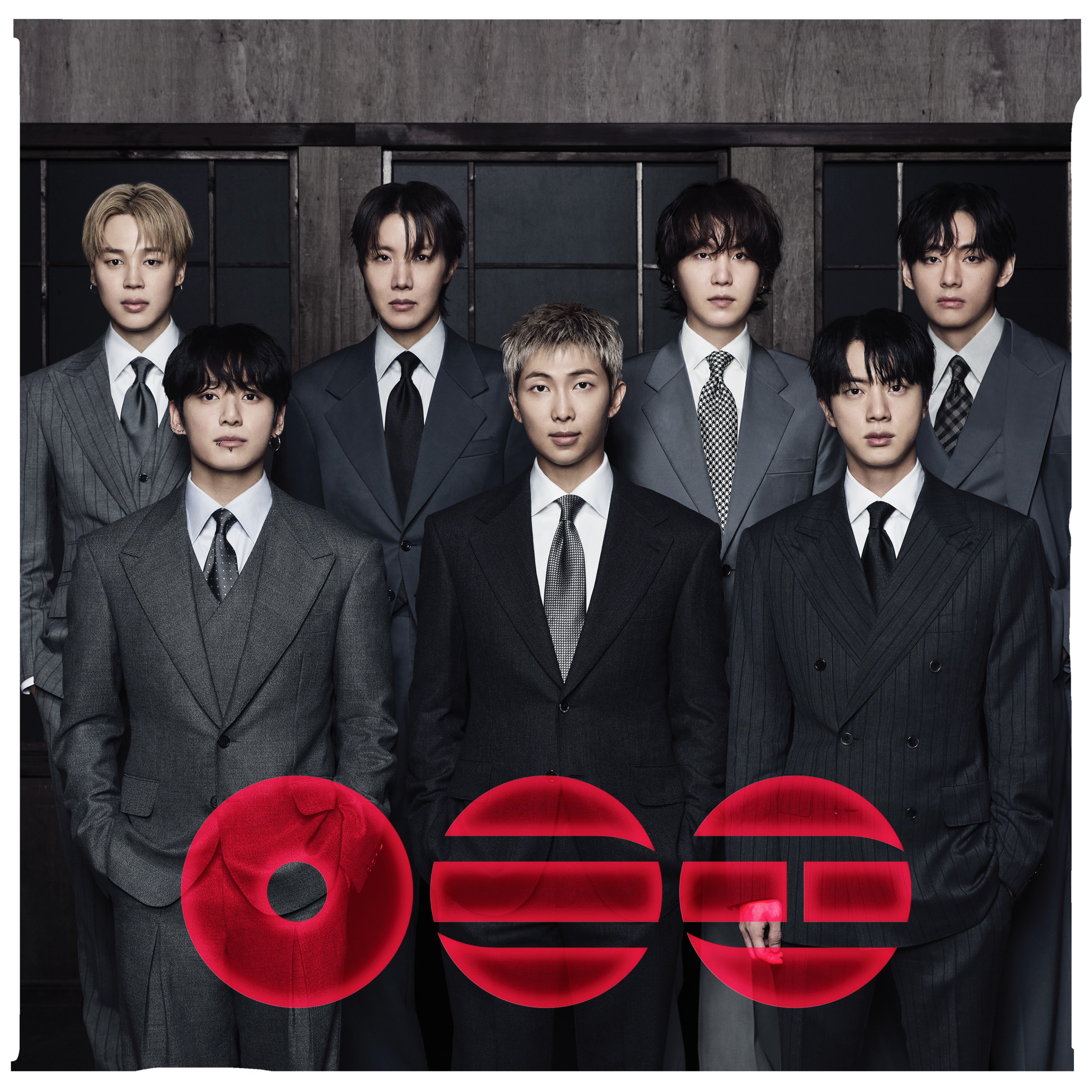

If Jay Z hadn't already written the line "I'm not a businessman, I'm a business, man," the rappers of BTS probably would have. The band's four-year hiatus — an inevitability, as South Korea requires all men between ages 18 to 35 to temporarily serve in the military — has brought with it nearly unprecedented stakes. Their fervent fanbase is so central to the BTS narrative (and to BTS-related web traffic) that every news story about the band seems written directly, panderingly, and very carefully for fans and fans alone, as if the ARMYs exert a kind of psychic editorial control. BTS is so load-bearing for the K-pop industry that their personal fortunes have caused actual economic fluctuations. After the band's free(!) comeback concert drew a smaller-than-expected crowd, shares in their label Hybe fell 15.5%, a sell-off that Korean analysts called "baffling and confusing."
It's almost impossible to think of an US equivalent to any of this. The BTS hiatus has been compared to Elvis getting drafted at the peak of his pelvic power, but that somehow seems like an understatement. American music companies are too besieged by private equity for a concert to do meaningful damage, and so divested from music itself that almost half of radio giant iHeartMedia's Q4 2025 revenue came from podcasts. But even if that weren't the case, there simply is no one American artist with this much gravitational pull on the industry's fortunes.
Needless to say, the fate of the entire music industry is not any artist's sole responsibility. But regardless of whether it's BTS' responsibility, it's still their problem. The group is in their thirties now — I have seen multiple people call them uncs — and about to reunite as a group after every member has already gone solo, a phase in the boy band lifespan that has a historical survival rate close to zero. New album Arirang, released last week, has already broken multiple Spotify records, including the record for most-streamed album in a single day. Yet after all those streams, many listeners — including some fans — have come away unsure what to make of what they heard. And in naming their album after one of Korea's most storied folk songs (as well as sampling it), BTS are presenting themselves as not just musicians but living symbols of South Korean excellence — which means they need much more than record-breaking numbers simply to meet those expectations. That's probably why this often interesting and sometimes perplexing album is as defensive as it is assured. As BTS cry out on "Normal," a track named for a lifestyle they may never again have: "What the hell do you want from me?'"
It would be valid to call Arirang, which introduces itself with several successive homages to Southern trap, the group's intriguing return to its alternative-rap roots, when Suga was still making MIDI beats and RM still went by Rap Monster. It would be equally valid to call Arirang a mass-appeal pop album where every component has been over-engineered to the point of bikeshedding. Seeking another global smash like "Butter," BTS traveled to LA, did the songwriting-camp circuit, and extracted a perfect cross-section of the Western songwriting industry. Longtime producer Pdogg is joined by buzzy artists like JPEGMAFIA and Rosalia producer El Guincho, comeback acts like Mike Will Made-It, and producers with lichlike longevity: millennialcore songwriters Livvi Franc and Sarah Aarons, megaproducer Ryan Tedder, and (ugh) Diplo.
Given the panoply of producers — the list above is very much incomplete — it's stunning how cohesive Arirang sounds as a musical statement. The seven members of BTS have diverse enough musical backgrounds to pull off trap and Jersey club and Bieber-esque pop with equal aplomb. Their vocals also span a broad range of timbres, from raspy lows to heaven-brushing falsettos, and what makes Arirang so specifically BTS is how they and their producers revel in all the ways they can play one voice off another. El Guincho's track, "Hooligan," is about contrasts. The swelling Camelot-esque strings clash with the clangs of a swinging switchblade, and RM's voice gets gruffer and gruffer while the singers compete to see who can make the phrase "chopped and screwed" sound the most seductive. Unassuming lead single "Swim" does the opposite: It foregrounds the chiller vocalists and melodic middle register, so all seven members blend into a pensive fog. And on propulsive standout "FYA," Flume's beat, RM and j-hope's snarled verses, and Jung Kook's full-throated hook interact like a fire triangle, each component igniting the next.
In trying to do so much, Arirang stumbles occasionally, most noticeably in the lyrics. On "Hooligan," "every one of you with a muse" leads directly to "crowd looking like a campus," raising some questions about those muses' demographics. "FYA" stakes its whole prechorus on a memey line about "going crazy like Britney" that no longer reads the room. (To be fair, I would bet money that this is a JPEGMAFIA contribution.)
But more often, the question isn't why BTS made certain creative choices, but why they made these choices with those ones. "Like Animals" has the most Adam Levine-ass opening this side of 2014; it also has the most blustery and unabashedly farty guitar solo this side of “Pink Pony Club.” Mike Will Made-It's "2.0" is bassy, unsettlingly spare Southern trap where RM and j-hope allude to carrying out a hit; it also has hooky vocals processed into a unison so perfect you could tune an orchestra with them. "Aliens" draws so much subtext out of its title — aliens as curiosities, as sci-fi villains, as the Other — that the arrangement strains to accompany it all.
Despite promoting the album with the tagline "What is your love song?", only the Kaytranada-esque "One More Night" can really be called one — especially when the hook bursts in with the fizz of '90s Mariah. This goes for "love" as a euphemism, too. "Seven," one of the bigger hits from BTS' solo era, found Jung Kook boasting that "night after night, [he'll] be fucking you right"; but on Arirang, when BTS sing about needing "some body to body," they mean packed crowds. In a post-"WAP" world, the beginning of "Swim” (“I can spend a lifetime watching you — swim”) sounds like it can only be the kind of lothario innuendo Usher used on “Dive"; only after several introspective minutes do you realize that it perhaps isn't innuendo, and that its closer analogue in aquatic alt-R&B is Frank Ocean, "swimming from something bigger than him."
On "No. 29," the band allocates over one and a half minutes of its record to silence, punctuated exactly once by the very quiet toll of Korea's legendary Divine Bell of King Seongdok. The intent is clear — an intermission between the rap and pop halves — and even the runtime is intentional; according to RM, the sound takes exactly 1 minute and 37 seconds to fade, although you'll need extremely loud speakers to verify that. But given the increasingly addled attention spans of streaming listeners (yes, yes, myself included), liable to bail on stops providing dopamine, it's a risky dip.
The obvious explanation here is that BTS, now that they've locked in their fate, can now make the exact kind of music they want to, damn the numbers. The problem is that this is false; Arirang is verifiably not the album they wanted to make. The “Arirang” sample and focus on Korean patriotism were their label's idea. So was the choice to fill the album primarily with English-language songs.
These are, obviously, contradictory goals, and BTS most likely know that. The members of BTS have consistently been forthright about their doubts, anxieties, and even pointed criticisms of their creative and choices — even during album cycles, including this one. And while they're more hesitant to extend that criticism to their employers, the reason we know about the label's meddling is that BTS included it in the Netflix documentary accompanying Arirang. The documentary also shows them hesitant about "Swim," finding it too low-key and even boring. The label's response was to juice its numbers by releasing nine new versions of it, one per each member's musical background: RM's "Chill Hip Hop Remix," Jin's "Alternative Rock Remix," j-hope's, uh, "Afrobeat Remix." (This is probably a good place to mention the main controversy surrounding Arirang's rollout: a promotional video intended to commemorate another group of seven Korean students visiting Howard University in 1896 that portrayed the historically Black college with mostly white students.)
The cornily vocoded album closer "Into The Sun" is much less interesting than the tracks preceding it. "Please" is a pleasant midtempo cut where the BTS singers ingratiatingly promise to "do the thing for you" — think Sara Bareilles' "Love Song" if done by Bruno Mars. Even more pointed is "They Don't Know 'Bout Us," a standoffish rap track tucked away near the end of the pop half, in which BTS rebut and disown everyone who views them as anything other than seven regular dudes from Korea. From virtually all megastars, this would come off as faux humility. From BTS, you sympathize.
POP TEN
Harry Styles - "American Girls"
Styles accepts his calling as the 1975 for people who refuse to listen to the 1975. (Though according to this song, Styles seems to think "American girls" is synonymous with "influencers," which isn't not Matty-coded.) In other words, it's yacht rock, but they're great yachts, beautiful yachts. Parts of this — particularly one lovely piano line that ripples in and out — remind me of Everything But The Girl.
Kacey Musgraves - "Dry Spell"
Even if you liked Kacey Musgraves' Deeper Well — it's very likable! — you must admit that the record was not Musgraves at her peak. "Dry Spell" is similarly low-key, but is a much better showcase of her charms. Kacey, as winsomely voiced as ever, nods to Shania's "Whose Bed Have Your Boots Been Under?" while cheekily venting about being "lonely with an H, if you know what I mean." (She's got more lines, too: "Even the chickens are getting laid," she lamented to NPR.) Even more impressively, she combines dusty spaghetti Western licks with faintly clicky percussion that could come off a Erika de Casier track; I can't believe someone even thought that up, but it works so well.
Charlie Puth - "Home" (Feat. Hikaru Utada)
Hikaru Utada, an absolute legend of Japanese pop and also very much a legacy act at this point, showing up on a random one-off Charlie Puth single would be surprising if Puth weren't the exact kind of closet music nerd to be a longtime fan. Here, he defers to her; "Home" sounds much closer to solo Utada than Puth, and her presence makes this genuinely moving.
Artemas - "More Than Just A Little Bit"
Artemas is also on the BTS record — he cowrote "Like Animals" — and this falsetto-slick, vaguely menacing single would fit right in with Arirang. (It'd also fit right in with The Idol, but to accept the Artemas proposition — a literal proposition, in this case — means accepting sleaze that may be bad for you.)
HYO - "MOVEURBODY"
Or would you rather put "FYA" on repeat, perhaps at 1.25 speed? This electro conflagration is for you. And me.
beabadoobee - "All I Did Was Dream Of You" (Feat. The Marías)
More exquisite yearning from the Marías; combine that with beabadoobee's ever-consistent remakes of turn-of-the-aughts pop rock, and what you get is moody and angsty and sounds a lot like Michelle Branch. I love Michelle Branch.
Bella Kay - "iloveitiloveitiloveit"
Not a Camila Cabello cover, but a follow-up to pop aspirant Bella Kay's breakout TikTok hit "The Sick." Trying to read about this mysterious, new, two-first-named artist, the only thing I could find was an Atlantic Records press release called "Bella Kay Boilerplate 2026." Make of these facts what you will.
That single led with a zinger of a lyric, "I hope your daddy's done hatin' you," and here Kay replicates the trick here but turns her loathing inward: "I like being used — it means I've got a purpose." The rest of the track comes off like Julia Michaels writing for Gracie Abrams: "bedroom pop" with a low-key vocal, sprawling stream-of-consciousness lyric, and self-aware self-laceration throughout. Probably not a great sign for, y'know, society that we've got the guys sleazing it up a little too well on the charts while the girls singing about relationships like this, but "iloveitiloveitiloveit" does show flashes of defiance in its arrangement, which to unearth the cathartic emo-pop anthem buried beneath it. You get the sense that Kay's character is a couple sessions of inner work away from asserting her boundaries, and you root for her.
Naomi Scott - "Gracie"
"Gracie," meanwhile, does not sound like Gracie. But it does sound, in its muted groove and exquisite restraint, a lot like Sade or Jessie Ware — Ware chatted with her for Interview Magazine recently, talking up classic soul and Dev Hynes. Scott's vocals match the mood: not flashy, but deceptively skillful in their perfect control. And this from the singer from Lemonade Mouth! (I liked Lemonade Mouth.)
Ayra Starr - "Where Do We Go"
Afrobeats titan Ayra Starr returns on this woozy, bassy slow burn of a track, with magisterial diva presence and plenty of mournful subtext in how she captures the exact moment a doomed fling goes from mysterious-in-a-hot-way to mystery whose solution is all too clear.
Luke Black - "KILL KILL KILL"
This British-Serbian artist closes out the month's mix in the best possible way: more sleaze. "KILL KILL KILL" is the darkwave to the electroclash of earlier track "Batshit," both menacing and campy (as any track by this name must be). Goes without saying that I'd love for this to cross over big.