
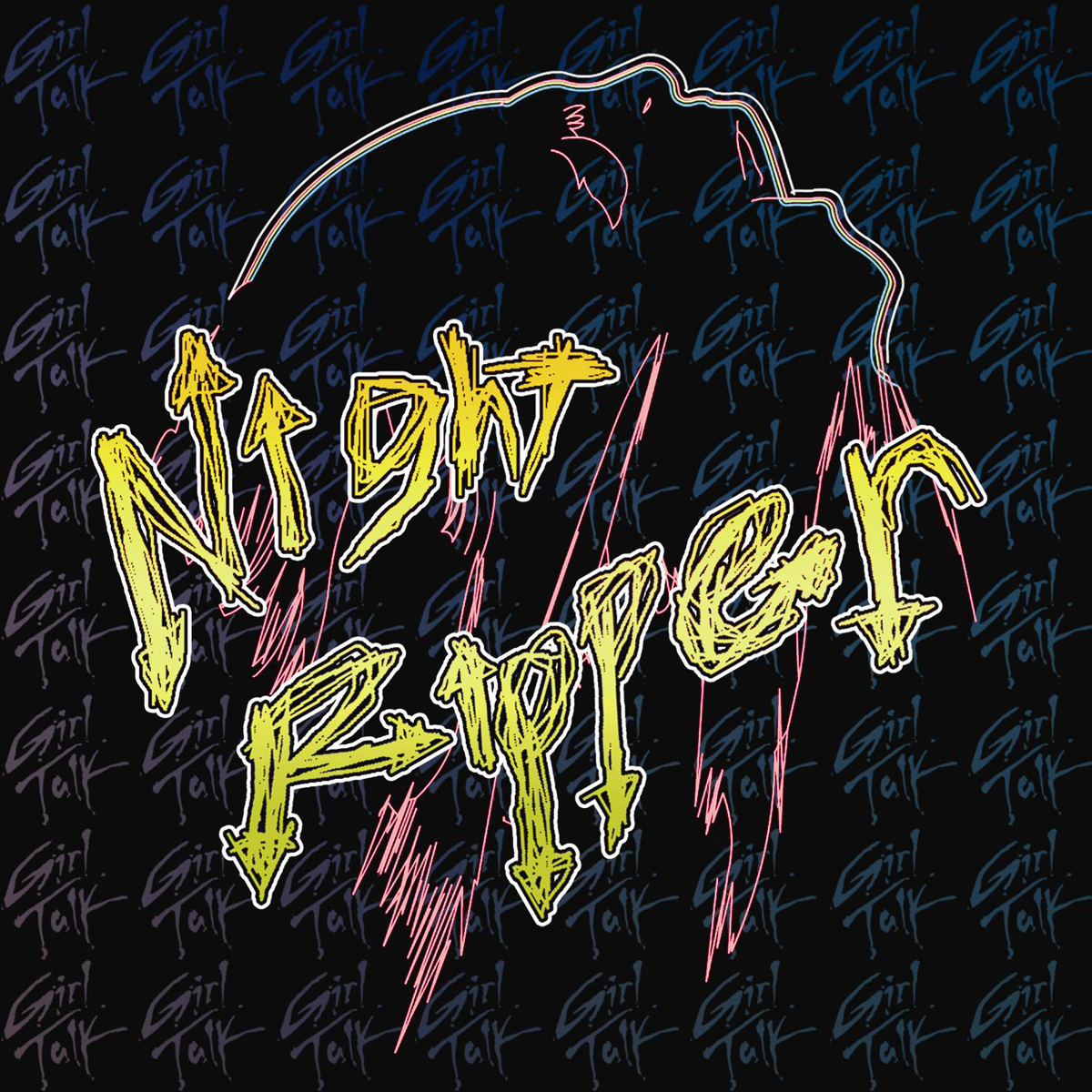
- Illegal Art
- 2006
God, I used to get so irritated. I'd hear a tiny piece of a song that I loved, and I would want to hear more of that song, but Girl Talk would not let me. Suddenly, somebody would be rapping over the song that I loved, or a big fucking guitar riff would come bulldozing in and throw everything off. The song that I loved would be smashed to bits, and then it would be on to another song — sometimes another song that I loved, sometimes one that I hated. This was the idea. It was the entire proposition. It was why people loved Girl Talk. At the time, I couldn't get on board.
I wanted Girl Talk to be something that he wasn't. Specifically, I wanted him to be a DJ. He could've been a DJ. He had the ear and the technical skills. He knew how to find unexpected connections, how to switch to a floor-filling anthem at a moment that nobody expected it. But Girl Talk didn't use songs to establish a mood, to build an experience through peaks and valleys, or even to highlight the greatness of the individual tracks that he tossed into the mix. Those were the things that DJs did, and Girl Talk was not a DJ. Instead, the splatter was the point — the sheer overwhelming chaos of all these disparate sonic delights, played in quick and jangled succession. Twenty years after the release of Girl Talk's breakout album Night Ripper, his approach makes a whole lot more sense, at least to me.
To plenty of other people, Girl Talk's approach made sense right from the beginning. Girl Talk was a sonic extremist, using more pieces of more instantly recognizable songs than any of his predecessors. But for decades before Night Ripper, people had been combining pieces of old music to make new music — Grandmaster Flash, Negativland, "Pump Up The Volume." Sometimes, people made record-collage records because they wanted to make art, and sometimes they did it to facilitate partying. Sometimes, you couldn't tell whether it was one or the other. Maybe the people making the records didn't know, either.
In the early '00s, the fresh and exciting new mutation of this tradition was the bootleg, or the mash-up. It wasn't actually new. Long before that, any rap-radio mix show might include blends — DJs, often in real time, matching one song's instrumental to another song's vocal track. In the peak AudioGalaxy years, online DJs turned that concept into a craze, combining seemingly-random pop hits, often with pun-heavy titles. Some of those mash-ups were a lot of fun. One of them became an actual hit when Richard X, working under the name Girls On Top, put the vocals from Adina Howard's horny R&B hit "Freak Like Me" over the instrumental from Tubeway Army's primitive synthpop grind "Are 'Friends' Electric?" The British girl group Sugababes covered that mash-up, and the result became a UK chart-topper that's better than either of the already-great songs that it jacked.
For my money, the best thing that came out of that mash-up moment was Never Scared, a 2003 DJ mix from Hollertronix, the duo of Philly party DJs Diplo and Low Budget. Hollertronix built their rep at hipster dance nights, and they constructed a mix that worked as a kind of new hipster canon — one that made room for Southern rap, new wave, Baltimore club, baile funk, and anything else that made sense to them. Hollertronix presented these things together as different parts of a unified aesthetic. Diplo did something similar a year later, teaming up with then-girlfriend M.I.A. for Piracy Funds Terrorism, Vol. 1, the mixtape that helped turn M.I.A. into a leftfield cult star. Never Scared was a proper DJ mix, not an art object. It was supposed to make people move. Girl Talk wanted to do something similar, but I'm not sure it was his main objective at first.
Girl Talk is Gregg Gillis, a guy from Pittsburgh who's about the same age as me. That means that Girl Talk, just like me, was in college when Napster turned the entire history of recorded music into a free public playground. He started making laptop music in the early '00s, after having his mind blown by glitch pranksters like Kid606 and Cex. Those guys loved pop music and pop culture, but they also loved fucking shit up. They'd take songs that everyone knew and then smear digital noise all over them. At least in the beginning, that's what Girl Talk did, too. Girl Talk filled his first two albums, 2002's Secret Diary and 2004's Unstoppable, with samples of ultra-famous pop and rap songs, but he intentionally destroyed those samples, transforming the original tracks into disjointed, abrasive blurs.
Night Ripper is disjointed, but it's not abrasive. On the album that made him indie-famous, Gillis took some of the catchiest parts from songs that were instantly familiar at the time, assembling the collage to make you want to hear the original tracks. While his earlier records were artistic defacements, Night Ripper actually celebrated the hundreds of songs that Gillis crushed together. It's a work of great affection. You can tell that Gillis absolutely loved the crushed-velvet synths of Fleetwood Mac's "Little Lies" intro, for instance, even when he ripped that intro out of its context and put the 69 Boyz bellowing dance instructions over it. Unlike Hollertronix, Girl Talk didn't present his samples as pieces of an aesthetic whole. His aesthetic was everything, all at once.
In a way, Night Ripper exploded the mash-up trend by taking it way past its logical extreme. By the time Girl Talk released Night Ripper, there were a million DJs posting a million mash-ups on a million websites, and the whole thing wasn't much fun anymore. Girl Talk's approach wasn't altogether different, but he blew past his contemporaries through sheer density. Night Ripper has hundreds of samples, some of which get to play out for almost a minute and some of which are just here and then gone in a split second, like Arrested Developement's Speech providing a transition by singing that he is still thirsty and then never returning. Girl Talk didn't always do the mash-up thing with vocals from one song over instrumentals from another, either. Sometimes, he'd have three or four samples playing at the same time, leaving your brain scrambling to recognize the sources or just to keep up.
There's no sense of cooler-than-thou curation to Night Ripper. Girl Talk wasn't trying to drop anything obscure on us. The vast storm of samples included prominent moments from M.I.A. and LCD Soundsystem, ascendant cool-kid favorites at the time. But he heaved their songs into the same wood-chipper as Dem Franchize Boyz and Weezer and Hall & Oates. Everything was the same as everything else. You hear the "whoop whoop" of KRS-One's "The Sound Of The Police," and then you hear the Beatles' "Come Together" bassline, and then Nelly's "Grillz" beat, and then the guitar intro from Smashing Pumpkins' "Today"; that's just me transcribing what happens in the randomly selected minute-long run that was playing on my speaker when I started typing this sentence. Nothing got any more canonical weight than anything else. It was just one endorphin rush of recognition after another.
Gregg Gillis put Night Ripper together in secret. This was not a career for him, or at least it wasn't supposed to be one. After college, he'd found a lab job at a medical engineering company. Girl Talk was a spare time situation, and Gillis never told his co-workers what he was doing. A year after Night Ripper came out, Gillis had enough of a weekend-warrior live-show income to quit his job. Even when he gave his notice, he still didn't tell his co-workers about his secret other life.
You couldn't make an album like Night Ripper now, but you couldn't really make it then, either. Night Ripper is a copyright-violation party, a thing that could never be licensed in a million years. Gillis knew it, since he released, as a download and CD, via the anonymously run llegal Art. (The label announced last month it's relaunching after going on hiatus in 2012.) He and his collaborators had a whole fair use legal defense planned, but nobody ever sued them. In a 2020 Billboard interview, Gillis implied that nobody wanted to be the one to ruin the party. Night Ripper is somehow on streaming services even now, though the same is sadly not true of the two Girl Talk albums that followed.
Night Ripper was the right album at the right time. Girl Talk didn't find much of an audience for his first two sample-happy albums, but Night Ripper hit the collective pleasure-centers harder. My man Sean Fennessey, a celebrated movie podcaster today, wrote a Best New Music Pitchfork review back when that mattered, and that started a wave of press for the project. That was early in my own music critic days, and I was not part of the consensus. Night Ripper was too busy. The songs couldn't breathe. At the time, I wrote, "Night Ripper is a truly impressive technical achievement, but the mix never ebbs or flows; it’s just one continuous claustrophobic splooge of reference." Gillis and I had pretty much the exact same shared musical memories, and I just didn't enjoy hearing my entire listening history digitally vomited back up at me. Today, though, I think it's a lot of fun.
Maybe the past 20 years have just given my brain the training that it needed — all those hours spent crushing tape by watching the first 30 seconds of a YouTube video or scrolling through disconnected non-sequitur Reels on Instagram. Night Ripper wasn't built to last, but it's got a wild time-capsule quality today. It's just fun to hear the pop voices of the moment that the album came out, your Ciaras and Paul Walls and Gwen Stefanis and Ludacrises, in surprise-cameo mode, erupting onto the mix at unexpected moments. And even the digitally clipped and squashed sound quality of that peak MP3 era, though definitely unpleasant, carries a textural nostalgic blast of its own, like hearing the phrase "Atlantic Records for T.I. clearance" on a leaked mixtape track.
Some moments on Night Ripper are genuinely sublime, the most famous of which is the oddly stirring collision of Biggie Smalls rapping "Juicy" over Elton John's "Tiny Dancer" piano. But I also snarfed out loud when I heard the Ying Yang Twins whisper about beating that pussy up over the dramatic-majestic "Bitter Sweet Symphony" strings. The physical barrage of samples works as a stimulant. I still wish the best moments lasted longer. But when I'm on the treadmill, Night Ripper sometimes makes me feel like I'm Mario with the invincibility star.
A few months after Night Ripper came out, I went to see Girl Talk at the Mercury Lounge, the tiny New York club where the Strokes played their early shows. Jesse Cohen's pre-Tanlines dance-punk band Professor Murder opened, and they were great. Before he started his set, Gregg Gillis got on the mic and said that we should all have fun instead of thinking about what we'd write about the night on our blogs. I did not comply. Gillis knew that it's not fun to see someone up onstage playing with a laptop, so he got randos from the crowd to come up and dance with him, and then he went crazy to his own mash-ups, which encouraged everyone else to do the same. I was pretty drunk that night, but I might've been the soberest person in the room. In those early days, Gillis used to put plastic-wrap on his laptops because people kept spilling drinks on them.
My first Girl Talk show was a fun night out, but it felt like a goofy little novelty, not like the beginning of something. I should've known that Girl Talk wouldn't stay in the Pitchfork bubble for long, that normal people might enjoy Girl Talk's mad montages of normal-people music. One year later, Girl Talk played on the third stage at the Pitchfork Music Festival, and that motherfucker got mobbed. People were climbing trees and fences just to get a look. When Girl Talk reached bigger stages, it wasn't the jagged intensity of his mixes that drew people. It was the joyous, sloppy populism. At a moment when mainstream pop and rap was a whole lot more exciting and inventive than indie rock and laptop music, it was life-affirming to see a laptop music guy give that stuff the sweatiest of hugs.
After Night Ripper, Girl Talk had a career. He dropped two more wild-collage albums, and he played bigger and bigger venues. When he performed at Coachella in 2014, a parade of famous guest-rappers came out to do their parts on his mash-ups. Then Girl Talk changed up and became a regular producer, a guy who makes beats for T-Pain or Wiz Khalifa, the voices that would've once appeared in his mixes. It's a fascinating evolution. His later music hasn't had the same impact on the world, but how could it? At that one moment, Girl Talk built a glittering junk-art pyramid out of the most popular music in the world. It doesn't irritate me anymore.