
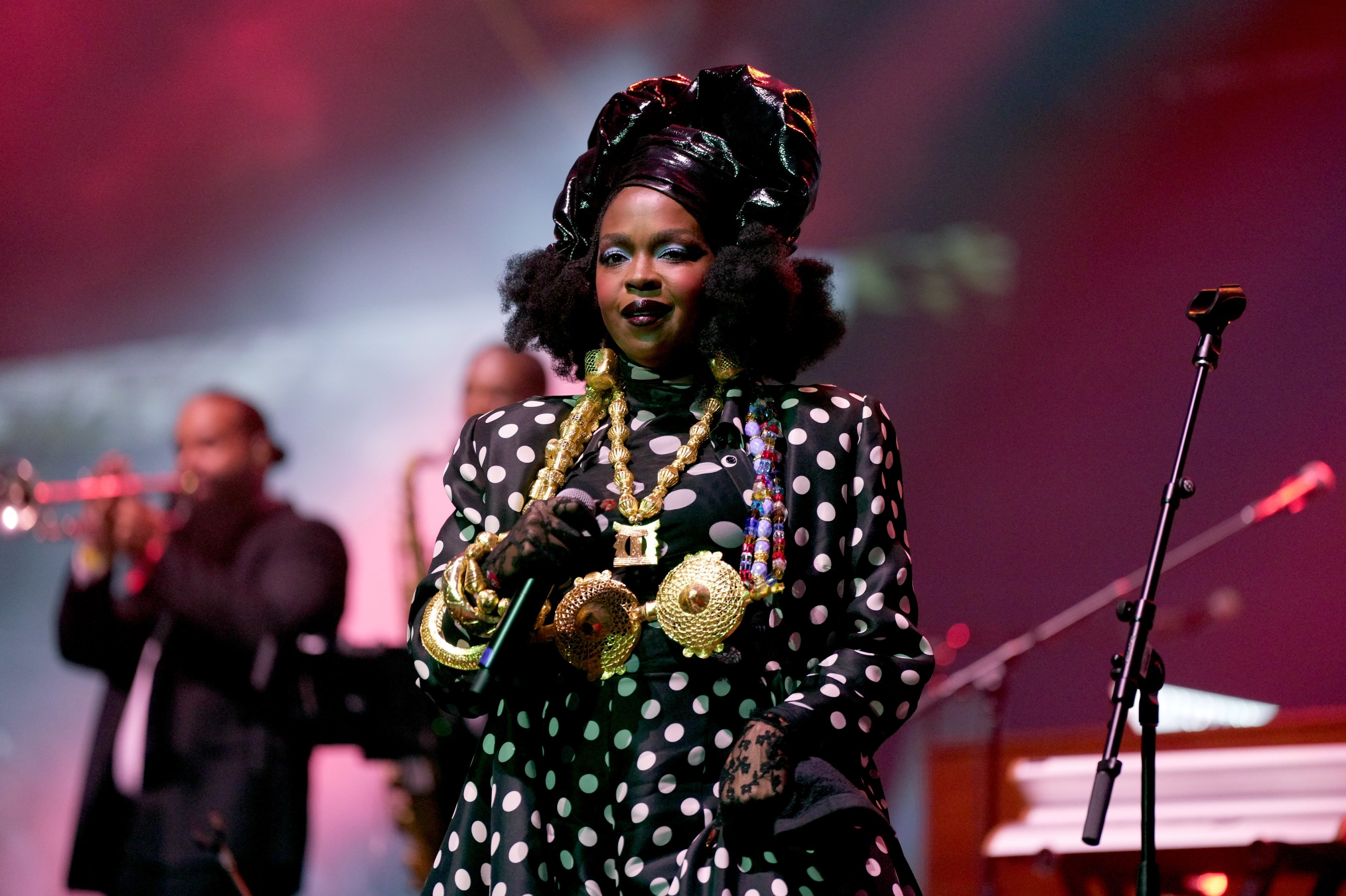
After breaking out in a huge way with Fugees' The Score in 1996, Lauryn Hill took over the world with her 1998 solo debut The Miseducation Of Lauryn Hill, then never put out another studio album. Over the weekend, Hill joined in some discourse about why things played out that way.
Miseducation was such a massive commercial and critical success that even those of us who lived through it might forget the full extent of it. The album debuted at #1, the first debut LP by a solo female artist to start out atop the chart. Its first-week sales totaled 422,624, breaking the first-week sales record for a woman; it still stands as the best first-week sales total of the 20th century for a woman's debut album. Miseducation sold 3 million copies in its first few months on the market and went on to be certified diamond by the RIAA, denoting 10 million units shipped. It spun off a number of hits including a Hot 100 chart-topper with "Doo Wop (That Thing)," which made Hill the first woman to debut at #1 with her first Billboard 200 and Hot 100 entries. And, of course, in February 1999 it became the first rap album to win Album Of The Year at the Grammys. Two years ago, Apple Music named it the best album of all time.
Within a couple years after Miseducation's release, Hill had dropped out of the public eye. Other than the 2002 live album MTV Unplugged No. 2.0, she never dropped another full-length body of work, and new singles would only arrive every few years. The reasons for her departure seem to be complex and personal, but many have speculated on them. Friday, the "NYC-based socially conscious hip-hop and art media" social media platform FRAIM joined the discussion with an Instagram post that suggested this explanation:
Few artists have ever disappeared at the peak of their power quite like Lauryn Hill. After releasing “The Miseducation of Lauryn Hill,” one of the most celebrated albums in hip-hop and R&B history, Hill became a global superstar, won five Grammy Awards, and seemed positioned to dominate music for decades. Instead, she never released another solo studio album.
Over the years, her absence became surrounded by rumors, myths, and speculation. But through interviews, lawsuits, collaborators, and people close to her career, a clearer picture slowly emerged: overwhelming industry pressure, battles over creative control, emotional exhaustion from fame, spiritual transformation, and a growing desire to protect her freedom and personal life.
Hill replied to FRAIM's post Saturday. First, she kept her response concise: "I disagree. ?." Later, she offered a more elaborate accounting of what went down:
When you’re inspired and desire to be principled, what doesn’t get talked about enough is the drain… nor the challenge to find safety so that you can create with integrity. Most see opportunity as dollars only and often exclude the ‘sense’. The Score nor the Miseducation were made because we were ‘allowed’ to represent what we did, we fought for every inch. Wild success can cause greed that begins to denegrate the art for the money. We’re people living through all this. These conversations should allow for more nuance. Artists go through phases, creativity requires expression, exploration and experimentation. There were people who hated the Unplugged album and yet some today swear by its significance. I was like a Harriet Tubman figure in some respects running to speak difficult truths to power before certain forces tried to close those doors. If it was so easy to do, where is that expression now on the world stage? Systems fear what they can’t control. Creativity is most potent when it’s free. If I did nothing else, I introduced standards and possibilities to a generation that didn’t know they could operate on that level before then. I am often doing things outside the support of the system before people can even realize what I’ve done. Another artist who values inspiration then recognizes IT’S value and re-presents it to an audience then ready to receive it.
I wonder what kind of album Hill would have created if she felt she had real creative freedom. I guess we'll never know.