
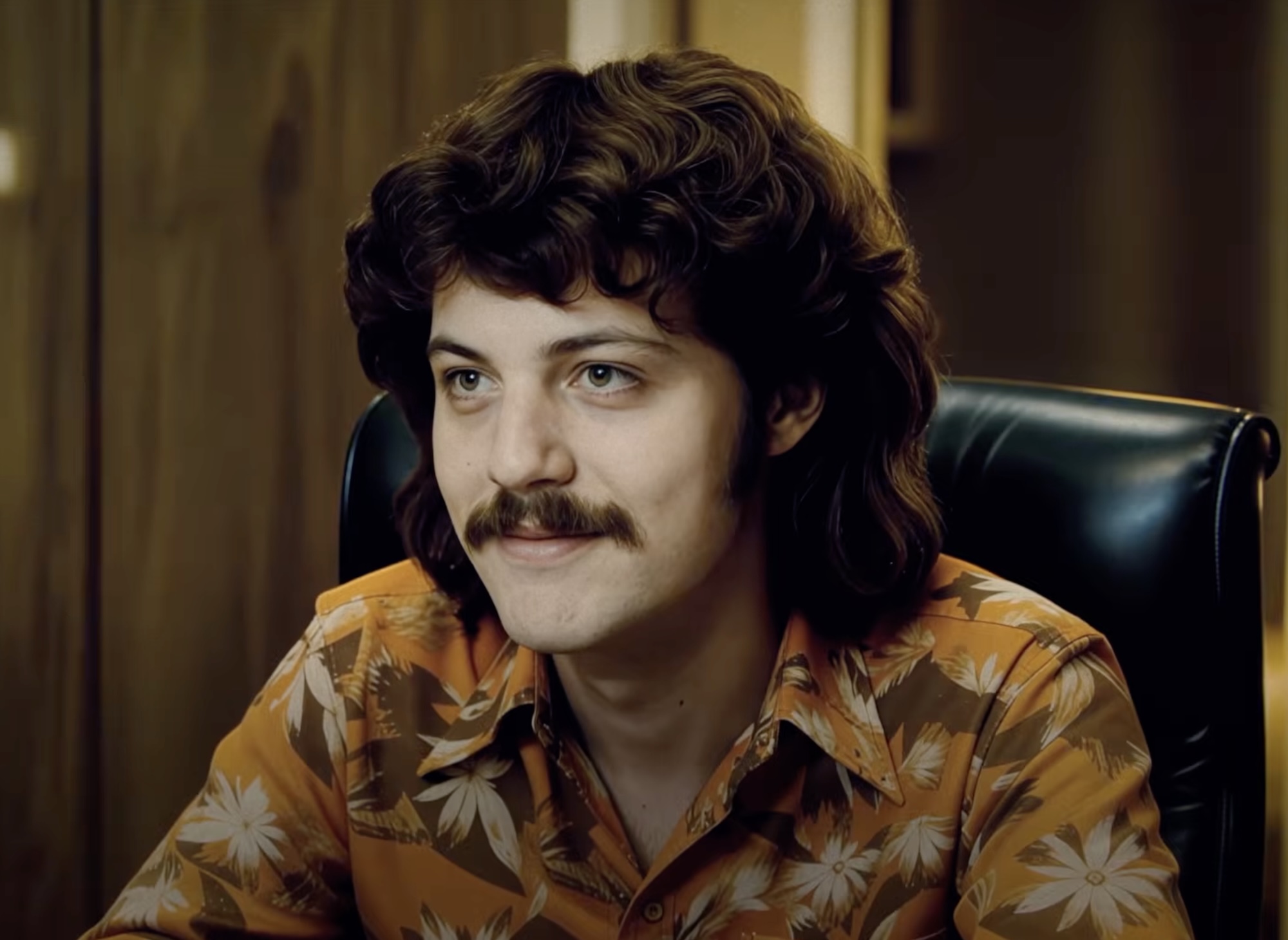
Back in 1971, when he was just coming off the release of his solo debut Cold Spring Harbor, the 22-year-old Billy Joel gave a college radio interview on Long Island. A recording of that interview was recently rediscovered, and now it's about to become an animated AI film project, made by the song of a guy who worked with Billy Joel early on and who has been effectively erased from the Billy Joel narrative. That AI movie, which looks horrifying, is just one of several forthcoming unauthorized film projects about Billy Joel's early years.
Last year, Billy Joel told his own story in the HBO documentary And So It Goes. Earlier this year, the film editor John Ottman announced plans to direct Billy & Me, a new movie about Joel's early years that'll apparently be told from the perspective of his onetime Attila bandmate Jon Small and his first manager Irwin Mazur. A rep for Joel slammed that project as "both legally and professionally misguided." So you can imagine how Joel and his team must feel about 1971: Billy Joel’s Lost Interview, the AI "documentary" that has apparently already been made.
As it turns out, Irwin Mazur is involved in this one, too. According to The Hollywood Reporter, the filmmaker behind 1971: Billy Joel’s Lost Interview is a guy named Adam Ripp. He's the son of Artie Ripp, the producer of Cold Spring Harbor. That album was a commercial failure, and Joel blamed Ripp for a famous mastering error in which the original record was pressed up at the wrong speed. Joel split away from Ripp, but Ripp continued to get royalties and publishing rights on Joel's music for years. Adam Ripp, who has also signed on as the screenwriter of Billy & Me, says that he's a Billy Joel fan and that Joel would play concerts in his living room when he was a kid.
Irwin Mazur sat in on that original college radio interview with Billy Joel, and his cousin Ed Mann conducted the interview and owned the masters to the recording. Mann and Mazur reportedly brought the recordings to Adam Ripp, who decided to contract with a Canadian AI company to animate that interview. The AI was apparently trained on photos that were taken by Mazur and people from his team, which means they have the rights to those photos. It seems to be the same impluse that drove Steven Soderbergh's AI-heavy documentary John Lennon: The Last Interview, which was widely despised when it debuted at Cannes earlier this year.
It's not entirely clear whether this Billy Joel movie can be legally released without Joel's blessing, which is almost certainly not forthcoming. A title card before the 20-minute short reportedly says, "This documentary is an independent historical work and is not endorsed by, affiliated with, or sponsored by Billy Joel." Per The Hollywood Reporter, Ripp "admits that part of the goal here is to restore credit for Mazur and perhaps even to his own family name."
If you really want to get a peek at his this AI looks, Ripp has shared a minute-long clip. The actual content is pretty amusing. Joel, someone who has played Madison Square Garden a record number of times, says that he wouldn't want to work at that venue: "That place is kind of a ripoff because what it is, in effect, is just jamming as many people and making as much money as you can our of a one-night thing. Unless you're up front or up close, it's just wasted. Madison Square Garden is just too big." If it were just the audio clip, that would be pretty interesting! Unfortunately, it comes in the form of cursed, dread-inducing uncanny-valley visual evilness. Here, look at it for yourself:
The 20-minute 1971: Billy Joel’s Lost Interview will debut Sep. 25 at the Long Island Music And Entertainment Hall Of Fame's Music Documentary Film Festival. Festival director Tom Needham allows that its AI usage "is a topic that will generate discussion and different viewpoints" but insists that "this film demonstrates how technology, when used thoughtfully, can help us reconnect with important moments in music history." The film doesn't currently have any distribution. Hopefully, it never will. You can read the full Hollywood Reporter story here.