Skip to Content
Columns

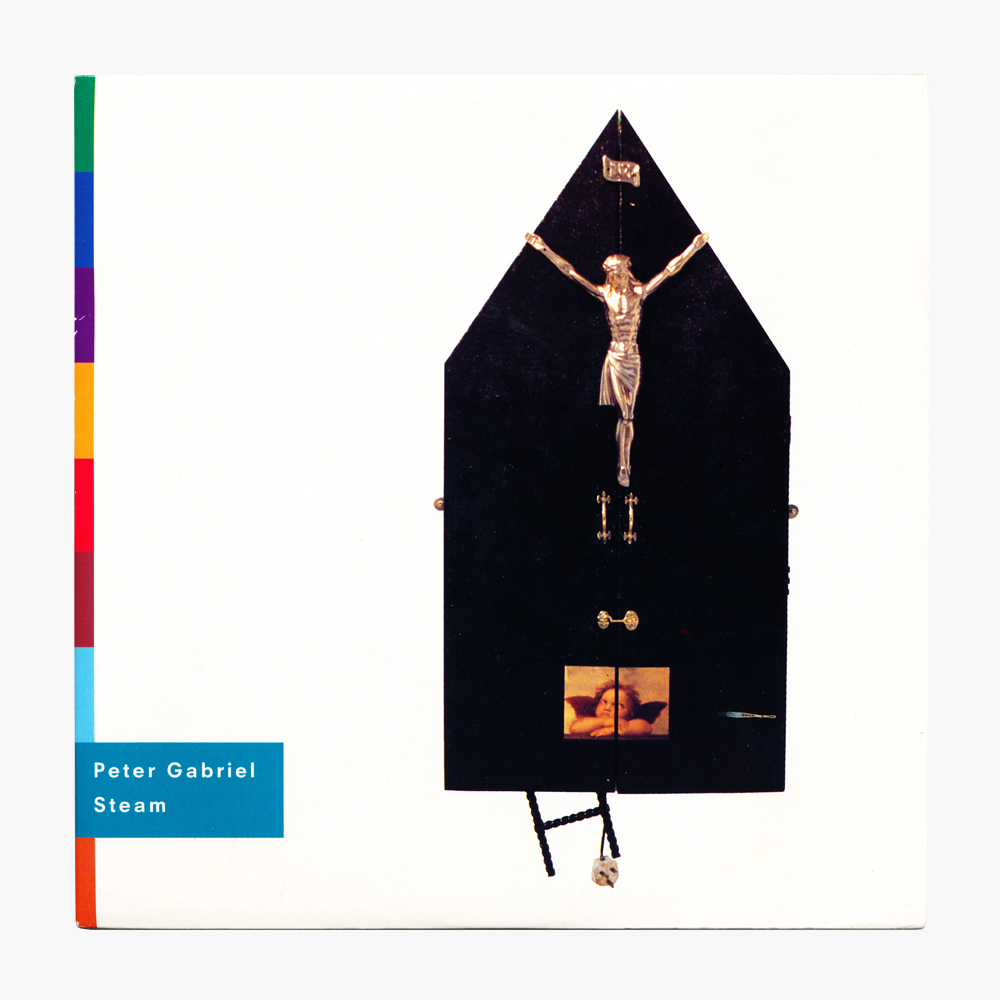
The Alternative Number Ones: Peter Gabriel’s “Steam”

December 12, 1992

  • STAYED AT #1:5 Weeks

In The Alternative Number Ones, I'm reviewing every #1 single in the history of the Billboard Modern Rock Tracks/Alternative Songs, starting with the moment that the chart launched in 1988. This column is a companion piece to The Number Ones, and it's for members only. Thank you to everyone who's helping to keep Stereogum afloat.

How do you respond when Peter Gabriel gets fonk-ayyyyy? Over the decades, Gabriel has built and earned a reputation for building dense, layered sonic environments. He spends years recording albums, he brings in musicians from all around the world, he messes around with experimental and futuristic recording techniques, and he makes music that seems to beam directly from a mature but emotionally open headspace. Every once in a while, though, Gabriel gets extremely silly, and that silliness clashes so hard with the rest of his music that you might convince yourself that he's really making a commentary on silliness rather than actually being silly.

"Sledgehammer" is the most obvious example. With the biggest pop hit of his life, Peter Gabriel tried to claim that he was paying tribute to "the spirit and the style" of Otis Redding and the other American soul singers that he loved as a young man. But "Sledgehammer," in spirit or style, doesn't really recall Otis Redding. Instead, it sounds like Peter Gabriel singing a catchy new wave jam about his dick. The epochal "Sledgehammer" video is a marvel of experimental animation and visual imagination, but it's also a slapstick party-time romp. "Big Time," another of the hits from Gabriel's 1986 blockbuster So, might be a satire of the yuppie-striver mentality, but Gabriel renders it in a form that yuppies could get down with. Is he doing something sophisticated, or is he just having fun? Does it matter?

Those questions come roaring back with "Steam." Gabriel took six years to follow So, and he finally returned with 1992's Us, a rich and sonically dazzling record about what it's like to be a middle-aged man who's gone though a divorce and another breakup and who can no longer communicate with his teenage daughter. Lead single "Digging In The Dirt" is all about using therapy to confront your own inner darkness. It's heavy shit. In the middle of all that, though, Gabriel suddenly turns into a Tex Avery cartoon wolf, braying about sex over digital horn-honks. Where does that fit into the grand narrative?

Some critics charged Gabriel with sacrificing his vision to chase crossover radio-play with "Steam." Some others took it as a self-conscious postmodern gesture. You can drive yourself nuts trying to figure out what to do with "Steam," but I think the top comment on the song's video reflects the best approach: "I fuckin love Peter Gabriel. I’m wasted cmon this is GOLD." Yup! Exactly. Don't tie yourself up into rhetorical knots thinking about "Steam" when you can just be like "yeeeaah baby Peter Gabriel's horny awoooo let's go!"

In a documentary about the making of Up, Gabriel said, "'Steam' is the most up track on the record, I think. It's obviously got all these soul references, and it comes out of the same family that 'Sledgehammer' grew out of -- Stax, Atlantic early years." Six years after "Sledgehammer," he was still trying it with that bullshit. The idea of Gabriel making a '60s-style Southern soul song is very funny. The idea of him thinking that this description might fit "Steam" or "Sledgehammer" is even funnier. "Sledgehammer" had some of the most purely '80s production that anyone ever heard. If anything, "Steam" goes even sleeker and more streamlined, in that inimitably janky early-'90s way. Every single moment on the track sounds like it was composed on one of those old Macintosh computers with the 80-pound external CD-ROM drives that would get hot when you used them for more than 15 minutes.

It's crazy to think about "Steam" and "Digging In The Dirt" coming out of the same sessions, using the same musicians, but that's what happened. Peter Gabriel wrote the song himself, co-produced it with Daniel Lanois, and recorded it with his usual coterie of former prog-rock musicians. Leo Nocentelli, the guitar legend from New Orleans funk greats the Meters, plays on both "Digging In The Dirt" and "Steam." "Steam" also has a full horn section of seasoned R&B players, including Fats Domino sideman Reggie Houston and Stax house-band trumpeter Wayne Jackson. The song has an extremely fun strut-groove, but the production has that computerized gloss all over it, so it sounds nothing like the music that supposedly influenced it. Instead it sounds like Gabriel trying to do his own version of early-'90s Prince, which is funny think about because Peter Gabriel is so manifestly not Prince.

It looks like I'm making fun of "Steam." I am not making fun of "Steam." I really like "Steam," and that silliness is exactly what I like about it. The silliness works nicely in the context of Us, where it breaks up all the funereal seriousness, and it worked even better in the context of the radio, which had plenty of its own funereal seriousness around that time. Gabriel actually recorded two versions of "Steam," and he performed them both live when he toured behind Us. The other version is called "Quiet Steam," and it's way more in line with everything else on Us. It's Gabriel mutter-sighing over moody, churning organs for six and a half minutes. Gabriel released "Quiet Steam" as a B-side on his "Digging In The Dirt" single. It's not bad, necessarily, but thank god he didn't put it on Us.

If "Quiet Steam," rather than loud "Steam," was on Us, the album would've suffered mightily. The song would've come off as a drab, dour grief-wallow, and people might not have even picked up on the overwhelming horniness of Gabriel's lyrics. The contrast between the two songs is so sharp and pronounced that it makes me wonder whether there are alternate-reality negative-image versions of other Peter Gabriel songs out there. What if he recorded frisky dancefloor versions of wildly sad Us songs like "Come Talk To Me" and "Blood Of Eden"? How would those sound?

In the actual version of "Steam" that we got, the silliness is baked-in. The whole thing is beautifully mechanized, and you can picture every sound -- the rubbery bassline, the blocky programmed drums the exuberant horn-stabs -- laid out on a precise grid. Gabriel's vocal is an exaggerated holler that sounds serious about its absurdity. When he's like, "Get a liiii-iiife?" Come on. I don't know if he actually hits the note that he thinks he's hitting, but that's good shit. If Prince sang "Steam," he would've actually sang it, and you can almost hear it in your head. Gabriel can't do that, but he has a good time, and it shows.

There is an actual idea at the heart of "Steam," and it's a sexual-political power-struggle thing. Gabriel sings about a smart, sophisticated woman who understands the world in ways that his character never could: "You know your culture from your trash, you know your plastic from your cash," etc. Our boy Petey Gabes doesn't know about any of that stuff, but he's in touch with his animal magnetism, and he knows her. It's the only advantage that he has, and he's going to use it the best he can. Gabriel's goal is to get the woman to forget about her sophistication and to join him on that animal level. He wants to fuck.

If Peter Gabriel had actually sung the phrase "I wanna fuck," then "Steam" probably wouldn't sound that different, though maybe it wouldn't have reached the same level of alt-rock radio play. Instead, Gabriel has to insinuate it in the broadest ways possible. On the first verse, he sings about the dogs sniffing around his feet -- on to something, pickin' up, pickin' up, this heat! That's right: Peter Gabriel is so horny that the dogs notice. On the bridge, he goes into a haze of sexual imagery that doesn't even necessarily make sense. "Backslap, boobytrap, cover it up with bubblewrap" -- what does that mean? But when he howls that this is more than he can take, I get that part. It means he's jizzing. Yeah, buddy! Get it, Peter Gabriel!

It's possible that "Steam" is Peter Gabriel's crass attempt to replicate the success of "Sledgehammer," and if that's the case, that's fine. They're both fun songs. It's also possible that the "Steam" recording is simply an excuse to make the video, and if that's the case, that's even better. Gabriel brought back Stephen R. Johnson -- director of his "Sledgehammer and "Big Time" clips, as well as the entire first season of Pee-Wee's Playhouse -- to make the "Steam" video. Johnson guy went off. The "Steam" video is a trip.

Where Gabriel's "Sledgehammer" video famously went crazy with surreal claymation imagery, "Steam" does the same thing, only with the ultra-primitive, Lawnmower Man-level CGI imagery that was considered state of the art at the time. I've given up on attempts to rewatch so many old '90s movies that I used to love -- Event Horizon is the first that springs to mind -- because that era's computer effects are so eye-scrapingly bad. The effects in the "Steam" video are bad, too, but they're knowingly bad -- as if Gabriel and Johnson understood that they were making a time capsule of a ridiculous moment. It's not built to age, which is why it ages well.

The "Steam" video opens with a camera flying through space and onto Earth, zooming in on a funky cartoon version of a generic city. A mile-long stretch limo pulls up, and Gabriel hops out in a purple pimp suit, with creepy bald guys sniffing at his platform shoes and buildings dancing behind him and his ladyfriend. Then they step into a wildly ugly CGI Garden Of Eden, and now they're naked and exploding into shards of nothingness, giving way to the genuinely disturbing image of Gabriel's pixelized face floating in a void of steam. It keeps going like that, alternating between goofy-horny Benny Hill imagery and surreal nightmare fuel, all rendered like an episode of Reboot.

A sexy girl paints Peter Gabriel's portrait, but he disappears from real life as his image appears on her canvas. Gabriel's face is sloppily pasted onto the body of a chiseled Chippendale dancer, and horny ladies pull him apart limb by limb, until the only thing left is his pulsating Speedo. Gabriel watches a pinup girl who's got pinwheels for boobs, and his eyes turn into pinwheels, too. A speeding locomotive morphs into his face as its pistons pump suggestively. He and a girl keep appearing in closeup, their bodies moving back and forth, but then the camera finally zooms out and they're shaking a tree and babies are falling out. There's a thread of sexual power dynamics in some of these little sketches, but it's not that deep. It's just lots and lots of wacky and occasionally disturbing things happening in quick succession. It's a blast.

Even with that video, "Steam" wasn't the crossover hit that "Sledgehammer" was, at least in the US. "Steam" was by far the biggest song from Us, and it reached #32 on the Hot 100 -- Gabriel's last time on that chart. Elsewhere, "Steam" did better. The single was a top-10 hit in the UK, Ireland, and New Zealand. In Canada, it went all the way to #1, ending the long reign of Whitney Houston's "I Will Always Love You." Just like "Digging In The Dirt" before it, the "Steam" video also won the Grammy for Best Music Video, which meant that Gabriel took that award home in two consecutive years. The "Steam" video beat R.E.M.'s "Everybody Hurts," Soul Asylum's "Runaway Train," Björk's "Human Behavior," and INXS' "Beautiful Girl" -- a pretty great slate of nominees, honestly.

Us went platinum, which means that it sold about one fifth as well as So. Was Peter Gabriel anticipating a blockbuster? I would guess that he was not, even if "Steam" is basically a pop song. The track stood out a little on alt-rock radio, and I don't remember hearing it anywhere near as often as "Digging In The Dirt," but it still got five weeks at #1. It also reached #2 on the Mainstream Rock chart, so I guess nobody was worried about whether or not it counted as a rock song. Gabriel followed "Steam" with the funky but atmospheric "Kiss That Frog," which peaked at #18 on the Modern Rock chart. I never heard that one on the radio.

Peter Gabriel did a lot to promote Us. He sang "Steam" on Saturday Night Live. (That week's host: Jason Alexander.) He toured hard, and he released a double album and concert video of his Secret World tour. For some of the dates on that tour, he had his occasional girlfriend Sinéad O'Connor, someone who's been in this column a couple of times, singing backup. Later on, Paula Cole joined the tour as a backup singer. (Cole's only Modern Rock chart hit, 1997's "Where Have All The Cowboys Gone," peaked at #32.) I wonder if Cole was in Gabriel's band when I saw him.

In 1994, my dad took me and my brother to Peter Gabriel's WOMAD Festival at Merriweather Post Pavilion. This was my second concert and my brother's first. The whole thing was my dad's idea. I think he'd heard some NPR story about all the musicians from around the world who were booked, and he thought it'd be a good cultural experience. I think he was right! I had a great time! There was stuff on the bill that I wasn't that enthused about; for some reason, my dad was really into the idea of these two Chinese flute players that I politely watched for a little while. I thought I was getting culture when I watched the spoken-word poet guy from Higher Learning. (You know: "What is high-er? What is learn-ing" -- that guy.)

But the acts that I wanted to see were the relatively mainstream-alternative ones. Midnight Oil, a band that's been in this column a few times, closed the show. Live, a band that'll be here eventually, played in the afternoon. Arrested Development, a group who have no Modern Rock chart hits, were my favorite act of the day -- right up until UK folk-punkers the Levellers played on the second stage. I thought they fucking ruled. (The Levellers' only Modern Rock hit, 1992's "One Way," peaked at #11. That song kicks ass.) Gabriel was the big draw, and I don't remember much about his set other than the big jets of steam that shot up from the ground when he sang "gimme steam" on "Steam." I liked that. That was pleasingly literal. I also got Gabriel's Xplora1 CD-ROM as a Christmas present, and I spent way too much time clicking around on that thing without actually having any fun, which was what I did with every CD-ROM I ever got.

When I saw Peter Gabriel live, he'd already released his final Modern Rock radio hit. In 1993, Gabriel's song "Lovetown" popped up on the soundtrack for Jonathan Demme's Philadelphia, and it peaked at #22. Ordinarily, this would be where I'd say something about how alt-rock radio moved away from artists like Peter Gabriel, and that would be true. But the real reason that Peter Gabriel stopped scoring Modern Rock hits was that he didn't release any damn music. Gabriel's next two projects were notable for not being albums. 1997's OVO was a soundtrack for a multimedia live performance that ran at London's Millennium Dome for a few years; I don't think it had anything to do with Drake. 2002's Long Walk Home was Gabriel's score for Rabbit-Proof Fence, a film that I have never been remotely tempted to watch.

It took a full decade for Peter Gabriel to release another proper album. His Up finally came out in 2002. Given that Gabriel was already middle-aged in the early '90s and that Up didn't sound much like Puddle Of Mudd, it's not exactly shocking that alt-rock radio stayed away. The songs from Up weren't hits anywhere, and neither were any of the other tracks that Gabriel has released in the years since. Instead, Gabriel has aged nicely into his elder-statesman role, releasing pretty-good music at a slightly more productive pace and getting great reviews for his occasional tours.

Peter Gabriel won the Nobel Man Of Peace award, which I'd never heard of until this very minute, in 2006, and he was deservingly inducted into the Rock And Roll Hall Of Fame in 2014. (Gabriel is actually a two-time Hall Of Famer, though he skipped the Genesis induction in 2010.) Gabriel has two Oscar-nominations, both for writing end-credits songs for kids' movies. The songs are fine, but the two movies, Babe: Pig In The City and WALL-E, are both bangers.

https://youtube.com/watch?v=fOM9i-4vV5I

Gabriel's more-recent albums are largely conceptual affairs. 2002's Scratch My Back was supposed to be half of a big project where Gabriel would cover the artists he admired (Radiohead, David Bowie, Arcade Fire, Neil Young), and then they would pay him back by covering his songs, but a bunch of the people who Gabriel covered did not reciprocate. The companion piece And I'll Scratch Yours didn't come out until three years later, and it was way shorter, but it did have folks like Bon Iver, Lou Reed, and Paul Simon covering Gabriel's songs. On 2011's New Blood, Gabriel covered himself, doing orchestral versions of his older songs. Last year, Gabriel came out with I/O, an album made up entirely of singles that he released one-by-one over the course of a year. I listened once. It was fine.

"Steam" is one of Peter Gabriel's bigger pop hits, but it doesn't exactly represent an important moment in his career. It wasn't a phenomenon like "Sledgehammer," and it's not an instantly recognizable cinematic work like "Solsbury Hill" or "In Your Eyes." It's just a middle-aged guy jumping onto early-'90s dance-funk production to shout about being horny. It's never going to be a big part of Gabriel's legacy -- not unless it suddenly soundtracks some new TikTok dance, a remote but real possibility. Still: A pretty fun song.

GRADE: 8/10

BONUS BEATS: The Bomb Squad, the production team behind Public Enemy, remixed "Steam" multiple times, or at least did multiple edits of the same "Steam" remix, which is more interesting in theory that in practice. Here's the 12" version:

THE NUMBER TWOS: Remember a couple of weeks ago, when I said that Neneh Cherry's "Trout," the beautifully bizarre one-of-one bugout where Michael Stipe raps about the importance of sexual education over the "When The Levee Breaks" breakbeat, peaked at #5 behind some other song? Yeah. That was wrong. I should've double-checked that. In real life, "Trout" peaked at #2 behind "Steam." It's still a 10.

THE 10S: Dada's wistfully chiming nonsense riff-beast "Dizz Knee Land," a song that still gets stuck in my head all the time even though it's not even a tiny part of my regular listening diet, peaked at #5 behind "Steam." I just gave this song a 10! I'm goin' to Dizz Knee Land!

(No Bonus Beats bits for "Trout" or "Dizz Knee Land" because the rest of the world apparently does not share my fond memories of those two songs.)

GET THE STEREOGUM DIGEST

The week's most important music stories and least important music memes.