July 24, 1993
- STAYED AT #1:3 Weeks
In The Alternative Number Ones, I'm reviewing every #1 single in the history of the Billboard Modern Rock Tracks/Alternative Songs, starting with the moment that the chart launched in 1988. This column is a companion piece to The Number Ones, and it's for members only. Thank you to everyone who's helping to keep Stereogum afloat.
This is it. It's the last one. After this, everything is different. Ever since I started writing this column a year and a half ago, there's been a long-running subplot: The programmers at American alternative rock stations in the early '80s and '90s absolutely loving the British post-punk and synthpop acts of the '80s. Most of those bands were long past their peaks by the time that the chart launched in 1988, but they still dominated this particular corner of the American airwaves. The dream of new wave was still alive on modern rock radio, until it wasn't. After "Break It Down Again," it finally expired.
Really, that development isn't quite as dramatic as I'm making it out to be. A band like Depeche Mode, who have already been in this column so many times, were still making top-10 Modern Rock hits as recently as (checks notes) 2023. But we've all seen this change coming for a long time. In 1991, Nirvana released Nevermind, changed the culture of popular rock music, and managed one week of "Smells Like Teen Spirit" at #1 in between two different Achtung Baby singles. The alternative charts took a while to fully adapt to the thing that Nirvana started, but it had to happen eventually.
Over a couple of years, grunge and grunge-adjacent bands took over MTV and the cultural zeitgeist, but they still had a hell of a time reaching #1 on the chart that this column covers. Instead, they got boxed out by '80s survivors like New Order and the Cure, as well as the British indie-dance bands who briefly looked like those groups' inheritors. Eventually, the American alt-rock bands were fated to take over American alt-rock radio, and it finally happened in 1993. Probably not coincidentally, that's when Billboard started using electronic monitoring to put the Modern Rock chart together, rather than just taking in what the different radio stations reported that they'd been playing. This was a gradual shift, not a sudden one. Starting in June 1993, Billboard used a combination of BDS data and station reporting, gradually shifting toward the former. That change, combined with the shifting tides of culture, eventually doomed all those British bands. Within a few years, the only UK acts who could top the Modern Rock charts were unicorns like Oasis or fake Americans like Bush.
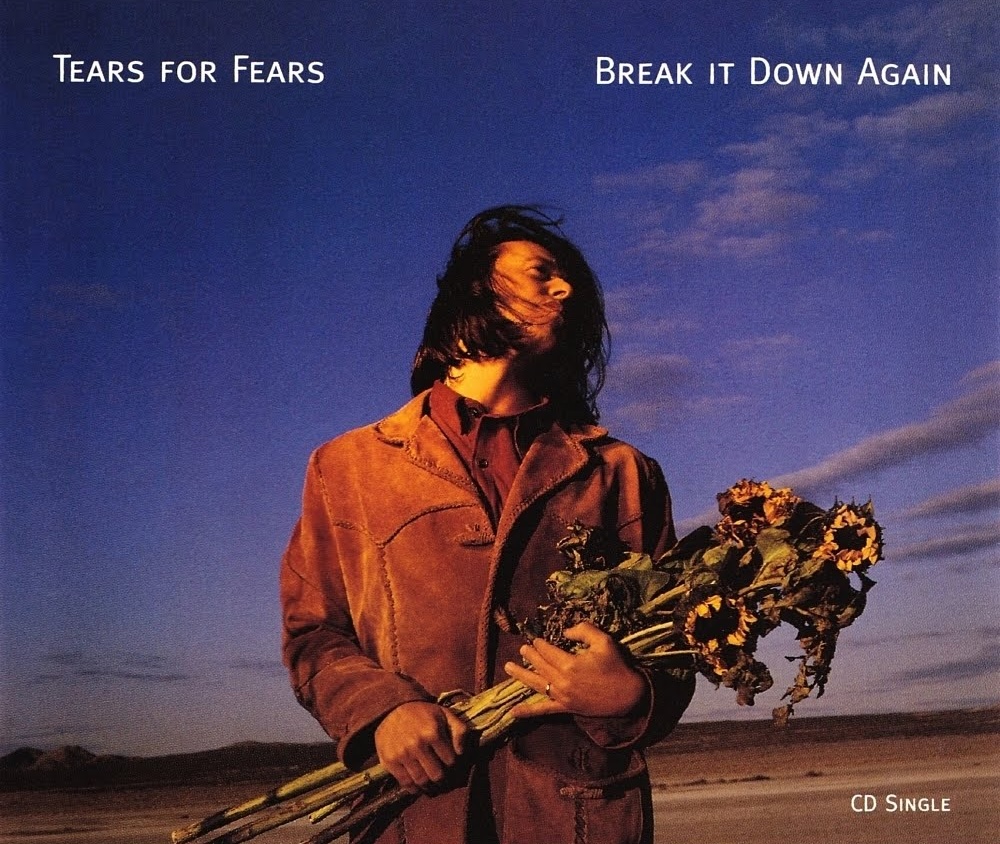
Someone had to be the last act to squeeze in there before the great shift made it to the alt-rock charts, and that somebody was Tears For Fears. There's nothing especially poetic about that; it's just how things worked out. Once upon a time, back when their album Songs From The Big Chair was percolating its way through popular culture, Tears For Fears were among the biggest commercial acts of the early MTV years. Songs From The Big Chair went quintuple platinum, and two of its singles topped the Hot 100. In 1993, Tears For Fears were in a very different place. They were basically broke and broken up. Half of the duo was gone, and the remaining half was in label debt, thanks to years of crooked management and expensive sonic perfectionism. Tears For Fears weren't anywhere near the cultural zeitgeist, and they were only barely hanging on as a pop-music entity. But this shattered version of Tears For Fears still managed three weeks atop the Modern Rock chart before the grunge babies took over and everything broke down.
Tears For Fears essentially broke up in 1991. After the blockbuster success of Songs From The Big Chair, they went into panic mode. The duo spent a fuckton of money and took four and a half years to release the follow-up LP The Seeds Of Love. That album went platinum, and lead single "Sowing The Seeds Of Love" topped the Modern Rock chart and reached #2 on the Hot 100, but that was still a huge step down from the previous record. The band's new sound, a sort of echo-synth late-Beatles pastiche, didn't exactly take the world by storm. Money was an issue, too. Band manager Paul King declared bankruptcy in 1990, and he later went to prison for fraud -- not for his activities as Tears For Fears' manager but because of a fake hangover cure that he tried to sell. (That's so low. That's just robbing people while they're already struggling.) Tears For Fears probably kept King around way too long, and they suffered the consequences.
The duo of Curt Smith and Roland Orzabal couldn't survive all of that. Smith went through a divorce, and Orzabal didn't think that he was sufficiently focused on music. Orzabal had obsessive studio-rat tendencies, and he considered himself to be the real leader of the band. In 1991, Smith left, and Orzabal kept the Tears For Fears name for himself. In interviews, Orzabal was kind of a dick about it. He would say that he was better off doing Tears For Fears without Smith, not having to manage him or write songs for him. Smith released the solo album Soul On Board in 1993, but it never even came out in the US.
In 1992, Tears For Fears released a greatest-hits collection called Tears Roll Down. I don't know why anyone would buy a Tears For Fears greatest-hits collection when they could just cop Songs From The Big Chair instead, but the world is full of wondrous mysteries. Tears Roll Down included the obligatory one new song, and that song was "Laid So Low (Tears Roll Down)," the first thing to come from the new-look solo-artist version of Tears For Fears. It's an agreeably strange piece of ultra-maximalist studio-pop with a vague house-music influence, and it reached #10 on the Modern Rock chart. (It's a 7.)
With Curt Smith out of the picture, Roland Orzabal found another main collaborator, and it was another old friend. In the early '80s, Alan Griffiths led the Escape, a Bristol synthpop band who recorded for the same label as Tears For Fears but never took off. The Escape opened for Tears For Fears on tour. After they broke up, Griffiths and his bandmate Nicky Holland became part of Tears For Fears' backing band. Holland co-wrote a lot of the songs on The Seeds Of Love with Orzabal, and then Griffiths stepped in and did something similar in the sessions for the 1993 Tears For Fears album Elemental. Griffiths co-wrote almost every song on Elemental, and he played a bunch of instruments, but he never became an official member of the group. Griffiths died of cancer in 2017. He was 57.
Roland Orzabal and Alan Griffiths co-produced Elemental with Tim Palmer, who'd done some work with legacy acts. He'd co-produced Robert Plant's 1988 solo album Now And Zen, as well as the 1989 self-titled debut from David Bowie's band Tin Machine. Palmer also mixed Pearl Jam's Ten; he's a man with a varied resume. Orzabal, Griffiths, and Palmer recorded Elemental at Orzabal's home studio, which Orzabal built to keep costs down after spending a literal million pounds making The Seeds Of Love. All three of them played a ton of instruments, and Elemental sounds just as fussed-over as The Seeds Of Love, but the sessions were easier and cheaper.
Tons of critics immediately noted that Elemental is a mean and bitter record, full of nebulously worded diss tracks directed at Curt Smith and ex-manager Paul King. Unlike plenty of their old synthpop peers, Tears For Fears weren't really doing much to catch up with the alt-rock explosion on Elemental. There are a few guitar solos here and there, and some of the drums are loud and echoey, but it's mostly the kind of mannered, busy, elaborate studio-pop that was on its way out, especially in an alt-rock radio context. This was probably the wrong year to attempt a Beach Boys pastiche, but Orzabal went ahead with "Brian Wilson Said" anyway. It's OK.
At least from what I can tell, "Break It Down Again," the lead single from Elemental, isn't about the burden of carrying the Tears For Fears name forward. Instead, it's about the general sense that things are going wrong in the world and how we need to end everything and start again. That sounds familiar, doesn't it? It's oddly comforting to know that people in past decades thought that everything was overwhelming and precarious and headed toward collapse. Even if shit is way worse now than it was then, our societal concerns are nothing new. There's no revolution coming. The architects of life still force us to keep working when we should be sleeping. All the love, all the love in the world still won't stop the rain from falling or waste from seeping underground. It would've been nice if we'd made some progress on the "it's raining" front, but at least past generations felt the same way that we do now. That's kind of nice.
Like a lot of Tears For Fears songs, "Break It Down Again" starts with a grand fanfare -- marching drums, synths imitating regal trumpets, more synths imitating rising choirs. It sounds like a member of the royal family is about to roll up, but no, it's just a build-up to the extremely 1993 arrival of the orchestra-hit synth setting. I got a Casio for Christmas around this time, and I loved that sound; my dad called it the hellhammer. I never learned how to play anything on keyboard, but I would just mash that sound ceaselessly and aimlessly, usually with one of the preset rhythm tracks playing. The pop producers of the late '80s and early '90s, from Prince on down, loved that orchestra hit, too. Here, Tears For Fears use an orchestra-hit riff to hold together a vaguely R&B groove that's absolutely cluttered with sounds.
I could drive myself nuts trying to pull apart all the elements on "Break It Down Again" -- the multiple layers of drums, the tingle-echo Edge-style guitars, the occasional power chords, the nattering keyboards, the free-jazz sax that comes wandering in near the end and just kind of hangs out in the lower reaches of the mix. It's all there to support Roland Orzabal's tragic white-soul yawp. I don't even know how to descibe Orzabal's vocals on this thing. He sounds like an effete British frog who won't turn back into Luther Vandross until a princess kisses him, so he just sits on her vanity table and tries to make Luther-style noises until she believes it's really him. I have a certain fondness for the awkward white-British soul-singer style, and this definitely qualifies. The big, busy song built around that voice isn't terrible. It's got sparkle and energy, but those things are smothered under the weight of all the ultra-dated studio trickery. I couldn't get excited about that stuff in 1993, and I can't get excited about it now.
They definitely played "Break It Down Again" a lot on WHFS, my local alt-rock station, and I definitely made exaggerated argh sounds whenever it came on. This was not what I wanted to hear. I wanted the big, cranked-up guitars and drums that increasingly defined the sound of alt-rock radio, and I couldn't understand why this boring British record kept coming on instead. If "Break It Down Again" had been great, I probably wouldn't have minded. But it's fine, and this particular brand of fine wasn't good enough for me at the time.
Apparently, this brand of fine wasn't good enough for most people, either. "Break It Down Again" peaked at #25 on the Hot 100 and #20 in the UK. It was a top-10 hit in a few countries, like Italy and Canada. Elemental limped its way to gold, but it wasn't touching Tears For Fears' past glories. They never made it onto the Modern Rock chart or the Hot 100 after "Break It Down Again," though "God's Mistake," from their 1995 follow-up Raoul And The Kings Of Spain, bubbled under at #102. That's a pretty good song.
Sometime around 2000, Curt Smith reconnected with Orzabal, and the two of them decided to reunite and give it another shot. Around the same time, these two guys named Gary Jules and Michael Andrews recorded a haunted sad-piano version of the 1982 Tears For Fears classic "Mad World" for the soundtrack of the cult movie Donnie Darko, and it became an out-of-nowhere worldwide smash, topping the UK charts and going top-10 in lots of other countries. (The "Mad World" cover peaked at #30 on what was then called the Alternative Airplay chart, but it was a #1 Adult Alternative hit. Maybe I should switch over to writing about that chart when this one gets dire.) Things were nicely primed for a Tears For Fears comeback, and that happened when they released the 2004 album Everybody Loves A Happy Ending. Nice, right?
Tears For Fears continue to take forever between records; they didn't follow Everybody Loves A Happy Ending until 2022's The Tipping Point. But they're still in a band together, so that feels like a victory. These days, Tears For Fears operate at the upper echelons of the '80s-nostalgia circuit, and they continue to play big venues. Last year, a lot of people got mad when their live album had AI cover art, but you already know that old, rich British synthpoppers want to be ahead of the curve on the AI thing. "Break It Down Again" never left much cultural impact, but Tears For Fears still play it live, and Curt Smith says that he likes it even though he wasn't in the band when they made it.
Tears For Fears continue to get sampled and rediscovered all the time. A few years ago, my son fell in love with "Everybody Wants To Rule The World" for a little while through TikTok, and he'd play it every day when I drove him to his elementary school. A little while ago, "Head Over Heels" came up on a playlist while I was stoned and walking my dogs, and I was like, damn, holy shit, Tears For Fears. Their legacy is a whole lot bigger than the weird moment where they were the last new wavers standing on the alt-rock chart, but that's where this column leaves them. It's also where this column leaves its British-dominance era. The Americans are coming.
GRADE: 5/10
BONUS BEATS: Here's the time-capsule spectacle of Tears For Fears performing "Break It Down Again" on Arsenio Hall, with a super-awkward Orzabal/Arsenio interview at the end: