
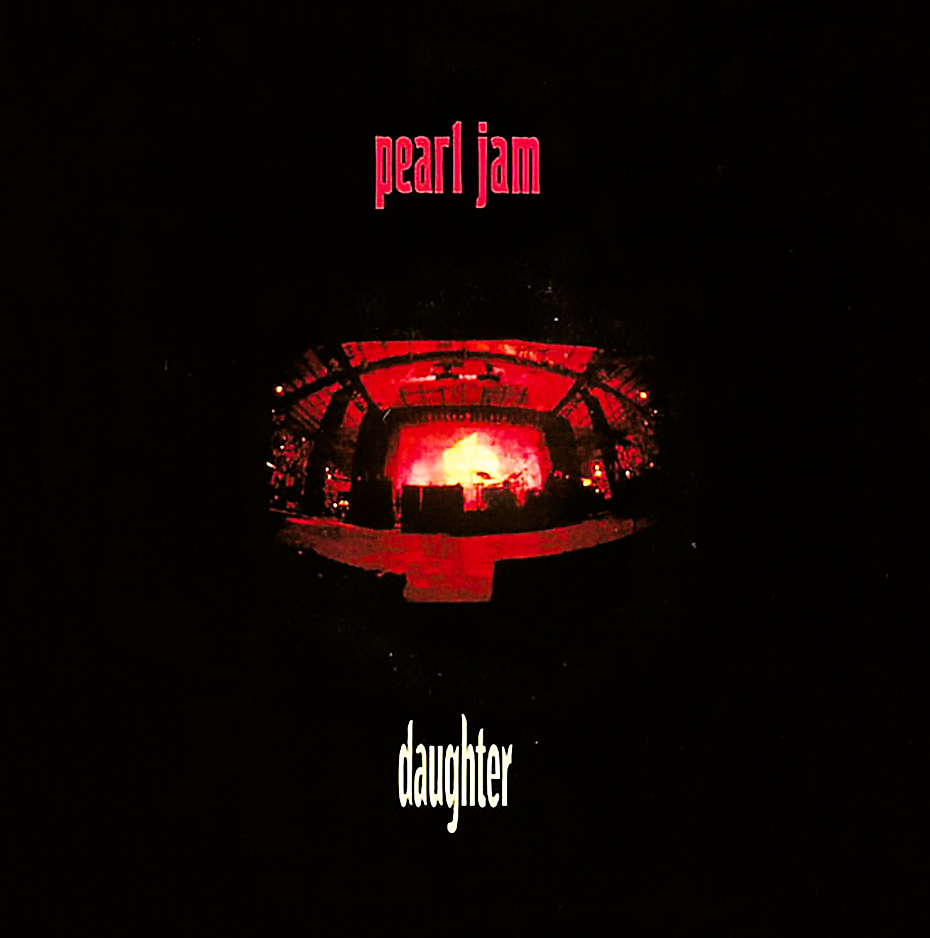
January 8, 1994
- STAYED AT #1:1 Week
In The Alternative Number Ones, I'm reviewing every #1 single in the history of the Billboard Modern Rock Tracks/Alternative Songs, starting with the moment that the chart launched in 1988. This column is a companion piece to The Number Ones, and it's for members only. Thank you to everyone who's helping to keep Stereogum afloat.
They're almost all gone now. The big grunge bands that came out of Seattle in the early '90s all had intense, smoldering, charismatic frontmen, and the vast majority of those frontmen died young. Some of them passed away when the genre still existed at the forefront of popular culture. Others left us decades later, becoming victims of the addiction and depression and hard living that followed them from those peak days. Kurt Cobain, Layne Staley, Chris Cornell, Mark Lanegan -- all gone. Stone Temple Pilots weren't even a Seattle grunge band, but Scott Weiland sang like they were, and he's gone, too. So is Blind Melon's Shannon Hoon, who isn't from Seattle and who didn't make grunge but who recorded in Seattle and hung out with the grunge guys.
It's crazy to look over all that carnage and think about what it means. "Seattle grunge frontman" has to be one of the most dangerous career paths that anyone has had in the past 50 years. There weren't that many people who ever held that position, and the people who existed in that role found varying degrees of fame, fortune, and mass adulation. It didn't save them. They might as well have been early Formula 1 drivers. They might as well have served on the front lines in World War I.
A few people made it out. As far as I know, Mudhoney's Mark Arm still works in the Sub Pop warehouse. The Melvins' Buzz Osborne continues to crank out new music at a terrifying speed. I don't know what Tad Doyle is doing with himself these days, but he's still around. None of those guys became full-on famous -- not even to the degree that Mark Lanegan did -- which probably helped. Candlebox's Kevin Martin did get famous, but his band was really just a pretty standard rock group that sometimes got swept up into the grunge conversation merely because they came from Seattle. Candlebox were roundly mocked for not being grunge enough, which made the band members hugely bitter and which almost certainly dimmed Candlebox's long-term commercial prospects. Still, who knows, maybe that saved Martin's life.
But the only one of the big-deal grunge frontmen who's still with us is Eddie Vedder. Vedder didn't come from Seattle. Instead, he arrived on the scene as a fresh-faced surfer dude from Evanston, Illinois by way of San Diego. At the peak grunge moment, however, Vedder was the biggest of any of them, and he might've been the most widely adored musician in all of America. He hated being famous, and that disdain might've been the biggest element of his public persona when Pearl Jam's second album broke sales records. Considering the overwhelming pressure and scrutiny that he once faced, it's truly amazing that Vedder sailed through just fine. These days, he seems perfectly at home as a legacy dad-rock type -- the kind who books his own annual festival at his favorite surfing spot and who makes entire soundtrack albums for Sean Penn passion projects that I will never watch. He made it out, and he's the only one -- the Highlander of Seattle grunge.
Vedder's survival shouldn't be remarkable, but when you consider the tragedy that's always surrounded him, it almost feels miraculous. It's worth wondering how this guy is still functioning when all of his peers have left this plane of existence. Maybe it speaks to some hidden strength and determination within Vedder himself. Maybe it's an accident of fate, since he never developed the drug problems of his Seattle peers, which might be a result of not living in Seattle when black tar heroin first flooded the scene. Or maybe it simply comes down to the man's point of view. Kurt Cobain, Vedder's closest peer in the voice-of-a-generation sweepstakes, resented his own fame on a visceral, molecular level. He didn't like the public's image of him, the structures that enabled his own success, or even the people who bought his band's records. He came at all that stuff from an acerbic sneery-punk sensibility; it was him against the world. Cobain had plenty of other problems, and this is probably too simple a description of what he had going on, but I'm trying to come up with an overarching theory here, so bear with me.
Eddie Vedder was different. He loved punk rock, and he's the grunge guy who developed the closest relationship with Fugazi leader Ian MacKaye, the man who so many punks treat as a living conscience. But Vedder didn't exist in the same grinding noise-rock circles that nurtured Cobain and so many of his peers. He didn't sing like a punk. Instead, his gnarled, unearthly baritone howl -- perhaps the single most influential rock singing style of the past 40 years -- is an adaptation of the big-gesture arena-rock of classic-rock faves like the Who. And though he resented his own fame, Vedder made sure never to reject his audience. He saw himself and the audience as comrades in grander struggles. When he went to war, it was against the structures -- MTV, Ticketmaster -- that got in the way of his relationship with that audience. Maybe that's why Vedder was also able to write and sing so many songs, including "Daughter," where he's not the main character. That majestic empathy was always a key part of the Pearl Jam dynamic, and I would like to imagine that it's played a role in keeping Vedder alive as well.
Considering how huge they were in the '90s, it's a little surprising that Pearl Jam don't really have that many #1 hits on the Modern Rock chart. They didn't touch the top spot until the biggest, most obvious song from their blockbuster sophomore album snuck into the #1 position after the Lemonheads' "Into Your Arms" finally tumbled. Now: The Lemonheads were nowhere near as popular as Pearl Jam. It wasn't even close. But the success of Pearl Jam's 1991 debut Ten was a slow-burn thing, driven more by touring and MTV than radio play. The big songs from Ten were all over the radio, but they did better on mainstream rock stations than alternative ones. Maybe the mainstream rock programmers could hear the echoes of Led Zeppelin in Pearl Jam's riffage, while the alternative guys took longer to accept the idea that British new wave acts weren't at the vanguard anymore.
Pearl Jam might've sounded like old-guard arena rock, but they had deep roots in the Seattle underground. Guitarist Stone Gossard and bassist Jeff Ament had been members of Green River, a band who could credibly claim to be the inventors of Seattle grunge. Green River started in 1984, and their sound was a squalid, feverish, riff-drunk form of punk rock. Their obvious antecedent was the Stooges, and there's plenty of Flipper and mid-period Black Flag in there as well. But Green River also came from a tradition of bleary, unhinged Pacific Northwest rock 'n' roll -- a lineage that stretches from the pre-punk garage rock of the Sonics and the Kingsmen up through the Wipers and Poison Idea. Green River's debut EP Come On Down came out in 1985 on on Homestead Records, the same label that helped introduce Dinosaur Jr. and Sonic Youth to the world. A few months later, Green River were one of the six bands included on the regional compilation Deep Six, which might've been the big-bang moment for Seattle grunge itself.
The Green River guys all came from the Seattle punk world, operating in a cool-kid area that must've just been a few square blocks. Stone Gossard was a Seattle native, and Jeff Ament moved there from Montana after dropping out of college when his graphic-design major was eliminated. Green River never did much outside of Seattle, but they had a decent run as an underground sensation within their own city. They released their second EP, 1987's Dry As A Bone, on Sub Pop, a just-starting-out indie that was run by a couple of Seattle guys who had day jobs working for the literal Muzak company. Their one full-length, 1988's Rehab Doll, came out after Green River were already broken up.
Green River's final show, at least before they reunited decades later, was a 1987 gig opening for Jane's Addiction in Los Angeles. Green River had a bad show that evening, and the band members were bitterly divided over what they saw later that night. Stone Gossard and Jeff Ament had their minds blown by Jane's Addiction, a band that's been in this column a couple of times. They hadn't realized that an underground band was capable of that kind of majestic ambition. But Green River frontman Mark Arm thought Jane's were the worst shit he'd ever heard in his life. That larger philosophical division might've led to Green River's breakup. Ultimately, Arm went off with Steve Turner, the former Green River guitarist who quit when he decided that the band was getting too metal, and formed Mudhoney. (Mudhoney's only Modern Rock chart, hit, 1992's "Suck You Dry," peaked at #23.) Ament, Gossard, and Bruce Fairweather, the guitarist who joined Green River after Turner quit, started Mother Love Bone.
Ament and Gossard ended up forming Pearl Jam, a band who sounds absolutely nothing like Jane's Addiction, but that took time. With Mother Love Bone, you can see the Jane's influence at work. Mother Love Bone was basically a vehicle for Andrew Wood, the flamboyant young star-child who'd been the frontman of the Deep Six band Malfunkshun. Mother Love Bone had a bit of Green River's grime and chaos, but they were basically a preening, hair-flipping '80s metal band. Mother Love Bone built a name for themselves through their theatrical live shows, and they scored a contract with Polydor, becoming maybe the first of that wave of Seattle bands to sign with a major label. They recorded their debut album, 1990's Apple, in California, and then Wood checked into rehab once the sessions were done. Before the record came out, Wood died of a heroin overdose, becoming the first of the many Seattle grunge casualties. He was 24.
The loss of Andrew Wood devastated much of the Seattle scene. It was especially hard on Chris Cornell, frontman of the Deep Six band Soundgarden, who'd been roommates with Wood for a time. (Cornell will eventually appear in this column, though not for anything that he made with Soundgarden. Soundgarden, the Creedence of the Modern Rock chart, had three different songs that peaked at #2 -- "Black Hole Sun" in 1994, "Pretty Noose" and "Burden In My Hand" in 1996 -- without ever getting all the way to the top. "Black Hole Sun" is an 8, "Pretty Noose" is a 6, and "Burden In My Hand" is a 7.) While Soundgarden were on tour on Europe, Cornell started writing songs about Wood. Cornell and Soundgarden drummer Matt Cameron got together with ex-Mother Love Bone members Stone Gossard and Jeff Ament to record a one-off tribute album under the name Temple Of The Dog. That record came out in 1991, and the single "Hunger Strike" reached #7 on the Modern Rock chart in 1992. (It's a 9.)
On that Temple Of The Dog album, a couple of other people joined the fray. After Andrew Wood died, Stone Gossard reconnected with an old high-school friend named Mike McCready. McCready, another guitarist, didn't come from punk. Instead, he'd been in Shadow, a metal band that once moved to Los Angeles in a doomed quest to get a label deal. After that, McCready got depressed, quit music for a while, and found a job in a video store. A Stevie Ray Vaughn show reignited his fire, and Gossard was impressed when he saw McCready cover Vaughn with a local band called Love Chile. McCready started jamming with Gossard and Ament, and they started to think about starting another band. Because of the Mother Love Bone connection, a lot of local singers were interested, but they all sounded like they were doing Andrew Wood impressions. This new group needed a singer and a drummer, and they sent one of their instrumental demo tapes to the former Red Hot Chili Peppers drummer Jack Irons. They wanted him to join up, and he eventually did, but he passed on the invitation first. (The band went through a lot of drummers before Soundgarden's Matt Cameron finally assumed the position in 1998.) As for a singer, though, Irons knew a guy.
Eddie Vedder was born in Evanston, just outside Chicago, and his family moved to San Diego when he was a kid. Vedder had been raised to believe that his stepfather was his biological father, and when he learned the truth, his biological father was already dead. That fucked him up. In San Diego, Vedder got really into surfing. He moved back and forth between San Diego and the Chicago area for a little while. Vedder was really into the Who, and he had an absolutely insane singing voice, a warbling bellow that made him sound like an ancient stone statue come to life. He worked menial jobs and sang for a few local bands. The one that got the furthest was Bad Radio, a vaguely Chili Peppers-esque group who recorded a demo tape and who eventually moved to LA in search of a record deal, but only after Vedder left the band.
While he was in Bad Radio, Vedder worked night shifts at a gas station. He was buds with Jack Irons; they played basketball sometimes. Irons passed Vedder this new Seattle band's demo tape. Vedder gave it a listen before going out surfing one day. Out on the water, Vedder came up with lyrics for those instrumental tracks, including one fiery lament about the father that he didn't realize he'd lost. That song was called "Alive," and it would eventually become Pearl Jam's debut single. (On the Modern Rock chart, "Alive" peaked at #18.)
Eddie Vedder's demo tape grabbed Stone Gossard and Jeff Ament right away, not least because Vedder wasn't trying to sound like Andrew Wood. They summoned him to Seattle and, after an audition process, invited him to join the band. At the same time, those guys were working on the Temple Of The Dog album with Chris Cornell. Mike McCready became the second guitarist in Temple Of The Dog, and "Hunger Strike" turned into a duet between Cornell and the previously-undiscovered Vedder. Vedder had never heard himself on a record before "Hunger Strike."
The Temple Of The Dog album came out on A&M, the same major label that had Soundgarden under contract, but it wasn't a hit at first. Vedder moved up to Seattle, and his new band named themselves after the NBA player Mookie Blaylock. Dave Krusen, a drummer who'd played in a bunch of local groups, also joined up, and Mookie Blaylock started playing shows around town. Eventually, they opened for fellow ambitiously heavy Seattle band Alice In Chains when AIC toured behind their debut album Facelift. (Alice In Chains will eventually appear in this column, but that won't happen for a long time.) Pretty soon after that, Mookie Blaylock had an offer from Epic Records, though they had to come up with a new band name that wouldn't get them sued. They decided to call themselves Pearl Jam, and then they came up a fake story about the band name, which was almost certainly just a jokey term for jizz.
Pearl Jam recorded their debut album Ten -- Mookie Blaylock's jersey number -- at producer Rick Parashar's Seattle studio London Bridge. (Parashar was just in this column for producing Blind Melon's "No Rain"; the Pearl Jam guys knew him because he did the Temple Of The Dog record.) Dave Krusen left Pearl Jam to check himself into rehab while they were in the middle of the recording the LP, and they replaced him with Matt Chamberlain, formerly one of Edie Brickell's New Bohemians. (The New Bohemians' highest-charting Modern Rock hit, 1988's "What I Am," peaked at #4. It's a 9.)
But despite that intra-band turmoil, Pearl Jam really made a motherfucking record. Ten has some of the raw intensity of Green River and some of the anthemic ambition of Mother Love Bone, merging them into a muscular churn. It's also got Eddie Vedder, a frontman willing to get feverishly vulnerable even though he sounds like one of those walking trees from Lord Of The Rings. It's easy to make fun of Vedder's passionate mumble-wail, and that voice has certainly inspired some of the most annoying rock vocals ever to reach mass popularity. But that style wasn't a cliché when Vedder started, and nobody ever did it quite like him. At his best, Vedder sounded less like he was singing, more like he was channeling elemental forces that even he didn't understand.
Ten came out in August 1991, about one month before Nirvana released Nevermind. Those two albums might've come out of the same city at the same time, and both bands might've had Sub Pop roots, but their aims were different. You can see it in the two album covers -- one visceral illustration of man's eternal and self-destructive pursuit of money, one image of a bunch of dudes in a group high-five. At first, the Pearl Jam proposition seemed relatively simple: These guys were rockers who wanted to make it. But once they did make it, things got complicated.
Pearl Jam and Nirvana both opened for the Red Hot Chili Peppers on the same fall 1991 tour; the Smashing Pumpkins, another band who will eventually appear in this column, were on some of those dates as well. By the time the tour kicked off, Matt Chamberlain left Pearl Jam to join the Saturday Night Live band. Chamberlain recruited a friend, a Texan drummer named Dave Abbruzzese, to take his spot, and Abbruzzese stuck around long enough to record two albums. Critics didn't take Ten too seriously, and it didn't place on the Pazz & Jop poll in 1991. The album did make a late-pass appearance on the 1992 poll -- way down at #34, between Lindsey Buckingham's Out Of The Cradle and Unrest's Imperial ffrr. That's goofy as hell, but it shows how long it took before Ten picked up steam. Pearl Jam's sweaty, intense live performances won people over, and they looked great on MTV, where they were in Buzz Bin rotation. "Alive" and follow-up single "Even Flow" were never too big on modern rock radio -- "Even Flow" peaked at #21. But "Even Flow" took off on mainstream rock radio, eventually peaking at #3. The sweaty live-show video was a big deal, too.
Ten went platinum in May 1992. That summer, Pearl Jam were scheduled to join their friends in Soundgarden and the Red Hot Chili Peppers on the second Lollapalooza tour. Pearl Jam weren't big names when they were booked for the festival, so they were scheduled to go on second, between Lush and the Jesus And Mary Chain. But by the time the tour actually started, the excitement around the band had snowballed. That left Lollapalooza with a situation a bit like when Chappell Roan played all those festivals last year, in mid-afternoon slots that were clearly negotiated before she got mega-popular. People showed up to Lolla early to see Pearl Jam, and they crashed the fences when the lines for admittance took too long. Pearl Jam's Lolla performances were the stuff of instant legend, with Eddie Vedder pulling off death-defying stage-dives and then making frequent second-stage appearances to pull gross bile-drinking stunts with the Jim Rose Circus Sidehow. That second installment of Lollapalooza became a flashpoint of the growing alt-rock phenomenon, and Pearl Jam basically supplanted Nirvana as the biggest band to come out of grunge.
While Pearl Jam were in the middle of Lollapalooza, they released "Jeremy" as the third single from Ten. It's a slow-motion freakout about a bullied kid who takes his own life, and its intense video captured a version of Eddie Vedder that looked absolutely possessed -- but, like, in a sexy way. The video attempted to tell kid's story, but MTV demanded cuts, which had the paradoxical effect of making it more disturbing. Because of that video, people thought "Jeremy" was about the title character's school shooting spree. As heavy as the song is, it's also big and melodramatic and irresistible, and it took off on both mainstream and alt-rock radio. (On the Modern Rock chart, "Jeremy" peaked at #5. It's a 10.)
https://youtube.com/watch?v=MS91knuzoOA
While they were promoting Ten, Pearl Jam played the game. They did a famous 1992 MTV Unplugged taping, Vedder singing with "pro-choice" written on his arm, and they gave a memorably unhinged performance of "Jeremy" at the 1992 VMAs. Pearl Jam had a couple of songs on the Singles soundtrack in 1992, and some of the band members had small roles in the movie. But as Ten became a runaway success, they scaled back on the promotional stuff, and Vedder shied away from publicity. He decided not to make a video for the power ballad "Black," which is still among Pearl Jam's best-loved songs. (It only reached #20 on the Modern Rock chart.) Ultimately, Vedder decided that music videos were stupid and intrusive and that he didn't want to make them anymore. He didn't want another situation like "Jeremy," where the video threatened to eclipse the song itself. So he decided to just stop making music videos, and that became Pearl Jam's policy for years.
But Ten was a runaway train, and Eddie Vedder couldn't stop it. While Pearl Jam worked on their sophomore album, Ten went quintuple platinum. (It's now platinum 13 times over.) Their stick-figure-logo T-shirt was everywhere, and it didn't necessarily signify any subcultural leanings. Even if modern rock radio was slow to embrace the band, nobody could argue with their impact. By 1993, any loose Pearl Jam track immediately went into radio rotation. They covered Victoria Williams' "Crazy Mary" for the benefit compilation Sweet Relief, for instance, and that cover reached #8. (It's an 8.)
The members of Pearl Jam didn't get a lot of time to think about what it meant to be a rock band of that size, but they had to figure it out in a hurry. It's probably too obvious, but I can't not compare the ways that Nirvana and Pearl Jam handled the question of the follow-up album. Pearl Jam released Ten a month before Nirvana released Nevermind, and they released Vs. a month after Nirvana released In Utero. The two bands had very different personalities, but they came from overlapping scenes in the same city, and they had to deal with similar levels of attention at the same time. They arrived at responses that are different in interesting ways.
Nirvana went off into the Minnesota wilderness and made a raw, intense album that's intentionally alienating on some level while still functioning as a kickass rock record. Pearl Jam had different pressures and internal dynamics, and they went in a different direction. As a co-producer, they hired Brendan O'Brien, a guy who became one of their key collaborators. O'Brien, from Atlanta, had been engineering and mixing records in his hometown for a few years. He started out working with Southern rock bands like the Georgia Satellites and the Black Crowes, and one of his first big production jobs was for Jackyl, the chainsaw-toting Georgia hair-metal wildmen. But O'Brien also worked on some important early-'90s alt-rock records, mixing the Temple Of The Dog album and engineering the Red Hot Chili Peppers' Blood Sugar Sex Magik. Fascinatingly, O'Brien produced the Stone Temple Pilots' 1992 debut Core. STP were arguably the first true Pearl Jam imitators to turn up on the scene, and they were hugely successful. I guess the real Pearl Jam liked the way that that album sounded.
Pearl Jam's producer might've had a background in radio-ready hard rock, and there's certainly some of that on Vs. But the album also represents Eddie Vedder's idea of how he wanted to use his platform. He wasn't all that interested in writing about his own internal conflicts on Vs. Instead, he wrote about causes that were close to his heart and about people who he might've never met. When you listen decades later, Vs. comes off partly as the emotional raw-nerve growlings of a Clinton-era liberal. Vedder howls at the moon about gun control, police brutality, and parents who just don't understand. He also brings great empathy to the story-songs where he puts himself into the shoes of regular people. "Elderly Woman Behind The Counter In A Small Town" is a prime example -- Vedder tackling something entirely outside of his personal experience but making it feel real and visceral.
Pearl Jam recorded Vs. at a comfortable studio in Marin County, California, and Vedder struggled to maintain his edge in those surroundings. He played tricks on himself, making himself intentionally uncomfortable so that he'd be able to summon the intensity that he needed. He'd sleep in a little shed on studio property that had once been a sauna. Sometimes, he'd drive into San Francisco and sleep in his car. When I type it out like that, this looks like obnoxious method-actor self-indulgence, but it worked. Vedder sounds unhinged on Vs.
Pearl Jam weren't around for long before they made Ten, though they already had Stone Gossard and Jeff Ament's years-deep connection as a foundation. They really had to learn how to be a band when they were touring behind Ten, and they carried those lessons into the studio for Vs. Many of the tracks took shape when they played in the studio together, and that immediate in-the-room interplay is mostly what you hear on Vs. The record covers a lot of ground. There are all-out rockers, strangulated ballads, and parts that get funkier than anyone remembers. The groove on "Rearviewmirror" is spartan and mathematical enough to remind me of New Order. To me, Vs. is an absolutely top-shelf classic rock record. It's got urgency, intensity, peaks, valleys, majesty, grandeur. I even love the vaguely cringey political bits. It all comes together to make something that spoke to me when I was 14. After In Utero, Vs. was the second album that I bought on its release day.
Lots of people bought Vs. on its release day. In its first week, Vs. sold about 950,000 copies -- the biggest opening-week sales of the Soundscan era to that point. Pearl Jam were doing Bodyguard-soundtrack numbers. Vs. held that record for five years, until Garth Brooks' Double Live came along in 1998. You could argue that Double Live didn't really break the Pearl Jam sales record, since all those sales counted twice. If we're looking at things that way, Pearl Jam held the belt until the Backstreet Boys moved more than a million units of Millennium in 1999, and that's really a pocket history of '90s culture right there. Critics still lowballed Pearl Jam. Vs. did better than Ten on the Pazz & Jop poll, but it couldn't break the top 10. Instead, the record came in at #14, between Paul Westerberg's 14 Songs and Bettie Serveert's Palomine. But Pearl Jam were ultimately critic-proof. The people loved them.
Because the people loved them, Pearl Jam didn't need videos. When you were as big as them, the lack of videos became its own kind of selling point -- a thing that every newspaper and magazine story about the band would mention. And there were a lot of newspaper and magazine stories about Pearl Jam in those days. In October 1993, Time put mid-howl Eddie Vedder on its cover, with the headline "All The Rage." The accompanying article was a clueless but enthusiastic alt-rock-for-adults primer, and it did not include an Eddie Vedder interview. The people at Time first thought that they could get Vedder and Kurt Cobain to pose together for the cover, which any plugged-in fan could've told them would be impossible. Cobain flat-out refused to do an interview, while Vedder said he would talk to them but then ghosted the writers. Plenty of Pearl Jam's peers resented the Time cover, but it's not like the band had much say in the matter.
Since there was no video from Vs., the album effectively had no lead single. Opening track "Go" got a bit of a radio push, even though it's a rabid rager that mainly works as a tone-setter. Still, it got airplay because it was a Pearl Jam song. ("Go" peaked at #8. It's a 7.) None of the songs from "Vs." were obvious radio-bait on the level of the Lemonheads' "Into Your Arms." Without going full Nirvana, Pearl Jam even went out of their way to avoid radio-bait. They recorded "Better Man," a song that Eddie Vedder originally wrote for his old band Bad Radio, but they left it off of Vs. because Vedder thought it was too much of an obvious hit. ("Better Man" eventually reached #2 in 1995. It's an 8.)
Without being able to get behind one obvious smash from Vs., alt-rock radio stations would just play deep cuts. I remember hearing five or six different tracks from Vs. in the wild around that time, but it took a while before an album track emerged as the real hit. Eventually, though, mainstream and alt-rock stations both got behind "Daughter," the album's most traditional power ballad. Probably not coincidentally, that's also the song that sounds the most like "Better Man." "Better Man" is a huge song, but it would've gone crazy if it was on Vs.
"Daughter" was one of the few songs that Pearl Jam mostly completed before going into the studio for Vs. They played it live for the first time at their idol Neil Young's Bridge School benefit in 1992. It's a slow, soulful rocker that gains steam as it unfolds. Stone Gossard wrote the main riff on an acoustic guitar, and it's got a soulful and vaguely swampy groove. Now that I think about it, there's a lot of John Fogerty in Eddie Vedder's ragged roar, and there's plenty of Creedence in the way that "Daughter" builds. It's all swirling strums at first, with Dave Abbruzzese working the hi-hats like he's playing the Shaft theme. Then the hammer drops. When the beat kicks in, Jeff Ament gets busy on the bass while the riffage grows fuzzier. But "Daughter" never sounds like it has anything to do with any version of punk. Instead, it's a classically structured power ballad, with the soft parts leading into the fuzzy guitar heroics. If anything, the progression just underlines how much the Seattle bands took from classic rockers like Led Zeppelin.
But Zeppelin wouldn't have had anything to do with the subject matter of "Daughter." Eddie Vedder wrote his "Daughter" lyrics about a little kid whose parents abuse her because they don't understand her learning disabilities. Later on, Vedder talked about how plenty of mental disorders weren't diagnosed for years, so kids had to deal with parents and teachers treating them like miscreants when they were just doing the best that they could. That's real shit! It's something that we're still trying to understand! Empathy is probably Vedder's greatest quality as a writer, and nothing makes him madder than people who can't or won't show that grace toward the people in their lives. His "Daughter" lyrics are plenty elliptical, and he delivers them with enough of a garbled wounded-goat verbal scrawl -- "Dun't cawwwll mayy dutterrrrr" -- that plenty of listeners probably never bothered to consider the actual point of the song. Still, you can tell that this guy's heart is breaking for the titular daughter even if you don't speak a word of the language, or even if you can't recognize Vedder's language as your own.
"Daughter" might be the first time that Vedder ever used his gurgle-slurry delivery for an intentional artistic purpose. In the Vs. lyric sheet, he made it plain that he sang one particular word in such a way that you couldn't tell whether it was "violins" or "violence." He describes this kid struggling to understand the book that her mother reads aloud, getting mad and blaming herself when she can't make her parents proud. As the song grows heavier and woolier, Vedder hints at what happens when her parents get mad, too. The shades go down, implying that the parents react in ways that their neighbors don't want them to see. Those parents become the track's most undeniably repressive force, but Vedder promises future triumph: "She holds the hand that holds her down/ She will rise above!" Man, I tell you what, that gets to me. I don't like to give bonus points for lyrical good intentions, but Vedder makes me feel that shit.
"Daughter" went to #1 on Billboard's Modern and Mainstream Rock charts. It also hit the Hot 100, but only enough to reach #97. That just goes to show: Pearl Jam didn't have to go to radio. Instead, rock radio had to figure out what to do with Pearl Jam. The band knew that they had juice, and they tried to use it in ways that benefited fans. When the band learned all the excessive fees that Ticketmaster put on its tickets, they did their best to change the live-music landscape. Stone Gossard and Jeff Ament testified in front of a Senate subcommittee, calling the company out for monopolistic practices. Eventually, Pearl Jam canceled a summer tour. They tried to play only venues that didn't have exclusive contracts with Ticketmaster, which severely limited their touring prospects in the US. Ultimately, they lost the battle. It was a noble defeat that helped pump the breaks on their exploding fame, even if it didn't accomplish much. The Senate or the Department Of Justice could've done something then, but they didn't; the corporate-friendly Clinton policies won out. Ticketmaster has gradually become an intractable public pariah, and Pearl Jam have accepted the fact that they'll have to play ball if they want to keep touring, which they definitely do. You have to love them for trying, though.
Vs. eventually went platinum seven times over, but Pearl Jam didn't get comfortable in its wake. In a SPIN cover story, Vedder fumed about the idea of having to headline an arena in Rotterdam, venting about how nobody could ever have a transporting experience in a room that big. He was hit hard by Kurt Cobain's suicide, even though the two frontmen were never personally close. Just after Cobain's death, Pearl Jam were the musical guests on Saturday Night Live. (Emilio Estevez was the host that week.) When they played "Daughter," Vedder worked in a few bars from Neil Young's "Hey Hey My My (Into The Black)," the song that Cobain quoted in his suicide note. Eventually, Pearl Jam decided on a press blackout, and they fired Dave Abbruzzese for the crime of enjoying his newfound fame too much. Jack Irons, Eddie Vedder's old friend, stepped in to take his place.
Before they kicked Abbruzzese out, Pearl Jam went back to work with Brendan O'Brien and recorded the 1994 album Vitalogy. Eddie Vedder loved vinyl -- that's what lead single "Spin The Black Circle" is about -- so Vitalogy came out on vinyl before it was available on CD. ("Spin The Black Circle" peaked at #11.) When the CD arrived, its first week sales were again crazy -- nearly a million copies, on its way to going quintuple platinum. Once again, radio pretty much had to play the whole album. Six different Vitalogy tracks made it onto the Modern Rock chart, with the aforementioned "Better Man" climbing the highest. None of them reached #1. In 1995, Pearl Jam made their way to #3 with "I Got Id," a track from their Merkin Ball EP. (It's a 6.) Around they same time, Pearl Jam backed Neil Young up on his Mirror Ball album, but none of those tracks reached the Modern Rock chart. (Unbelievably, Neil Young has never made the Modern Rock chart, though he's done better on Adult Alternative.)
This column, like the mainline Number Ones, is a weird keyhole to use when you're looking at the history of popular music. During that initial three-album run, Pearl Jam were far and away the biggest band on the entire alternative rock landscape. Not even Nirvana could touch them. But only one Pearl Jam song made it to #1 for one week during that entire imperial stretch. There are plenty of reasons for this. Pearl Jam seemed like more of a metal band when alternative radio didn't really play metal bands. They took over without fully embracing the idea of radio songs, and they rarely threw their weight behind promoting individual tracks. These are among the reasons that Pearl Jam were so widely beloved, but it means that they're not as big a factor in this column as they probably should be.
In any case, that three-album run was the only time I could call myself a Pearl Jam fan. I loved Vs., but I never even bought Vitalogy, though I listened to my little brother's copy sometimes. I went one way, and Pearl Jam went another. People still swear by some of those mid-period albums, but I've never done a deep dive. I guess I'll have to fix that when Pearl Jam appear in this column again.
GRADE: 8/10
BONUS BEATS: Heart co-leader Nancy Wilson isn't exactly an alternative rocker, but she's had plenty of overlap with Pearl Jam over the years. The Wilson sisters lived in Seattle during the grunge era and became friendly with all the young bands. Like Pearl Jam, the Wilson sisters were on the Singles soundtrack, covering Led Zeppelin with their side project the Lovemongers. Nancy used to be married to Cameron Crowe, who cast Pearl Jam in Singles and directed their Pearl Jam Twenty documentary. Nancy also covered "Daughter" for the soundtrack of I Am All Girls, a 2021 Netflix thriller about sex trafficking. Here's the video that she made for her version: