
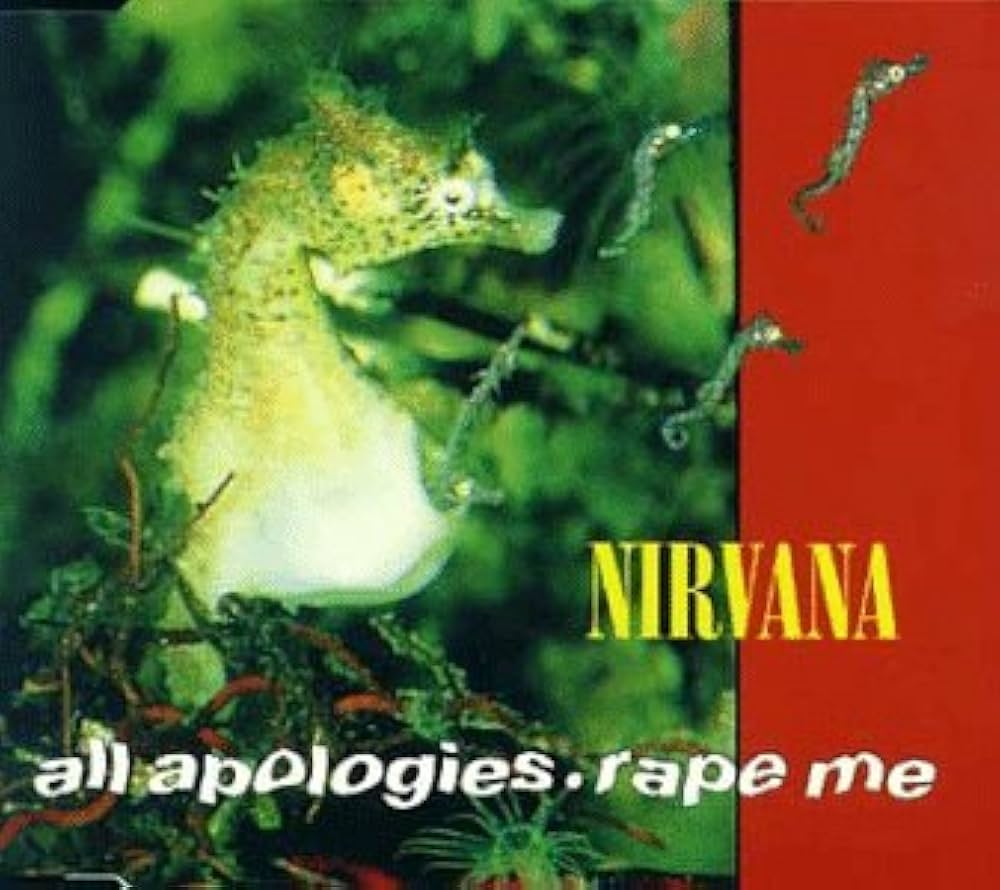
January 22, 1994
- STAYED AT #1:2 Weeks
In The Alternative Number Ones, I'm reviewing every #1 single in the history of the Billboard Modern Rock Tracks/Alternative Songs, starting with the moment that the chart launched in 1988. This column is a companion piece to The Number Ones, and it's for members only. Thank you to everyone who's helping to keep Stereogum afloat.
On The White Lotus a few weeks ago, there was a beautiful little scene where Tim Ratliff, the wealthy North Carolina businessman played by Jason Isaacs, goes to talk with a Buddhist monk. Tim's daughter has decided to spend a year in a Thai monastery, and her mother thinks it's the end of the world. Tim is going through his own personal apocalypse, and he's sleepwalking through his time in paradise, barely responsive to the people around him. He's talking to this monk at his wife's urging, and with the walls closing in on him, he doesn't think the monastery is necessarily a terrible idea. Maybe that's why he asks the monk a question that hangs over him all season: "What do you think happens when we die?"
I'll be thinking about that monk's answer long after the rest of this fraught little cultural moment has faded from my mind: "When you're born, you are like a single drop of water flying upward, separated from the one giant consciousness. You get older, you descend back down. You die, you land back into the water, become one with the ocean again. No more separated. No more suffering. One consciousness." Onscreen, drops of ocean spray fly up in slow motion, falling back down and illustrating the point. I'm sure that's not a new idea, but I'd never heard it phrased quite like that before. I found it terribly comforting. All in all is all we are.
Did Kurt Cobain think about what happens when we die? The name of his band suggests that he did. In his suicide note, Cobain wrote about his inability to enjoy or even accept the love that Nirvana's audience sent his way every night: "I've become hateful towards all humans in general. Only because it seems so easy for people to get along that have empathy. Only because I love and feel sorry for people too much I guess." In his last words, he explained, as much as anyone can explain anything in that state beyond hope and rationality, that he was ending his earthly existence for the sake of his daughter -- "for her life, which will be so much happier without me." He didn't get old and descend back down toward the water. He plunged himself back in, suddenly and violently. I never met the man, never saw his band live. I was in eighth grade when he died. I still wish I could've talked him out of it. It still stings.
Even though Cobain left an actual, physical suicide note, it's tempting to hear "All Apologies," the last song on the last Nirvana album, as an explanation, or as a goodbye. It's the tender, ragged plea of a fuckup. He cannot imagine a world in which he can offer anything other than apologies, see any color other than aqua seafoam shame. He doesn't know what to write because he doesn't think he has the right. He wishes he was like you -- easily amused. He sings about the impermanence of earthly existence with a bruised intensity. In the sun, he yowls, he feels as one, and then he wails the words married and buried as if he can't believe how similar those two states of being are. He ends the song, and his career as an active recording artist, by repeating the same seven-word phrase over and over again: "All in all is all we are." Maybe he's trying to remind himself, or reassure himself, or convince himself. Maybe he's trying to understand what nirvana really is.
Everything I just wrote? Bullshit. All bullshit. Kurt Cobain didn't have access to some mysterious intangible wisdom. He was a depressed, addicted, conflicted person who couldn't continue to live in his personal rock-stardom hell. Because of what Cobain meant to me and to people my age, it's so tempting to put way too much weight on "All Apologies," but that song was not some last will and testament. Cobain might've written "All Apologies" as early as 1990, and Nirvana recorded a demo back when Nevermind was still in the planning stages. Circumstances have forced some of us to turn "All Apologies" into something bigger than what it is -- a heavy, pretty, excellent rock 'n' roll song. There are plenty of big ideas and feelings at work on "All Apologies," but they're vague and nebulous enough that we can't really know what they are. Cobain could've just repeated that end phrase all those times just because it sounded good.
If that's the case, he was right. It sounds good as fuck.
When Kurt Cobain wrote "All Apologies," he was living in the little Olympia, Washington apartment that he shared with Dave Grohl, the kid who he'd just brought in to play drums in Nirvana. Danny Goldberg, Nirvana's manager, once claimed that Cobain was listening to the Beatles' "Norwegian Wood" on repeat while he worked on the track. That makes sense. Cobain was a brilliant student of the Beatles' hypnotic, chiming melodies, and "Norwegian Wood" is the purest example of that hypnosis. An early acoustic four-track version of "All Apologies" highlights that quality. The guitar line seems to refract and splinter and resolve in front of you, and Cobain's vocal just hums over it, as if the melody guides the words. Back then, the line was "all my words are grey," not "everyone is gay." It was "all my words are grey" right up until Nirvana recorded the song for In Utero. Early versions don't have the second verse, either, so the "easily amused" bit came later.
Nirvana recorded the first studio version of "All Apologies" in January 1991, and it kind of sucks. That's probably a little strong, but they make it sound like a wacky lark. The guitar upstrokes are almost ska? They didn't know what they had yet, but Cobain kept that song in his back pocket as Nirvana rose up and took over the world. When the band headlined the Reading Festival in 1992, they played "All Apologies" live for the first time. That version of "All Apologies" wasn't quite fully-formed yet. Cobain still sings that all his words are grey, and Krist Novoselic's bass gets way busier than it would on the final version. On the chorus, the guitar-fuzz has a pulverizing force that isn't there on the one that we know. It's amazing to see that video -- Cobain's hair glowing in the stage lights, his hospital gown billowing around in the wind, the crack in his voice already ghostly and overwhelming.
When Nirvana finally cut the proper version of "All Apologies" in 1993, they had some help. They recorded In Utero with Steve Albini at Pachyderm Studios in Minnesota, and Albini brought in his then-girlfriend Kera Schaley to play cello on their song "Dumb." At the time, Schaley was a college student and a member of a band called Doubt. She was only in the studio for a couple of days, and she never talked to Nirvana again after that. Kurt Cobain liked what Schaley did on "Dumb," so he asked her to try out some ideas for "All Apologies," the album's only other quiet-ish song. Decades later, Schaley told Rolling Stone that Albini actually tried to talk Cobain out of using cello on "All Apologies," but Cobain was into the idea. Schaley improvised her parts after only listening to the song once, and her instrument lends a bit more mournful gravitas to a song that already had plenty of the stuff. (During that session, Schaley also played on "Marigold," a song that Dave Grohl wrote, sang, and played guitar on. It came out as a B-side on the "Heart-Shaped Box" single.)
"All Apologies" really is a beautiful song. Nirvana recorded plenty of relatively soft and pretty tracks, but "All Apologies" might be the only one where the guitar glides along that dreamily, like a butterfly on a lazy spring day. When Cobain mashes the effects pedal on the chorus, it still sounds pretty, even though he's probably trying to make it sound unpretty. During those parts, Schaley's cello does the hugely important work of carrying that guitar riff. The groove is plaintively patient, and I've always loved the way that Grohl murders those drum fills, doing the exact things that you want a drum fill to do during a climactic break. If "All Apologies" comes on in the car, I am going to bang those drum fills out on the steering wheel, even if I'm in the middle of parallel parking. Cobain's vocal is about as good as a rock vocal can be. He's conversational and deadpan and oddly vulnerable, and then he ramps up to this painful yelp that still carries the tune. I sometimes hear a little high-lonesome twang when he hits his upper register: "In the sawwwwwn!" At the end, the track devolves into entropy as Cobain repeats his mantra, and that's really only way the last Nirvana song on the last Nirvana album could end.
Long before the song took on a tragic weight, "All Apologies" radiated power. It arrives at the end of In Utero, a cathartic burst of clarity after all the screams and scuzz-riffs of the preceding tracks, and it reaches for transcendence in ways that the rest of the album doesn't try to do. (The rest of the album finds a different version of transcendence in its own way. I'm not going to sit here and tell you that the "Serve The Servants" riff isn't transcendent.) I wonder if "All Apologies" was Cobain's nod toward shoegaze in some way, or if he was trying to do his version of impressionistic Cocteau Twins glimmer, but I'm probably overthinking it. It was probably just Cobain doing one of his occasional Beatle ballads. It might be the best of his Beatle ballads.
There's plenty of sad resignation in the final version of "All Apologies." When the song first came out, people heard the "everyone is gay" line as snark or irony. (That's the way eighth graders heard it, anyway. I can't speak for the rest of the population, but I heard kids sing that line and then snicker.) Today, the line comes across much more as a statement of empathy, or maybe as a way to make certain segments of Nirvana fandom uncomfortable. The subject of Cobain's sexuality was a matter of some speculation after his death. These days, lots of people theorize that he would've come out as trans if he'd lived. He once told The Advocate, "I've always been a really sickly, feminine person anyhow, so I thought I was gay for a while because I didn't find any of the girls in my high school attractive at all. They had really awful haircuts and fucked-up attitudes. So I thought I would try to be gay for a while, but I'm just more sexually attracted to women." That's maybe not the most powerful statement about the tyranny of gender constructs, but it was a big thing for a rock star to say in the early '90s.
If "All Apologies" is a song about feeling yourself dissolve into total depression, then "all my words are grey" might be a more appropriate lyric. But Cobain was a painfully public figure when he recorded the final "All Apologies," and he must've known the effect that the new line could have. I hear something similar in the "I wish I was like you, easily amused" bit. He might've written "All Apologies" before getting famous, but he tweaked it to make it more of a reflection on the untenable circumstances in which he found himself. The "aqua seafoam shame" part probably refers to to the walls of the hospitals and rehab centers where Cobain sometimes found himself. It just makes a sad song even sadder.
There was no question that "All Apologies" was going to be a single. When Cobain decided to have R.E.M. producer Scott Litt remix a few In Utero tracks for the radio, mightily pissing off Steve Albini in the process, "All Apologies" was one of those tracks. Cobain made the right call. The Albini mix of "All Apologies" is pretty in its own way, but the glimmer doesn't hit the same. Albini mixes the vocals and the cello a lot lower. The guitars and drums hit hard, but "All Apologies" isn't the sort of song where the drums and guitars need all the focus. The Litt remix doesn't sound lighter, necessarily. It keeps the song's intensity intact, but the prettiness resonates in a different way.
The "All Apologies" single went out to radio in December 1993, though I'm pretty sure my local alt-rock station was already playing it before then. Nirvana never got around to making an "All Apologies" video, though the comedian Bobcat Goldthwait, a friend of Cobain, later claimed that he pitched an idea about a clip where he restages the JFK assassination, but with a pie to the face rather than a bullet. That sounds pretty stupid to me. In any case, Nirvana didn't need an "All Apologies" video. In November 1993, Nirvana taped their MTV Unplugged special, a moment that will come up again in this column. MTV simply put the Unplugged version of "All Apologies" into rotation. That version is fucking awesome. (Session cellist Lori Goldston toured with Nirvana in late 1993, and she's the one who plays on the Unplugged version of "All Apologies.")
Nirvana were touring America behind In Utero when the "All Apologies" single came out in Europe and when the song started getting pushed on American radio. A month later, Nirvana played a pair of hometown shows at Seattle Center Arena, home to the Western Hockey League's Seattle Thunderbirds. The Butthole Surfers, a band that will eventually appear in this column, opened both of those shows. So did the Hawaiian noise-rockers Chokebore, a band that was never destined to get anywhere near the alt-rock charts or even the post-Nirvana major-label signing spree. Bobcat Goldthwait also opened the second of those gigs, and I wonder how that went over. A Bobcat Goldthwait stand-up set at a Nirvana show feels even more potentially alienating than having Chokebore on the bill.
That second Seattle show ended up being Nirvana's final performance in the US before Cobain's death. In summer 1994, Nirvana were supposed to headline Lollapalooza, which would've really been something. Even without Nirvana, that was the peak Lollapalooza year, the one where Smashing Pumpkins and the Beastie Boys, two groups that'll eventually appear in this column, jousted over the headlining spot. In the new Lollapalooza oral-history book, a very fun read, Billy Corgan says, "When Kurt died, I cried because I lost my greatest opponent," which is a very Corgan thing to say. A couple of the bands on that year's bill, the Breeders and L7, were mostly on there because Nirvana pushed for them. It's hard to imagine how much bigger that tour could've been if it ended with a Nirvana set, but that's a sliding-doors reality that we'll never see.
"All Apologies" reached #1 on the Modern Rock chart during the month-long lull between the end of Nirvana's American tour and the beginning of their European run. Around the time that it fell from the top spot, Nirvana kicked off their European tour in Paris. The Buzzcocks opened some of their shows, and their old friends the Melvins joined up for the final leg. Nirvana played what would be their final gig in Munich on March 1. They were supposed to play the same venue on the next night, but they canceled that one because Cobain had bronchitis. Cobain went to Rome, and on March 4, Courtney Love found him overdosing on champagne and Rohypnol. It might've been his first suicide attempt, and there were rumors that he was dead. Cobain was hospitalized, and he went back to Seattle when he was released. A few weeks later, Love called Seattle police, reporting that a suicidal Cobain had locked himself into a room with a gun. Cops confiscated his guns and left.
Love and some friends staged an intervention for Cobain soon after that, and he agreed to check himself into rehab in Los Angeles. He convinced Earth frontman Dylan Carlson, one of the friends at that intervention, to buy him a shotgun, and he checked himself out of rehab after a few days. Around that time, the LA Times reported that Nirvana had dropped off the Lollapalooza tour because of Cobain's health concerns and that they might be breaking up over tensions within the band. Cobain flew back to Seattle, and he stayed alone in his Seattle house for about a week. His loved ones didn't know where he was. On April 8, an electrician discovered Cobain's body. He'd used that shotgun to take his own life. There will always be rumor and innuendo about Cobain's death, but I think that's goofball shit. Cobain was overwhelmed with depression for his entire life, and he found himself in a place where he didn't think he could continue. It fucking sucks. I wish he didn't go out like that, but he did. The end.
Like so many of Cobain's songs, "All Apologies" came to seem more meaningful after his passing. I don't even think it's necessarily a song about death, though it isn't not about death. This is just one of those eerie cases, like Biggie Smalls releasing an album called Life After Death immediately after dying. Some of our greatest artists are fascinated with the idea of oblivion, so when they die young, those works come to seem spooky or prophetic. "All Apologies" sounded spooky and prophetic even before Cobain died. When I hear it now, it's just really, really sad. It's also great. Maybe "All Apologies" has larger truths to tell us, but I don't think we have to elevate it to the level of mythological text. For me, it's enough for a song to be both sad and great.
Nirvana were a ridiculously important band before Kurt Cobain died. Now, they're a shirt that you can buy at Target. That's weird, but it doesn't make me like the music any less. "Smells Like Teen Spirit" might be the single most overplayed song of my lifetime. I can't get a rush when I hear it anymore. That was probably already gone when Cobain was still alive. I know it's a great song, but it's been diluted. I've heard "All Apologies" hundreds of times over the years, maybe thousands, and the same thing hasn't quite happened. If anything, "All Apologies" might be even more of an intense listening experience now, just because of the tragedy of it all. We're not quite done with that tragedy yet. Nirvana will appear in this column again.
GRADE: 10/10
BONUS BEATS: Sinéad O'Connor, someone who's been in this column a couple of times, released her "All Apologies" cover on her Universal Mother album in September 1994. It's fucking devastating. Here's the video that she made for it:
BONUS BONUS BEATS: Here's Herbie Hancock's instrumental jazz version of "All Apologies," released in 1996:
BONUS BONUS BONUS BEATS: In 2005, one of the final episodes of Six Feet Under ended with a flashback scene where Peter Krause's Nate character reacts to Kurt Cobain's death by bumping "All Apologies," getting high, sobbing, and making a very questionable life decision. Here it is:
BONUS BONUS BONUS BONUS BEATS: When Nirvana were inducted into the Rock And Roll Hall Of Fame in 2014, the band's surviving members got back together to play four songs, with four different women standing in for Kurt Cobain. The last of those songs was "All Apologies." For that one, they brought out Lorde, who will eventually appear in this column if I keep writing it long enough. Lorde was born two and a half years after Kurt Cobain died. She was 18 when she sang for Nirvana, and she's older now than Cobain was when he died. Here's that performance: