Skip to Content
Columns

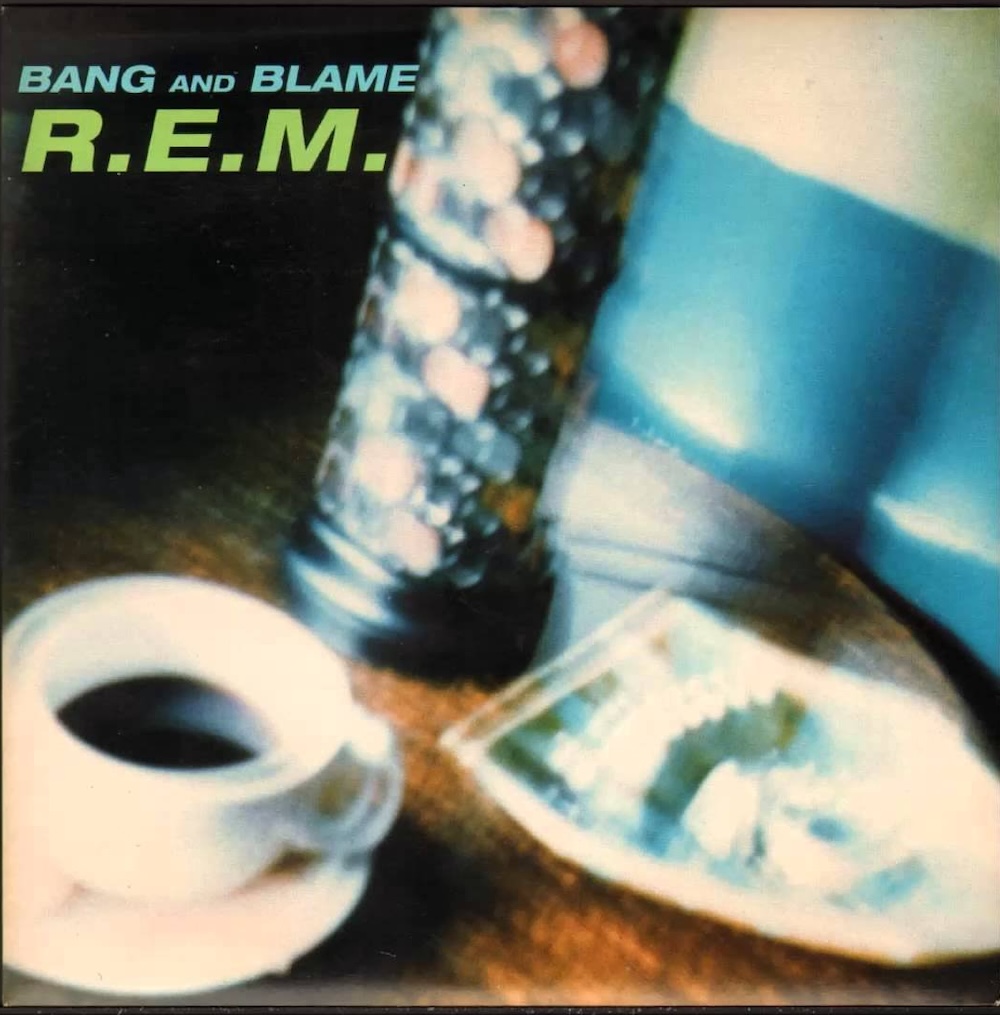
The Alternative Number Ones: R.E.M.’s “Bang And Blame”

December 17, 1994

  • STAYED AT #1:3 Weeks

In The Number Ones, I'm reviewing every single #1 single in the history of the Billboard Hot 100, starting with the chart's beginning, in 1958, and working my way up into the present. Book Bonus Beat: The Number Ones: Twenty Chart-Topping Hits That Reveal the History of Pop Music.

"Some bands I like to namecheck, and one of them is R.E.M." That was Stephen Malkmus, drawling hard and bringing his customary level of cryptic irony to "Unseen Power Of The Picket Fence," Pavement's contribution to the 1993 compilation No Alternative. That comp was a big deal, a moment when alt-rock giants like Nirvana and Soundgarden and future Pavement adversaries Smashing Pumpkins could use their live tracks and throwaways to raise money for AIDS relief. It was probably a big deal that Pavement were on it, too. At the time, Pavement were coming off of their breathlessly acclaimed debut album Slanted And Enchanted, and observers wondered whether they were gearing up for something comparable to R.E.M.'s run in the '80s -- that band's pre-stardom time as a mythic underground institution. Naturally, Pavement used what might've been the biggest look of their collective career to write a song about R.E.M.'s pre-stardom time as a mythic underground institution.

Pavement actually went on to achieve that mythic underground-institution status, and they did it while making music that I personally find extremely irritating. As it happens, "The Unseen Power Of The Picket Fence" is one of the few Pavement songs that I really like. (Another is 1994's "Cut Your Hair," which was Pavement's only Modern Rock chart hit. That one peaked at #10. It's an 8.) "Unseen Power" has nastier, more locked-in riffs that I can remember hearing on any other Pavement song, and it has Malkmus putting more bite into his delivery. I've never fully understood the intent behind the song, and that's probably by design. Maybe Pavement were paying real homage to past masters and influences, listing song titles like they were naming ancient scriptures even as they discussed "Time After Time (Annelise)," Malkmus' "least favorite song." Maybe they were mocking the R.E.M. legend and the comparisons that they were already getting. Either way, the song ends with Malkmus invoking the image of General Sherman marching and burning his way through Georgia at the end of the Civil War and coming face-to-face with R.E.M.

That's a fitting image of where R.E.M. stood in the early '90s. None of the members of R.E.M. had reached their 40th birthdays by the time that Pavement released "The Unseen Power Of The Picket Fence," though Michael Stipe had already lost the lawwwng hair that Malkmus used to identify him. But R.E.M. had already entered the realm of antiquity. They were the band that essentially created indie rock and then went on to achieve the mainstream pop stardom that fully evaded Pavement. They were almost universally beloved and respected -- by their fellow bands, by critics, and even by regular people who listened to the radio and bought CDs. Their name was already written into history. But R.E.M. were still a working band -- one who had to contend with new movements like grunge, to say nothing of young wiseass contenders like Pavement.

On Valentine's Day 1994, Pavement released Crooked Rain, Crooked Rain, their second album. It got rapturous reviews, but it did not turn Pavement into stars. I bought a copy on cassette, and then I got really pissed off because I'd just blown eight bucks and none of the other songs sounded anything like "Cut Your Hair." (This is the root of my disdain for Pavement, but I have given them too many chances since then to ever change my mind.) Five months after the release of Crooked Rain, Crooked Rain, R.E.M. came out with Monster, their stab at a big rock record. It's probably the R.E.M. record that has the least in common with anything that Pavement ever did, though the two bands were getting played on the same radio stations and profiled in the same magazines. They were competitors, in a way. On the 1994 Pazz & Jop ballot, Crooked, Rain, Crooked Rain came in at #2, with Monster at #3 -- both albums racking up far fewer points than that year's chart-topper, Hole's eternal Live Through This.

In all matters other than general critical respect, R.E.M. and Pavement could not possibly have been further apart from one another in 1994. But I think that confluence says something. R.E.M. were at the point of their career where they were getting a questionably sincere musical tribute from an ascendant young band like Pavement, but their imperial era wasn't over yet. Nearly a decade and a half after "Radio Free Europe," R.E.M. were capable of writing songs that could capture the collective imagination. They continued to do this while operating on a different level -- selling millions of records, touring arenas, fielding invitations to Bill Clinton's White House. But that imperial era was coming to a close. For the first six years that the Billboard Modern Rock Songs chart existed, R.E.M. were almost inarguably that chart's signature act, the yardstick by which all other alt-rock bands were measured. But a little more than a year after that Pavement song came out, R.E.M. topped the Modern Rock chart for the final time.

It would've been so much more poetic if "What's The Frequency, Kenneth?" was the last time that R.E.M. appeared in this column. That song has its detractors, but it's a statement, a big swing. R.E.M. took a hard left turn away from the downbeat chamber-folk that made them insanely popular, and they made a charged-up rocker about confusion that confused plenty of people on its own. That's a song that people can remember. Instead, R.E.M.'s run on this column ends with "Bang And Blame," which could've been one of the harder-rocking tracks on any number of previous R.E.M. records, occupying the same general place as a "Driver 8" or an "Orange Crush." "Bang And Blame" is not as good as those songs, but it's part of the same continuum -- a high-impact dirge that expresses its big ideas in cryptic ways. "Bang And Blame" just isn't one of R.E.M.'s defining songs. It's pretty good, though.

When Monster was new, lots of people assumed that "Bang And Blame" was a song about domestic violence, the same way that "Everybody Hurts" was a song about suicide. A Time feature even theorized that "Bang And Blame" was about the OJ Simpson trial. That's the problem when an elliptical act like R.E.M. achieves mainstream popularity -- the most basic interpretation of a song also becomes the dominant one. Listening today, it seems much more likely that "Bang And Blame" is about sex, a subject that Michael Stipe only began to delicately address on Monster. Stipe still wasn't very open about his sexuality in that moment, though it's hard to mistake the horniness something like the Monster track "Tongue." That interpretation of "Bang And Blame" is probably too basic, too. It doesn't nail the tone. The tone that Michael Stipe hits on "Bang And Blame" isn't crusader-mode anger or drooling Tex Avery wolf. It's a general peevish aggravation, with notes of the other two feelings mixed in.

In its opening moments, "Bang And Blame" sounds a bit like one of the Police's excursions into dub reggae pastiche. Peter Buck's guitar hits echoing staccato clangs, while Mike Mills' deep bassline threatens to swallow the rest of the song. Michael Stipe's cryptic moans turn vaguely surly and accusatory: "If you could see yourself now, baby, it's not my fault." It's not his fault that someone else can see themselves? He sounds like he's in an argument and he's not sure what tactic he wants to take.

On its chorus, "Bang And Blame" suddenly surges upward and turns into a rocker, which is probably why it did so well on alt-rock radio in its moment. As long as a song followed that general quiet-to-loud blueprint, it fit into the general fabric that those stations were building. "Bang And Blame" wouldn't have sounded out of place following any of the other tracks in rotation at the time. On that chorus, Peter Buck mashes his pedalboard and cranks out some power chords, while Stipe's voice turns into a yelp. Stipe complains that you bang bang bang bang bang and blame blame blame. Instead of Mike Mills' backing harmonies, we get a few chiming, echo-drenched high notes from a weird one-off group of backup singers. Stipe's sister Lynda is one of them, and so is Rain Phoenix, sister of Stipe's late friend River, to whom Monster is dedicated. One of the backup singers is Sally Dworsky, who led the band Uma and who did the grown-up Nala's singing voice in The Lion King. Ané Diaz, who later served as Rain Phoenix's bandmate in the Causey Way, is in there. So is Lou Kregel, an Athens guy who did all of Sugar's album art. That's a lot of people, but their main contribution is a high, chiming "bang" on the chorus -- an effect that works a bit like a stray harpsichord plink on a Dead Can Dance song.

When Michael Stipe accuses the song's antagonist of banging and blaming, I don't think he's talking about physical altercations and the arguments that follow. I don't think he's singing about fucking, either, though I could be convinced. Instead, I think he's talking about being worn down and exhausted. He's blaming this other person for blaming him for whatever. He has a few accusations about "your secret life of indiscreet discretions," and he does a bit of taunting: "I've got your number, but so does every kiss-and-tell who dares to cross your threshold." On the fadeout, Stipe turns things in a more directly sexual direction ("you kiss on me, tug on me, rub on me, jump on me") and then tilts things back toward violence ("you bang on me, beat on me, hit on me, let go on me"). There's sex in his violence and violence in his sex, and maybe that's why he's still drawn to this person who he doesn't seem to like very much.

"Bang And Blame" is a perfectly solid R.E.M. song that never fully achieves liftoff. It almost works as filler on Monster, and it might've worked the same way on the radio. "Bang And Blame" was all over the radio, and not just the alt-rock stations. Mainstream rock and pop stations played it, too, and it reached #19 on the Hot 100, which meant that it was R.E.M.'s biggest mainstream hit since "Shiny Happy People." I was never sorry to hear "Bang And Blame," but I never went out of my way to find it. The no-frills video was mostly memorable for the stripey shirt that Michael Stipe wears. It should be way too big for him, but it hangs on him really nicely. I wish I owned that shirt. Bill Berry, meanwhile, rocks overalls. Even though it's 1995, they make him look less like Marky Mark and more of a farmer, which is what he already was when he wasn't playing drums for R.E.M.

"Bang And Blame" reached #1 on the Modern Rock chart shortly before R.E.M. jetted off to Australia to start their first tour since the late '80s. That tour was the main reason that Monster existed at all. After touring behind Green and headlining venues that felt too big to the people in the band, R.E.M. avoided the road for a long time, only doing occasional performances, mostly for promotional reasons. They needed a harder-rocking album to fill up the cavernous venues where they would now be booked, and Monster did the trick. But the tour did not go smoothly. Old R.E.M. fans were bummed out, and Charles Aaron wrote an entire SPIN cover story about how he thought it sucked to see the band in arenas. (Aaron has had more influence on me than maybe any other critic, but I simply cannot imagine writing a story like that one in one million years.) The members of R.E.M. had a rough time on the tour for different reasons. During a March 1995 show in Switzerland, Bill Berry collapsed from a brain aneurysm onstage. He needed immediate surgery, and the rest of the band stayed in Switzerland for weeks while he recovered.

R.E.M. came close to canceling the rest of the tour after Bill Berry's aneurysm, but Berry wanted to keep going, so they did. The Monster album cycle kept going, too. The band followed the "Bang And Blame" single with "Star 69," a revved-up, echo-drenched guitar song that was more in the vein of "What's The Frequency, Kenneth?," and it peaked at #8. (It's a 7.) For my money, the two best songs on Monster are the ones that came out as singles after that. "Strange Currencies" is one of the group's great glowing heartsick ballads, while "Crush With Eyeliner" is a trashy, flirty rocker that does the glam thing more successfully than any other R.E.M. track. Those songs are both absolute classics to me, but neither of them did very well commercially, even on alt-rock radio. ("Strange Currencies" peaked at #14, "Crush With Eyeliner" at #33.)

R.E.M. kept soldiering through their global arena tour, and health problems kept befalling them. Mike Mills needed some kind of intestinal surgery in the middle of the tour, while Michael Stipe needed to get a hernia fixed. But while they were out on the road, the band also signed a huge new deal with Warner Bros. The band seemed like a sure bet for the label. All of their Warner albums were huge sellers, Monster included. In the US, Monster went quadruple platinum, just like Automatic For The People and Out Of Time before it. But unlike those two albums, Monster apparently mostly sold to people who then turned around and sold the album back to used record stores. For years afterward, Monster earned a rep as a used-CD-bin staple. I cannot tell you how many times I flipped past that orange fuzzy goblin on the cover.

When R.E.M. signed their new deal, some press outlets reported that they made $80 million. The actual band members disputed that number, but it was clear that they got paid. Warner threw giant checks at them just as they turned into a legacy act who didn't really sell records anymore. While touring behind Monster and recovering from their various surgeries, R.E.M. made time to write and record a sprawling, evocative LP called New Adventures In Hi-Fi. That record wasn't an embarrassment by any stretch, but it didn't even come close to touching the band's previous three or four LPs commercially. New Adventures went platinum, and it sent two singles into the Modern Rock top 10. Lead single "E-Bow The Letter" had backup vocals from the legend Patti Smith, and it reached #2, even though I don't remember ever hearing it on the radio. (It's a 7.) The driving, majestic "Bittersweet Me" reached #6, and that was R.E.M.'s last time in the alt-rock top 10. (It's an 8.)

New Adventures Of Hi-Fi marked the moment that R.E.M. lost their centrality in the alternative rock ecosystem, and it almost marked the end of the band, too. It would've made a good capstone. In 1997, Bill Berry quit R.E.M. His departure was about as amicable as one can be, and he reportedly got the rest of the band to promise to continue without him. R.E.M. had always said they would break up if anyone left, and they felt weird about keeping the train rolling, but they did it. In the years that followed, they brought in different drummers to help them tour and record, but they never replaced Berry. Officially, they were a three-piece.

R.E.M. recorded 1998's Up, their first album without Berry, with Radiohead producer Nigel Godrich. I really liked that album. I haven't listened in years, but it was lush and pretty and downtempo, and it sounded nice next to Air, Belle And Sebastian, and all the other prettified soft-boy stuff that I was jamming at the time. (Lead single "Daysleeper" peaked at #18.) In 1998, R.E.M. also played the Tibetan Freedom Concert in DC, and that was the only time I ever saw them live. I don't remember their set anywhere near as well as the moment that Michael Stipe came out to sing "Lucky" with Radiohead, one of their openers on the Monster tour. That was fucking sick. (Radiohead's highest-charting single, 1993's "Creep," peaked at #2. It's a 10. They played that one in DC, too.)

In 1999, R.E.M. scored Miloš Forman's Man On The Moon, the Andy Kaufman biopic named after their own song, and their soundtrack single "The Great Beyond" reached #11. R.E.M. kept going into the 21st century, but they operated as a kind of boutique legacy act. They released four albums, all of which are fine and none of which are great. They toured arenas, with cool younger indie bands like Modest Mouse and the National as openers, and put out greatest-hits collections. They got into the Rock And Roll Hall Of Fame in 2006, their first year of eligibility, and Bill Berry came back to join them for that performance. They became absolute beasts on the AAA chart, where seven of their late-period singles reached #1. But on regular alternative radio, they were a non-factor. Only two of their 21st-century songs made the chart at all -- 2001's "Imitation Of Life," at #22, and 2008's "Supernatural Superserious," at #21. At the request of a Stereogum donor, I wrote a whole bonus Number Ones column about the latter song. It's a good one.

In 2011, shortly after the release of their album Collapse Into Now, R.E.M. announced that they were breaking up. There was no final tour, no farewell show, no ceremony whatsoever. It was just a no-fuss notice on their website, a definitive and matter-of-fact endpoint that I respect enormously. Since then, they've all gotten back together a few times. When they were inducted into the Songwriters Hall Of Fame last year, for instance, they reunited for a TV interview and a one-song performance. They all seem to be friendly with each other, and they've all got their own things going on these days. They insist that they'll never do a full-on reunion, and that's fine with me. If they change their minds and do one someday, that would be fine, too.

In a way, R.E.M.'s afterlife has been the best-case scenario for a band of their stature. They're all alive and seemingly healthy, which isn't true of so many other bands that have been in this column. They're presumably still spending the money from their '90s Warner deal. At this point, I don't hear too many younger bands with direct, identifiable R.E.M. influences, but maybe that's because R.E.M. are too foundational to the entire idea of American indie rock. Maybe R.E.M.'s influence is like the Beatles' influence -- something so huge and overwhelming that you don't even notice it.

R.E.M. continue to have cultural moments, like when Michael Shannon takes his cover band on tour or when The New York Times runs a huge feature on Michael Stipe's struggle to make a solo record. These are the kinds of things that might remind you that R.E.M. are great and you should listen to them more often. Whenever you have that thought, you are correct. R.E.M. are great, and you should listen to them more often. That might seem like vague and obvious praise, but you'd never catch me saying the same thing about, say, Pavement.

GRADE: 7/10

BONUS BEATS: "Bang And Blame" hasn't had the same afterlife as a ton of other R.E.M. songs. So instead of dredging up some random cover or just posting an SNL performance, I'd rather use this space to spotlight a different Monster song that has had an afterlife. The Bear, a show that I love, has used "Strange Currencies" as a kind of recurring love theme, and it always hits like a drug. Here's its first appearance, from the 2023 episode where the song soundtracks a chance grocery-store meeting between Jeremy Allen White and Molly Gordon:

THE NUMBER TWOS: Weezer's wacky fun-times power-pop cruncher "Buddy Holly" peaked at #2 behind "Bang And Blame." It's a 9.

GET THE STEREOGUM DIGEST

The week's most important music stories and least important music memes.