

- Cash Money/Young Money/Universal
- 2005
I couldn't take Tha Carter II home. That wasn't how it worked. The labels wanted their records to get reviews in glossy music magazines, which still existed then, but they were worried that critics would leak the albums online, which was a new problem. So I'd take the train to Midtown, and the label would set me up in someone's office. I would never know whose office it was. Maybe they'd just pick a low-level staffer and tell them to take a long lunch break. I would sit in that office with a notebook, hear the album once, and mentally compose my single-paragraph Blender review. Blender paid pretty well, but you'd only have about five sentences to render a verdict on a new record. It was a strange setup. That was how I first heard Tha Carter II.
Imagine that. Picture yourself in my position. Lil Wayne was just starting to ascend into the pantheon, but outside of his base in the South, the world hadn't really caught up yet. The New York music media definitely hadn't caught up. If you were truly dialed in, you might've noticed that Wayne's guest verses were starting to contain shocking levels of confident weirdness, but that new reality did not fit with the world's wider image of Lil Wayne — that of an aging child star who made fun club music but who wasn't worth taking seriously. Sometime in fall 2005, I spent a little more than an hour in someone's office, I guess at Universal, and I heard Lil Wayne break the sky open. Then I had to convince the rest of the world that something special was happening.
The magazine Blender no longer exists, and its online archives seem to be nuked. I have no record of any interaction that I had with anyone over that Blender review. I don't even know whether anyone besides my editor read the fucking thing. So this is all from memory, off the dome. My memory is that I dropped four stars on the album — too low, in retrospect — and my editor Jonah Weiner was like, "Really? Four stars? For Lil Wayne?" I insisted, he shrugged, and my review ran. Pretty soon, Jonah was writing his own stories extolling Wayne's genius, and he was right to do it. Not long after Tha Carter II, Wayne's greatness became virtually undeniable. Tha Carter II arrived into a world where people were just starting to figure it out.
In the moment, it seemed that Lil Wayne had suddenly taken a bold leap into unknown realms. Looking back, it didn't happen all at once. Even as a kid rapper on Cash Money in the '90s, Wayne had presence and charisma, and his slippery croak of a voice stood out, even on posse cuts full of guys who had the same thick accent as him. As his comrades in the Hot Boys all walked away from Cash Money, Wayne became the last man standing. He grew up in the public eye, and he dedicated himself to the craft of rapping endlessly. He put his hours in, and he did it in public. Wayne's series of Sqad Up mixtapes came out in 2002 and 2003, and they captured him abandoning pre-written lyrics and moving into an in-the-moment off-the-dome flow state. The result of all that practice was Tha Carter, the 2004 album where Wayne proclaimed himself the "best rapper alive since the best rapper retired."
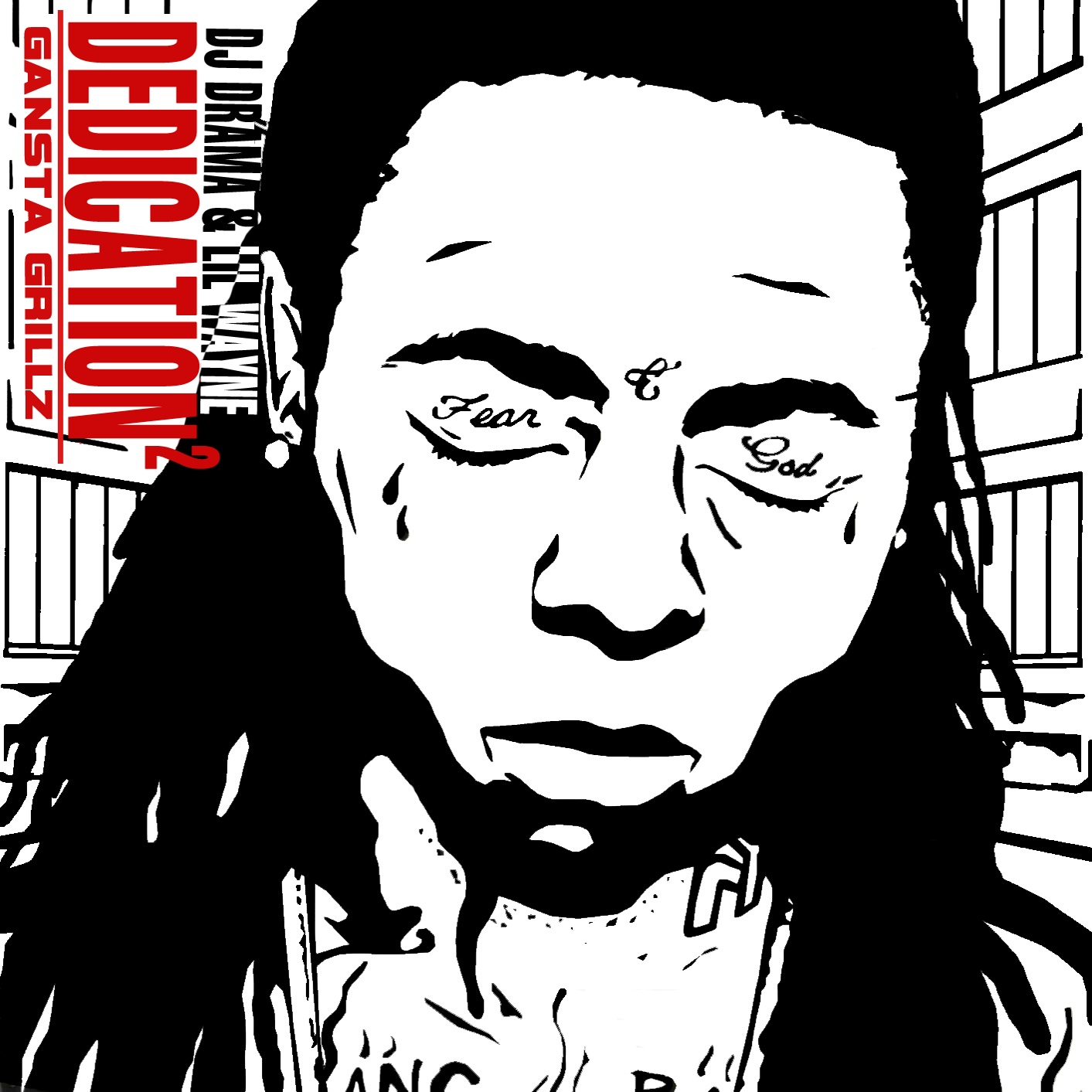
I liked the singles from Tha Carter, especially the big hit "Go DJ," but I didn't take that claim seriously, and I didn't buy a copy of the album until later. Wayne made Tha Carter with Mannie Fresh, the Cash Money in-house producer who'd supplied the music for his entire career. From the outside, that LP didn't seem like a big jump. But I caught myself paying more and more attention during Wayne's guest verses. Certain lines would rattle around in my head for long enough that I took notice. The industry paid attention, too. There was lots of talk about Jay-Z, the best rapper who retired, trying to sign Wayne to Def Jam when he became that label's president. But Jay reportedly made a lowball offer, so Wayne stuck with Cash Money and became president there. Early in 2005, he also released his first Dedication mixtape with DJ Drama. That alliance would lead to greater things.
I remember the exact moment when I started to figure out what was happening. Houston underground star Paul Wall released his major-label debut The People's Champ in September 2005. It was fine — a fun record, but not one that would ever demand its own Anniversary piece. In the middle of the deep cut "March N Step," though, there's a Wayne verse that just twisted my neck around: "I'm tryna get somewhere like I ain't never been nowhere/ They'd probably suffocate, tryna breathe this N.O. air/ Halt, who goes there?/ N***a , I live there/ I run on top of water/ I walk on thin air/ I ride around with the MAC-10 squared, that's a pair of semiautomatics shootin' everywhere."
Wayne spat out every word with such emphasis, but the actual lyrics followed their own logic, as if the words themselves were directing Wayne what to say next. And his delivery just bounced. He sounded like he didn't know what he was going to say next, like he was excited to find out. I hung on every word. I couldn't get the verse out of my head, and I wrote about what was starting to happen with Wayne. In that piece, I stupidly dismissed Wayne's "best rapper alive" claim: "It would take a global apocalypse at the very least to make Lil Wayne the best rapper alive." But I did call Wayne "the only guy in rap who seems to be improving with every verse," so I can be proud of that. I understood that something was happening, even if I didn't know what it would become.
It did not take a global apocalypse to make Lil Wayne the best rapper alive. It happened so quickly. For my money, Tha Carter II is the moment that he made the transition. That record, which celebrates is actual 20th birthday on Saturday, is still my favorite of Lil Wayne's studio albums, though some of the mixtapes that came in its immediate wake are probably better. Tha Carter II is a triumph, a declaration. But if you weren't there, I wonder if the album hits the same. Part of my love of that record comes from its context —the vast privilege of getting to watch and to write about a great artist taking off on a historic run in real time. If you don't have that context in your head, is Tha Carter II still a classic album? I'll never know. It's none of my business. Because I was there, and I'll never forget that feeling.
When Lil Wayne made Tha Carter II, his world was changing. After the Jay-Z rumors, he had a lot more eyes on him. When Cash Money label boss Birdman allegedly didn't pay the agreed-upon price for the 2002 banger "What Happened To That Boy?," seeds were planted for a Clipse/Cash Money beef that would have big effects many years down the line. (When Wayne wore BAPE in his "Hustler Muzik" video, that only fanned the flames and possibly led to the Clipse track "Mr. Me Too.") Also, when Wayne was still recording Tha Carter II, Hurricane Katrina devastated his New Orleans hometown. By the time Wayne's MTV Cribs episode aired, he had to abandon that house. Tha Carter II only acknowledges Katrina in passing ("I gotta bring the hood back after Katrina/ Weezy F. Baby, now the F is for FEMA"), but Wayne still became something of a symbol of his city and its embattled people.
The changing circumstances of Wayne's life were important to Tha Carter II, but they probably didn't have as big an effect as a change at Cash Money. In between the first and second Carter albums, Mannie Fresh fell out with Birdman and cut ties with Cash Money, a label that had once been synonymous with his sound. (In retrospect, it's staggering to think that Birdman built a towering rap legacy while alienating and seemingly ripping off just about anyone he ever worked with.) Wayne had to come up with a completely different musical direction, and he made it look easy.
Sonically, Tha Carter II is a complete break from what Wayne was making just one year earlier. Working with a team of not-very-famous producers, including Dipset collaborators the Heatmakerz and 8Ball & MJG associate T-Mix, Wayne attacked a set of instrumentals heavy on swollen, dramatic soul samples and slow-motion synth-churn. The production on Tha Carter II never gets enough attention. It doesn't have a consistent sound, but the beats draw attention to Wayne's voice, and they sound huge and epic. Wayne was just comfortable on those tracks as on the cartoonish Mannie Fresh bounce-funk of his early years or the grab bag of big beats that he hijacked during his mixtape run.
The rollout started with "Fireman." Incredible song. The beat, from relative-unknown New Yorkers DVLP and Filthy, is cheap but colossal, a whole track built from a wobbling synth-siren. Wayne dug right into that track's pocket, coming out with lines that took root in my brain even when I didn't quite know what he was talking about: "Ridin' by myself, well really not really/ So heavy in the trunk, make the car pop a wheelie." He talked his shit with condescending glee: "I don't even need a G-pass, I'm past that/ I'm passin' 'em out now, and you can't have that." "Fireman" was a solid chart hit but not a crossover smash. I loved it. I kept switching over to BET, hoping the video would be on. It was on a lot.
"Fireman" doesn't really sound like anything else on Tha Carter II, but it set the table. This was the new Wayne. He would jump on every new beat with joyous ferocity, and he would rap his face off. On Tha Carter II, there's a trio of tracks that all have the same beat, and Wayne uses all of them to bar out, never pausing to let a hook in. I would not be shocked if Wayne recorded "Fly In," "Carter II," and "Fly Out" in a single unbroken session, with some A&R person splitting one long freestyle up into separate installments like it was Kill Bill. The album is full of hard-flex tracks: "Money On My Mind," "Oh No," "Hit Em Up." On "Best Rapper Alive," Wayne doubles down on his big claim from the first Carter, using an Iron Maiden sample to drive the point home harder: "Young Heart Attack, I spit that cardiac/ You can't see me, baby boy, you got that cataracts." Some of those songs have choruses, but they don't need them. Even in battle mode, Wayne brings a playfully musical strut to his delivery. Every line is a hook.
But that's not the only Wayne that we get on Tha Carter II. When the album came out, the only song I didn't like was "Grown Man," a silky loverman ballad with a verse from Curren$y, Wayne's newly signed protege. (Like so many others, Curren$y left Cash Money at the first opportunity, and he became an underground stoner-rap institution once his old affiliations were in the rearview. He and Wayne beefed for a minute and then mended bridges.) Today, I think "Grown Man" has some very dated charm, but I still prefer the Isleys-sampling "Receipt," a better example of Wayne in R&B-friendly for-the-ladies mode. And then there's the aforementioned second single "Hustler Musik," in which Wayne adapts a bluesy singsong to rip up one of the prettiest, funkiest soul-sample beats this side of The Blueprint.
When I first heard Tha Carter II, the track that grabbed me the hardest was "Shooter." That song has a backstory. In 2002, nepo-baby white R&B singer Robin Thicke, then known only as Thicke, released his debut album Cherry Blue Skies, which was later retitled A Beautiful World. The record flopped hard; Thicke didn't become a hitmaker until later. But that LP opened with "Oh Shooter," an extraordinarily funky vamp about the time that Thicke was a bystander during a bank robbery as a teenager. Wayne would drive around listening to that song, and he'd rap over the parts where Thicke wasn't singing. He proposed to release a new version of the track, leaving the original intact but adding his raps. Basically, "Shooter" is a mixtape freestyle, and Wayne sounds like he always belonged on it even though he and Thicke talk about different things. Wayne is lifted up by the squelchy guitars and humid horns, and he uses them to deliver a statement of regional pride: "This is Southern, face it/ If we too simple, then y'all don't get the basics."
I was obsessed with "Shooter." I wrote about it all the time, called it "song of the year" and shit. I believed that "Shooter" needed to be a single, that it would change the world. To me, "Shooter" was Wayne's "Hard Knock Life" — the track that was destined to make him a larger-than-life household name to a whole new audience. But then "Shooter" came out as a single and went nowhere. It didn't even touch the Hot 100. If you ever see me predict anything, feel free to ignore it. I am always wrong about what's about to happen. Nevertheless, "Shooter" is an amazing song, and none of Robin Thicke's later shenanigans have convinced me otherwise.
My "Shooter" obsession overlapped with the one time I ever talked to Lil Wayne. When Tha Carter II dropped, I was writing a music blog for the Village Voice website, and I was getting bewildering offers to interview many of my favorite rappers. My second day on the job, I sat down with Young Jeezy, who had only just released Let's Get It: Thug Motivation 101. This didn't make any sense to me, but I was in the right place at the right time. So I figured, what the hell, I should try to interview Lil Wayne. My memory of it goes like this: I sent a bunch of emails and heard nothing back. Then when I was sitting at my desk one day, I got a call telling me that Wayne would call that same phone 15 minutes later. This was exactly what happened.
The resulting interview is bad. Don't read it. I had no time to prepare, and my head was spinning. I basically just fanned out on him and got him to explain some punchlines that probably didn't need to be explained. I told him that I thought "Shooter" was his "Hard Knock Life," and he told me that he'd just been talking to his team about how he needed a "Hard Knock Life." A couple of years later, Wayne did have a "Hard Knock Life" — a breakthrough crossover hit that was actually way bigger bigger than "Hard Knock Life" — and it was a woozy, Auto-Tuned hymn to getting head. You just never know.
Tha Carter II was the beginning of Lil Wayne's Olympian run. For the next few years, the world would behold what might be the greatest sustained one-person creative explosion in rap history. As it was happening, I would try to tell other critics that we were witnessing a Hendrix run, a phenomenon that people would speak about in hushed tones for decades. When they refused to agree, I would actually get angry. This was a ridiculous way to conduct myself, but I was right. During Lil Wayne's golden era, I got to chronicle history in action, and I knew it. Soon enough, the rest of the world would know it, too.
A couple of years after Tha Carter II, the next Carter was an instant blockbuster, and more superstars would emerge from Wayne's orbit. (There's a singer named Nikki on a couple of Carter II tracks, but it's not Nicki Minaj, who started showing up on Wayne mixtapes a year later.) Commercially, Tha Carter II was a solid success. It initially went platinum, which was right in line with the first Carter and the rest of Wayne's solo albums. Tha Carter II eventually went platinum a second time, but that didn't happen until 2020. None of the singles from Tha Carter II were any more successful than "Fireman," and Wayne didn't become a bigger star overnight. But the seeds were there. Great things were coming. If you were listening for them, great things were already here.