
- Rabid
- 2006
The voice doesn't sound human. It doesn't sound like one voice, either. It's a distorted monotone chant that comes through in several registers at once. It's a high-pitched whisper and a baritone rumble at the same time. It's one voice, clearly, but that one voice is being shifted and stretched and morphed into a bizarre caricature of humanity. Even the heavy Swedish accent on that voice increases the disconnect. The voice sounds alien, and it speaks of alienation: "In a dream, I lost my teeth again/ Calling me woman and a half-man." In the "Silent Shout" video, that voice comes out of a warped, distended, expressionless face, as if Joseph Merrick was intimidatingly bored when he asserted his humanity to a freaked-out mob at the end of David Lynch's The Elephant Man.
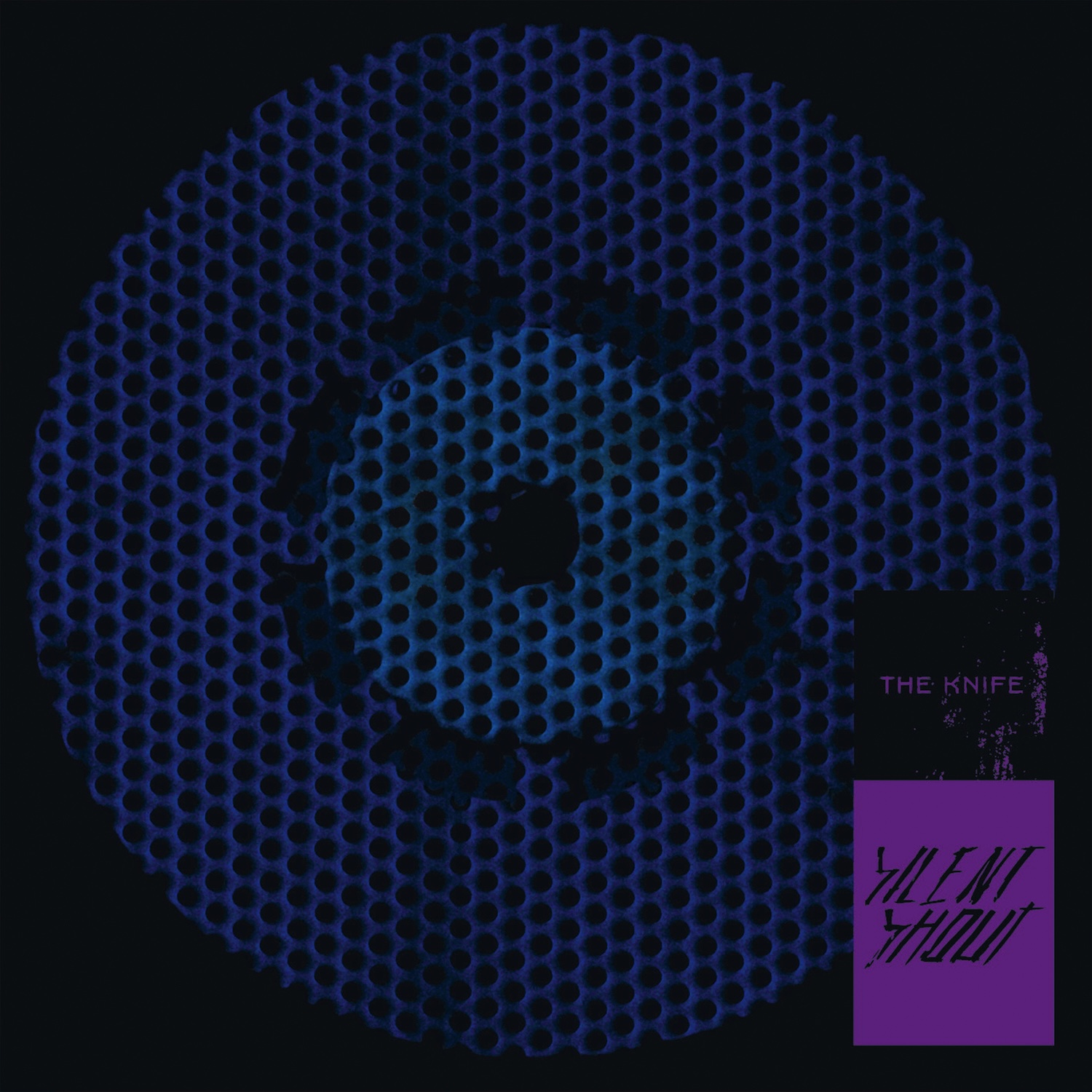
As with David Lynch, sound design plays a huge role. But where Lynch filled his visions with ambient hums and clanks and whirs, the Knife went way more spartan with their 2006 masterpiece Silent Shout, which came out in Sweden exactly 20 years ago today. The aforementioned title track, the first on the album, opens with a nervous synth note pattern: Boom boom boom pause, boom boom boom pause. A pulsing house music kick drum comes in underneath it, and then a cold, flighty keyboard arpeggio. That arpeggio keeps nattering away, sometime drifting just out sync and then finding its way back again. In its way, that musical bed is just as disquieting as that electronically manipulated voice or the lyrics that the voice chants. "Silent Shout" is straight-up club music. It's exciting and physical, and it carries a sense of freedom, of release. At the same time, it sounds like walls closing in on you.
Lynch was a big touchpoint for the Knife. Shortly after Silent Shout came out, Karin Dreijer told Pitchfork, "We talked about David Lynch a lot, especially Mulholland Drive, where they go to this concert in the middle of the night, and there's playback music. We were very inspired by that when we decided to start doing live shows. I think I'm more inspired by films than music." Dreijer mentions that the Knife were just starting to do live shows because live shows hadn't been part of their mission since the two siblings started making music together. Karin's brother Olof had been recognized a few times, and he didn't like it. So when they posed for press pics or did the occasional rare live show in 2006, the Dreijer siblings wore plague masks and allowed themselves to simply become part of an audio-visual spectacle that erupted all around them.
These days, people tend to remember the Knife as an uncompromising art project, a group willing to disregard any thought of commercial success to make a sharp, uncompromising statement. After Silent Shout, they pushed further into experimental and conceptual realms, making the 2010 opera Tomorrow, In A Year and the 2013 double album Shaking The Habitual before disbanding entirely. Karin Dreijer's solo project Fever Ray continues to carry the transgressive torch. But at the time that they made Silent Shout, the Knife were at least fringe participants in a European dance-pop underground. When nobody paid attention to their self-titled 2001 debut, the Dreijer siblings started messing around with club sounds and free downloadable plug-ins on 2003's Deep Cuts. That's still a fearless, idiosyncratic record, but it found an audience in ways that the group couldn't have anticipated.
The Sony commercial was the Knife's one real brush with mainstream fame, or at least with mainstream fame on any terms other than their own. Deep Cuts opened with "Heartbeats," a big and bright synthpop jam that's still by far the biggest Knife track on Spotify. The duo's fellow Gothenburg musician José González released a hushed acoustic cover of that song, and Sony licensed the González version for a commercial for the Bravia TV — an instantly memorable clip where thousands of brightly colored balls cascade down a San Francisco street. As a result of that ad, the González "Heartbeats" cover became a huge hit all across Europe just as Silent Shout was coming out. It could've been a perfect hype-storm for the Knife, but they had other things in mind.
The Knife had to sign off on Sony's license. They agreed to let the company use their song. They were putting out music on their own label, Rabid, and they figured that the ad money would keep them funded. During that period, the Knife didn't exist off on their own icy island reserve. They were part of a little experimental pop community. The Knife produced "Who's That Girl?," a single from Robyn's 2005 self-titled album, and Robyn took inspiration from the duo's DIY ways when she started her own Konichiwa label. That same year, Karin Dreijer sang on the Norwegian duo Röyksopp's single "What Else Is There?," and that song was a chart hit in a bunch of countries. The Knife's sound was eerie and futuristic, but it also had a certain nostalgic warmth to it. They were able to merge their style with what other artists were doing, and they could've continued on that route. Instead, they became something else.
Silent Shout exists at a magical pivot point. It's the record that the Knife made right in between their time as a culty synthpop act and as a fully experimental concern. They had things that they wanted to say about sex, economics, gender, and the omnipresence of screens. They found minimal ways to say those things, constructing Silent Shout with nothing but synthesizers and drum machines that were already old and outmoded in the mid-'00s, and they knew how to make that shit bang. They also arrived early to the vocal-manipulation party, warping Karin Dreijer's voice into something eerily and majestically post-human right around the time that T-Pain was first unlocking the commercial possibilities of robo-narcotized Auto-Tune effects. Their goals were different, but the Knife and T-Pain both gestured at a future where humanity was fungible, where emotion would be conveyed through glaringly artificial electronic effects.
In the aforementioned Pitchfork interview, Olof Dreijer talked about why the Knife used so many vocal effects on Silent Shout. He said that the duo wanted to make an album more ambient than Deep Cuts and that the vocals, if they were going to be there, had to help conjure "another state of mind" in the listener. "If you want vocals, you have to treat them so that you don't get back to reality so fast. If you recognize the voice as Karin, then you also end up back in reality, so you have to create a person who is someone you don't know, where you don't know if it's a male or a female or what." This was many years before Karin started using they/them pronouns, before gender fluidity was even part of the mainstream conversation. Already, though, the Knife's music worked to subvert binaries like gender.
In some ways, the blinky drum machine bounce and monotonal vocals of Silent Shout were an extension of electroclash, the irony-drenched art-kid club music that thrived in the early '00s. But Silent Shout is bigger than that. The ominous power of the production and Dreijer's disguised voice work together in eerie, forbidding ways; The critic Mark Pytlik called the album "haunted house" in a rave review. The album's lyrics work as squirmy post-punk provocations. Karin Dreijer sings of sex work at an arch remove: "I'm dancing for dollars for a fancy man," "Bend back, give head, it's not pornography/ If you do it with the lights, then it's art, you see." They warn of the numbing effects of TV screens and demand control of their body. Those concerns have only sharpened with age, and now Silent Shout sounds like an album out of time, one that has lost absolutely none of its dark urgency.
When Silent Shout came out, the Knife didn't sound like participants any pop-adjacent scene anymore. They were their own thing. Silent Shout was a huge deal within certain enclaves, but it didn't leave much impression on the culture at large. The LP was a #1 album in Sweden, and Pitchfork chose it as the best album of 2006, putting it ahead of noisy records from TV On The Radio, Joanna Newsom, and Ghostface Killah. But on that year's Pazz & Jop critics' poll, Silent Shout didn't even place. The Knife made their US debut at New York's Webster Hall, not a huge room but an excited one.
Two decades on, it's hard to calibrate the legacy of Silent Shout. It's an acknowledged classic of weirdo almost-pop, but it's also a = singular record. Nobody else, the Knife included, has really made another album that sounds like Silent Shout, but I hear echoes of its eerie thump in plenty of the jagged, gothy music that emerged from various different undergrounds in the intervening years. The sound of malevolent, mechanized almost-humanity never goes out of style, and Silent Shout still sounds like a future that we haven't been smart enough to avoid.