
- Matador
- 2006
Chan In Memphis. That was the elevator pitch. In 1969, English balladeer Dusty Springfield signed to Atlantic, at the time primarily a soul label, and went off to Memphis to record with some of the city's great session musicians. Springfield was apparently too shy to record most of her vocals in the room. Later on, though, she laid down her parts in a New York studio, and the resulting record, Dusty In Memphis, is sensual to the point of being psychedelic. It's one of the all-time great makeout albums, and its best song, "Son Of A Preacher Man," was Springfield's biggest-ever hit. Also, Springfield advised her new bosses at Atlantic to sign a new British band called Led Zeppelin. It worked out pretty great for everyone. So what if Cat Power made an album like that? That was the question that her album The Greatest attempted to answer. It was an insane question.
Nobody expected Cat Power to make her own version of Dusty In Memphis. People barely expected her to function as a viable ongoing indie rock concern. For many years, Chan Marshall was arguably more famous for her almost unbearably shy live presence than for her hypnotic, gut-wrenching music. If you knew anything about Cat Power, then you knew that she might cry and run offstage mid-show. On record, however, you could hear Marshall growing more and more confident, even as her music stared deep into the void. Her 2003 album You Are Free, with luminaries like Eddie Vedder and Dave Grohl in supporting roles, turned her into the kind of artist who might sometimes show up on late-night TV. This was a major breakthrough. She could've kept recording slow, mesmerizing records forever after that. Instead, she went to Memphis.
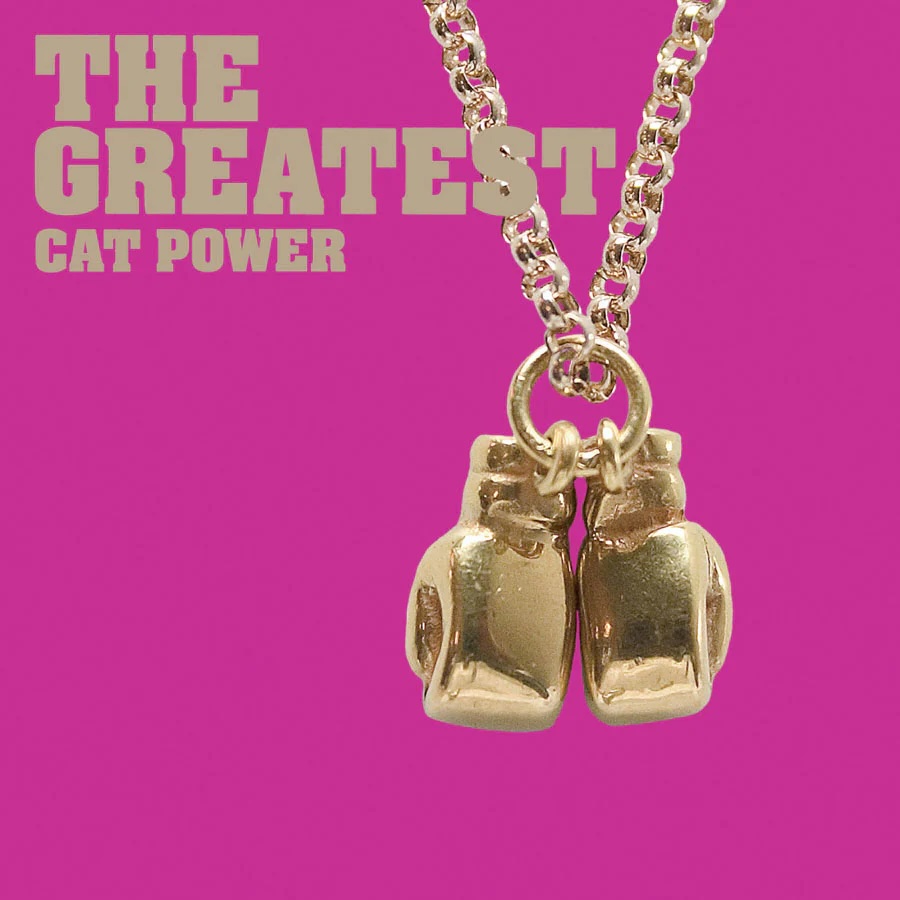
Cat Power's album The Greatest turns 20 this week, and I've never seen a satisfying explanation of how it came into being. Chan Marshall is a native Southerner, and she grew up with Otis Redding records. She was born in Atlanta, and she moved all around, spending time in Memphis, as well as Greensboro and Prosperity, South Carolina. At basically the last historical moment when you could theoretically record an album with many of the great Memphis soul musicians of the '70s, that's what Marshall did. The big name who worked on The Greatest was Mabon "Teenie" Hodges, the guitarist who was famous for playing on Al Green records and co-writing some of Green's best-loved songs. Hodges died in 2014, and The Greatest is a lovely little late-career grace-note from him. His playing is soft, delicate, humid, and rhythmically sophisticated. It matches the languid sadness of Marshall's voice beautifully, as if they were always meant to be together.
Lots of other Memphis veterans, including Teenie's bassist brother Leroy Hodges, also played on The Greatest, as did plenty of younger musicians who'd studied under their tutelage. The group became known as the Memphis Rhythm Band, and they recorded The Greatest at the storied Memphis studio Ardent, with White Stripes/Loretta Lynn engineer Stuart Sikes on production. For the first time, Marshall didn't include any cover songs on her LP, though she certainly drew on the spirit of older records. The Greatest sometimes flirts with the the soul-sucking darkness of past Cat Power music, but it bathes her voice in the warm glow of old soul and country.
You couldn't really obsess over The Greatest. I'd been listening to Cat Power for a while, and that threw me for a bit of a loop. The penultimate song on The Greatest is "Hate," the only one that's all empty space and bottomless depression. After singing about Kurt Cobain on You Are Free opening track "I Don't Blame You," Marshall quoted him on "Hate": "I hate myself and want to die." It's a song so heavy that she later remade it as "Unhate," using her own song to signal that she'd arrived at a better place.
There's more heaviness on The Greatest if you know where to look for it. "Lived In Bars" is a fond but tired drinker's lament: "There's nothing like living in a bottle/ And nothing like ending it all for the world." "Empty Shell" finds her shattered after a breakup: "I don't never wanna see/ What my mind has seen/ When you loved me." "Islands," one of the record's most arrestingly pretty songs, finds poetic ways to play with pop tropes about death: "I want to rule the islands/ And I want to rule the sea/ But if you're not coming back/ I will sleep eternally."
Mostly, though, The Greatest works as a soft, celebratory glide. Guitars twang. Horns hum. Organs sigh. Chan Marshall's deep, honeyed voice sinks right into all of it. There aren't any moments of soulful catharsis like the ones on Dusty In Memphis, and she never gets as outwardly horny as Dusty Springfield did. But just like Springfield, you can hear Marshall setting into these sounds, finding herself perfectly comfortable. It made for the first Cat Power album that you could conceivably play on low volume during a dinner party.
Plenty of critics, myself included, came up with weird mental narratives about Chan Marshall and these old session guys in the studio together — her going into flustered-freakout mode, them barking that she should get to work. Apparently, it wasn't like that at all. In a Paste interview years later, Marshall called Teenie Hodges a "father figure." She also talked about how, at Hodges' request, she sat down and answered music-business questions from his nephew, the aspiring rapper Drake: "It was business. It wasn’t about things like Dylan, it wasn’t about things like the Holy Spirit or revolutionary thought. It was about business moving forward." (This must've been around the time Drake released his debut mixtape Room For Improvement, which came out about a month after The Greatest. I wonder what Drake took from that conversation.)
Teenie Hodges definitely looked like a father figure when I saw him play with Cat Power later in 2006. When The Greatest came out, Marshall was supposed to head out on tour with the Memphis Rhythm Band, but she suffered a breakdown, brought on at least in part by alcohol. She canceled her tour and checked into Mount Sinai Medical Center in Miami. This wasn't a surprise. The surprise was that she rescheduled the tour and put on a truly incredible live show. I'd seen Cat Power a few times before I caught her set at the New York theater Town Hall, and she'd never looked remotely happy to be onstage. So when I got to behold her her laughing and dancing and absolutely glowing in the company of her bandmates, it was a total revelation. (I'd never even seen her with bandmates before that; she was usually just onstage by herself in the early days.) Hodges, spry and wily up there, beamed with pride.
That live show really unlocked The Greatest for me. Before that, I thought the album had some great songs and some boring ones. I liked it, but I never bought in all the way. Since then, I return to the album all the time, and I never skip tracks. The songs all have different feelings, but they weave together into something special. The Greatest is one of those magic albums. It doesn't really sound like Dusty In Memphis. It doesn't really sound like anything else, either. It's not my favorite Cat Power album, I don't think, but it's often the one that I want to hear the most. It hits like bourbon with ice on a summer evening.
Does The Greatest have a legacy? That's the kind of thing that we have to ask when an album turns 20. It was a big record, at least relatively speaking. At a time when indie rock was becoming lifestyle music for upwardly mobile young urban types, it was the first Cat Power album that could really serve that function. It charted higher than any previous Cat Power LP, came in at #11 on the Pazz & Jop poll (between Tom Waits and Sonic Youth), and won the Shortlist Music Prize in the second-to-last year that that was a thing. But then Marshall didn't release and album of new Cat Power songs for another six years. The Greatest is not her arrival at a new place. In her career, it's just one stop along the road.
Sometimes, though, I think of The Greatest as the album that invented Lana Del Rey. That's not exactly right. Del Rey has plenty of other influences, and she's never dug as deep into classic R&B as Cat Power did on The Greatest. But Del Rey has spoken of Cat Power as a formative influence, and I hear echoes of Marshall's tender, downcast torch songs, and especially of the warmth that she brought to The Greatest, in much of Del Rey's catalog. From a certain perspective, The Greatest is an album that sits on the same historical chain as both Dusty In Memphis and Norman Fucking Rockwell. It's the kind of record that ripples softly down through history. It exists out of time, moving backwards and forwards at once.