
- XL
- 2016
I have this friend Monty. Had this friend Monty. When he died last month at age 70 while undergoing cancer treatment, it took me by surprise. The chemo had weakened him severely, but the doctors believed he was past the worst of it and would be on the mend soon. His body knew better.
Monty and I led a Bible study together. He was a retired judge from southern Ohio, generous and mild-mannered, always extolling us with references to movies and TV shows from before I was born, never missing a chance to indulge his anglophilia by visiting the UK. It was tough for him when he developed diabetes and had to cut back on the sweets. It was also tough when the cancer forced him to cancel one of his most beloved traditions, the birthday party he threw himself every December that doubled as a toy drive.
Monty was a lifelong bachelor. Before his diagnosis last fall, I had been thinking that I should try to be there for him as he got older, since he didn’t have children. Over the past decade, we would get together for lunch or coffee now and then, but not as often as we should have. When he got sick, I visited him sometimes at home or in the hospital, but not as often as I should have. Who knows if I would have followed through on my plan to be part of his support structure down the line. It’s not an option now. I feel weird about that.
I haven’t cried yet. I feel weird about that, too. The closest I’ve come to an emotional outpouring is the dull sensation that followed when I grabbed my phone to fire off a text with some good news, only to realize Monty couldn’t receive my message because he was dead. I suspect he’d tell me that experience is all too common. Whenever I start to beat myself up, to dwell on regrets about my real or perceived failures as a friend, I think about what Monty might have to say about it. He’d probably say that everyone grieves differently, that grief sneaks up on us at irregular intervals, that it’s normal to relitigate the past but not necessarily helpful. He was always immensely prepared whenever such subjects came up.
Monty was the grief guy. The whole time I knew him, he headed up a series of seminars and classes that helped people cope with the deaths of their loved ones, as well as one about how to help your friends when they’re grieving. He had a lot of wisdom to share, and he was always eager to share it. But I was lucky not to lose anyone close to me for many years, so rather than soak up that information, I only picked up little bits in passing. I appreciate the irony that he’s no longer around to help me process his own death.
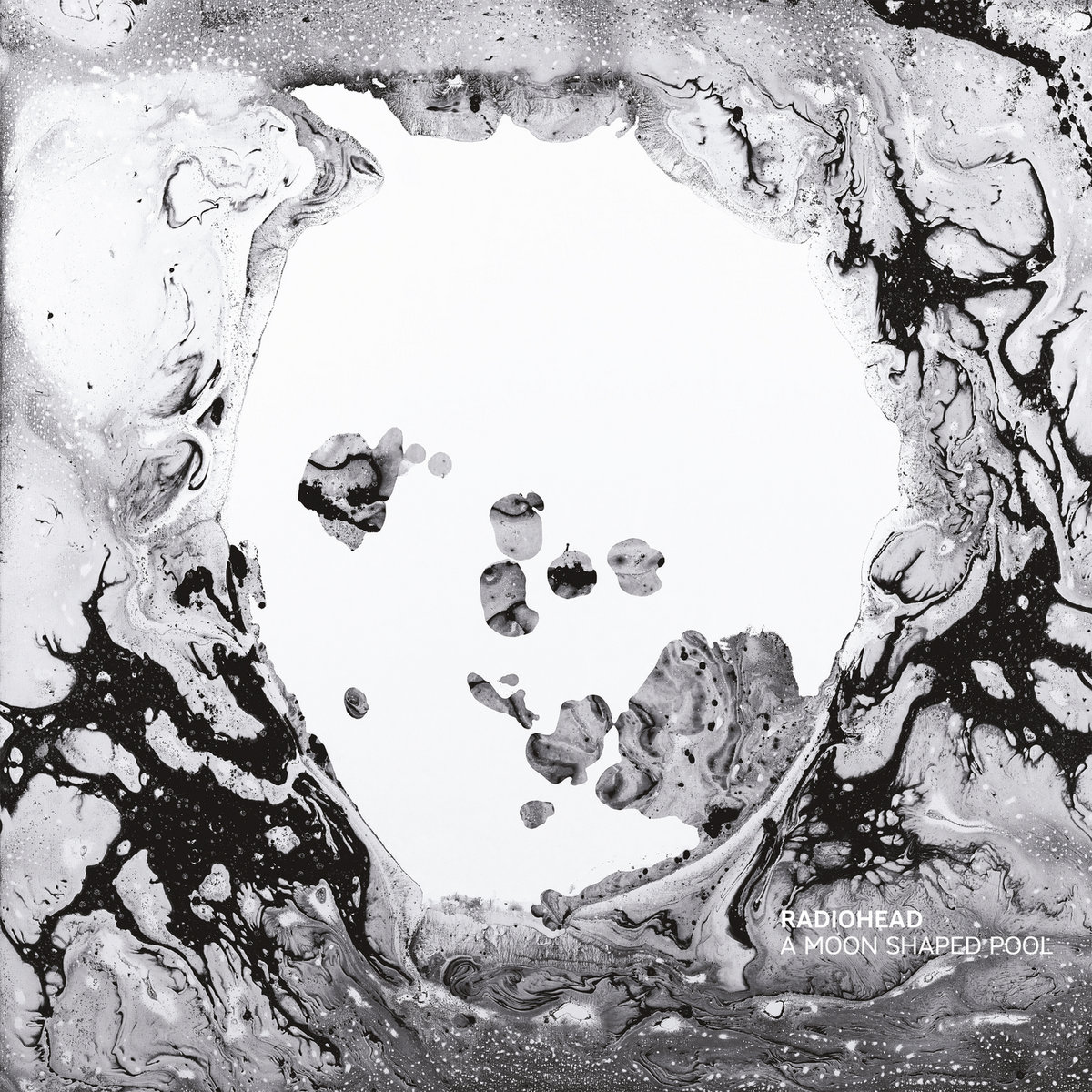
Recently I thought about Monty while out for a run, reflecting on A Moon Shaped Pool. Radiohead’s ninth album arrived 10 years ago today with an air of finality about it. Writing about it on its day of release, I wondered whether it might be the last we ever heard from this band — the final word from the alt-rock innovators who defined a generation, who’d turned fragility into strength and ugliness into aching beauty, who’d channeled neuroses into approachable epics and challenged their audience at every turn. This band of childhood friends from Oxford, so important to me and to millions of others worldwide, had been going back and finishing old unused songs from their archives, as if tying up loose ends. The gaps between albums had been getting longer, the side projects more numerous. When A Moon Shaped Pool finally dropped, bassist Colin Greenwood tweeted, “Very happy, very proud we did this xx,” as if referring to a group that had already broken up, back together for one last ride.
On top of that, even by this band’s depressive standards, so much of the album felt weary and defeated. It was easy to imagine it as the sound of Radiohead mourning the end of Radiohead. But there were other kinds of grief informing these songs. As usual, grief over the state of geopolitics and society at large. Increasingly, grief over climate change and our declining planet. At the core of it all was a fresh, acute, personal grief over Yorke’s split from his wife Rachel Owen after 23 years together. “Then into your life, there comes a darkness.” “As my world comes crashing down, I'll be dancing, freaking out.” “Different types of love are possible.” “It’s too late, the damage is done.” “You really messed up everything.” “Just don’t leave, don’t leave.”
It came out on Mother’s Day. I was so annoyed at the time: My wife’s first Mother’s Day as a mom, and there I went mid-afternoon, disappearing into my home office to work for the rest of the day, just like I would on Christmas that year when Run The Jewels 3 dropped early. (Please, won’t someone think of the music critics!?) Why would Radiohead release a new album on a Sunday afternoon, I wondered? Now, I suspect it was intentional. They don’t celebrate Mother’s Day on the same schedule in the UK, but the timing feels too pointed. The mother of Yorke’s children was going, going, gone, and A Moon Shaped Pool had arrived.
This is not an everyday listening experience. Most Radiohead albums demand a certain headspace. You immerse yourself in them, devote your full attention, get swept away, or else they grate against your peace of mind, like someone melting down on the subway. Maybe The Bends or In Rainbows you can throw on in the background without the sense that a dark cloud is lingering nearby, ominously, obnoxiously threatening your wellbeing. With A Moon Shaped Pool, you let the cloud consume you, and such bleak music becomes so beautiful.
Jonny Greenwood was well into his second career as a film score composer by 2016, and he’d been lacing Radiohead records with symphonic splendor since Kid A. He flaunted those skills to an unprecedented extent here. “Spectre,” the rejected Bond theme Radiohead released a few months earlier, turned out to be a warning shot for an album adorned by orchestral strings. The advance tracks further hammered the point: the long-gestating anthemic rocker “Burn The Witch” and the brand-new piano ballad “Daydreaming,” one rising ever higher like smoke from a pyre, one plunging ever lower into subaqueous depths, both infused with the majesty of the London Contemporary Orchestra.
Arriving after the gray, glitchy The King Of Limbs, these were some of Radiohead’s most organic-sounding songs in years. Albeit no less bleary, the music felt like the work of a live band again, often rooted in acoustic guitar or piano. “Identikit” was a despairing jazz-rock groove, “The Numbers” a glittering folk-rock procession to the end of the world. Eerie sound design did not obscure the coffeehouse guitar and brushed drums at the core of “Desert Island Disk.” Even the krautrock workout “Ful Stop,” powered by one of those stunning less-is-more basslines from this band’s secret weapon Colin Greenwood, never lets its tactile pleasures get lost in a fog of keyboard textures. If In Rainbows had recentered crowd-pleasing rock music, this was like a deluxe edition of MTV Unplugged.
I wish the album was a little punchier a little more often, that it rocked a little harder. But what it lacked in cataclysmic oomph, it made up for with arrangements that created their own kind of dynamism and internal logic. Jonny’s swirling, soaring symphony heightened the drama and lent an air of doomed elegance to the proceedings. Sometimes there was a choir, too, to further bolster the grandeur; there’s a real early 20th century Hollywood vibe when the chorale repeats, “Broken hearts make it rain.” And beneath the apocalyptic arrangements, it was all so painfully human. The opening track announces, “This is a low-flying panic attack,” but “Burn The Witch” is a much older song from a different era, when Yorke was racked by paranoia, struggling to cope with newfound fame and an onrushing dystopia. The mood on most of these songs is not panic so much as desolation. It sounds like the work of a broken man.
That’s never truer than on closing track “True Love Waits,” one of the most stunning achievements in a catalog overflowing with them. Dating back to 1995, it’s likely the oldest song excavated from the archives for A Moon Shaped Pool, and its transformation here is instructive. The version captured on the 2001 live album I Might Be Wrong is a solo acoustic paean to romance, brimming with giddy expectation. It’s the anti-”Creep” — maybe the most joyful, sentimental song Yorke has ever performed. On A Moon Shaped Pool, those tender strums are subbed out for echo-laden piano that gets more scrambled and dissonant as it goes. Yorke’s old words remain, but the warmth at the song’s core has been hollowed out, leaving only frigid emptiness. His final plea, “Please, don’t leave,” once so pregnant with hope, instead becomes impossibly, overwhelmingly sad.
At the time, “True Love Waits” was enough for me. A Moon Shaped Pool was enough for me. If this was the end of Radiohead, it was the finest finale I could have hoped for, somehow both triumphant and utterly dejected — effects that were magnified when Owen died of cancer a few months later, adding new emotional dimensions to an already harrowing body of work. This was a natural endpoint for their discography. The band then complicated my theory by touring relentlessly for two years. In the middle of those travels, when asked by Rolling Stone if Radiohead was coming to an end, Thom Yorke replied, “I fucking hope not.” It seemed like maybe there were more chapters left to be written in this band’s story.
Then, he and Jonny started a new band and promptly cranked out three albums’ worth of Radiohead apocrypha — good to great, none measuring up to this staggering achievement — and undermined their longtime role as clear-eyed doomsaying prophets with a muddled stance on Israel’s efforts to destroy an entire civilization. In 2025, when Radiohead finally got back together for their first shows in seven years, it felt more awkward and complicated than you ever want the return of your favorite band to feel. Or at least it felt that way from a distance. Maybe if I’d made it over to Europe for one of those shows, the whole ordeal would have played differently. Maybe the proposed plan for 20 shows per year will turn into a wondrous tradition, and they’ll shake off the weirdness and settle into a pleasing equilibrium for their twilight years. Maybe they’ll surprise-release an album so powerful that it makes all this hand-wringing seem stupid.
I don’t know if I really believed we’d make it 10 years without new Radiohead music. Back when I was putting so much effort into reading the tea leaves, I hadn’t truly grappled with the thought of this treasured creative entity ceasing to create, just like Monty’s death hasn’t truly hit me yet. But as much as I want new songs, new memories, new history with the band, the wonderful thing about recorded music is that, unlike a beloved friend, it never has to go away. The records are still right there. The music is forever. As long as we can dip back into A Moon Shaped Pool, Radiohead can help us grieve their own absence. It’s bleak, and it’s beautiful.
Radiohead - A Moon Shaped Pool [LP]