
- Warp
- 2006
Consider it their debut. And then, when you’ve situated the album that way in your brain, marvel at a band that could come up with this on their first try.
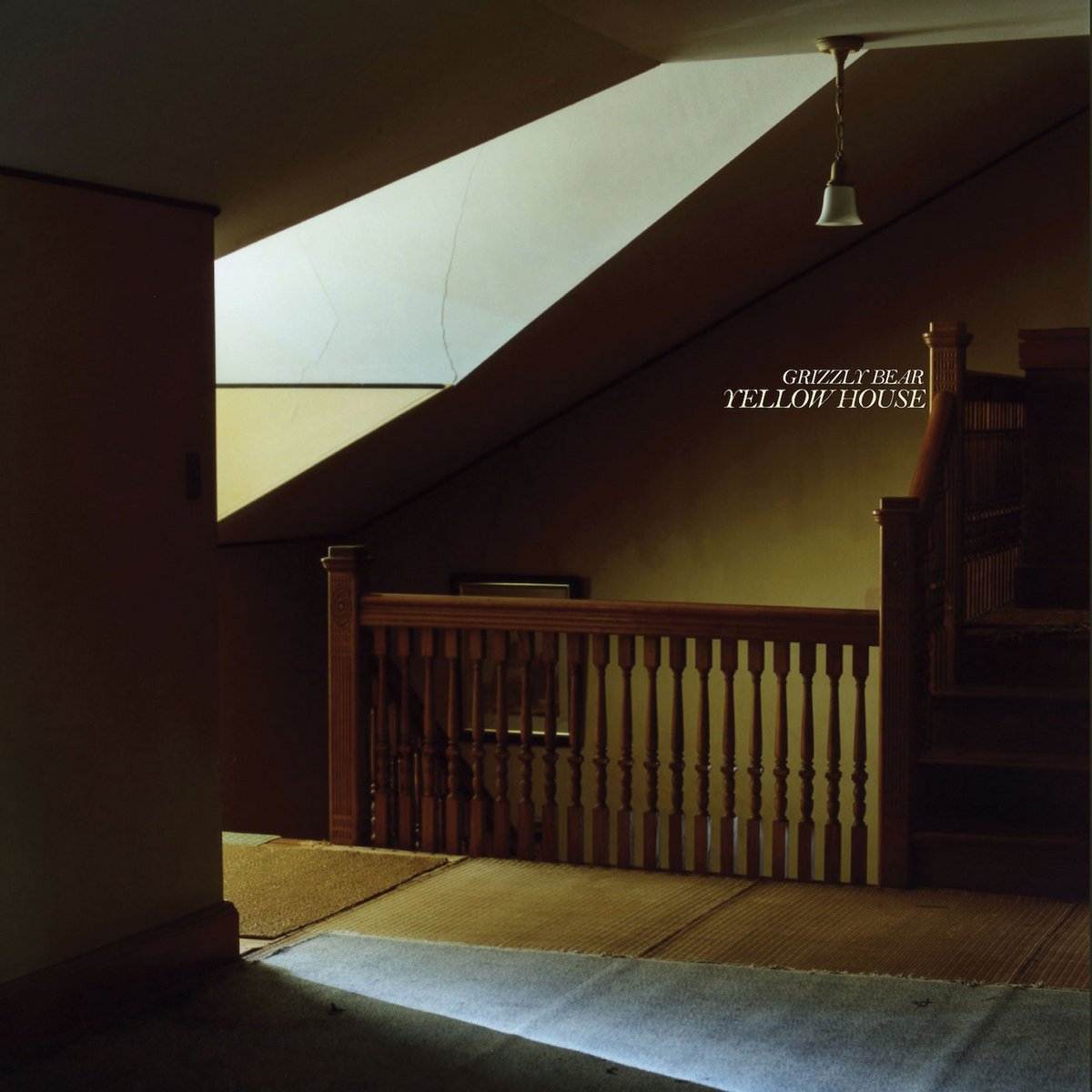
Technically Yellow House, released 20 years ago today in the UK and the following day in the US, is the second Grizzly Bear full-length. But 2004’s Horn Of Plenty was essentially an Ed Droste solo joint, and its lo-fi recordings might as well be demos compared to the sounds he and his bandmates conjured together. The splendor and sophistication of these tracks heralded a new era for indie music: rooted in classic pop, rock, and folk but tied to the avant-garde; hashed out in rock clubs but fit for conservatories; spacious and ghostly yet utterly visceral at times. It helped to define its moment, yet two decades later, Yellow House feels timeless. It is aging extremely well.
The Grizzly Bear project expanded from its solo origins by necessity. Drummer Christopher Bear had assisted with Horn Of Plenty, but when it came time to promote the album with live shows, he and Droste needed reinforcements. Chris Taylor came first, mainly playing bass but also expanding the band’s boundaries via woodwinds and electronics, not to mention production savvy. The final piece was Daniel Rossen, a heady guitar virtuoso who quickly became Droste’s songwriting foil. Rehearsing and performing together that first year, they began developing into a collective entity, one of those bands where every player matters and the connection feels telepathic.
That process came to a head in July 2005, when Grizzly Bear gathered to record at Droste’s childhood home near Boston, the titular yellow house. Despite no record label commitment — a surprising deal with experimental electronics hub Warp came later — the band gave themselves a month to finish. The self-imposed pressure could have easily led to a shoddy, incoherent body of work, but instead it sharpened Grizzly Bear’s instincts and brought their aesthetic into focus. From the opening flutters of “Easier” to the closing vocal rounds of “Colorado,” it’s the sound of a singular unit in full command of its powers. They arguably made even better records later, but all the pieces were assembled here on the first try.
Horn Of Plenty had earned blog buzz and mainstream critical acclaim, and Grizzly Bear were becoming a Brooklyn fixture at a time when the borough increasingly felt like the center of the indie rock universe. They were primed for a breakout, and Yellow House overdelivered. So when bloggers like Stereogum’s own Scott Lapatine and Amrit Singh got hold of the album, the hype train went into overdrive. “Yellow House is going to be one of your favorite albums of the year,” Scott promised in his writeup of a late-night Bowery Ballroom gig two months out from the release date, between a pair of informal updates from Droste that made the Gum feel like his personal blog. When this site premiered the "Knife" video, the post began, "Well, we've been drooling over this one for awhile." The sentiment was similar at peer blogs like Gorilla vs. Bear and Said The Gramophone, where Droste also checked in via SMS. By the time the Best New Music anointment arrived, Grizzly Bear were the new vanguard.
At the time, I was fresh out of college and perhaps still not a patient enough listener to be gobsmacked by the album’s slow-burn sprawl. Not that I was one of those skeptics who might point to Yellow House as a harbinger of the hifalutin Dark Was The Night era and decry the genre's move away from its scrappy punk-rock origins. I liked the album well enough and made it a point to go see Grizzly Bear perform more than once. But Veckatimest’s straightforwardly poppy “Two Weeks” was what really perked my ears up, and Shields — the least woozy, hardest-rocking Grizzly Bear album — made me a fan for life. Only in hindsight did I recognize what I’d been missing in ’06 while bumping FutureSex/LoveSounds or Columbus, Ohio's finest art-punk bands.
Listening back now, it’s easy to understand why people went nuts for Yellow House. I’m going nuts for it myself right now. Under a sheen of reverb that rendered everything in soft focus, these songs are like living, breathing organisms. The hushed moments are mesmerizing, the loud ones so volatile you might catch yourself hanging on for dear life, wondering how these meticulous arrangements can withstand the storm. Rossen’s guitars add so much, both the intricate acoustic playing that often serves as a textured foundation and the nasty electric leads that cut through the mix with surprising ferocity. There are so many instrumental flourishes that make genre tags like “chamber-pop” feel fitting — banjo, brass, piano, and on and on — and the songs often eschew standard verse-chorus-verse formats, unfolding in a way that makes them feel more like compositions.
“Marla,” a tribute to Droste’s great great aunt who drank herself to death after following a similar path from Boston to New York, saunters and creeps like New Orleans funeral jazz. “Lullabye,” with its haunting refrain of “Chin up, cheer up,” begins so quietly and builds to such thunderous clamor. “On A Neck, On A Spit” takes a similar trajectory, biding its time then blasting off to euphoria. All throughout the tracklist, nary a second goes by when something beautiful isn’t happening, but it’s rarely the kind of beauty you’d expect. I love how Sean Michaels put it way back when: “There's an insideness to the music — close, murmured, tender — brought outside. Or an outsideness - wild, fertile, ripe — brought in. Things walking where they should and shouldn't.”
Above all, the singing stands out. Droste and Rossen’s voices swoon similarly enough that people had trouble telling them apart at first. Once you familiarize yourself, they play off each other nicely, just as the more streamlined Droste tracks like the spectral doo-wop lament “Knife” complement the proggy Rossen suites like “Little Brother.” The interplay is especially stunning when Bear and Taylor join in, all four members’ voices spilling over into waves of beauty, a phenomenon that recurs again and again throughout the album.
These vocal arrangements sparked countless reasonable comparisons to the Beach Boys, but Grizzly Bear took that sound to otherworldly places all their own, somehow fussier and wilder. They sounded like mythical creatures a wide-eyed Sufjan Stevens might run into in one of his own orchestral indie epics, yet the passion was all too human. “Everyone manages to classify it somehow. We’ve gotten the stamp of a million different things,” Droste told Under The Radar, balking at the “folk” descriptor often assigned to an album too complex and shapeshifting to really fit in anywhere. “When I think of folk, I think of random Scottish sheep-shearing songs. I think of a totally different hardcore folk.”
Yellow House does make sense as folk music when you place it in the context of 2000s indie. It’s easy to hear it as a transitional record, a stepping stone between the feral psych-folk of Sung Tongs and the reverent CSNY worship of Fleet Foxes. Within Grizzly Bear’s own arc, it sounds like a band fading in. But if the music sometimes feels more spiritual than physical, it never ceases to be substantial. If they’d stopped right here, they’d be legends all the same.