
December 30, 1995
- STAYED AT #1:10 Weeks
In The Alternative Number Ones, I’m reviewing every #1 single in the history of the Billboard Modern Rock Tracks/Alternative Songs, starting with the moment that the chart launched in 1988. This column is a companion piece to The Number Ones, and it’s for members only. Thank you to everyone who’s helping to keep Stereogum afloat.
Oasis just had a big fucking moment for themselves. After 16 years of publicly sniping at one another, brothers Noel and Liam Gallagher finally patched things up enough to take their old band out on a global stadium tour. The mass rapture that greeted them was bigger than anything I could've predicted, and I would've predicted a lot. It was already a lock that the Oasis reunion was going to be a cultural tidal wave in the UK. Over there, solo Gallagher brothers could still play gigantic shows even before the reunion. At this point, Oasis fandom is written into British cultural identity as much as tea and crumpets. But Oasis got that same reaction all over the planet. It was truly something to behold.
I didn't see the Oasis reunion. I like Oasis just fine, but I've never been a massive fan like that. It seemed like it would be a lot of time and money, and I remembered all the reports that Oasis were a lousy live band even at their peak. Still, I thought about it. I thought pretty hard. I know people who flew out to the UK for the first shows on the tour, and I know plenty more who carefully plotted out which North American shows would have the best vibes. (Mexico City looked lit.) Even without being there myself, I've tasted a little bit of that feeling in the air. I've been wearing a lot more soccer jerseys in the past few months. If I'm painfully honest with myself, that's probably not a coincidence.
In 2025, the closest thing we had to an Eras Tour-level event was the Oasis reunion. The huge scope of the Oasis tour had something to do with the long wait for the Gallaghers to get over their bullshit and figure things out, and it also had something to do with a whole lot of great songs that haven't really aged in the past 30 years. More than anything, though, I think people were excited to be excited about something. Rock 'n' roll stars are in short supply these days, and Oasis might be our clearest living links to a grand, dying tradition. Liam Gallagher, at least, still pretty much looks the way he did when he was running wild over the globe, and he's still talking the same kind of shit. He's just not talking that shit about his brother anymore -- not publicly, anyway. Oasis represent a version of guitar music where swagger and danger and charisma are still abundant, a version that can still pack stadiums full of euphoric hooligans. People want to hold onto that feeling.
Now that I sit and think about it, that feeling might've been a big part of the reason that Oasis got so huge in the first place. Oasis were national heroes in the UK almost from the jump. They were drinking with Tony Blair at 10 Downing Street, and the press held them up as avatars for an entire wave of rough, messy Anglo glamor. The British press -- all the music press, really -- seemed deliriously happy to cover a band that would loudly trumpet itself as "hard-drinking, groupie-shagging, drug-snorting geezers," as Noel Gallagher put it to Rolling Stone in 1996. The big American rock bands of the early '90s didn't want to portray themselves that way. They'd grown up in an underground where that shit was considered wildly uncool, and they brought that attitude to the mainstream with them. Even the ones who were like that knew better than to depict themselves that way. The big British rock bands, meanwhile, might've been OK with that portrayal, but most of them were less about attitude and more about waggling-eyebrow insouciance. Even at their wildest, they seemed like they were commenting on wildness. But Oasis never waggled an eyebrow in their fucking lives.
The Oasis story is all about confidence. These guys came from nothing -- squalor, poverty, violence, no hope anywhere. They lived lives where you could maybe aspire to be a roadie for Inspiral Carpets. They weren't supposed to be rock stars, but they carried themselves as rock stars anyway, to the point where the first song on their first album is literally called "Rock 'N' Roll Star." They truly believed that they were the greatest band of their era. They believed it so hard that they convinced plenty of other people to believe it, too. That same self-belief is what turns good rappers into great ones, and Oasis are living proof that it translates across genre lines, that rock bands can turn their own egos into magical forces. This year, Oasis have once again convinced a great many people to believe it.
Oasis were once avatars for a kind of rock 'n' roll excess that was long gone from the conversation. In a climate full of arch, self-aware Britpop and turgid post-grunge, they were the throwbacks, the guys who loved the Beatles so much that they convinced themselves that they were the Beatles. And they had the songs to back it up -- the simple, straightforward elegies that practically demanded to become the full-stadium singalongs that they became. Maybe the climate now is such that Oasis get to play the same role again. They're the grand exceptions, a twice-over nostalgia act that taps into some mythic power that otherwise remains dormant. I probably hear their songs almost as often today as I did in 1996.
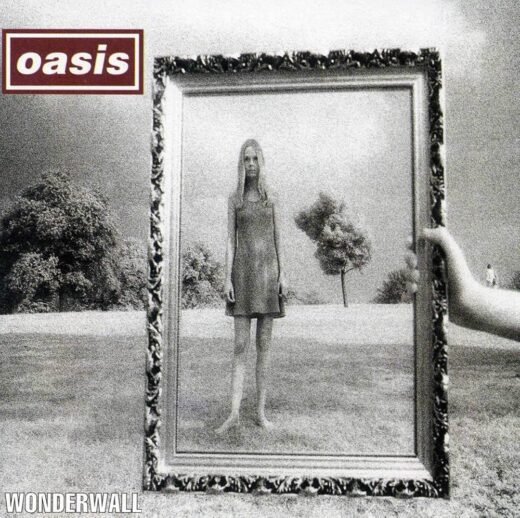
Anyway, here's "Wonderwall."
Noel and Liam Gallagher grew up together in a working-class Irish Catholic family in Manchester. Their father was an abusive, alcoholic construction worker, and their mother was a homemaker. There's a third brother named Paul, and he's just a year older than Noel, who is five years older than Liam. But when the brothers were kids, Paul got his own room, while Noel and Liam had to share one. Earlier this year, Paul was charged with rape and assault; he pleaded not guilty. The Gallaghers' father left the family when they were kids, and their mother raised them herself. Here's Noel describing his father to Rolling Stone in 1996: "He’s still a twat and always will be a twat. I don’t care if he’s living on his own or on the dole. He was always a cunt. He was never there. He was always at the pub. When he finally left, we were glad to be rid of him."
Both brothers were rough kids who got into a lot of trouble. Noel got kicked out of school and then arrested for burglary as a teenager. He taught himself guitar while he was stuck at home on probation, and then got a construction job with his father. After a work injury, he got moved to an indoor office job and kept practicing guitar there. Then he became buddies with Inspiral Carpets, a sort of middle-of-the-pack band in the early-'90s Manchester scene. He became a roadie and tagged along with them around the world. (Inspiral Carpets' highest-charting Modern Rock single, 1992's "Two Worlds Collide," peaked at #8. It's a 6.)
While Noel was off with Inspiral Carpets, Liam was stuck at home. He got in trouble for fighting at school, and he got hurt pretty badly when another kid hit in him the head with a hammer. Music looked a lot more attractive after that, especially in the moment that the Stone Roses came out of Manchester and took over the UK zeitgeist. A couple of Liam's buddies, Paul "Guigsy" McGuigan and Paul "Bonehead" Arthurs, recruited Liam to sing for their band the Rain after they decided that their original singer wasn't any good. Liam came aboard, and he suggested they change the name to Oasis. When he came home from an Inspiral Carpets tour, Noel went to see his brother's band, and he was impressed. So he offered them a proposition: He'd join their little group, but only if he got to write all the songs. That suited the other guys just fine.
Liam Gallagher mostly wanted to become a rock star because he didn't want to work a regular job. If his older brother wanted to accept the responsibility of writing every Oasis song, Liam wasn't going to stop him. In the aforementioned Rolling Stone feature, writer Chris Mundy, who doesn't seem to like the guys in the band very much, asks Liam what Oasis would be if Noel didn't write all the songs. Liam's reply: "That’s like, 'What if the fucking world was square?' [Extended pause] Or 'What if the queen had fucking 10 tits?'"
With Noel installed as bandleader, Oasis finessed their way onto the bill at a club show in Glasgow, and Alan McGee, flamboyant founder of the super-important UK indie label Creation, saw them. McGee signed Oasis after they'd only played a half-dozen shows. Oasis wrote and recorded their 1994 debut single "Supersonic" in a single day. Noel Gallagher claimed that he wrote the song in an hour, while everyone else in the band was going to get Chinese takeout. "Supersonic" fucking rules. It's a smeary, snarly streaked-guitar anthem with lyrics that don't even bother trying to make sense. Every riff sounds like a train crashing through your house. I thought it was the coolest thing in the world when I first heard it. After "Supersonic," every new Oasis song disappointed me the first time I heard it. I'd always be like, "Hey, maybe this one will sound more like 'Supersonic,'" and it never happened. I am not exaggerating. I felt this way for literally Oasis' entire career.
"Supersonic" reached #2 on the UK's indie charts, and it crossed over to become a top-40 pop hit. On American alt-rock radio, "Supersonic" did well enough to reach #11 by the end of 1994. At that point, modern rock radio programmers still sometimes kept UK bands in rotation, but those groups were quickly losing ground to grunge acts. Back at home. Oasis were slotted into the booming phenomenon known as Britpop -- the wave of young guitar bands who firmly rejected any influence from the American fuzz-rock world. Early on, a few Britpop bands got some attention from American alt-rock radio. Suede, the group whose rise pretty much catalyzed the entire Britpop idea, made it to #7 with "Metal Mickey" in 1993 and then never touched the Modern Rock chart again. (It's a 9.) Oasis' future arch-nemeses, London art-school kids Blur, ganked the Manchester indie-dance sound on their 1991 single "There's No Other Way" and reached #5, and then they made it to #4 with their 1994 classic "Girls & Boys." ("There's No Other Way" is a 9, and "Girls & Boys" is a 10.) After that, Blur wouldn't trouble our Modern Rock chart for another three years.
I fucking loved Britpop. I was all over that shit. I was still into it long after the end of the Britpop era. I met my wife at a Britpop dance night in 2003. But outside of the kind of pockets that would sustain things like Britpop dance nights, America was not on board with that stuff. Most of the music was too arch and clever to really thrive over here. Deeper into the '90s, UK bands like Radiohead and Elastica had some alt-rock radio success, but they became a vanishing breed. In the moment that we're looking at now, the biggest British band on American alt-rock radio was easily Bush, a group who made American-style quasi-grunge and who were a total non-factor in their homeland. So it's a little surprising that alt-rock radio programmers took to Oasis the way that they did. But then again, maybe it's not. Oasis were not arch or clever. They acted tough, looked cool, and made obvious crowd-pleasers. By the time "Supersonic" got airplay over here, Oasis had already released their debut album Definitely Maybe. They followed "Supersonic" with the big ballad "Live Forever," which went all the way to #2 on our alt-rock chart. (It's an 8.)
In the UK, Definitely Maybe was an absolute fucking phenomenon. It's a big, loud, swaggering, purposeful album that arrived at just the right moment. Very quickly, Oasis left behind the critical indie hype world and landed right in the cultural mainstream. Definitely Maybe went to #1 and went platinum nine times over. "Live Forever," "Cigarettes & Alcohol," and the non-album single "Whatever" were all top-10 pop hits over there. For a sensationalistic music press, Oasis provided some truly great copy, since the Gallagher brothers loved talking shit about each other and everyone else. They came close to breaking up while touring behind Definitely Maybe, but they were persuaded to stay together and keep moving forward. They promptly got into the Battle Of Britpop with Blur.
At the 1995 Brit Awards, Blur cleaned up, beating Oasis for a bunch of awards. In August 1995, Blur's "Country House" single happened to come out on the same day as Oasis' "Roll With It," and the press made a huge deal out of these two bands' fight for commercial supremacy. There was a big class element to the Blur/Oasis rivalry, and both bands leaned into it. Oasis got particularly nasty, with Noel Gallagher saying that he hoped Blur frontman Damon Albarn and bassist Alex James would "catch AIDS and die." (He later apologized.) Blur ultimately won that battle, with "Country House" handily outselling "Roll With It." Over here, the Blur/Oasis war mostly made for MTV News curiosity fodder, and neither of those songs did anything on the Modern Rock chart. We had our own pop-cultural rivalries, but it was fun to hear about the bullshit they had going on over there.
During all the fury around the Blur battle, Oasis kept working on their all-important second album (What's The Story) Morning Glory? "Some Might Say," another pre-album single, became the first of Oasis' many #1 hits in the UK. They ditched their original drummer for a guy who could actually play, and Guigsy briefly quit the band over nervous exhaustion. Oasis replaced him with another guy who only stuck around for long enough to play a few shows and appear in the stately black-and-white "Wonderwall" video, but then he quit and the other Oasis guys coaxed Guigsy back into the band. But the actual Morning Glory sessions were relatively quick and easy. Noel Gallagher wrote the whole album and co-produced it with Owen Morris, the guy who mixed and mastered Definitely Maybe. It only took the band a couple of weeks to record the LP, and their song "Morning Glory" reached #24 on the Modern Rock chart. It was really just table-setting for "Wonderwall," though.
When Noel Gallagher first wrote "Wonderwall," he called it "Wishing Stone." At the time, he said that he wrote the song for his girlfriend, the woman who he would later marry and divorce, as a way to encourage her when she was out of work. Later on, Noel claimed that was bullshit and that it's just a song about "an imaginary friend." But if you're analyzing lyrics while listening to Oasis songs, you're doing it wrong. Noel himself never thought about the fucking things. In the Rolling Stone feature that I can't resist quoting at length, Noel admits it: "I know, I know, I get lazy. I’m not John Lennon. I’m not trying to say anything. I’m just trying to entertain people. Sometimes, you don’t care about trying to make the lyrics make sense. Fuck, it’s only lyrics."
For his part, Liam offers that there's "shitloads of meaning" in Noel's lyrical content; he just doesn't personally know what any of it is. Liam also offers this explanation of "Wonderwall": "A wonderwall can be anything. It’s just a beautiful word. It’s like looking for that bus ticket, and you’re trying to fucking find it, that bastard, and you finally find it and you pull it out, 'Fucking mega, that is me wonderwall.'" What can I say? A true fucking poet. There were many things that he'd like to say to us, but he doesn't know how.
There is an actual meaning for the word "Wonderwall," and it's somehow dumber than anything that either of the Gallagher brothers could've conjured. In 1968, George Harrison became the first Beatle to make a solo album when he released Music For Wonderwall, an LP of instrumental sketches recorded for the film Wonderwall. I've never seen it, and I'm not sure Noel Gallagher has either, but Wonderwall is about a creepy guy who lives next door to Penny Lane, a model played by Jane Birkin. He drills holes in his wall so that he can look at her naked. That's why it's called Wonderwall. The wonderwall is a wall full of holes so that this guy can look at naked Jane Birkin. Then he saves her from a drug overdose, which he only witnesses because he's peeping. The magic of cinema!
Noel picked "Wonderwall" as a title because it had something to do with a Beatle. His nursery-rhyme lyrics speak to some vague discontent -- roads that are winding, lights that are blinding, a fire in somebody's heart going out, somebody maybe saving somebody else. If you wanted, you could interpret "Wonderwall" as a song about a relationship or as a look at Noel's own conflicted view of his growing rock 'n' roll stardom. The lyrics are vague and indistinct enough that there is no definitive meaning. The song defies definitive meaning for definitive maybeness, and it sure is pretty.
People have been playing acoustic versions of "Wonderwall" at open-mic nights and around campfires for the past 30 years. It's an easy song to play, an easy song to sing, and an easy song to remember. I've never played guitar a day in my life, and I'm confident that I could still learn to play "Wonderwall" in about an hour if somebody showed me. It's that kind of song -- the kind that feels like it has always existed. "Wonderwall" opens with guitar strums. As the track goes, it picks up more elements -- some quietly understated funky drumming, a few relatively complicated guitar flourishes, Bonehead and Owen Morris playing the string parts on a Mellotron and a Kurzweil synth. The decorative touches are lovely, but the song really just boils down to that elemental guitar strum and to Liam Gallagher's vocal, which sounds sneery and defiant and whiney and wistful and heartbroken all at once.
When you're in the mood to hate on it, Liam Gallagher's "Wonderwall" vocal can be pretty fucking annoying. He just kind of bleats through the track, his voice distinctive enough to allow for uncharitable impressions. But Liam holds the center of the song the way that a great movie star holds the screen. Without doing anything showy, Liam radiates presence, coming off tough and sensitive at the same time. Eventually, "Wonderwall" topped the Modern Rock charts for 10 weeks. At the time, that was the longest that any song ever held the #1 spot. That meant that I got pretty sick of "Wonderwall" back in the day, though I guess part of that was that I didn't think that it sounded enough like "Supersonic." Decades later, I've got to give it up. You could wake me up out of a dead sleep at four in the morning, stick a gun in my face, and demand that I sing "Wonderwall," and I'd be able to belt the whole thing right back at you without hesitation. It's a rare talent to be able to make a song that lives forever in people's memories. Oasis did that a bunch of times, and "Wonderwall" is only the biggest and most obvious example.
In the UK, "Wonderwall" peaked at #2 on the pop charts, and the band continued to run roughshod over all of popular culture. At the Brit Awards in February 1996 -- the one where Jarvis Cocker flapped his ass at Michael Jackson -- Oasis took home three awards, swept Blur, and got shitfaced while basically offering to fight any other band in the building. When Michael Hutchence from INXS handed them the British Video Of The Year trophy, Noel said, "Has-beens shouldn't be presenting fuckin' awards to gonna-bes." Right into the mic! Right in front of him! What a dick!
Over here, though, "Wonderwall" was the Oasis song. It was a full-on pop hit, reaching #8 on the Hot 100, while (What's The Story) Morning Glory? made it to #4 on the album charts. Oasis got a decent amount of critical love over here, too. In the 1995 Pazz & Jop poll, the Morning Glory album came in at #10, right between Yo La Tengo's Electr-O-Pura and Joan Osborne's Relish. A year later, "Wonderwall" landed at #4 on the singles list, tying with Pulp's "Common People." ("Common People" is better. I'm just saying. In the Blur/Oasis debate, I will opt out and pick Pulp every time.) Even after 10 weeks of "Wonderwall" on top, alternative nation still wasn't sick of Oasis. We'll see them in this column again soon.
GRADE: 9/10
BONUS BEATS: In 1995, a retro easy-listening band called the Mike Flowers Pops released a '60-style novelty orchestral pop version of "Wonderwall." That cover became a huge UK hit, going all the way to #2, just as the Oasis original had done. Here's the cover:
BONUS BONUS BEATS: Here's the hypnotic "Wonderwall" cover that Cat Power recorded for a Peel Session in 2000:
BONUS BONUS BONUS BEATS: In 2008, Jay-Z became the first rapper ever to headline Glastonbury. Noel Gallagher didn't like that, and he made a big stink about it. Jay-Z responded by coming onstage at Glastonbury with a guitar that he pretended to play, half-heartedly singing along to "Wonderwall." This was an obvious fuck-you move, and Jay followed it by transitioning straight into "99 Problems." But something funny happened. The Glastonbury crowd didn't treat it as a fuck-you. Instead, it was an opportunity for a euphoric singalong. Jay-Z, who really does like "Wonderwall," played into it. He did a bad job singing the song, but I don't hear any mockery in his voice. That's how a theatrical fuck-you transcends its intentions and becomes a great concert moment. Here it is:
BONUS BONUS BONUS BONUS BEATS: Here's One Direction having a cute little beach "Wonderwall" singalong while filming the "What Makes You Beautiful" video in 2011:
BONUS BONUS BONUS BONUS BONUS BEATS: A few months ago, Green Day, a band that's been in this column a bunch of times and that'll be back plenty more, played a show in Luxembourg, and they invited someone from the crowd to come up and play the hit 1997 ballad "Good Riddance (Time Of Your Life)" with them. But after a couple of faltering attempts, that fan attempted to play "Wonderwall" instead. When Billie Joe realized what was going on, he said, "Oh, fuck me" and grabbed his guitar back. On Twitter, Liam Gallagher posted the video and wrote, "Best song of the night." Here's that moment, preserved forever on the internet:
("Good Riddance (Time Of Your Life)" peaked at #2. It's a 7.)